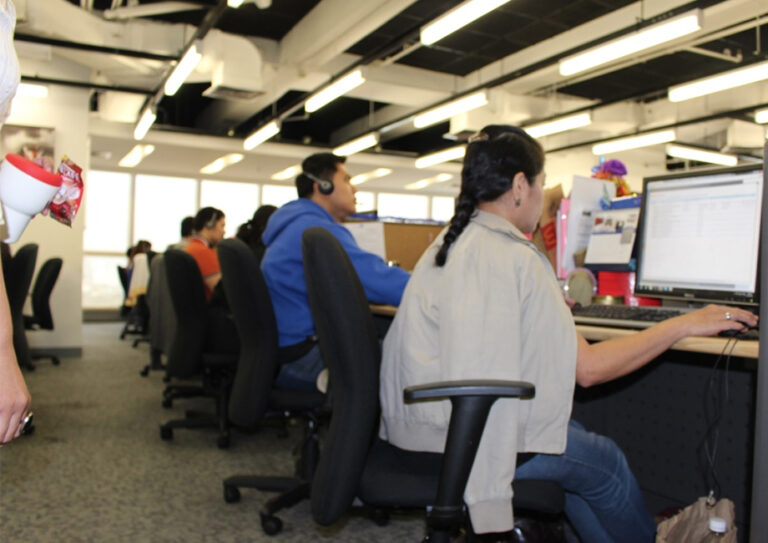

For most online retailers, the business case for offshore customer care rests on two numbers, not one: what each support hour costs, and how much revenue the team keeps that would otherwise walk out as refunds, cancellations and abandoned carts. PITON frames the ecommerce outsourcing service it helps retailers buy around that second number, because a cheaper seat that loses sales is not a saving.
This guide sets out where the cost advantage comes from, which kinds of revenue a Philippine team can protect, how order processing, inventory and logistics coordination fit in, what automation adds, and how to build the model for your own store. It closes with the situations where the numbers do not work, so you can rule them out early.
Where the savings come from, and where they stop
The savings come from labor cost: a fully loaded agent hour in the Philippines costs a fraction of the same hour in the United States, with supervision and quality assurance included. They stop where the operation is under-managed, because rework, repeat contacts and lost orders eat the difference quickly.
PITON’s 2026 pricing calculator uses a $12/hour fully loaded base rate that already includes team-lead and QA supervision, against a US in-house benchmark of $33/hour fully loaded, the midpoint of the $26–40 onshore range. On that basis it shows typical savings of 50–70% versus US in-house staffing in 2026. The talent pool is deep enough to hold those rates at scale: the Philippine IT-BPM industry employed 1.9 million people in 2025, IBPAP told the Philippine Star in January 2026.
Three things decide whether a retailer actually lands inside that range:
- Scope. Whole workstreams with clear ownership (a channel, a contact type, an order queue) save more than scattered tasks that need constant handoffs.
- Management. A dedicated lead, weekly quality scoring and calibration with your own staff keep error rates down; skipping them shifts cost back to your team.
- Tooling. Agents working in your help desk and order systems avoid duplicate licenses and the errors that come from working from copies.
The revenue a support team can protect
The larger part of the business case is revenue, not cost. A trained team protects sales at four moments: before purchase, when an order goes wrong, when a customer asks to return, and when a subscriber tries to cancel.
Before the purchase
Shoppers who ask a question before buying are signaling intent. A fast, confident answer on sizing, compatibility, delivery dates or financing often decides the checkout, and a live agent can recover a cart the customer was about to abandon. Our guide to pre-purchase sales support for online stores covers how those conversations are staffed and scored.
When an order goes wrong
Late, damaged and lost orders produce the angriest contacts and the most refunds. An agent who can see the carrier scan, reship a replacement and offer a goodwill credit turns a likely chargeback into a repeat customer. The customer service representative is often the only human a shopper ever talks to at an online brand, so that conversation is the brand.
When a customer asks to return
Returns are the clearest revenue lever. An agent who offers an exchange, a different size or store credit before processing a refund keeps part of the sale; an agent measured only on handle time processes the refund and moves on. Agents’ patience and warmth, rooted in the Filipino value of malasakit, are well suited to that conversation.
When a subscriber tries to cancel
For subscription brands, a save offer, a pause or a plan change can keep a customer who was about to leave. Track saves as revenue, not as tickets closed.
Order processing, inventory and logistics coordination
Beyond the inbox, a Philippine team can run the operational work that keeps orders moving: validation, processing, tracking, inventory checks and follow-up with warehouses and carriers. That work prevents contacts rather than answering them.
Order processing
Agents validate new orders, flag suspected fraud for review, process edits and cancellations, confirm addresses, and track each order through fulfillment to delivery and after-sales support. Clean processing up front removes a large share of the “where is my order” contacts later.
Inventory monitoring
Knowing what is in stock, where it sits and when to reorder protects both customer satisfaction and cash. Philippine staff can watch stock levels across channels, flag items about to sell out, update marketplace listings when stock changes, and warn customers early when an item is back-ordered, which cuts cancellations.
Logistics support
E-commerce logistics spans warehousing, packing, shipping and delivery. A Philippine support team liaises with third-party logistics providers, chases delayed shipments, files carrier claims for damaged or lost parcels, and keeps shipping documentation in order, so your in-house staff can focus on carrier contracts and fulfillment strategy.
What automation adds to the model
Automation raises the value of each agent hour rather than replacing the team. It takes the repetitive work so that people spend their time on the contacts where judgment protects revenue.
- AI chatbots and self-service answer order status, return initiation and refund status around the clock, provided they read live order data.
- Machine learning tags and routes tickets, suggests replies and learns from every resolved contact.
- Robotic process automation handles repetitive steps such as order updates, data entry and inventory syncing, which reduces manual errors.
- Data analytics turns contact reasons and customer behavior into insights on products, policies and packaging that drive avoidable contacts.
Automation only pays off when it is integrated with the storefront, order management system and help desk. Our piece on technology integration for cross-border support teams explains how those connections are built and secured.
How to build the numbers for your own store
Build the model from your own data, not a vendor’s average. A simple version needs a baseline of cost and revenue outcomes today, then conservative assumptions for what changes.
- Count monthly contacts by channel and reason, and the hours your team spends on them.
- Calculate today’s fully loaded cost per hour and per contact, including management and software.
- Record revenue outcomes: refund rate, exchange rate, cart recovery from chat, subscription cancellations and saves.
- Price the Philippine team with supervision and quality assurance included, using quotes from a competitive shortlist.
- Model a modest improvement in exchange and save rates, and check the case still works if that improvement does not appear.
- Add transition costs: training, system access, a parallel run and your own staff time during launch.
The retailers who get the most from this treat support as a revenue channel with its own targets. The 2026 playbook for AI-first e-commerce growth goes further into how brands are structuring that model this year.
When the model does not pay off
The case is weak when volume is too low to keep a dedicated team busy, when most contacts need deep product engineering knowledge held only by your staff, or when policies change so often that no written procedure survives a week.
It also fails when the contract rewards the wrong thing. If the provider is paid on tickets closed and handle time, agents have every reason to refund quickly and no reason to save the sale. Put exchange rate, recontact rate and satisfaction into the scorecard alongside cost, and review them monthly with the provider’s lead.
Frequently asked questions
How quickly does offshore support pay for itself?
It depends on your volume and how much revenue is currently leaking through refunds and cancellations. Retailers with steady volume often see the cost side within the first quarter; the revenue side takes longer because it depends on training and on changing how agents are measured.
Is cost per contact the right metric for the model?
Only as one input. Cost per contact rewards speed; pair it with revenue metrics such as exchange rate, cart recovery and subscription saves so that the team is not rewarded for quick refunds.
Can a Philippine team handle order processing as well as customer service?
Yes. Many retailers start with customer service and add order processing, inventory monitoring and carrier follow-up once the team knows the products and policies.
How do we choose a provider?
Compare several vetted Philippine providers on the same scope, ask for live reporting from a comparable retail account, and see their peak-season plan. PITON’s vendor-neutral shortlist is free and carries no obligation.