

On this page
- Key Takeaways
- How Does the Professional Quality of the Philippine Labor Pool Compare Onshore?
- What Macro Factors Account for the Deep Linguistic and Cultural Alignment?
- What Does Overcoming Scale and Retention Bottlenecks Look Like?
- Why Rely on PITON-Global to Secure Top-Tier BPO Talent?
- Who Is PITON-Global?
- How Does PITON-Global Differ from Traditional Outsourcing Brokers?
- How Does PITON-Global’s Network of 100+ Vetted Providers Benefit Organizations?
- How Does PITON-Global Onboard and Match Enterprise Talent?
- Why Do Organizations Use PITON-Global?
- What Are the Most Common Questions About Philippine Call Center Talent?
Call centers in the Philippines provide enterprises with access to a highly educated, naturally empathetic, and culturally aligned workforce at scale. Unlike domestic models plagued by chronic churn, the offshore ecosystem features deep technical proficiency and exceptional tenure—yielding a steep reduction in human-capital expenditure while maintaining superior customer satisfaction. Those traits lower a buyer’s staffing risk only when the vendor hires and trains well, which is why the people behind an offshore support team deserve as much scrutiny as the price.
Key Takeaways
- Academic capital: Over 800,000 university graduates enter the local labor market annually, creating an abundant pipeline for complex technical and analytical roles.
- Inherent cultural symmetry: Native linguistic alignment and deep immersion in Western consumer nuance eliminate conversation friction, surpassing alternative nearshore options.
- Workforce longevity: Frontline positions in premier offshore operations are prestigious, upwardly mobile careers, producing highly stable team structures.
- Frictionless elasticity: Organizations can execute large-scale resource expansions within tier-1 infrastructure zones in days — the workforce scalability growing enterprises rely on — bypassing domestic labor shortages.
How Does the Professional Quality of the Philippine Labor Pool Compare Onshore?
The baseline profile of an offshore specialist in Manila or Cebu is structurally superior to standard domestic personnel. Most frontline specialists hold four-year degrees or specialized certifications, treat BPO as a coveted career, and stay 24–36+ months—versus the 6–11-month tenure typical of transitional domestic roles.
When executives evaluate international human-capital models against domestic options, they must re-examine old assumptions. Domestic customer-interaction positions are increasingly viewed by local workforces as temporary, transitional employment, fueling a destructive cycle of continuous recruitment and onboarding. In Manila, Cebu and other major tech hubs, by contrast, BPO represents a highly coveted professional career path.
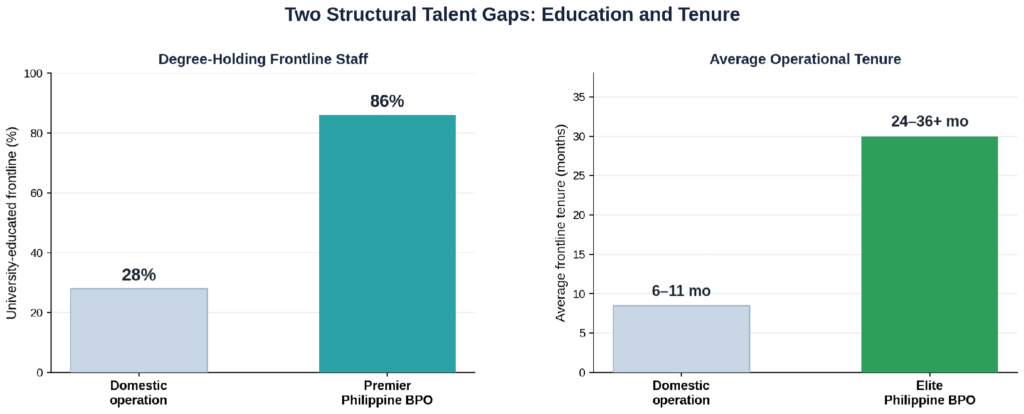
Figure 1. Two structural gaps—degree-holding frontline staff and average operational tenure—favor the Philippine model.
The full talent profile, also examined in our breakdown of offshore BPO talent against domestic staffing, is structurally superior across education, labor-market status, linguistic adaptability, and tenure, as the comparison below details.

Figure 2. Onshore versus Philippine talent profile across education, market status, language, and tenure.
What Macro Factors Account for the Deep Linguistic and Cultural Alignment?
English is the primary medium of instruction across the country’s secondary and higher education, so professionals speak fluent English enriched by Western idioms, humor, and consumer nuance. The deeper differentiator is emotional intelligence and a hospitality-driven ethos rather than the mere absence of an accent.
The capacity to build immediate, authentic rapport with Western clients and consumers is a primary differentiator for the region. The historical evolution of the national educational system establishes English as the primary medium of instruction across all secondary and higher education. This ensures professionals speak fluent English, enriched by a natural grasp of Western idioms, contextual humor, and consumer nuance.

Figure 3. Four drivers of alignment: English-medium education, idiom mastery, a hospitality ethos, and emotional intelligence.
The true differentiator of the Philippine workforce isn’t simply the absence of a heavy accent; it is a profound capacity for emotional intelligence and contextual empathy. Onshore teams frequently struggle with systemic burnout, which bleeds directly into consumer interactions. In contrast, the professional delivery culture in the Philippines is anchored in a hospitality-driven ethos that fundamentally transforms a standard technical support call into a positive brand experience.
— John Maczynski, CEO, PITON-Global
What Does Overcoming Scale and Retention Bottlenecks Look Like?
Treating offshore deployment as a talent upgrade rather than a cost compromise unlocks stability. One fintech firm with runaway annual turnover transitioned 85 roles to college-educated finance graduates in Manila, cutting turnover to a small fraction of its former rate, trimming handle time 42 seconds, and sharply reducing human-capital cost in six months.
Client Challenge
A high-growth North American fintech corporation faced crippling annual turnover across its internal fraud-prevention and customer-care departments, leading to escalated wait times and dropped calls.
Selection and Solution
PITON-Global mapped the company’s strict regulatory requirements against its audited matrix of 100+ operators, selecting a compliance-ready back-office and voice specialist in Manila. The program transitioned 85 full-time positions to an elite dedicated team, shifting talent profiles from entry-level domestic workers to college-educated finance and accounting graduates.
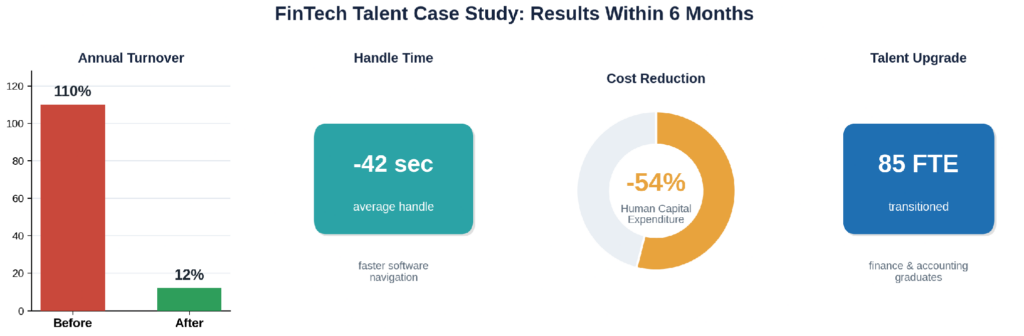
Figure 4. Quantifiable outcomes within six months of the talent upgrade.
Outcomes and Lessons
Within six months, operational turnover plummeted to a small fraction of its former rate, average handle times decreased 42 seconds through faster software navigation, and overall human-capital expenditure decreased sharply. The lesson: treating offshore deployment as an upscale talent upgrade rather than a cost-cutting compromise unlocks superior operational performance and stability.
Why Rely on PITON-Global to Secure Top-Tier BPO Talent?
PITON-Global is a structurally independent, advisory-led consultancy that eliminates selection risk across a curated network of 100+ vetted providers. It custom-matches security frameworks, integrations, and language needs with the top tier of operators for your vertical—shortening procurement and guaranteeing an efficient transition.
Who Is PITON-Global?
PITON-Global acts as a dedicated, advisory-led consultancy that eliminates selection risk through an expansive, carefully curated network of more than 100 vetted call center and back-office providers across the country. With thousands of firms claiming elite delivery status, its independent guidance removes the risk of a misaligned partner.
How Does PITON-Global Differ from Traditional Outsourcing Brokers?
Operating with full structural independence, PITON-Global custom-matches corporate requirements—security frameworks, data integrations, and required language competencies—with the top tier of operators suited to your industry vertical, rather than forwarding leads. This consultative approach minimizes procurement timelines and eliminates hidden contract risk.
How Does PITON-Global’s Network of 100+ Vetted Providers Benefit Organizations?
The curated network of more than 100 vetted providers lets organizations bypass a dense, risky provider landscape. Because each operator is assessed for vertical competency, security, and delivery quality, buyers reach a partner genuinely capable of supplying the educated, tenured talent their workflows demand.
How Does PITON-Global Onboard and Match Enterprise Talent?
PITON-Global maps requirements, screens its vetted network, matches on vertical fit, and shortlists the strongest operators. Each launch then runs a layered onboarding pipeline—sourcing, background verification, brand and systems training, and quality calibration—for day-one performance.
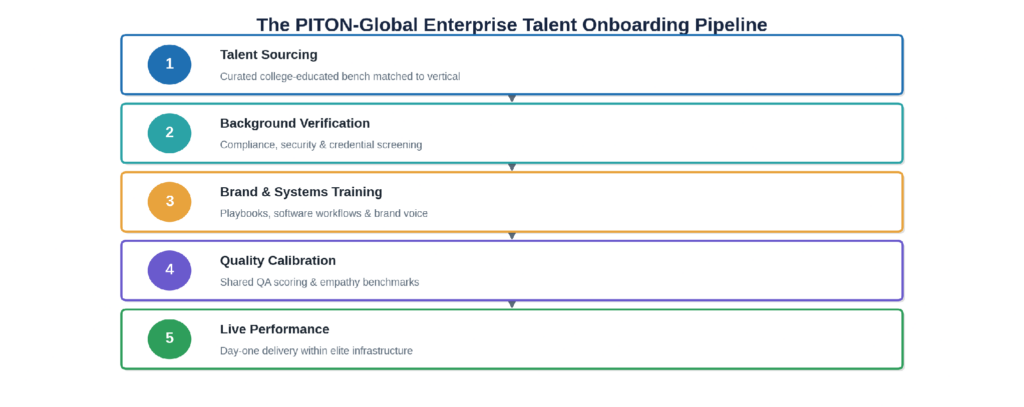
Figure 5. The layered onboarding pipeline—sourcing, verification, training, and calibration—behind day-one performance.
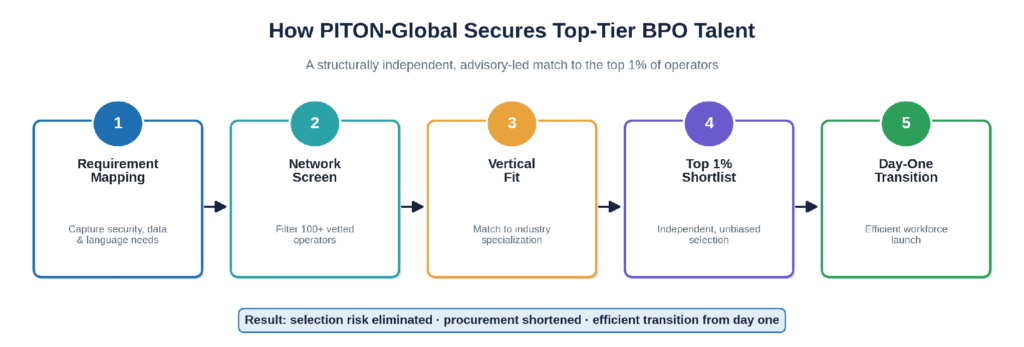
Figure 6. PITON-Global’s five-stage process for securing top-tier BPO talent.
Why Do Organizations Use PITON-Global?
Organizations use PITON-Global to eliminate selection risk, shorten procurement, and guarantee an efficient workforce transition from day one. By matching requirements to top-tier operators at no cost, the firm helps enterprises treat offshoring as a talent upgrade rather than a gamble.
What Are the Most Common Questions About Philippine Call Center Talent?
Common questions concern the educational backgrounds of specialists, how lower attrition translates to savings, capability for complex tier-2/3 support, overnight coverage, and integration into internal corporate culture. Each is answered below.
What specific educational backgrounds do Philippine call center specialists typically hold?
The talent pool is highly diverse, featuring professionals with university degrees in business administration, communications, information technology, nursing, and hospitality management, and some providers also draw on returning talent from the global Filipino diaspora.
How does lower offshore attrition translate to financial savings?
Low attrition directly suppresses recurring expenditures on recruitment marketing, background screening, and onboarding academies. It also preserves institutional knowledge, keeping resolution rates high and preventing costly errors.
Are Philippine professionals equipped to handle complex, technical tier-2 and tier-3 support?
Yes. By partnering with specialized technical providers within the PITON-Global network, enterprises regularly source engineers, certified accountants, and IT specialists to manage advanced workflows.
How does the Philippine BPO sector handle overnight coverage and shift changes?
The industry has operated on a 24/7/365 framework for decades, using structured night-shift protocols, comprehensive employee transportation programs, and robust wellness initiatives to sustain peak performance during Western business hours.
Can an offshore team integrate into our internal corporate culture?
Absolutely. Top-tier providers run dedicated engagement initiatives, continuous training, and open communication channels that let offshore teams align seamlessly with your corporate values and brand identity.