
Every robot fleet needs humans ready when autonomy runs out.
We'll line up six to ten award-winning, mid-sized, fully compliant providers in Manila that specialize in robotics teleoperation support and are serving teams like yours right now. Shortlist in 48 to 72 hours. Completely free, no obligation.

Sourced for you, not listed. Free, no obligation.
Your details go to John, nobody else.
Robotics teleoperation outsourcing for a fleet that keeps growing
Yes, if the team is built around response time and intervention quality rather than headcount. Vetted operations centers staff operators per robots-under-watch, not per shift slot, run latency-tested links to your fleet, and log every intervention with cause and resolution.
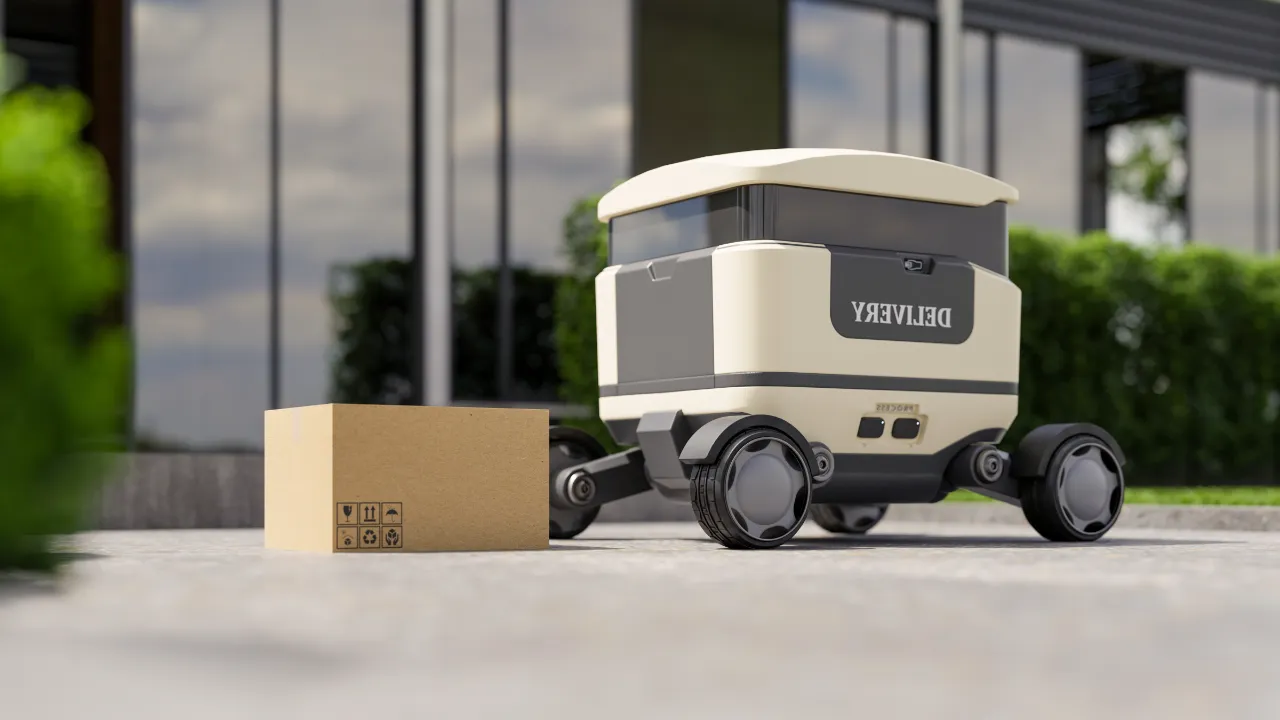
In robotics, a slow intervention doesn’t cost you a ticket — it leaves a robot blocking a sidewalk, an aisle or an order, with customers and bystanders watching. Teleoperation here is scored on time-to-operator and safe resolution, not seats filled.
Indicative 2026 rates — priced by control level, because a monitoring operator and a manipulation teleoperator are not the same seat.
The two premium rows have no commodity equivalent because a general monitoring desk staffs neither: demonstrations need consistent physical technique and incident review needs safety-case discipline. Rates confirmed per engagement.
Scope my teleoperation center →ISO 27001 / SOC 2 Type II — certified operations and access control · Safety runbooks aligned to your safety case and local operating permits · Video and location data handled under GDPR and the Philippine Data Privacy Act (RA 10173), with face and plate blurring where required · Session logging for every intervention and teleoperation session.
Four kinds of fleet, supported four different ways.
Speed, safety rules and data needs differ by robot, so each desk is staffed around its own fleet.
Sidewalk and indoor robots that need a remote operator when they get stuck.
Picking, sorting and inspection robots whose exceptions block the line.
Robotaxis and trucks that need remote assistance and certified teleoperators.
Developers who need demonstrations and intervention data to train the next model.
Four stations, running every hour — each intervention resolves an exception and teaches the autonomy stack.
Teleoperation is how autonomy gets better: every time a person steps in, the fleet learns where it needs help.
Operators watch fleet dashboards and alert queues, triaging exceptions by urgency: blocked path, perception uncertainty, localization loss, human interaction. The control: alerts are assigned by severity and robot location, so the most urgent robot is always seen first.
Waypoint guidance, path approval, object classification and go/no-go decisions that let the robot resume on its own. The control: operators assist rather than drive wherever possible, which is safer over variable networks and keeps the autonomy stack in charge.
Full remote driving or manipulation when assistance isn’t enough: recoveries, tight spaces, hardware faults. The control: operators are certified per robot type, links are latency-tested before every session, and a hard stop is always one click away.
Every intervention is labeled with cause, action and outcome, and demonstration sessions are recorded for imitation learning — so the autonomy team knows which situations to train on next.

“Running a remote robot fleet looks a lot like running a contact center: queues, response times, peaks, escalation. The difference is that the customer is a machine on a public sidewalk. You staff it with the same discipline, and you measure it by how fast a person shows up when the robot needs one.”
Operators record high-quality demonstrations for imitation learning and robot foundation models: pick-and-place, navigation, manipulation, with consistent technique and labeled outcomes. Wider AI training data is covered on our AI Data Collection page.
Handling the people around the robots: recipient calls, merchant issues, bystander reports and incident follow-up, run by the same center that watches the fleet. Sector context is on our Robotics operations industry page.
Structured review of near-misses and incidents from video and telemetry, with root-cause tags and reporting formats your safety and regulatory teams can file.
A monitoring desk vs. a center that gets robots moving again.
Seven dimensions, read as risk vs. protection — the exposure an ad-hoc monitoring desk creates against what a teleoperation center defends.
You own the robots, the autonomy stack and the safety case. We supply trained operators — never the go/no-go on your safety policy.
Which actions operators may take, speed limits, geofences and when to call local staff are defined by your safety team. Operators follow the runbook; they don’t extend it.
Direct driving needs a tested, stable link. Where latency exceeds your threshold, operators switch to assistance-only or safe-stop. We state the limits for each site before go-live.
Our Robotics operations page covers outsourcing for the robotics industry as a whole; AI Data Collection covers general training data. This page covers remote operation and assistance of robot fleets and the demonstration data it produces.
Hardware repair, battery swaps and physical recoveries need local field teams. We coordinate with them through your dispatch process; we don’t claim to replace them.
A teleoperation center live in 8 weeks — response times proven before full fleet handover.
A gated stand-up. Markets move to the Philippine center only after latency tests pass and operators meet response and safe-stop targets on a pilot fleet.
How to choose a robotics teleoperation provider in the Philippines
Three controls separate a teleoperation center from a monitoring desk — and each is demonstrable before you sign. In robotics, getting one wrong means a robot stuck in public with no one answering.

“Ask a prospective teleoperation partner for the 95th-percentile response time from last month, by hour of day. The median looks fine at almost every vendor. The tail shows you what happens at 3 a.m. when two robots get stuck at once.”

Robotics Teleoperation Support Outsourcing: Remote Assist, Intervention and Mission Control
Robotics teleoperation support outsourcing hands the human side of a robot fleet to a trained remote crew: the operators who step in when a robot stops, the triage team that decides who acts, and the reviewers who log each intervention so it never has to happen twice. It is the operations half of our robotics hub, and it suits delivery, warehouse and field-robot companies that need a desk staffed at every hour without building one at home.
Robots fail on the unusual case: a blocked sidewalk, a pallet in the wrong place, a door that will not open. Someone has to look, decide and act within seconds, and that someone does not need to sit next to the machine. Vetted mission-control teams in Manila, Cebu, Baguio and Dumaguete can run this work around the clock, working inside the client’s own stack under ISO 26262- and SOC 2-aligned controls. For how the role has developed, read our profile of the remote robot wrangler.
How a remote desk works
A remote desk resolves the events a robot cannot handle alone, in tiers. The robot resolves routine events itself; a remote assistant confirms a path or answers a question; a teleoperator takes direct control; and only the rare remaining case sends a technician to the site.
The design goal is to catch each event at the lowest tier that can resolve it safely. That means a triage step at the front of the desk, where a trained operator classifies the event by severity and routes it, and written rules that say which tier may do what. PITON-Global’s robotics page describes the path in five steps: disengagement, triage and classification, teleoperation or assist, clear and log, then label and return the case to the autonomy team.
Our step-by-step answer to setting up an offshore teleoperation program walks through staffing, tooling and escalation for a first desk.
Speed is the measure that matters
Mean time to intervention, the time from a robot asking for help to a human acting, decides whether an event is a pause or a stranded machine. Measure the desk on that and on fleet uptime, not on hours staffed.
In PITON-Global engagement RB-093, verified in Q2 2026, a last-mile operator running 1,400 sidewalk robots moved its desk to a 24/7 crew across Manila and Cebu. Intervention time fell from more than four minutes to eight seconds, uptime rose from 95.1% to 99.6%, and field-recovery trips fell 71% over twelve months.
Speed comes from engineering before staffing. Operators need a latency-budgeted connection with active-active failover between sites, a clear view of the robot’s sensors, and drills that test the handoff without warning. Ask any vendor for a live, unannounced intervention drill on your own stack before you sign.
Safety cases and intervention records
A teleoperator acting on a moving machine is part of your safety system, so every action must be recorded and reviewable. The desk should keep a record of each intervention that shows what the operator saw, what they did and why.
Frameworks such as ISO 26262 for functional safety and UL 4600 for autonomous products shape what evidence you will need. A dedicated safety-case analyst reviews interventions, writes them into the safety case and flags patterns for your engineers, so that any event can be reconstructed and defended later. Keep reviewers separate from the operators they audit where you can.
Write the line between advice and control into the contract and the runbooks: who may suggest a path, who may take control, who may send a technician and who carries responsibility for each. Our planned guide to autonomous fleet and remote operations support covers the same handoff for driverless cars and trucks.
Exception handling in warehouses and fixed sites
Warehouse and industrial robots need the same desk with different priorities. A blocked unit halts a line rather than a route, so coverage follows your fulfillment peaks and the operators work inside your warehouse management and fleet tools.
Mis-picks, unfamiliar packaging and blocked aisles each need a person to decide, and each decision is also a training example if it is labeled and returned to the autonomy team. Measure the team on exceptions cleared and on how often the same exception comes back. Our article on automated fulfillment with human oversight goes further, and our logistics hub covers the freight and order operations around the warehouse.
Closing the loop with training data
A desk that clears events but never labels them leaves the robot no smarter. Every intervention should become a labeled edge case sent back to the people who train the model, so the robot needs help less often over time.
Plan the return loop at the start: the label schema, who writes it, how fast it reaches the autonomy team and how you will measure whether the same event recurs. Many robotics companies give the labeling to the same Philippine vendor so the operators’ context is not lost. Our planned hub for robot training data and task demonstration covers perception labeling, keypoints and demonstration programs in depth.
Building the crew
Teleoperators are not general support agents. The Philippine labor market has deep experience in round-the-clock operations to draw on, but recruit for calm under time pressure, spatial judgment and the discipline to follow a runbook, then certify each operator on a simulator running your stack before they touch a live robot.
A gated stand-up takes about eight weeks on PITON-Global’s model: integration and safety mapping in weeks one and two, operator hiring and simulator calibration in weeks three and four, shadow operations and an unannounced drill in weeks five and six, and a phased cutover in weeks seven and eight. Keep a stable core team with trained reserves, and run two sites so a local outage never leaves the fleet without cover.
What it costs
Indicative 2026 rates on PITON-Global’s robotics page put latency-drilled teleoperators and safety-case analysts at $12–18 per hour, triage operators at $10–14, edge-case labelers at $6–10 and shift leads at $10–12, confirmed per engagement against fleet size and event rate.
Compare the cost of the desk with the cost of a stranded robot: a missed delivery, a recovery trip, a stopped line. A cheaper quote that staffs general agents at the teleoperator rate is not a saving if intervention times slip. Our pricing guide explains how fully loaded rates are built and lets you model a team.
How to choose a vendor
Choose a vendor that can prove intervention speed on your own robots, show its safety-case records and run inside your stack under secure access.
Ask each candidate for a live drill, sample intervention records, its edge-case labeling workflow and the controls that keep sensor data, maps and model IP inside a secured environment such as a Zero-Trust virtual desktop. Visit the operations floor and test failover between sites. Our seven-step vetting framework describes how PITON-Global tests providers before they reach a shortlist, and our wider guide to outsourcing to the Philippines covers hubs, contracts and governance. Customer-facing calls from site managers or delivery recipients sit better with a voice team, covered in our guide to call center outsourcing.
Hidden champions: the six to ten providers you’d otherwise have missed, lined up in 48 to 72 hours. Judge for yourself. No cost, no obligation.
Frequently asked questions
Staff your mission-control desk with PITON-Global
PITON-Global is a vendor-neutral advisory. Tell us your fleet size, event rate and stack, and we return a free shortlist of vetted Philippine mission-control teams, each tested on an intervention drill before it reaches you. Book a no-obligation call to start.
Book a no-obligation call →