

Before supporting hospital operations, a Philippine healthcare BPO partner must provide a curriculum centered on clinical workflow integration, U.S. regulatory compliance, and security-hardened data handling. For healthcare back-office work run from the Philippines, programs should prioritize role-specific competencies, hands-on EHR proficiency, and forensic audit-trail training to protect patient data and ensure compliant support.
Key Takeaways
- Compliance baseline: Mandatory, verified training on the HIPAA Privacy and Security Rules, validated through documented assessment and annual recertification.
- Role-based specialization: Distinct tracks for clinical functions (utilization management, coding) versus administrative ones (scheduling, billing).
- System mastery: Intensive, hands-on simulation within the hospital’s specific EHR environment to reduce post-go-live errors.
- Security protocols: Training on encrypted remote access, data redaction, and strict “minimum necessary” access standards to prevent breaches.
- Operational agility: Use of the Kirkpatrick model so training translates into tangible clinical and financial KPIs, not just “training hours.”
Why Is a Standardized Curriculum Insufficient for Modern Hospital Support?
Because generic call-center training is fundamentally misaligned with a hospital’s stakes. Here the cost of an error is not a lost sale but a potential compliance violation or a delay in patient care, so effective programs use a clinical-intelligence framework in which agents understand the “why” behind the data.
That framework bridges basic medical terminology and the complex, gray-area judgment required for clinical denials and prior authorizations — the judgment that marks the clinically literate people behind the process. The curriculum should rest on four pillars — regulatory, technical, clinical, and security — each tied directly to a hospital-operations outcome.
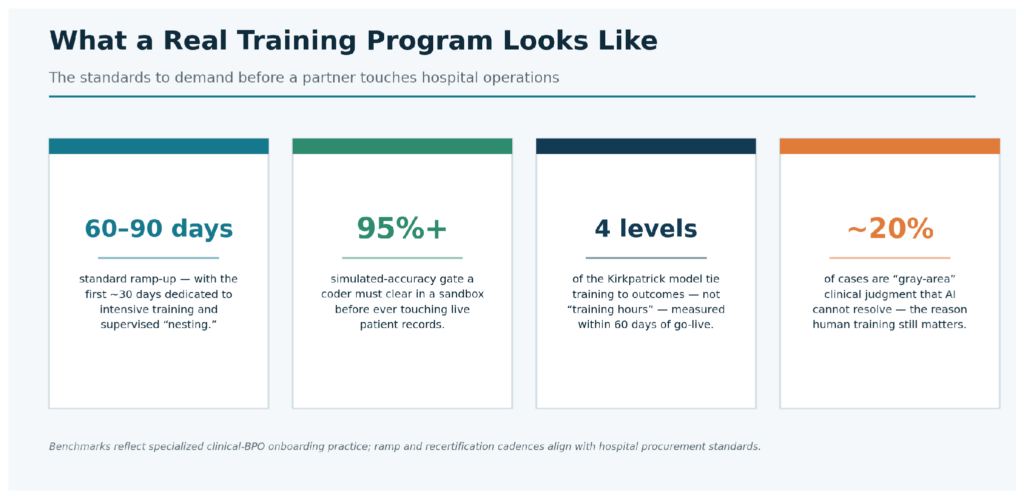
Figure 1. The standards to demand before a partner touches hospital operations.
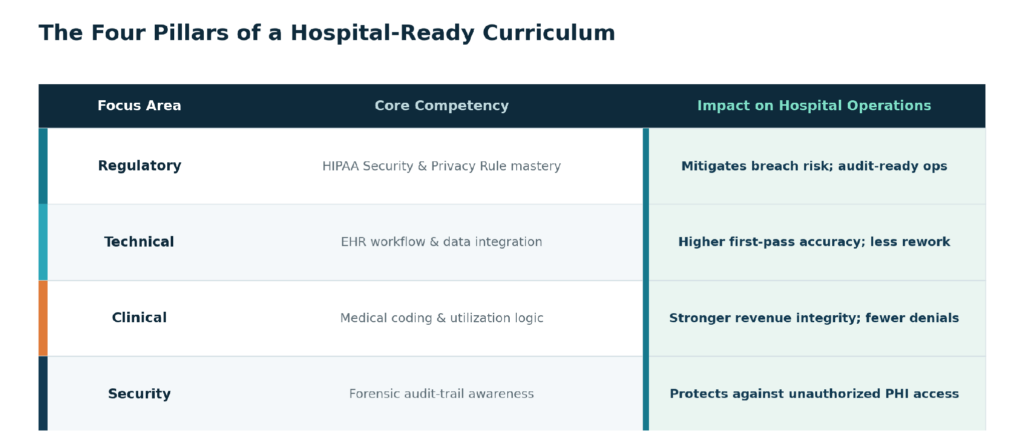
Figure 2. The four pillars of a hospital-ready curriculum and their operational impact.
These pillars are not equal peers; they stack. Compliance and security form the non-negotiable foundation, EHR proficiency and terminology sit above it, and specialized clinical judgment is the apex that only the strongest programs reach.
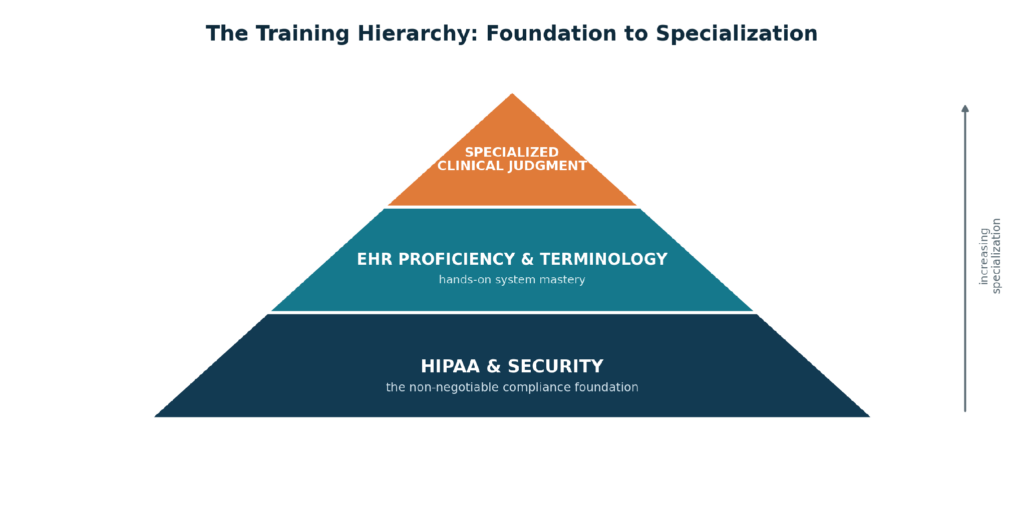
Figure 3. The training hierarchy, from compliance foundation to specialized clinical judgment.
How Should Training Be Structured to Ensure Compliance and Accuracy?
Demand a blended-learning methodology — self-paced e-learning alone is insufficient for roles handling protected health information. The program should combine immersive sandbox simulations, scenario-based assessment, and a supervised “nesting” period that ends in formal supervisor attestation before any agent touches live data.Three elements distinguish a rigorous program. Immersive simulations use sandbox versions of the client’s actual EHR so agents practice workflows without touching live data. Scenario-based assessment replaces multiple-choice tests with “day-in-the-life” exercises — a coder applies the correct ICD-10-CM or CPT codes to a complex chart in real time. And supervisor attestation culminates a nesting period in which agents work under close supervision until a supervisor formally certifies their judgment. Sequenced over 90 days, it looks like this.
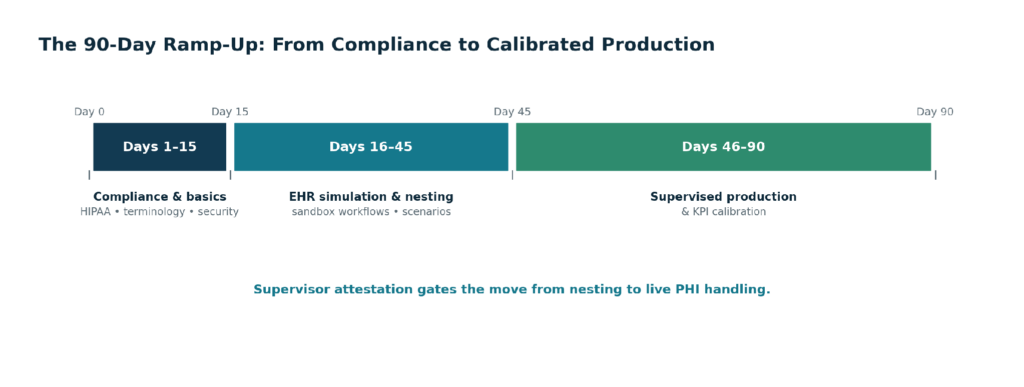
Figure 4. A 90-day ramp-up, from compliance basics to calibrated production.
How Do You Ensure the Training Translates Into Operational Performance?
Shift the focus from “training hours” to “performance outcomes.” A successful program shows up in predictable metrics — time-to-proficiency, error-rate reduction, and compliance pass rates — within the first 60 days of go-live, which is exactly where optimized programs separate from generic ones.
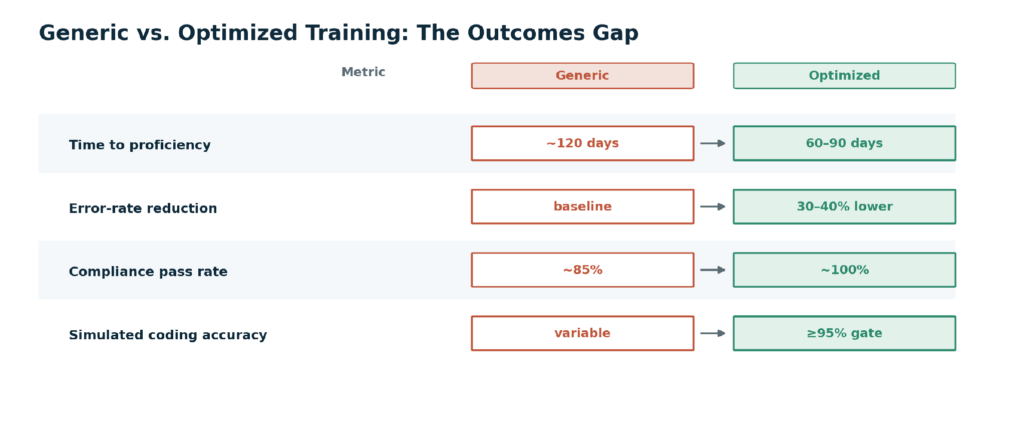
Figure 5. The measurable outcomes gap between generic and optimized training.
“The true measure of a Philippine healthcare BPO is not the scale of its training facility, but the maturity of its clinical intelligence and the rigor of its compliance infrastructure. We advise our clients to look beyond the certificate and verify that the provider’s training is inextricably linked to their internal audit trails and quality-assurance metrics.”
— John Maczynski, CEO, PITON-Global
What Does Training-Led Improvement Look Like in Practice?
It closes the “scaling gap” — the shortfall a hospital hits when volume outruns specialized skill. The representative composite below shows a hospital network reverse a denial surge by engaging a provider whose in-house academy trains strictly on U.S. revenue cycle management.
Consider a mid-sized U.S. hospital network facing a sharp rise in claim denials, driven by high turnover and thin specialized coding knowledge in its internal back office. Working through an advisory partner, it engaged a Philippine provider with an in-house RCM training academy. The provider ran a custom six-week, coding-intensive program that required every agent to clear a strict accuracy threshold in simulated environments before handling live patient records.
Within four months, the network cut denial rates meaningfully and lowered its annual labor costs while maintaining full HIPAA compliance. The figures are an illustrative composite rather than a single named client, but the lesson is clear: a disciplined accuracy gate before go-live is what converts training into financial results.
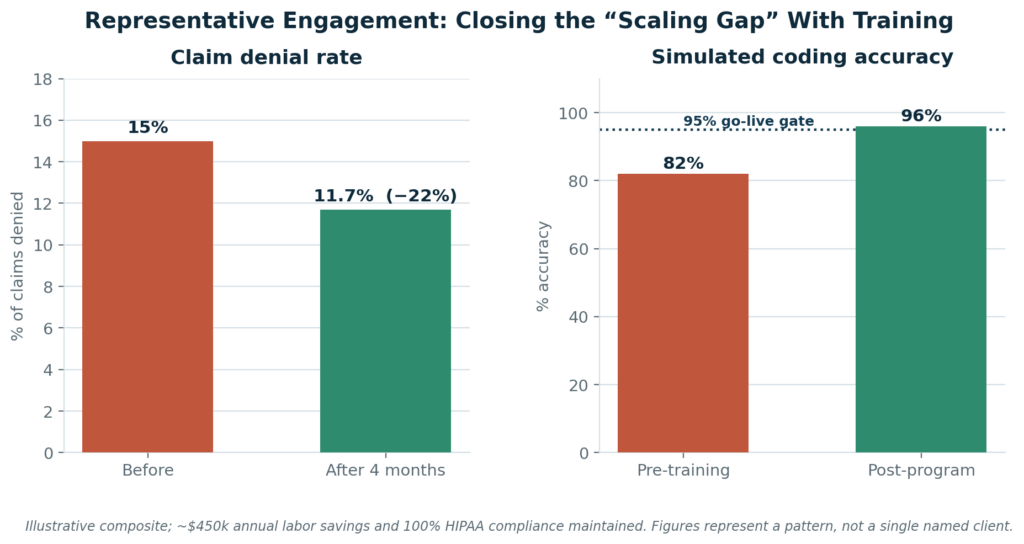
Figure 6. Representative training-led revenue-cycle improvement (illustrative composite).
What Role Does PITON-Global Play in the Philippine Outsourcing Ecosystem?
PITON-Global acts as a strategic buffer between an organization and the inherent risks of global outsourcing. As an advisory consultancy with a network of 100+ vetted, specialized providers — each audited for capabilities including their ability to execute rigorous training — it ensures a partner’s methodology, compliance posture, and culture align with the client’s clinical standards.
Who Is PITON-Global?
PITON-Global is an advisory firm focused on the Philippine healthcare BPO market. Rather than reselling vendors, it evaluates providers — including the depth and rigor of their training academies — against each client’s specific clinical and compliance standards.
How Does PITON-Global Differ from Traditional Outsourcing Brokers?
Brokers refer vendors for commission; PITON-Global is advisory-led and vendor-neutral. It reduces risk by verifying that a provider’s training methodology, compliance posture, and culture align with the client’s clinical standards before any commitment is made.
How Does PITON-Global’s Network of 100+ Vetted Philippine BPO Providers Benefit Organizations?
A vetted network of more than 100 specialized providers lets organizations quickly find partners with proven training academies, sandbox EHR labs, and mature compliance infrastructure — filtering out generalist vendors that lack the curriculum depth hospital work demands.
How Does PITON-Global’s Advisory-Led Vendor Matching Process Work?
It audits training readiness in three stages: inspecting the academy (curriculum, sandbox labs, simulation depth, and trainer credentials); verifying compliance infrastructure (HITRUST / SOC 2, forensic audit trails, and recertification cadence); and aligning training to the client’s KPIs, audit trails, and QA — then monitoring performance post-go-live.
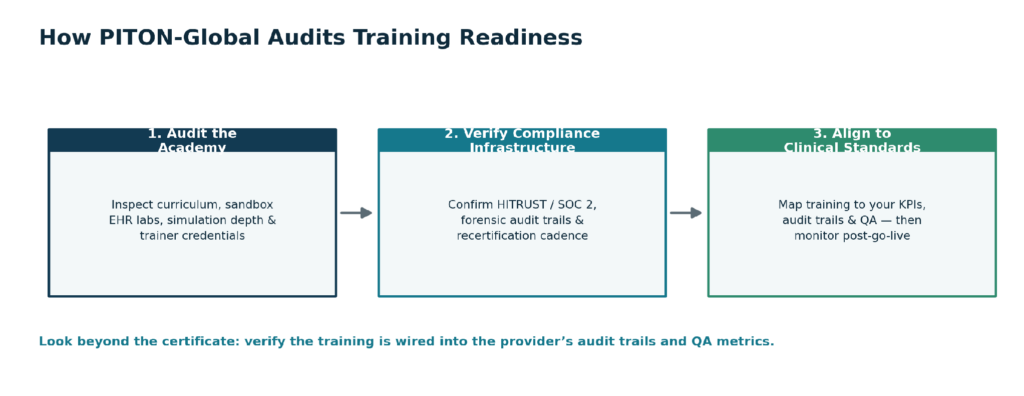
Figure 7. How PITON-Global audits a provider’s training readiness.
Why Do Organizations Use PITON-Global?
Organizations partner with PITON-Global to de-risk outsourcing and verify that training is wired into a provider’s audit trails and QA metrics — not just documented on a certificate. The result is a workforce prepared to protect PHI and perform from day one, with outcomes measured rather than assumed.
Frequently Asked Questions
Common questions concern verifying HIPAA-compliant training, internal vs. outsourced delivery, ramp-up timeframe, AI’s limits, and retraining cadence. The concise answers below address each.
How do we verify that an offshore training program is truly HIPAA-compliant?
Request a recognized third-party audit report — such as HITRUST or SOC 2 Type II — and review documentation for forensic audit trails and a defined HIPAA-refresher schedule.
Should we handle training internally or outsource it to the BPO?
A “train-the-trainer” hybrid works best: your subject-matter experts build the core clinical modules, while the BPO provides pedagogical expertise, infrastructure, and local monitoring.
What is the typical ramp-up timeframe for new healthcare staff?
In a specialized clinical BPO, a 60–90-day ramp-up is standard, with roughly the first 30 days dedicated to intensive training and nesting. That cadence also sets how quickly a provider can scale headcount.
Can AI replace the need for extensive manual training?
No. AI handles predictable, low-complexity tasks well, but the gray-area cases that remain require the clinical judgment of highly trained human specialists.
How often should we require retraining?
Best practice pairs quarterly micro-learning sessions with annual comprehensive recertification on compliance, security, and changes in medical coding or hospital policy — a rhythm that also underpins workforce stability and service continuity.