

On this page
- Key Takeaways
- What Core Cost Components Comprise the True Total Cost of Ownership?
- How Do Implementation Spikes and Hidden Risks Impact First-Year Capital Outlay?
- How Does Scale Compress Governance and Operational Overhead Over 36 Months?
- What Does Effective TCO Management Look Like in Practice?
- How Does PITON-Global Help Enterprises Control Three-Year TCO?
- Frequently Asked Questions
Enterprise buyers should model a fully loaded three-year TCO per seat that covers direct labor, statutory benefits, infrastructure, technology, and governance—not just the hourly rate card. Direct base salaries make up only part of total spend, and Year 1 carries a transition premium that normalizes in Years 2 and 3; a cost calculator with nothing hidden is the fastest way to see the fully loaded per-seat figure for a given function, headcount, and coverage.
Key Takeaways
- Labor is only the baseline: Direct base wages are the largest single component of true TCO but far from all of it. Mandatory statutory contributions, night differentials, hardware, security compliance, and supervisory oversight represent the remainder.
- Year 1 implementation premium: Expect Year 1 expenditure to run materially above steady state due to transition management, knowledge transfer, secure telecom integration, and initial onboarding buffers.
- Scale compresses overhead: Expanding from a 10-FTE pilot to a 50+ FTE program compresses fixed governance, management, and administrative overhead meaningfully per unit over 36 months.
- Risk-adjusted pricing protects capital: Failing to model mandatory statutory accruals—13th-month pay, holiday premiums, and the night shift differential—is the primary driver of budget variance in offshore programs.
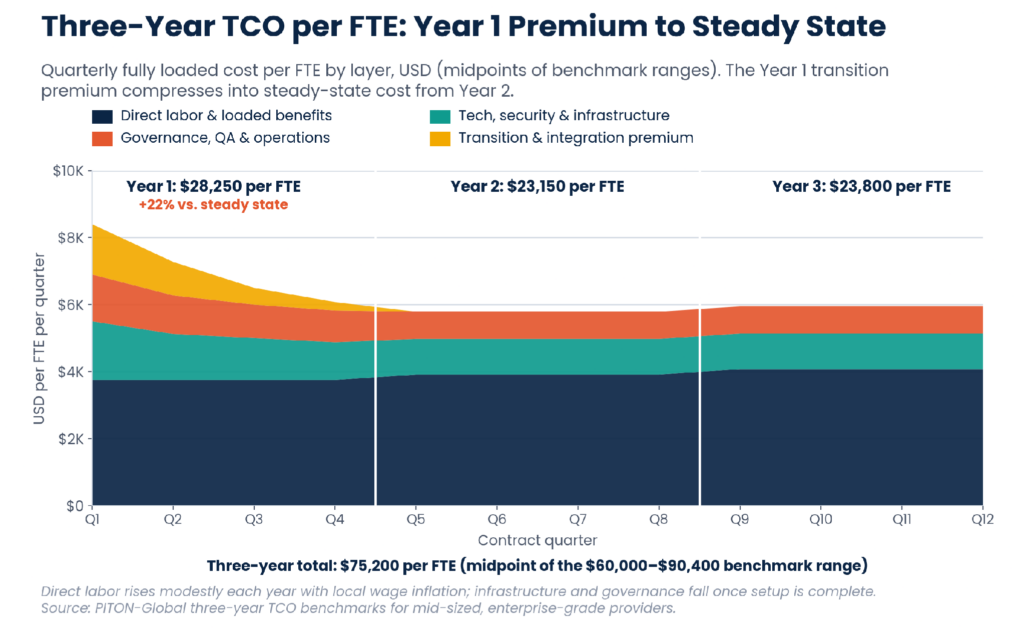
Figure 1. Three-year TCO per FTE by cost layer: an elevated Year 1 transition premium compresses into steady-state operating cost in Years 2 and 3 (midpoints of benchmark ranges).
What Core Cost Components Comprise the True Total Cost of Ownership?
A defensible three-year model separates Philippine BPO spend into three layers: direct labor and loaded statutory benefits (the largest), infrastructure, technology, and facilities, and governance, quality, and operations, plus a one-time Year 1 transition and integration premium per FTE. Unmapped hourly rate cards hide the last three.
Basic hourly rate cards rarely map to these layers, which is why budgets built on them drift. The same three layers apply whether the program is airline passenger support or publishing customer operations. A defensible model itemizes each of the following:
- Direct labor and loaded benefits (the largest layer): Base compensation plus the mandatory 13th-month bonus (an extra month of basic salary required under Presidential Decree No. 851), night differential pay for US and European shift alignment, holiday premiums, and statutory employer contributions to the Social Security System (SSS), PhilHealth, and the Pag-IBIG Fund.
- Infrastructure, technology, and facilities (the second layer): Class-A corporate real estate, redundant fiber-optic internet feeds, dual-generator power backup, endpoint device refresh cycles, SOC 2 and PCI DSS compliance architecture, and localized enterprise security protocols.
- Governance, quality, and operations (the third layer): Operational supervision by team leaders and QA analysts, specialized recruitment funnels, HR support, legal counsel, and ongoing client management oversight.
The table below sets out benchmark ranges for each layer by contract year. Labor rises modestly each year with local wage inflation while infrastructure and governance fall once setup is complete, so the three-year total per FTE comes to less than three times the Year 1 figure.
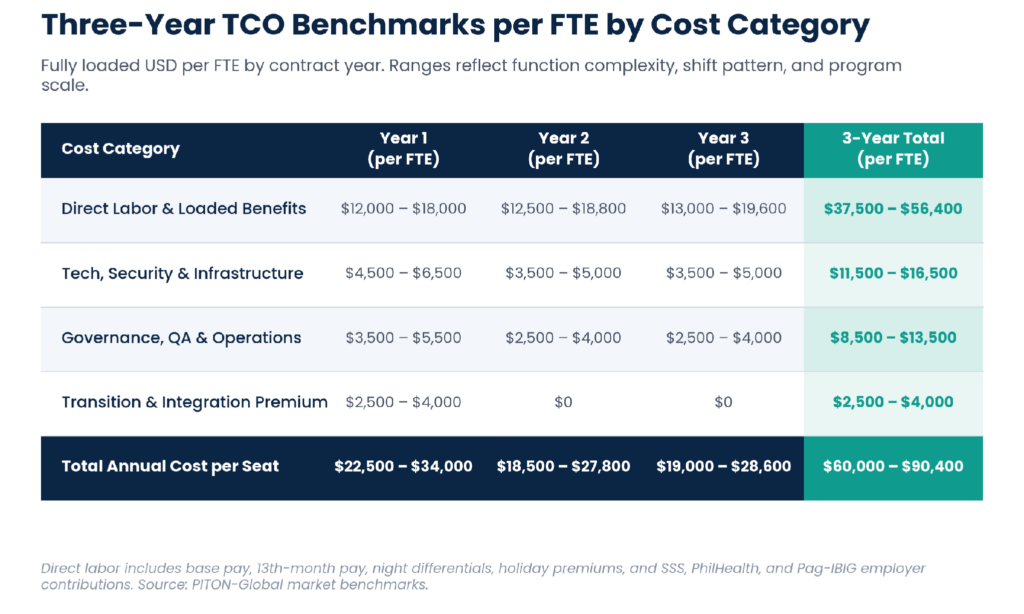
Figure 2. Three-year TCO benchmarks per FTE by cost category and contract year.
Set against an onshore US position, the layered view is where the savings become visible. A fully loaded onshore role, once compensation, statutory benefits, facilities, and management are included, costs a multiple of the equivalent Philippine seat over three years even after the offshore transition premium is counted—a reduction that comes as much from eliminated facilities and overhead as from the wage delta.
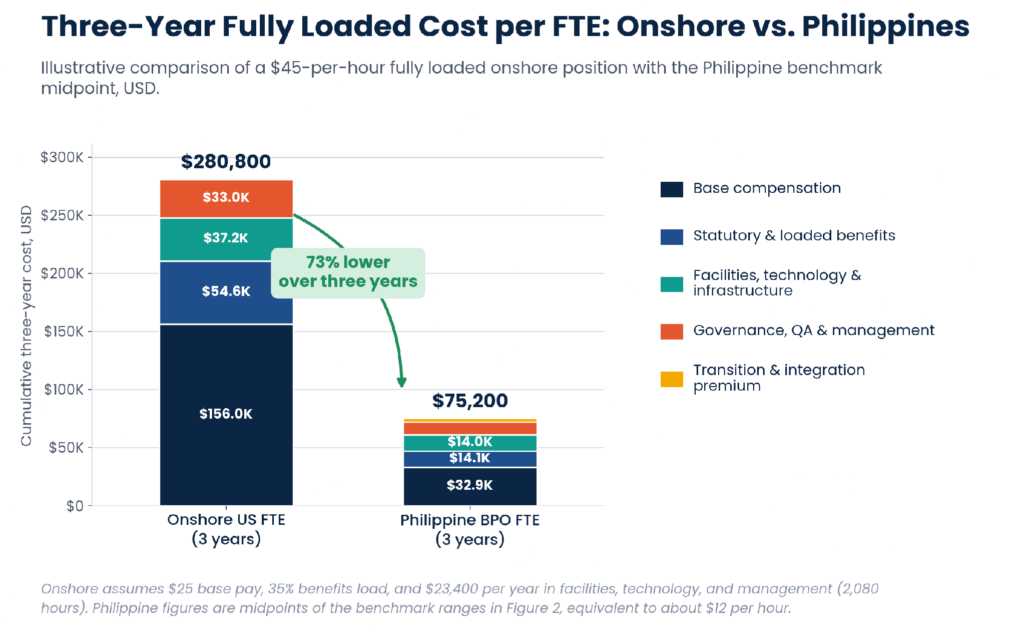
Figure 3. Illustrative three-year fully loaded cost per FTE, onshore US versus Philippine BPO, by cost layer.
How Do Implementation Spikes and Hidden Risks Impact First-Year Capital Outlay?
Year 1 runs materially above steady state because enterprise-grade operations require non-recurring spend: dedicated MPLS or VPN tunnels, endpoint security, directory integration, and SOC 2 Type II or PCI DSS attestation; double payroll during shadow-period knowledge transfer; and specialized recruitment funnels with ramp buffers. Assuming a flat invoice from Day 1 is the most common procurement oversight.
Assuming a flat monthly invoice from Day 1 is the most frequent financial oversight in enterprise outsourcing procurement. The Year 1 premium per FTE, plus elevated first-year infrastructure and governance charges, is the price of establishing enterprise-grade operations, and it concentrates in the first two quarters. Three items account for most of it.
System Integration and Security Auditing
Provisioning dedicated MPLS or VPN tunnels, endpoint security compliance, Active Directory integration, and specialized SOC 2 Type II or PCI DSS attestation. For regulated workloads such as healthcare or payments these costs are non-negotiable, and they should be itemized in the contract rather than absorbed into an inflated hourly rate.
Knowledge Transfer and Training Accruals
Funding double payroll during shadow-period training, when onshore teams and offshore cohorts overlap to establish baseline SLA performance. A four-to-eight-week overlap is typical, and the accrual should be booked as a one-time transition cost rather than spread invisibly across Year 1 invoices.
Recruitment and Ramp Buffer
Sourcing candidates for high-complexity roles requires specialized recruitment funnels to guarantee early-stage retention and reduce early attrition costs. Providers that over-hire modestly for the first training wave protect go-live SLAs, and that buffer should appear in the model as a Year 1 line rather than as a surprise.
In 2026, enterprise buyers cannot evaluate outsourcing purely on hourly seat rates. When you factor in mandatory benefits, night differentials, and infrastructure, a $14/hour specialist in Manila replaces a $45/hour onshore position while absorbing all facilities, hardware, and compliance burden. The true savings aren’t just in the wage delta—they are in the eliminated corporate overhead.
— John Maczynski, CEO, PITON-Global
How Does Scale Compress Governance and Operational Overhead Over 36 Months?
Non-labor TCO carries high fixed costs that dilute as headcount grows. Scaling from a 10-FTE pilot to a 50+ FTE footprint spreads supervisors, QA analysts, and site leadership across a broader base, cutting per-FTE governance expense meaningfully and tilting the cost mix toward direct labor, lowering effective TCO per transaction in Years 2 and 3.
At small scale, a team leader, a QA analyst, HR support, and account management sit on top of a handful of agents, so fixed governance can represent a disproportionate share of per-FTE TCO. At 50 or more seats the same functions are amortized across five times the headcount, and governance falls sharply while operations and technology ease as well. Direct labor becomes a larger share of the mix—not because agents cost more, but because everything around them costs less per unit.
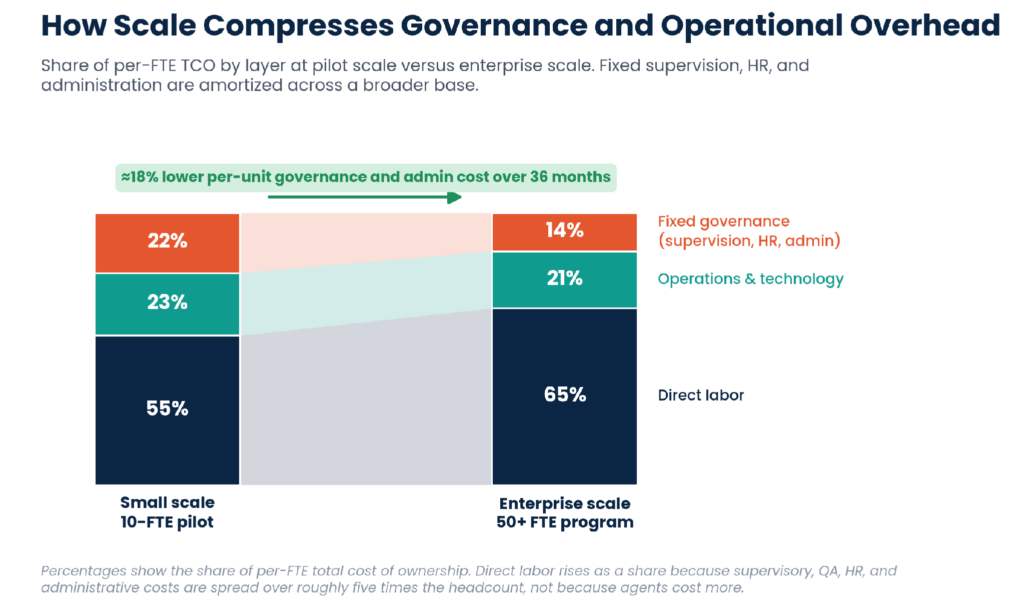
Figure 4. Per-FTE TCO composition at pilot scale versus enterprise scale: fixed governance and operations overhead compress as headcount grows.
The practical implication for a three-year model is that pilot-phase unit economics understate steady-state returns. Buyers should negotiate management ratios, QA coverage, and administrative fees on a sliding scale tied to headcount tiers, so that overhead compression is captured contractually rather than left to the provider’s discretion—the kind of clause a BPO performance-management framework should carry.
What Does Effective TCO Management Look Like in Practice?
Effective TCO management models every Year 1 setup fee, connectivity cost, training buffer, and management ratio before signing. A US healthtech firm scaling HIPAA-compliant revenue cycle operations locked in a fixed three-year cost per FTE for a 40-FTE team, achieved a steep reduction versus onshore labor, and cleared billing backlogs materially within 90 days.
Client Challenge
A rapidly growing US healthtech firm needed to scale its patient eligibility verification and revenue cycle management (RCM) operations while maintaining strict HIPAA compliance and zero billing backlogs. Initial vendor bids spanned a wide hourly range, creating procurement uncertainty about true long-term expense.
Vendor Selection
PITON-Global audited the client’s technical and security requirements against its network of more than 100 pre-vetted Philippine service providers and identified a high-security BPO partner specializing in healthcare workflows, with proven retention strategies and deep clinical domain expertise.
Solution Implemented
A fully compliant 40-FTE team was deployed under a transparent, fully loaded contract structure. All Year 1 setup fees, secure connectivity costs, training buffers, and management ratios were modeled upfront, so the three-year invoice profile was known before go-live.
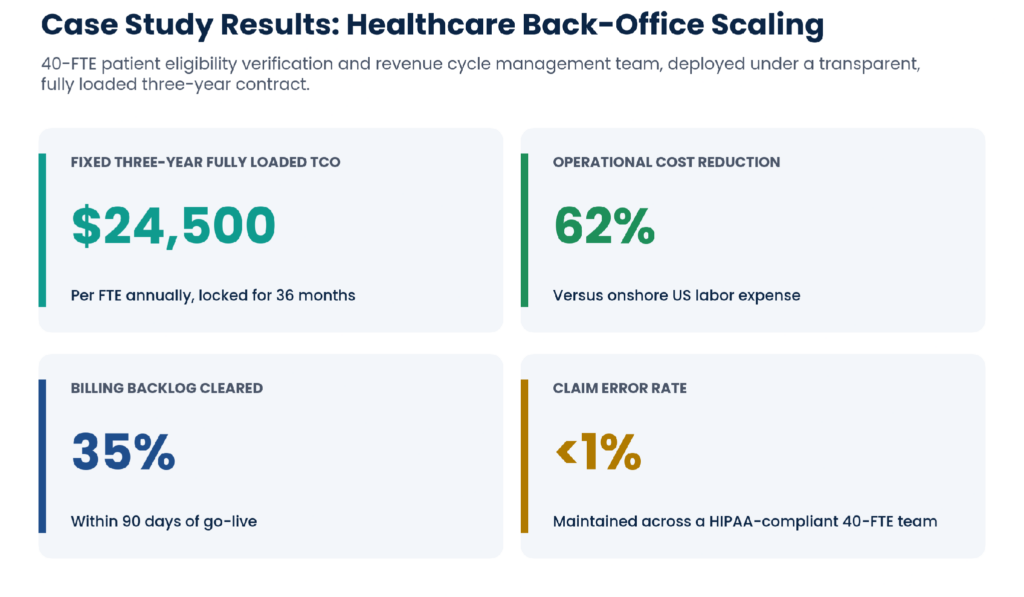
Figure 5. Quantifiable outcomes of the healthcare back-office scaling program.
Outcomes and Lessons
The program established a fixed three-year fully loaded cost per FTE, achieved a steep operational cost reduction compared with onshore US labor expense, cleared billing backlogs materially within 90 days, and kept claim errors to a negligible rate. The lesson: factoring implementation overhead and compliance costs directly into the Year 1 financial model prevents unexpected mid-contract renegotiations and delivers immediate balance-sheet stability. The wide bid spread also disappeared once every bidder was required to quote on the same fully loaded basis.
How Does PITON-Global Help Enterprises Control Three-Year TCO?
PITON-Global is an advisory firm and BPO selection partner embedded in the Philippine outsourcing market. It maintains a vetted network of more than 100 top-performing call center and back-office providers across Manila, Cebu, Clark, and regional hubs, and helps executive teams decode pricing models, evaluate infrastructure, and match requirements with proven partners—without advisory fees to the buyer.
Who Is PITON-Global?
PITON-Global is an advisory firm and BPO selection partner headquartered in Manila and embedded directly in the Philippine outsourcing market. Led by senior operators with more than 65 years of combined outsourcing leadership, it helps mid-market and enterprise executive teams navigate complex pricing models, evaluate provider infrastructure, and match operational requirements with proven partners across a landscape of more than 1,000 providers.
How Does PITON-Global Differ from Traditional Outsourcing Brokers?
Traditional brokers push single-vendor solutions and earn transactional referral fees, which biases recommendations toward whoever pays. PITON-Global takes an advisory-led, provider-agnostic approach: it evaluates providers independently, benchmarks fully loaded pricing rather than headline rates, recommends on client outcomes and fit rather than provider promotion, and stays engaged through contracting and transition.
How Does PITON-Global’s Network of 100+ Vetted Philippine BPO Providers Benefit Organizations?
Access to more than 100 pre-vetted call center and back-office providers across Manila, Cebu, Clark, and regional BPO hubs lets organizations skip months of discovery and bid normalization. Each provider has already been assessed for infrastructure quality, security posture, statutory compliance, retention performance, and pricing transparency, so buyers compare like-for-like TCO rather than incompatible rate cards.
How Does PITON-Global’s Advisory-Led Vendor Matching Process Work?
The process runs from TCO needs assessment to selection support: establishing the fully loaded baseline, compliance requirements, and three-year volume plan; filtering the vetted network for hub, specialization, and right-sized capacity; delivering a curated shortlist within 48–72 hours with bids normalized to fully loaded TCO; auditing statutory accruals, night differentials, security, and escalator clauses; then supporting site visits, negotiation, and transition oversight.
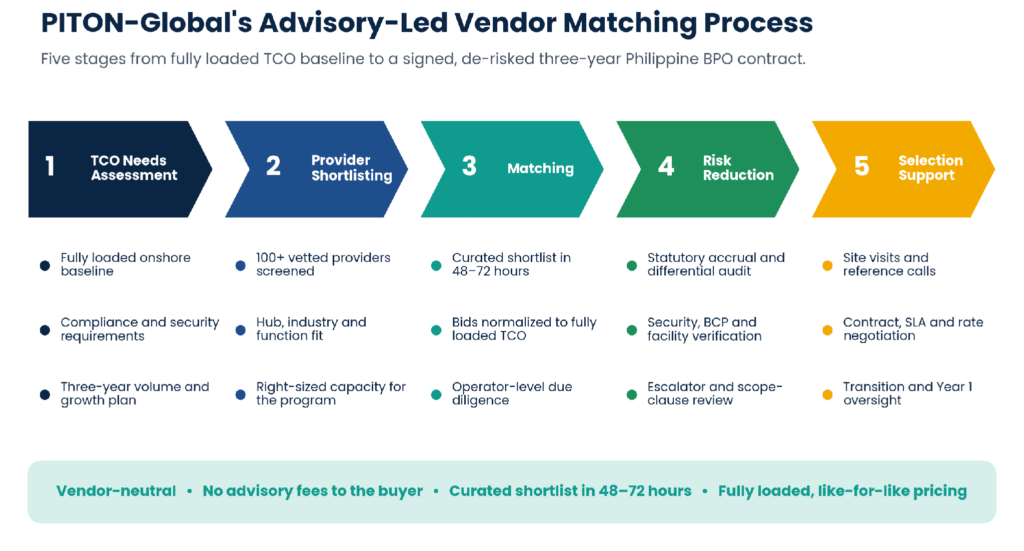
Figure 6. PITON-Global’s five-stage advisory-led matching process, from TCO baseline to signed contract.
Why Do Organizations Use PITON-Global?
Organizations use PITON-Global to convert a scattered range of hourly bids into a predictable three-year fully loaded cost, to avoid the statutory and infrastructure surprises that drive mid-contract renegotiation, and to launch faster with providers that treat the program as strategic. Because the service carries no advisory fee for the buyer, it adds expert due diligence at the point where TCO errors are most expensive.
Frequently Asked Questions
What mandatory statutory employee costs must be included in a Philippine BPO financial model?
Models must incorporate Social Security System (SSS) employer contributions, PhilHealth medical insurance premiums, Pag-IBIG housing fund contributions, mandatory 13th-month pay under Philippine law, and night shift differentials for evening schedules. Together these add a substantial layer above base salary depending on shift pattern, before holiday premiums.
How do night shift differentials impact overall program cost?
Philippine labor law mandates a minimum premium of one-tenth of the hourly wage for hours worked between 10 PM and 6 AM local time. Competitive BPOs targeting US or European business hours typically pay above that floor to attract and retain top-tier talent, so the differential should be modeled on the full night-hour share of each schedule.
Why is Year 1 TCO higher than Years 2 and 3?
Year 1 includes non-recurring expenditure such as secure network integration, VPN/MPLS provisioning, specialized compliance attestation, initial recruitment funnels, and overlapping double payroll during knowledge transfer, which together lift Year 1 materially above steady-state cost.
Is currency fluctuation a major financial risk over a three-year contract?
Most enterprise BPO agreements in the Philippines are contracted in US dollars, which shields buyers from peso volatility and locks in predictable unit pricing across the contract. The residual exposure sits with the provider, which is why annual escalator clauses should be capped at signing.
At what team size does a captive center become more cost-effective than a managed BPO provider?
For programs under 150–200 FTEs, managed BPO services offer superior TCO by avoiding corporate setup, local entity maintenance, facility leases, and administrative management overhead. Captive centers generally require 250 or more FTEs to reach financial breakeven.