
On this page
- Key Takeaways
- What Does a Truly Fully Loaded Hourly Rate Include Across Premium Philippine Providers?
- How Do Global Regions and Domestic Municipalities Compare in Real Financial Terms?
- Why Is the Shift From Simple Labor Arbitrage to Intelligence Arbitrage Rewarding Enterprise Buyers?
- How Can Executives Systematically Audit Offshore Unit Economics?
- What Do These Savings Look Like in a Real Engagement?
- What Is PITON-Global’s Role in the Outsourcing Ecosystem?
- What Are the Most Common Questions About Call Center Outsourcing Costs?
Companies can realistically achieve net cost savings of 60–75% by outsourcing call center operations to the Philippines versus maintaining an onshore US team. Fully loaded hourly expenditures fall from $35–$55 domestically to an all-inclusive $12–$18 range, while integrating advanced automated workflows and specialized talent pools.
Key Takeaways
- Substantial TCO reductions: all-inclusive financial savings typically stabilize between 60% and 75% once fully loaded onshore expenditures are audited honestly.
- Transparent pricing frameworks: elite-tier providers operate inside a $12–$18 hourly window that bundles base salaries, overhead, and digital tool configurations.
- The intelligence dividend: modern efficiency is measured through optimized cost-per-resolution metrics, not raw human operational hours.
- Geographic cost scaling: sourcing across provincial tier-2 and tier-3 ecosystems yields an added 15–25% budget optimization over capital regions.
- Cheap rates carry hidden costs: budget vendors with 50–70% attrition quietly return their headline savings through retraining cycles and degraded customer experience.
- Audit before migrating: a structured unit-economics review — baseline TCO, friction mapping, tech compatibility, piloted transition — protects the savings on paper from evaporating in practice.
What Does a Truly Fully Loaded Hourly Rate Include Across Premium Philippine Providers?
A sustainable, corporate-grade inbound solution in the Philippines stabilizes at a fully loaded $12–$18 per hour — a unified rate covering agent salaries, statutory night-shift differentials, mandatory 13th-month payroll, comprehensive health benefits, continuous training, facilities, and technology. There are no platform upcharges, administrative seat expenses, or separate technical support fees.
Enterprise procurement teams that look past unrealistic promotional entry rates uncover this real operating baseline quickly. The distinction matters because the fully loaded structure is what makes the rate durable: a provider charging enough to fund statutory benefits and professional development retains its people, while budget vendors quoting below-market rates finance the discount through under-investment — driving attrition of 50–70% that degrades the long-term customer experience and silently returns the savings through endless retraining. The anatomy of a representative premium rate shows where every dollar goes:
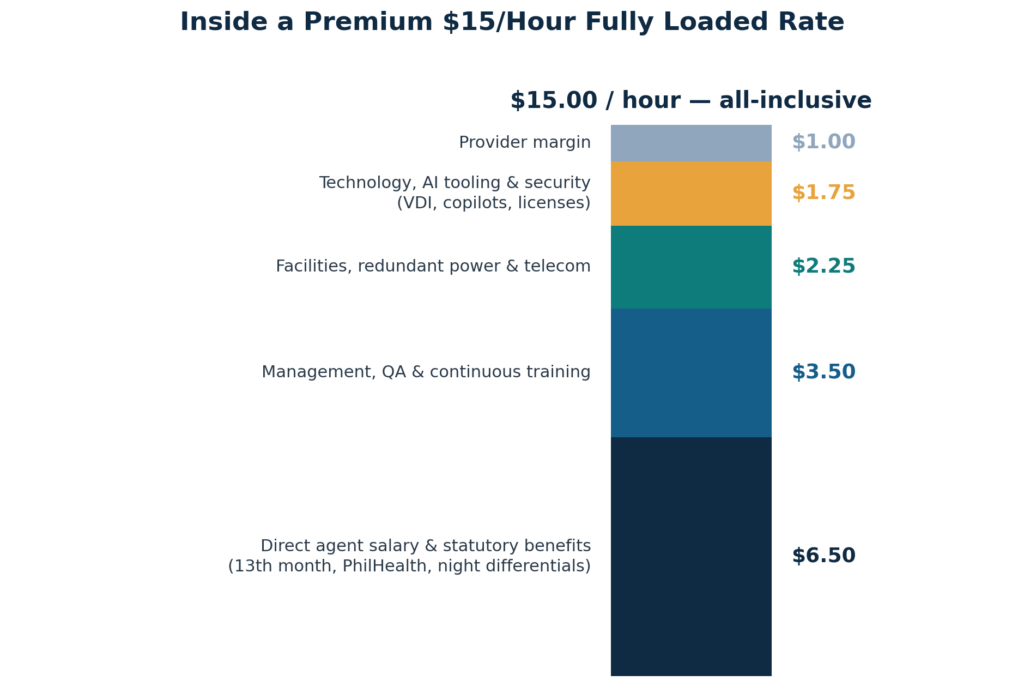
Figure 1. Anatomy of a premium $15/hour fully loaded rate: direct labor burdens, management, facilities, technology, and margin.
How Do Global Regions and Domestic Municipalities Compare in Real Financial Terms?
Domestic US operations run $35–$55 per hour in total cost of ownership; Metro Manila delivers the same seat for $12–$18; and provincial tier-2/3 cities compress it further to $10–$14. Expanding beyond the capital region into provincial tech zones cuts expenses another 20–30% while accessing highly stable local labor pools.
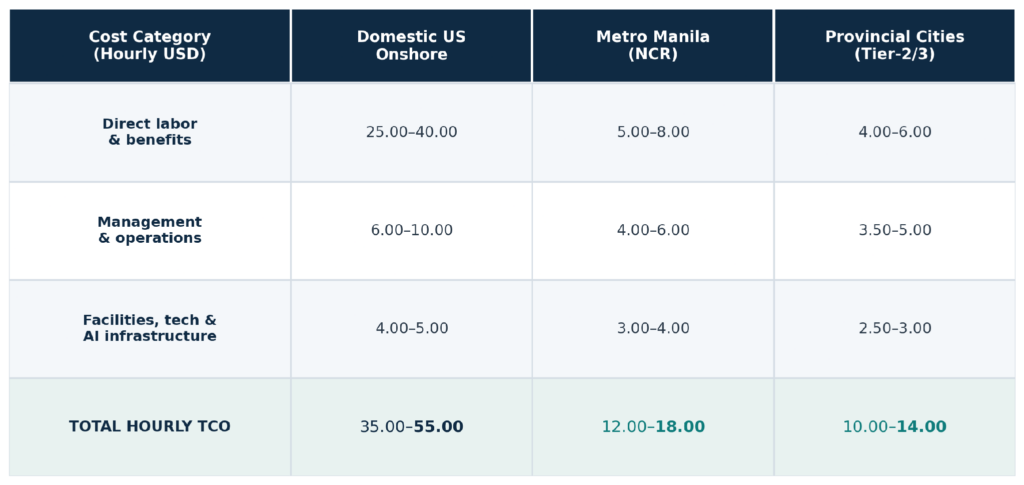
Figure 2. Hourly cost-of-ownership categories compared: domestic US onshore, Metro Manila, and provincial tier-2/3 cities.
The geography inside the Philippines matters as much as the offshore decision itself. Central business zones like Makati and Bonifacio Global City are ideally suited for complex, technical tier-2 customer support, where the densest senior talent commands a premium within the national band. High-volume transactional queues, by contrast, thrive in emerging provincial tech centers — Clark, Cebu, Iloilo, Davao — where labor competition is lower, attrition is structurally more stable, and the same quality standards cost 20–30% less. The index below places representative US metros and Philippine hubs on a single scale:
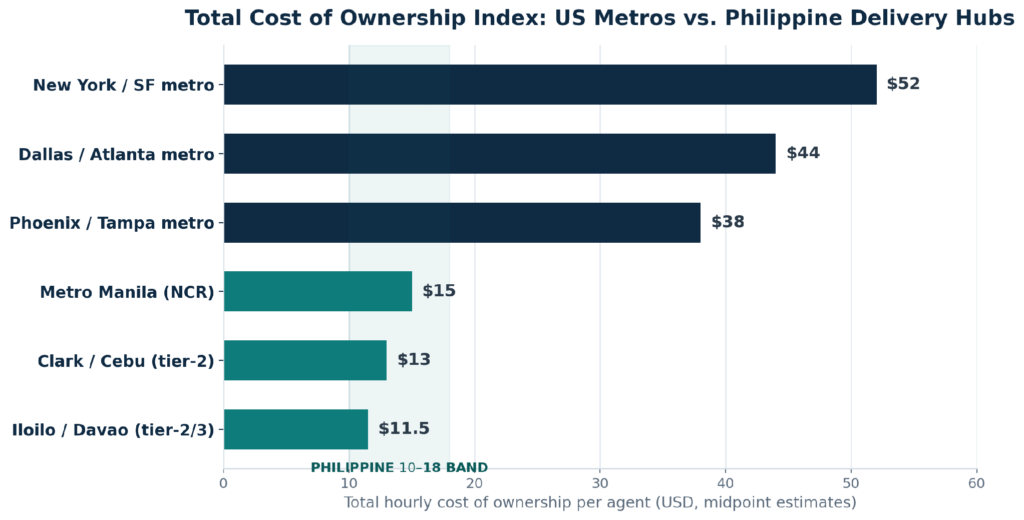
Figure 3. Total cost of ownership index (midpoint estimates): major US metros versus Metro Manila and emerging provincial hubs.
Why Is the Shift From Simple Labor Arbitrage to Intelligence Arbitrage Rewarding Enterprise Buyers?
Evaluating engagements strictly on hourly rates creates a structural conflict of interest: a provider selling raw human hours has no incentive to deploy tools that shorten interactions or resolve issues on first contact. The industry has shifted to an intelligence-driven model measured on total cost per resolution — where slightly higher rates routinely produce dramatically lower costs.
The arithmetic favors capability over cheapness. An agent equipped with modern system copilots, real-time knowledge retrieval, and automated after-call work can resolve several times the ticket volume of an agent working bare-handed — so the metric that actually governs budget outcomes is resolutions per dollar, not dollars per hour. Buyers structuring agreements around cost-per-resolution and first-contact-resolution targets align the provider’s profit motive with their own efficiency goals, converting the vendor from a headcount reseller into a continuous-optimization partner.
“Firms that prioritize low hourly costs over operational quality often trap themselves with inefficient systems,” states John Maczynski, CEO of PITON-Global. “Real enterprise value comes from combining experienced, highly skilled human agents with advanced digital workflows. When an agent uses modern system copilots to resolve six tickets an hour instead of two, the true cost per resolution drops by half, even if the base hourly rate is slightly higher.”
How Can Executives Systematically Audit Offshore Unit Economics?
The audit runs in four phases: establish the baseline domestic TCO, identify hidden operational friction, map vendor technology compatibility, and execute a targeted performance transition through multi-tiered pilot waves. Completing the sequence before changing providers ensures cost-containment goals match actual vendor performance.
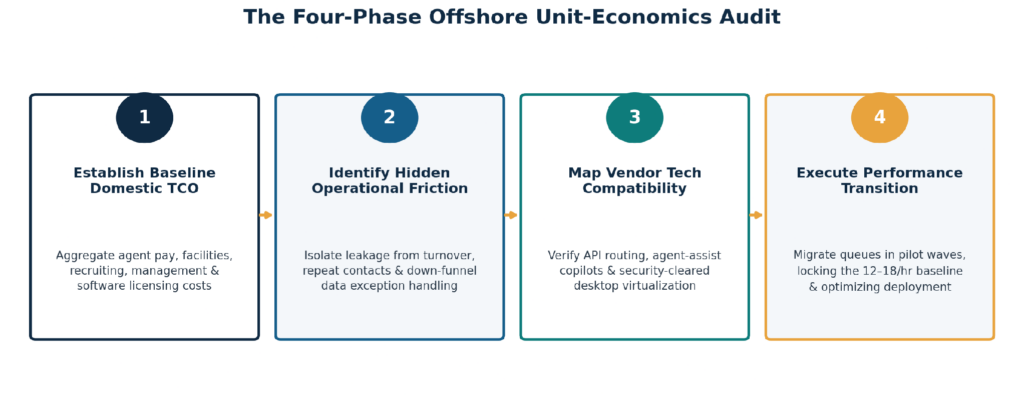
Figure 4. The four-phase offshore unit-economics audit preceding any provider change or infrastructure upgrade.
Phase one aggregates the true domestic operational expenditure — direct hourly agent pay, facilities, recruiting pipelines, management overhead, and software licensing — since headline salary comparisons systematically understate onshore costs. Phase two isolates financial leakage from high internal turnover, repeat contact frequencies, and down-funnel data exception handling, quantifying friction the accounting system never labels. Phase three verifies that the prospective partner’s technical architecture seamlessly routes modern API queries, agent-assist copilots, and security-cleared desktop virtualization frameworks. Phase four then migrates processing queues in multi-tiered pilot waves — locking in the specialized $12–$18/hour baseline while optimizing localized agent deployment layers against live volumes rather than projections.
What Do These Savings Look Like in a Real Engagement?
In a representative engagement, a high-growth fintech whose domestic support costs scaled linearly with user growth migrated to a premium tier-2 Philippine partner with automated diagnostic tooling. Monthly support expenditure fell 64% immediately, customer satisfaction rose from 78% to 93%, and average resolution cycles shortened 41%.
Client Challenge
The rapidly growing financial technology enterprise faced unsustainably high customer support costs, with domestic spending scaling linearly alongside user growth — every new customer cohort demanded proportionally more expensive onshore capacity.
Vendor Selection Process
The organization engaged PITON-Global to move away from high-overhead domestic delivery models and evaluate specialized, compliance-focused service providers across the Philippines.
Solution Implemented
- Leveraged PITON-Global’s audited ecosystem of more than 100 specialized BPO operators to select a premium partner in a tier-2 location.
- Implemented automated diagnostic tools alongside a dedicated customer support team, pairing agents with intelligent routing.
- Structured the engagement around resolution efficiency rather than raw billed hours.
Quantifiable Business Outcomes
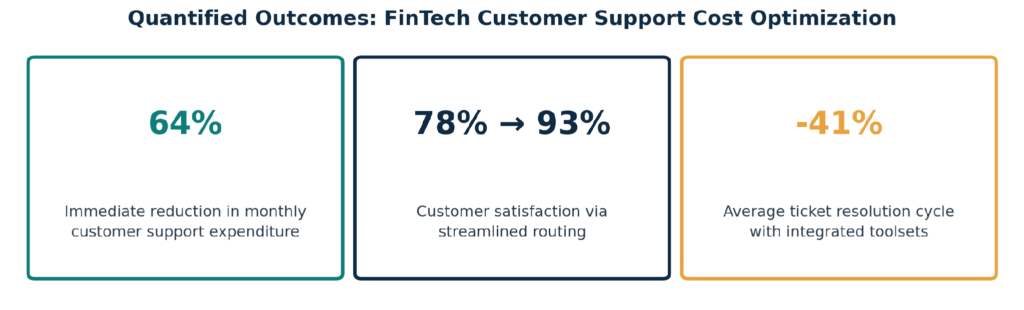
Figure 5. Measured results from the fintech customer support cost optimization.
Lessons Learned
Scaling customer support sustainably requires shifting away from basic staffing models toward technology-enabled, localized service environments. The savings came not from the cheapest possible seat, but from the combination of tier-2 economics and automation-ready delivery.
What Is PITON-Global’s Role in the Outsourcing Ecosystem?
PITON-Global is an advisory-led outsourcing consultancy — not a traditional broker — that matches enterprise buyers with Philippine partners meeting their exact technical, security, and linguistic requirements. Its continuously audited network of more than 100 verified providers eliminates hidden middleman fees and shortens evaluation cycles, at no cost to the buyer.
Who Is PITON-Global?
PITON-Global is a Philippine-focused BPO advisory firm led by executives with decades of institutional outsourcing leadership. Within the Philippine market it acts as an independent guide for enterprise buyers: defining requirements, mapping the provider landscape across Metro Manila and provincial hubs, and steering the selection of call center and back-office partners. Its expertise spans regional pricing benchmarks, provider technical maturity, security compliance, and the commercial structures that make offshore savings durable.
How Does PITON-Global Differ from Traditional Outsourcing Brokers?
Traditional brokers and generic web directories are commission-driven, promoting the operators that pay them and introducing hidden middleman fees into the pricing chain. PITON-Global operates an advisory-led model built on independent provider evaluation — objectively assessing technical infrastructure, security posture, attrition profiles, and management depth. Recommendations rest solely on alignment with the client’s requirements, keeping the focus on client outcomes rather than provider promotion.
How Does PITON-Global’s Network of 100+ Vetted Philippine BPO Providers Benefit Organizations?
The diverse Philippine landscape features hundreds of call center operations with widely different technical, security, and management capabilities — and unverified RFPs routinely expose buyers to compliance and operational risk. PITON-Global maintains a continuously audited ecosystem of more than 100 verified providers spanning customer care, technical support, and back-office services across Metro Manila, Clark, Cebu, and emerging provincial hubs. Because diligence on certifications, infrastructure, and pricing integrity has already been performed, buyers compress vendor discovery and qualification from months into weeks.
How Does PITON-Global’s Advisory-Led Vendor Matching Process Work?
Engagements follow a structured five-stage methodology. A requirements assessment establishes the buyer’s technical, security, and linguistic needs. PITON-Global then filters its network to a shortlist with demonstrated strength in the relevant domain and geography, scores each provider against the client’s capability, culture, and scale criteria, and layers in risk-reduction measures — site diligence, security audits, and reference validation — before supporting evaluation, pricing benchmarking, and contract finalization.
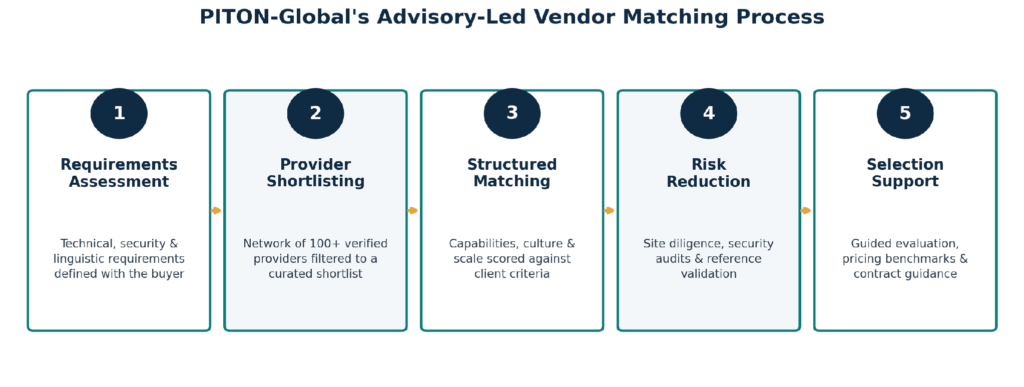
Figure 6. PITON-Global’s five-stage advisory-led vendor matching process.
Why Do Organizations Use PITON-Global?
Enterprise buyers engage PITON-Global to neutralize selection risk, secure transparent pricing, and accelerate vendor decisions. The advisory-led process replaces directory guesswork with objective evaluation, eliminates hidden fees and broker markups, and provides strategic guidance from initial assessment through contract signature — ensuring the realized savings match the projected 60–75%, at zero advisory cost.
What Are the Most Common Questions About Call Center Outsourcing Costs?
Buyers most often ask about hidden fees in cheap providers, how English proficiency affects efficiency, data security, transition timelines, statutory benefits in pricing, and how seasonal surges affect rates. The answers below reflect established practice among premium Philippine providers.
What are the main hidden fees associated with cheap call center providers?
Budget operations often separate basic hourly billing from critical software licenses, telecom trunks, recruitment backfill costs, and mandatory shift premiums — line items that premium providers bundle into the all-inclusive rate.
How does the native English proficiency of Philippine professionals impact resolution efficiency?
High cultural alignment and language fluency ensure clear customer communication, directly reducing average handle times and avoiding the costly friction of repeat contacts and escalations.
Is customer data fully secure when outsourcing customer care workflows?
Premium providers maintain strict data security through formal SOC 2 Type II certifications, cleanroom physical environments, and secure virtual desktop infrastructure that keeps sensitive data off local machines.
What is the standard timeframe required to transition a call center operation offshore?
A comprehensive implementation lifecycle — secure technical integration, process mapping, and agent training — typically requires 45 to 60 days to launch smoothly.
How do statutory benefits affect the overall contract pricing structure?
Top-tier providers build local statutory mandates — including PhilHealth, Pag-IBIG, and 13th-month bonuses — directly into their hourly rates, guaranteeing pricing transparency and workforce stability.
How do seasonal volume surges affect fully loaded hourly rates?
Premium partners provide elastic staffing options that adapt to transaction spikes, allowing scale modifications without altering the contracted core hourly baseline.