
Back
How Do You Govern Liability & the Remote-Intervention Hand-off in AV Support Outsourcing?

By Ralf Ellspermann / 8 June 2026
 Authored by Ralf Ellspermann, CSO of PITON-Global, & 25-Year Philippine BPO Veteran | Executive | Verified by John Maczynski, CEO of PITON-Global, and Former Global EVP of the World's Largest BPO Provider on June 8, 2026

Governing liability in autonomous vehicle (AV) support outsourcing comes down to one explicit, audited line: when the onboard stack maintains vehicle control versus when a remote operator takes control. Outsource execution — monitoring, assistance, indirect control within the ODD — never the safety case. The hand-off workflow, the responsibility matrix, and the audit trail must state who owns what at every moment, so accountability never blurs across the offshore boundary. None of this is legal advice; confirm with qualified counsel.
Key Takeaways
- One explicit line. Govern the exact moment control passes between the onboard stack and the remote operator.
- Execution outsources; accountability doesn’t. The operator keeps the safety case and regulatory filing; the partner executes within it.
- Mode defines responsibility. Assistance and indirect control differ from direct control in risk and regulatory weight.
- Audit the hand-off. Every control transfer is logged, timestamped, and reconstructable after the fact.
Where Exactly Is the Line Between Onboard Control and Remote Control?
At the moment of the hand-off: the onboard stack owns the dynamic driving task within its ODD until a defined trigger passes specific, bounded authority to the remote operator — and that transition must be explicit, logged, and reversible.
Liability in remote AV support turns on a single question asked continuously: who has control right now? For most of a trip the onboard stack maintains the dynamic driving task within its operational design domain. At a defined trigger — an exception the stack cannot resolve confidently — bounded authority passes to a remote operator, who provides assistance or indirect commands and then hands control back when a safe state is confirmed. The governance task is to make that transition explicit and bounded: what triggers it, what authority transfers, and how it reverses. A blurry hand-off is where liability hides; a sharp, logged one is where it is managed.

Figure 1 — The demarcation line is explicit and audited; the operator retains the safety case throughout.
According to John Maczynski, CEO, PITON-Global, “Litigators don’t ask who was cheapest; they ask who had control at 14:32:07 and what authority they held. If your hand-off is documented to the second, you can answer that. If it is a vague handshake between your stack and an offshore desk, you cannot — and that gap is the whole exposure.”
What Does and Does Not Transfer to the Outsourcing Partner?
Execution transfers — monitoring, assistance, and indirect control within the operator’s protocols and ODD. The safety case, the determination of what the vehicle may do, and regulatory accountability do not; they remain the operator’s, and the contract should say so plainly.
A clean engagement separates execution from accountability. The partner executes: it staffs the monitoring, performs assistance and indirect control within defined protocols, and documents what it does. It does not own the safety case, decide what the vehicle is permitted to do, or carry the regulatory filing obligation — those stay with the operator and its qualified advisors. Direct real-time control, where it exists, is a regulated safety-critical mode that sits inside the operator’s safety framework regardless of who staffs the seat. Writing this division into the contract, the protocols, and the audit trail is what keeps accountability from drifting across the offshore boundary.

Figure 2 — Accountability never transfers to the partner; the contract states the division of responsibility plainly.

“The contracts that hold up are the ones where the responsibility matrix is on page one and the hand-off triggers are defined in the protocol, not improvised in the moment. A serious partner insists on that clarity as hard as you do, because the ambiguity is their risk too,” said Ralf Ellspermann, CSO, PITON-Global.
How Do You Make the Hand-off Auditable and Defensible?
With a complete, timestamped record of every control transfer — trigger, authority held, operator actions, and return to autonomy — retained so any event can be reconstructed, and reviewed with qualified counsel against the applicable AV regulations.
Defensibility is a property of the record. Every hand-off should be logged with its trigger, the authority transferred, the operator’s actions, the system state, and the return to autonomy — timestamped and retained so any incident can be reconstructed precisely. That audit trail is what converts a hand-off from a liability into a managed, demonstrable process. The framework should be built and reviewed with the operator’s qualified counsel and compliance function against the applicable AV regulations; a partner experienced operating inside these boundaries makes the whole arrangement cleaner, but the accountability and the legal review remain the operator’s.
“Define the hand-off in the protocol, not in the heat of an incident. The agreements that survive scrutiny are the ones where everyone knew who held control before anything went wrong,” noted John Maczynski, CEO, PITON-Global.
Frequently Asked Questions
Does Outsourcing AV Support Transfer Liability?
No. Execution — monitoring, assistance, indirect control within the ODD — transfers to the partner, but the safety case, the determination of permitted behavior, and regulatory accountability remain the operator’s. The contract should state this plainly.
What Governs the Control Hand-off?
A defined, bounded, and logged transition: what trigger passes authority to the remote operator, what authority transfers, and how control reverts when a safe state is confirmed. Every transfer is timestamped and reconstructable.
How Is the Hand-off Made Defensible?
With a complete, timestamped audit record of every control transfer — reviewed with qualified counsel against applicable AV regulations. This is general information, not legal advice; confirm specifics with your own advisors.
About PITON-Global
PITON-Global helps AV operators source support partners who operate inside a clear liability boundary — documented hand-offs, an explicit responsibility matrix, and full audit trails — from a network of 100-plus leading Philippine BPOs, 20 of them AI-first front-runners. Our leadership carries 6+ decades of combined global outsourcing experience and 25+ years in the Philippines; sourcing is free and obligation-free, and we are not a substitute for your legal counsel.
Achieve sustainable growth with world-class BPO solutions!
PITON-Global connects you with industry-leading outsourcing providers to enhance customer experience, lower costs, and drive business success.
Get Your Top 1% Vendor List
Author
Ralf Ellspermann is a multi-awarded outsourcing executive with 25+ years of call center and BPO leadership in the Philippines, helping 500+ high-growth and mid-market companies scale call center and customer experience operations across financial services, fintech, insurance, healthcare, technology, travel, utilities, and social media.
A globally recognized industry authority - and a contributor to The Times of India, CustomerThink, and The AI Journal - he advises organizations on building compliant, high-performance offshore contact center operations that deliver measurable cost savings and sustained competitive advantage.
Known for his execution-first approach, Ralf bridges strategy and operations to turn call center and business process outsourcing into a true growth engine. His work consistently drives faster market entry, lower risk, and long-term operational resilience for global brands.
EXECUTIVE GOVERNANCE & ACCURACY STANDARDS
Authored by:
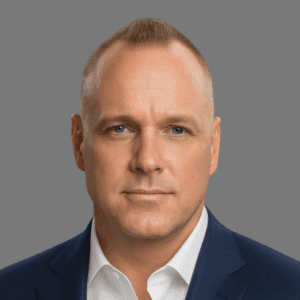
Ralf Ellspermann
Founder & CSO of PITON-Global,
25-Year Philippine BPO Veteran,
Multi-awarded Executive
Specializing in strategic sourcing and excellence in Manila
View Full Bio
Verified by:
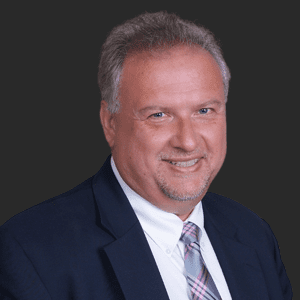
John Maczynski
CEO of PITON-Global, and former Global EVP of the World’s largest BPO provider | 40 Years Experience
Ensuring global compliance and enterprise-grade service standards
View Full Bio
Last Peer Review: June 8, 2026
This service framework is audited quarterly to meet shifting global outsourcing regulations and COPC standards.