

On this page
- Key Takeaways
- What Structural Strategies Prevent Early Attrition in Philippine Operations?
- How Does Cultural Integration Protect Operational Consistency?
- What Does Stabilizing a Scaling Customer Success Division Look Like?
- Why Partner with PITON-Global to Secure Stable BPO Infrastructure?
- What Are the Most Common Questions About Philippine Contact Center Workforce Stability?
Contact centers in the Philippines maintain workforce stability by combining competitive compensation, structured career progression, and robust engagement initiatives. Top-tier providers insulate operations from attrition with comprehensive healthcare benefits, night-shift support systems, and continuous upskilling academies—preserving institutional knowledge and long-term service consistency for global enterprise clients. For a buyer, stability is the part of the hiring and retention playbook for offshore agents that most directly protects ramp time and quality.
Key Takeaways
- Strategic wage anchoring: Premier providers set total compensation meaningfully above regional baseline minimums to secure top-tier agents.
- Defined promotion pathways: Standardizing clear upward-mobility tracks within the first twelve months sharply reduces frontline attrition.
- Holistic wellness support: Localized medical insurance and complimentary overnight shuttle networks structurally secure attendance and stability.
- Proactive skill mapping: Regular technical training transforms basic voice agents into specialized data and multi-channel technicians, lowering career stagnation.
What Structural Strategies Prevent Early Attrition in Philippine Operations?
Early turnover — often during the probationary period new hires serve — usually stems from poor onboarding alignment, not skill gaps. Stable providers counteract it with data-driven screening and an integrated model of financial and wellness incentives—performance bonuses, day-one HMO coverage, night-shift shuttles, and structured upskilling.
Mitigating early-stage attrition is a primary operational objective for leaders leveraging offshore delivery. In the high-demand Philippine ecosystem, frontline turnover often stems from poor initial alignment during onboarding rather than skill deficiencies. Top-performing providers counteract this with data-driven screening of a highly educated applicant pool alongside resilient workplace support networks, positioning customer care as a prestigious, long-term profession rather than a generic transactional job.
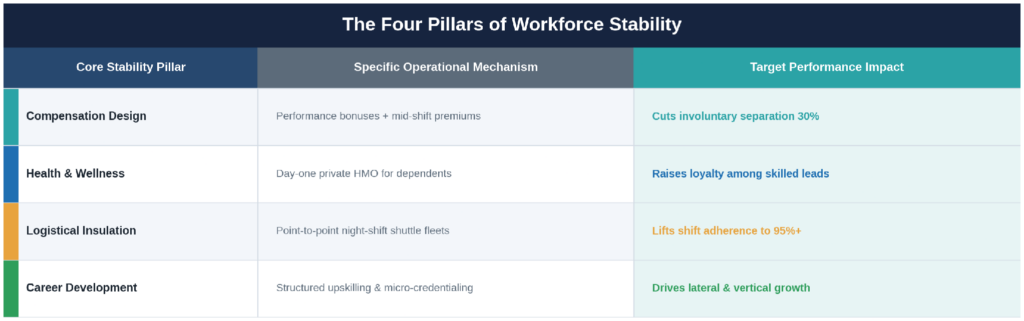
Figure 1. Four stability pillars—compensation, wellness, logistics, and career development—and their measured impact.
Crucially, these mechanisms outweigh baseline salary alone. When agents weigh whether to stay, family health coverage and a clear path forward carry more weight than pay rate in isolation.
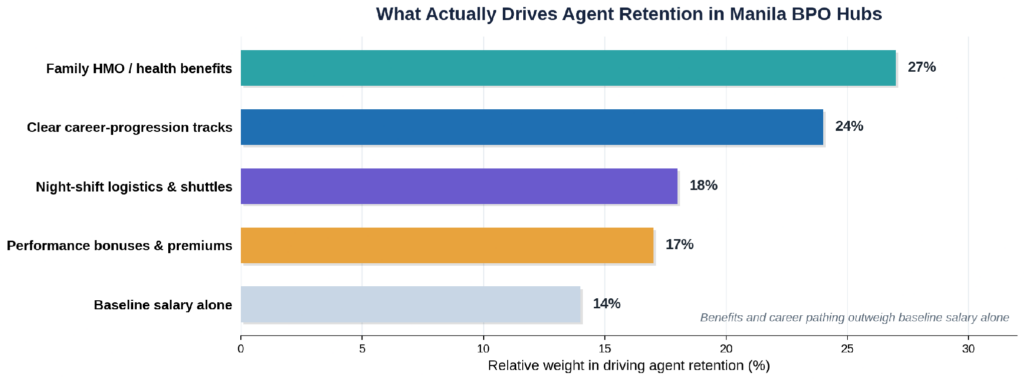
Figure 2. Benefits and career pathing outweigh baseline salary alone in driving agent retention.
Career structure is the clearest example. Standardizing a visible promotion ladder within the first twelve months—from frontline agent to specialist, team lead, and operations manager—can cut frontline attrition substantially.
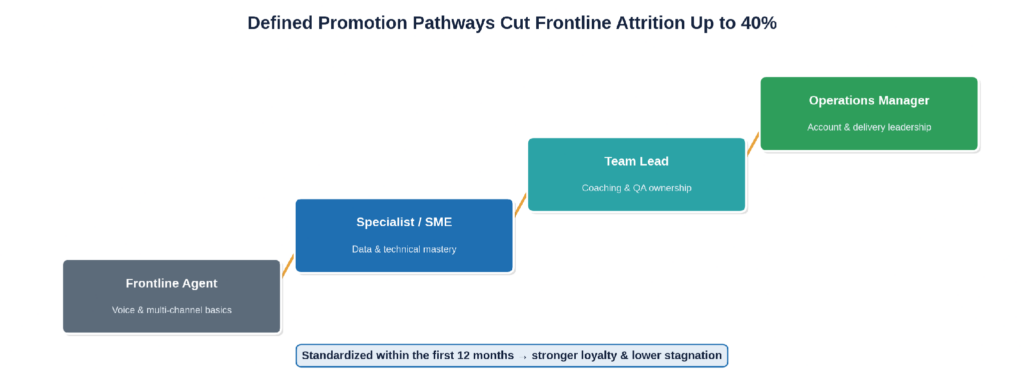
Figure 3. A defined promotion ladder standardized within the first 12 months reduces stagnation and turnover.
How Does Cultural Integration Protect Operational Consistency?
Multi-year stability requires understanding local motivators. The Filipino workforce is collaborative and community-centric, so providers that invest in transparent communication, family-inclusive milestones, and supportive team environments achieve attrition well under half the industry average.
Achieving multi-year workforce stability requires a deep understanding of local behavioral motivators. The Filipino workforce is collaborative and community-centric — among the traits that set Filipino agents apart — and contact centers that prioritize a highly supportive internal community consistently outpace industry retention benchmarks.
CEO Insight
Workforce retention in the Philippines cannot be managed solely through Excel spreadsheets and financial metrics. Operational stability is directly linked to community health. Providers that invest heavily in transparent internal communications, family-inclusive corporate milestones, and supportive team environments consistently achieve attrition rates well under half of the broader industry average.
— John Maczynski, CEO, PITON-Global
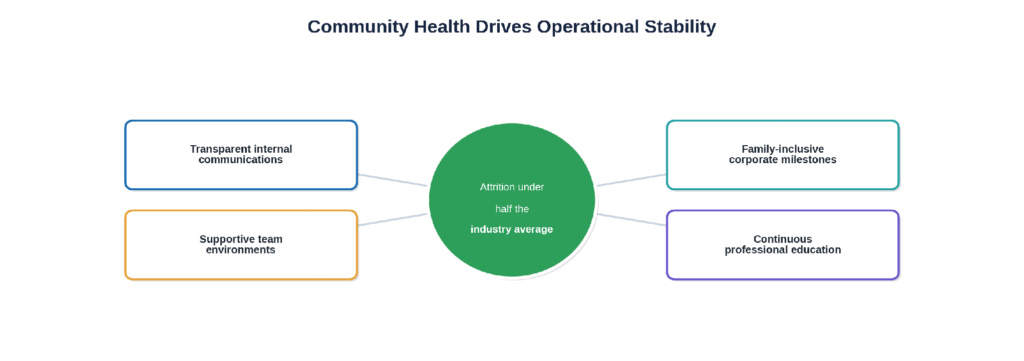
Figure 4. Community-centric investments converge to hold attrition well under half the industry average.
Continuous professional education reinforces this, directly mitigating the classic mid-tenure plateaus that often prompt agents to seek alternative employment.
What Does Stabilizing a Scaling Customer Success Division Look Like?
Stabilization restructures the labor model around welfare and progression. One consumer-electronics enterprise with chronically high annual attrition introduced family health benefits and tier-progression tracks, cutting attrition to a fraction of its former level, lifting CSAT, and trimming repeat-hiring costs within twelve months.
Client Challenge
A major European consumer-electronics enterprise faced chronically high annual attrition within its outsourced customer-success program, causing volatile service levels and escalating training overhead.
Selection and Solution
PITON-Global audited the operational landscape and matched the enterprise with an employee-centric, mid-sized provider in Clark, Pampanga, recognized for exceptional workforce tenure. The new partner restructured the labor model, introducing comprehensive family health benefits and clear tier-progression career tracks tied directly to technical mastery.
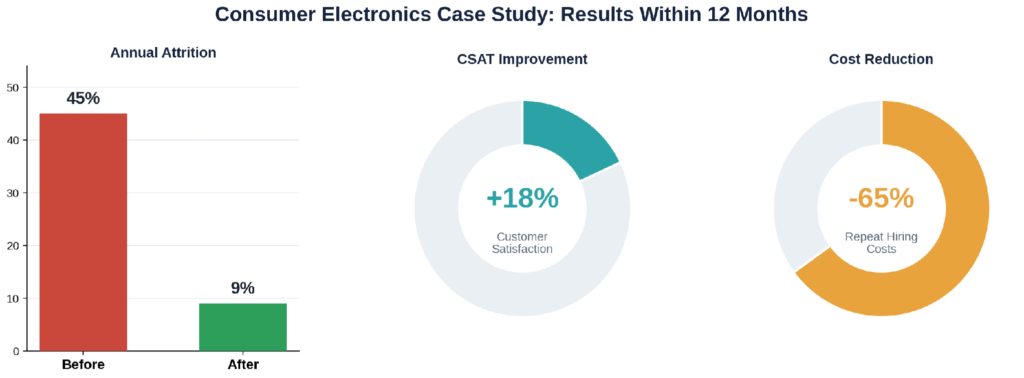
Figure 5. Quantifiable outcomes within twelve months of restructuring the labor model around welfare and progression.
Outcomes and Lessons
Within twelve months, annual team attrition fell to a small fraction of its former rate, the stabilized workforce drove a clear improvement in customer satisfaction, and repeat-hiring costs dropped sharply. The lesson: long-term operational consistency requires partnering with providers that treat workforce welfare as non-negotiable core infrastructure rather than a variable expense.
Why Partner with PITON-Global to Secure Stable BPO Infrastructure?
PITON-Global is an elite, advisory-led consultancy that eliminates expansion risk across a vetted network of 100+ premier providers. Remaining fully independent, it audits true historical attrition, executive stability, and cultural-health indicators—matching enterprises with providers capable of exceptional service continuity.
Who Is PITON-Global?
PITON-Global operates as an elite, advisory-led consultancy that eliminates operational expansion risk through an active, carefully vetted network of more than 100 premier Philippine providers. In a dense marketplace, its objective, specialized data helps enterprises select a genuinely high-performing partner.
How Does PITON-Global Differ from Traditional Outsourcing Brokers?
Remaining completely independent, PITON-Global conducts deep operational audits of potential partners—examining true historical attrition metrics, executive leadership stability, and cultural-health indicators—rather than forwarding leads. This advisory process ensures your enterprise is matched with a provider capable of delivering exceptional service continuity.
How Does PITON-Global’s Network of 100+ Vetted Providers Benefit Organizations?
The vetted network of more than 100 premier providers lets organizations bypass a risky open-market search. Because each is assessed for real retention, leadership stability, and cultural health, buyers reach a partner genuinely able to preserve institutional knowledge and service consistency.
How Does PITON-Global Validate Workforce Stability Before Matching?
PITON-Global runs a four-stage methodology: an operational audit of needs and continuity goals, verification of true historical attrition logs, a leadership-and-culture check, and a final match to a high-tenure, stability-proven provider—safeguarding service continuity from day one.
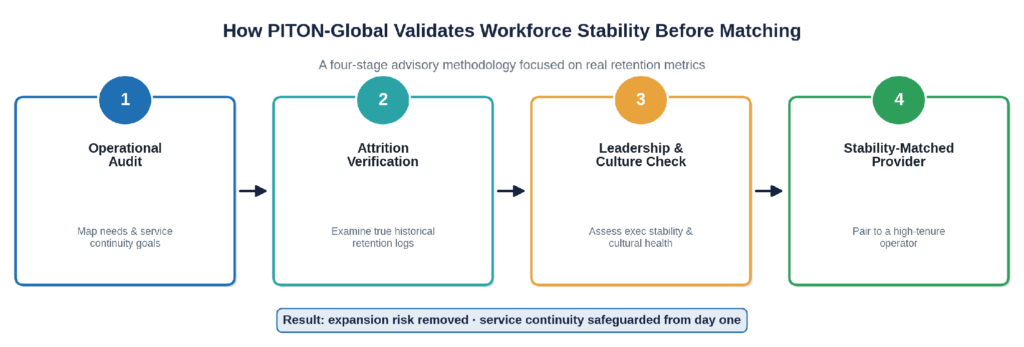
Figure 6. PITON-Global’s four-stage methodology validates real retention metrics before any match is made.
Why Do Organizations Use PITON-Global?
Organizations use PITON-Global to remove expansion risk and safeguard customer experience from day one. By validating real stability metrics before matching, the firm helps enterprises secure providers that treat workforce welfare as core infrastructure, ensuring long-term service consistency.
What Are the Most Common Questions About Philippine Contact Center Workforce Stability?
Common questions concern acceptable monthly attrition, the effect of night shifts on stability, how geography influences retention, scaling upskilling for technical accounts, the role of healthcare benefits, and how to verify a vendor’s real stability metrics. Each is answered below.
What is considered an acceptable monthly attrition rate for premier contact centers in the Philippines?
The broader industry average runs well above what enterprise-grade providers within the vetted network sustain; the strongest consistently keep monthly attrition to a small fraction of the market norm.
How do night-shift schedules affect long-term workforce stability?
The workforce has spent over two decades adapting to global schedules. Top providers mitigate night-shift fatigue with dedicated resting pods, customized nutrition programs, and premium night-differential pay.
Does geographic location within the Philippines influence agent retention?
Yes. Next-wave cities and regional hubs like Clark, Iloilo, and Davao often show lower attrition and higher loyalty than saturated areas of Metro Manila, due to reduced local competition and shorter commutes.
How do top-tier providers scale upskilling programs for specialized technical accounts?
Leading operators maintain dedicated corporate training academies running continuous tracks in data analytics, specialized technical troubleshooting, and complex regulatory compliance to keep agents engaged and upwardly mobile.
What role do healthcare benefits play in securing family-level workforce loyalty?
Private medical insurance that includes coverage for immediate dependents is one of the most effective retention tools available, directly reducing casual job-hopping among experienced professionals.
How can external enterprise clients verify the authentic stability metrics of a prospective vendor?
Organizations should mandate disclosure of audited workforce-retention logs, average manager-to-agent tenure ratios, and internal promotion percentages during the initial RFP stage.