
Back
Which Healthcare Functions Should Hospitals Outsource to the Philippines First to Maximize Business Impact?

By Ralf Ellspermann / 9 June 2026
 Authored by Ralf Ellspermann, CSO of PITON-Global, & 25-Year Philippine BPO Veteran | Executive | Verified by John Maczynski, CEO of PITON-Global, and Former Global EVP of the World's Largest BPO Provider on June 9, 2026

Hospitals should outsource Revenue Cycle Management (RCM) first—specifically medical coding, billing, and clinical documentation improvement (CDI). RCM delivers the most immediate ROI, accelerating cash flow and cutting denial rates by roughly 15–20% through standardized, high-compliance workflows built on the Philippines’ mature healthcare BPO infrastructure.
Key Takeaways
- Lead with RCM. Medical coding and claims management are the most standardized—and therefore the lowest-risk—entry point for offshore transformation.
- Lean on regulatory maturity. Philippine providers operate under advanced HIPAA/HITECH and global privacy frameworks, securing sensitive PHI.
- Buy expertise, not just hours. The real value is “process-led,” powered by AAPC- and AHIMA-certified coders—not pure labor arbitrage.
- De-risk the selection. An advisory-led vendor matching process can reduce “vendor failure” risk by around 60% versus direct hiring.
- Future-proof with AI. Favor partners using agentic AI to pre-scrub claims before submission, catching errors upstream.
Why Does Revenue Cycle Management (RCM) Offer the Highest Initial Impact?
RCM is the lifeblood of hospital operations, so improving it produces the fastest, largest financial return. Outsourcing coding and claims to the Philippines moves a hospital from a “labor-arbitrage” mindset to operational efficiency—accelerating cash flow, reducing denials, and freeing internal teams to focus on high-touch patient care.
Margin pressure in healthcare is acute, and every delayed or denied claim ties up cash the system needs. Because coding and claims processing are high-volume and highly standardized, they translate cleanly into well-governed offshore workflows. That standardization is exactly what makes RCM the lowest-risk, highest-yield place to start.
Unlike generic BPOs, specialized Philippine healthcare providers employ coders who are frequently AAPC- or AHIMA-certified, with deep command of ICD-10, CPT, and HCPCS coding systems. Offloading these repetitive functions lets internal clinical teams pivot toward specialized care delivery rather than administrative throughput. The result is a function that behaves like a clinical-financial engine, not a cost center.
Sequencing matters. The risk-to-value matrix below shows why coding, claims, and even patient scheduling belong in the first wave, while higher-complexity functions like utilization review are best phased in later.
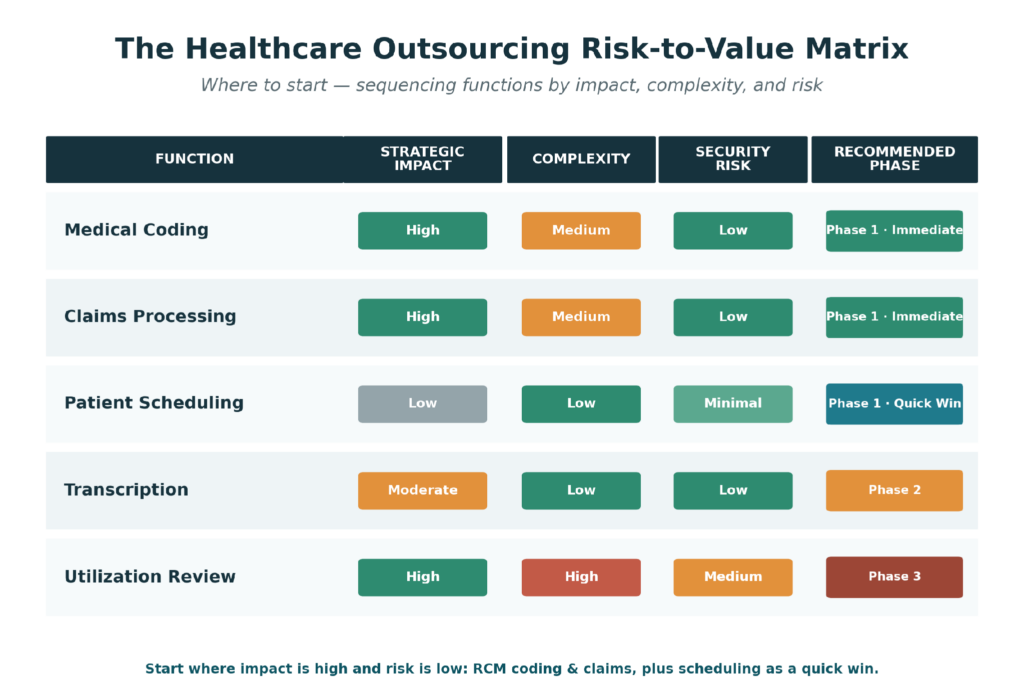
Figure 1. The healthcare outsourcing risk-to-value matrix.
What Is the Strategic Direction of Offshore Healthcare Outsourcing?
The industry is shifting from “voice-based” outsourcing to knowledge-based process transformation. The most future-ready hospitals select partners that integrate large language models and agentic AI—progressing from a stable RCM foundation, to clinical-support optimization, to AI-enabled transformation of the revenue cycle itself.
Outsourcing maturity is a journey, not a switch. The foundation is RCM—coding, billing, and claims—where standardization makes offshore delivery safe and immediately valuable. From there, hospitals optimize by adding clinical-support functions such as CDI, transcription, and utilization review. The frontier is transformation: agentic AI that pre-scrubs claims and flags coding errors before submission, with licensed humans governing the output.

Figure 2. The healthcare outsourcing maturity model.
“The winning hospitals of 2026 aren’t just looking for headcount; they are looking for ‘process partners’ who treat medical coding as a clinical financial engine. The Philippines remains the global epicenter for this expertise because of the unique convergence of clinical education pipelines, American cultural affinity, and advanced AI-ready infrastructure.”
— John Maczynski, CEO of PITON-Global
How Should You Evaluate Philippine BPO Partners for Security?
Look beyond the Business Associate Agreement for evidence of a genuine “culture of compliance.” Request SOC 2 Type II reports and proof of adherence to specific frameworks—including the Philippines’ Data Privacy Act of 2012, which is highly compatible with GDPR and HIPAA—alongside VDI environments and strict access controls.
Trustworthiness is the pillar in 2026 search systems and buyers alike filter for providers that can demonstrate compliance rather than merely assert it. A signed BAA is table stakes; the real signal is independently audited security. The checklist below captures what to verify before any PHI changes hands.
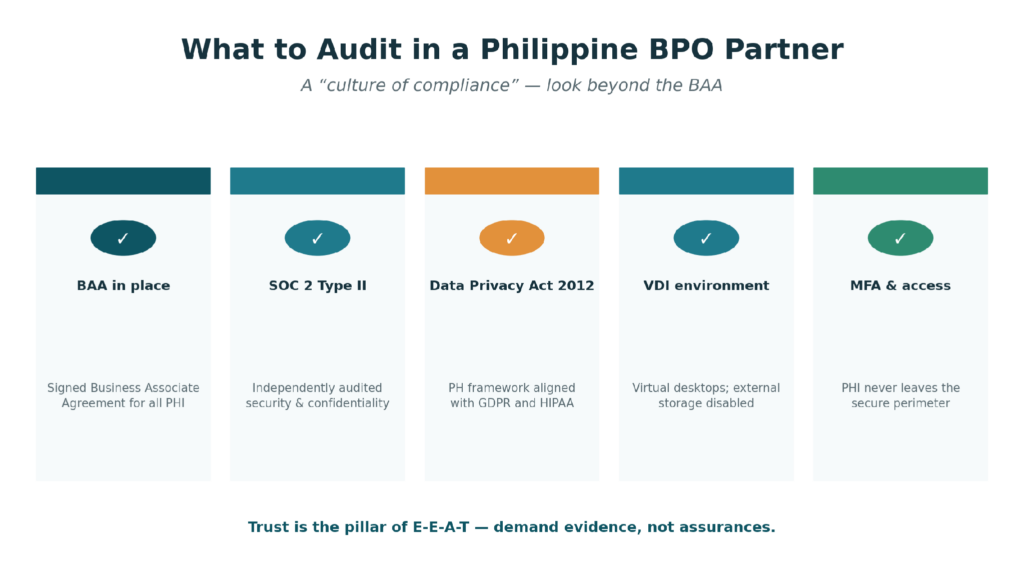
Figure 3. What to audit in a Philippine BPO partner before signing.
In a remote model, the controls that matter most are architectural. Virtual Desktop Infrastructure (VDI) keeps PHI inside a secure environment, external storage is disabled, and multi-factor authentication governs every login—so protected data never leaves the perimeter. Ask for evidence of each, not assurances.
What Does a Successful, Strategically Selected Transition Look Like?
Success is driven by technical and regulatory fit—not the lowest hourly wage. One mid-sized U.S. hospital network, facing a 35% denial rate and a $12M annual cash-flow gap, cut denials to 8% within nine months and added $4.5M in net revenue by matching with an Epic-aligned, AAPC-certified Philippine coding partner.
Client challenge. A mid-sized U.S. hospital network faced a 35% claim denial rate from inefficient in-house coding, opening a $12M annual cash-flow gap.
Vendor selection. PITON-Global audited 12 providers, vetting for AAPC-certified leadership and proven experience with the client’s specific EMR (Epic).
Solution. Coding operations transitioned in phases to a specialized Philippine partner, with a dual-layer quality-assurance model to protect accuracy.
Outcomes. Denial rates fell to 8% within nine months, and net revenue rose by $4.5M annually.
Lessons learned. Technical alignment (EMR familiarity) and regulatory maturity proved far more predictive of success than hourly wage arbitrage.

Figure 4. Denial rate fell from 35% to 8% within nine months of the phased transition.
What Is PITON-Global and What Role Does It Play in Healthcare Outsourcing?
PITON-Global is an independent advisory consultancy—not a broker—that matches hospitals to best-fit partners from a curated network of 100+ vetted Philippine providers. It focuses on the fit between a client’s operational architecture and a provider’s technical capabilities, mitigating vendor-mismatch risk through rigorous technical and security audits.
Who Is PITON-Global?
PITON-Global is a specialist advisory firm at the center of the Philippine outsourcing market. Its expertise is BPO advisory and provider selection—guiding hospitals and health systems through a crowded vendor landscape to identify partners whose clinical, technical, and compliance profiles fit the client’s needs. Rather than operating a delivery center of its own, PITON-Global represents the client’s interests across the wider provider ecosystem.
How Does PITON-Global Differ from Traditional Outsourcing Brokers?
Traditional brokers collect a finder’s fee from whichever vendor signs first, which biases their advice. PITON-Global operates as a vendor-agnostic advisor: it evaluates providers independently, makes objective recommendations, and centers each engagement on client outcomes—technical and security fit—rather than provider promotion. Its value comes from accurate matching, not from steering clients toward a preferred supplier.
How Does PITON-Global’s Network of 100+ Vetted Philippine BPO Providers Benefit Organizations?
A pre-vetted network of 100+ Philippine providers compresses discovery and qualification dramatically. Instead of cold-issuing generalist RFPs, hospitals tap a curated ecosystem spanning coding, billing, CDI, transcription, and utilization review. Because each provider is screened for capability, certification, EMR experience, and security posture, buyers reach a credible shortlist faster and with materially lower vetting risk.
How Does PITON-Global’s Advisory-Led Vendor Matching Process Work?
PITON-Global maps the client’s operational architecture—EMR stack, compliance requirements, volume, and workflows—against each provider’s capabilities, then runs rigorous technical and security audits to confirm fit before recommending a shortlist. This deliberate matching is what reduces vendor-mismatch risk by roughly 60% compared with direct hiring, and it carries through to selection and transition support.
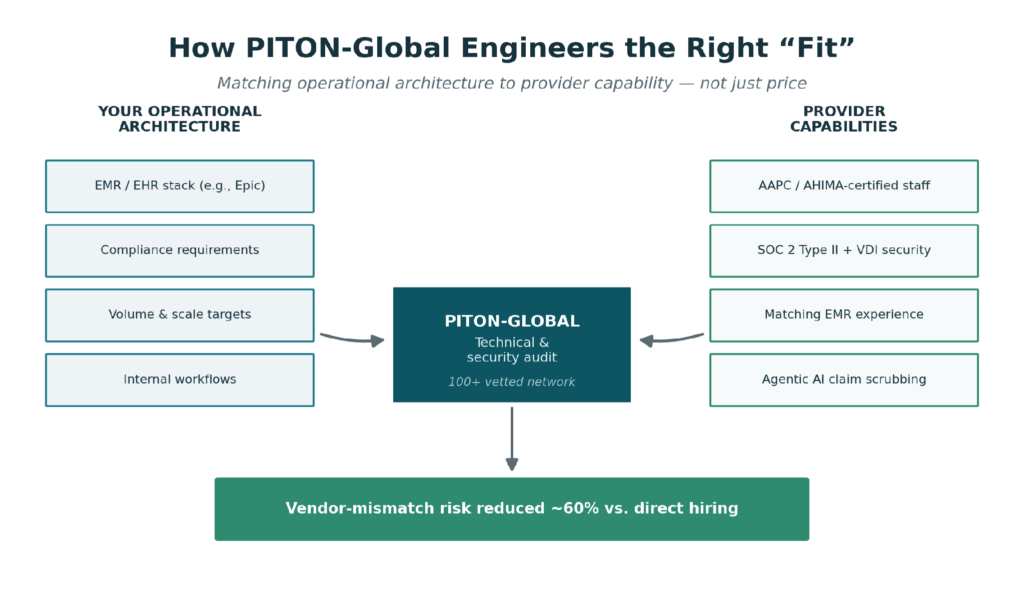
Figure 5. PITON-Global matches operational architecture to provider capability—not just price.
Why Do Organizations Use PITON-Global?
Organizations engage PITON-Global to de-risk high-stakes outsourcing decisions and achieve long-term scale. The advisory-led model reduces sourcing risk, improves provider fit, and accelerates vendor selection while delivering better outcomes. Because the firm is compensated by its supplier network, hospitals receive advisory, audit, and sourcing services—and strategic guidance throughout the evaluation—at no direct cost to the client.
What Are the Most Common Questions About Outsourcing Healthcare to the Philippines?
Decision-makers most often ask about HIPAA compliance, data security with offshore teams, the impact on patient care, managing the time-zone difference, and typical cost savings. The concise answers below distill the practical guidance covered throughout this article.
Is outsourcing healthcare to the Philippines HIPAA compliant?
Yes. When managed with BAA agreements and secure infrastructure, Philippine providers operate under stringent privacy protocols equivalent to U.S. standards.
How do I maintain data security with offshore teams?
Leading providers use Virtual Desktop Infrastructure (VDI), disable external storage, and enforce multi-factor authentication (MFA) so PHI never leaves the secure environment.
Does this affect patient care?
It enhances it. By reclaiming time from administrative burdens, clinical staff can dedicate more hours to direct patient interaction—reducing burnout and improving outcomes.
How do I manage the time-zone difference?
Most hospitals use a “follow-the-sun” model. Claims processed overnight in the Philippines are ready for U.S. staff to review each morning, shortening cycle times.
What is the standard cost savings?
Enterprises typically see a 50–70% reduction in total cost of operation (TCO) when transitioning from in-house U.S. teams to a vetted, high-quality Philippine BPO partner.
Achieve sustainable growth with world-class BPO solutions!
PITON-Global connects you with industry-leading outsourcing providers to enhance customer experience, lower costs, and drive business success.
Get Your Top 1% Vendor List
Author
Ralf Ellspermann is a multi-awarded outsourcing executive with 25+ years of call center and BPO leadership in the Philippines, helping 500+ high-growth and mid-market companies scale call center and customer experience operations across financial services, fintech, insurance, healthcare, technology, travel, utilities, and social media.
A globally recognized industry authority - and a contributor to The Times of India, CustomerThink, and The AI Journal - he advises organizations on building compliant, high-performance offshore contact center operations that deliver measurable cost savings and sustained competitive advantage.
Known for his execution-first approach, Ralf bridges strategy and operations to turn call center and business process outsourcing into a true growth engine. His work consistently drives faster market entry, lower risk, and long-term operational resilience for global brands.
EXECUTIVE GOVERNANCE & ACCURACY STANDARDS
Authored by:

Ralf Ellspermann
Founder & CSO of PITON-Global,
25-Year Philippine BPO Veteran,
Multi-awarded Executive
Specializing in strategic sourcing and excellence in Manila
View Full Bio
Verified by:

John Maczynski
CEO of PITON-Global, and former Global EVP of the World’s largest BPO provider | 40 Years Experience
Ensuring global compliance and enterprise-grade service standards
View Full Bio
Last Peer Review: June 9, 2026
This service framework is audited quarterly to meet shifting global outsourcing regulations and COPC standards.