

An AI–human hybrid BPO model in the Philippines typically delivers a 60–65% reduction in cost per interaction versus a legacy offshore operation, while lifting customer-experience scores by double digits. Autonomous agentic AI contains the high-volume, routine queries; a specialized Filipino “human layer” resolves the complex 20% that demands genuine judgment and empathy.
The catch: those headline numbers are achievable, but they are not automatic. Returns depend on intent mix, the quality of your grounding data, and disciplined human-in-the-loop oversight — not on the automation rate alone.
Key takeaways
- Cost per contact falls from roughly $4.50–$6.50 to $1.50–$2.25 as routine volume shifts from human seats to autonomous AI. Human-handled interactions industry-wide run about $6–$8; AI-resolved contacts run roughly $0.50–$0.70 (McKinsey, 2025).
- “80% containment” is a ceiling for narrow intents, not a blended average. Median enterprise Tier-1 deflection sits near 41%; the top quartile reaches ~59% (Zendesk, Salesforce, 2026). Routine intents exceed 70%; nuanced complaints rarely clear 25%.
- The hybrid model closes the satisfaction gap. Pure-AI handling lands around 4.1/5 CSAT versus 4.3/5 for humans; hybrid escalation flows narrow that gap to roughly 0.05 points (Intercom, 2026).
- Watch re-contact, not just deflection. AI-resolved tickets are re-opened within 72 hours about 11.3% of the time, versus 8.7% for human-resolved tickets — a hidden cost that a human layer is designed to absorb.
- This is intelligence arbitrage, not labor arbitrage. The Philippine IT-BPM sector closed 2025 near $40B in export revenue and is moving up the value chain under IBPAP’s Roadmap 2028 toward $59B and higher-skill work.
From labor arbitrage to intelligence arbitrage
For decades, outsourcing to the Philippines rested on labor arbitrage — cutting costs by moving high volumes of transactional work to a capable, English-fluent offshore workforce. By 2026 the calculus has shifted. In top-tier operations, the legacy “agent + script + CRM” pattern is fading, replaced by intelligence arbitrage: returns flow from the structural optimization of a combined digital and human workforce rather than from headcount alone.
Under this model, agentic AI platforms operate with real autonomy — reading customer intent, querying disparate backend systems, and completing multi-step workflows without a person in the loop for most routine contacts. Instead of paying for hundreds of seats to field repetitive questions, buyers invest in a lean, high-performing core. The financial impact lands across three dimensions:
- Total cost of ownership compresses. Agentic systems scale with volume without a matching rise in seat count or supervisory overhead, breaking the old linear link between contact volume and cost.
- Linguistic rework is largely erased. Positioning the Philippines as an “empathy hub” means complex escalations are handled cleanly, avoiding the costly miscommunication loops common to less proficient nearshore alternatives.
- Commercials move to outcomes. Leading providers are shifting from rigid hourly billing toward outcome-based pricing tied to containment and resolution quality, not the number of open phone lines.

Figure 1 — Blended cost per contact drops 60–65% as routine volume migrates to autonomous AI.
What the 2026 benchmarks actually show
The table below pairs the headline efficiency gains brands report after a hybrid transition with the strategic value behind each one. Treat the figures as directional planning anchors: cost and resolution metrics vary widely by industry, channel mix, and the maturity of your data.
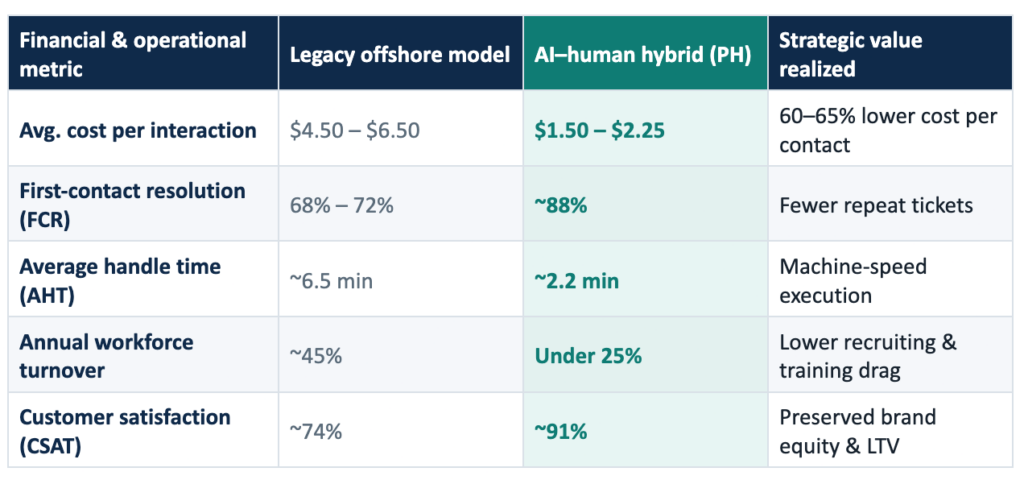
Methodology note: Cost-per-interaction ranges are anchored to published 2025–2026 figures from McKinsey and CX-platform benchmarks; FCR, AHT, turnover, and CSAT ranges reflect commonly cited hybrid-program outcomes and should be validated against your own baseline before forecasting.
The 80% containment myth — and what to measure instead
The most common pitch in this market is that automation alone will “contain 80% of your tickets.” That number is real, but only for a narrow band of intents. Smaller enterprises that buy a generic AI layer expecting 80% deflection across the board routinely see 20–30% in practice — and they inherit an error rate that quietly erodes customer lifetime value.
The data tells a more disciplined story. Median Tier-1 deflection across enterprise CX programs sits near 41%, with the top quartile around 59% (Zendesk CX Trends 2026; Salesforce State of Service 2026). Routine, well-bounded intents — password resets, order tracking, suspicious-transaction alerts — clear 70% and up. Nuanced complaints rarely break 25%. Containment is therefore an intent-level metric, not a single program-wide promise.
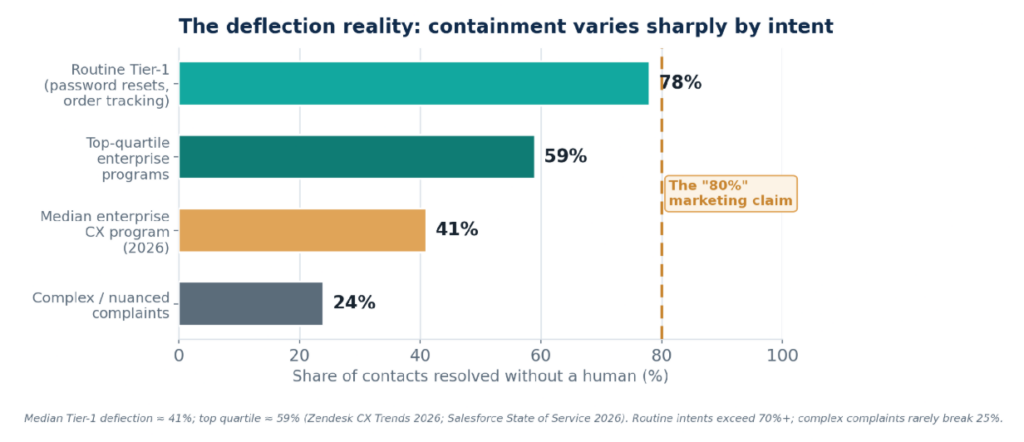
Figure 2 — Containment is highly intent-dependent. A blended “80%” is a marketing artifact, not an operating average.
Three numbers buyers overlook
- Re-contact rate. AI-resolved tickets are re-opened within 72 hours ~11.3% of the time vs. ~8.7% for human-resolved — “deflected” is not the same as “resolved.”
- Cost per resolution over time. Analysts warn AI cost-to-serve could drift toward ~$3 per resolution by 2030 as usage and orchestration scale; model the trajectory, not just today’s unit cost.
- The production gap. Roughly 64% of enterprise CX teams ran an agentic AI pilot in 2026, but only ~27% had a channel in full production — execution, not access, is the differentiator.
Why agentic AI plus the Filipino “human layer” maximizes lifetime value
AI deployed in isolation carries hidden liabilities. Without a grounding-data layer, an automation layer is less an intelligence engine and more a hallucination engine — confident, fast, and sometimes wrong in ways that destroy trust. The return is unlocked by pairing advanced automation with human-in-the-loop (HITL) oversight, and this is precisely where the Philippines has built durable advantage.
Filipino specialists increasingly act as “AI pilots” and “judgment architects,” monitoring live autonomous streams and stepping in the instant a logic loop, a compliance edge case, or a sensitive customer moment appears. The principle is straightforward: AI supplies speed and scale; skilled people supply judgment and empathy. The evidence backs the pairing — pure-AI handling trails human CSAT by about 0.2 points, but hybrid escalation flows close that gap to roughly 0.05 (Intercom, 2026), and agentic programs that keep humans in the loop report materially higher satisfaction than automation-only deployments.
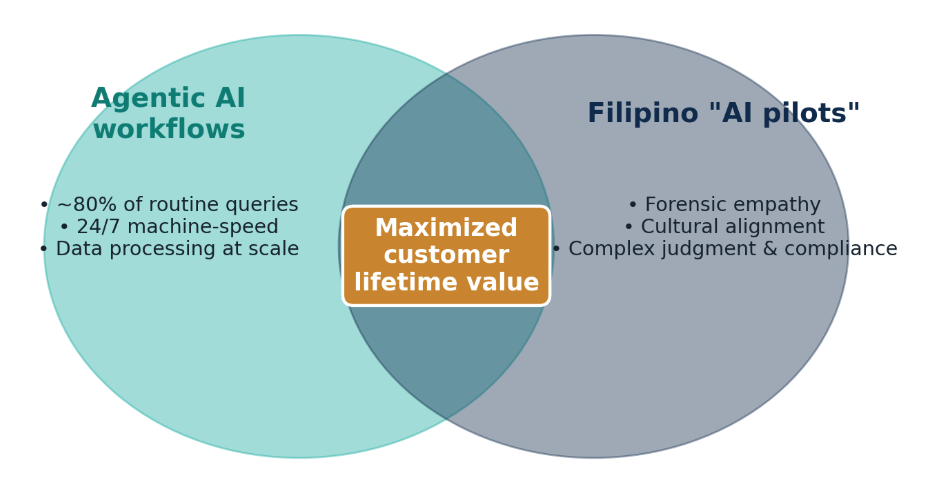
Figure 3 — The advantage materializes at the intersection: machine speed multiplied by human judgment.
Representative scenario: a US fintech secures ~63% savings
Note: the following is a composite scenario built from typical Tier-2 fintech deployments, presented to illustrate the model’s mechanics. It is not a single named client; figures are representative, not audited.
A fast-growing US financial-technology firm faced surging customer-care costs and a mounting backlog of account-verification tickets. With high customer-acquisition costs and a domestic support model that had become financially unsustainable, the firm needed a structurally different approach. Rather than default to a large, generalist outsourcer, it partnered with an AI-native, specialized Tier-2 operation in Manila. The implementation paired two layers:
The AI layer
The AI layer integrated with the client’s core ledger via secure APIs to handle identity verification, password resets, and suspicious-transaction notifications — reaching a ~78% containment rate on routine Tier-1 inquiries.
The human layer
The human layer — specialized Filipino finance professionals — managed regulatory-compliance overrides, high-net-worth escalations, and edge-case dispute resolution.

Figure 4 — How a hybrid transition reshapes the cost base over a ~120-day deployment.
Within roughly 120 days of deployment, the firm modeled a reduction in its annualized customer-care budget from about $3.8 million to $1.4 million. Because customers with complex Tier-2 issues were routed straight to empathetic specialists instead of getting trapped in automated menus, overall Net Promoter Score rose by an estimated 14 points — the efficiency gain and the experience gain reinforcing each other rather than trading off.
How to model your own ROI in four steps
Headline percentages are a starting point, not a forecast. Use this framework to translate the model into a number your finance team can defend:
Segment by intent, then estimate realistic containment
Map your contact mix and apply intent-level deflection (70%+ for routine, ~40% blended, <25% for complex) rather than a single global rate.
Calculate blended cost per resolution
Weight AI-resolved contacts (~$0.50–$0.70) and human-resolved contacts (~$6–$8) by your projected split, and include re-contact volume in the human side.
Price the human layer as quality insurance
Size the specialist team to the complex ~20% plus HITL monitoring; this is the line item that protects CSAT, compliance, and lifetime value.
Discount for ramp and governance
Apply a 90–120 day ramp curve and budget for data-grounding, model evaluation, and oversight — the work that separates the ~27% in production from the 64% still piloting.
What B2B buyers must anticipate next
As conversational search and agentic business models mature, the yardstick for evaluating outsourcing investments is shifting from headcount to data protection and operational quality. The Philippine sector is moving with that shift: IBPAP’s Roadmap 2028 targets roughly $59 billion in revenue and 2.5 million workers, with explicit emphasis on responsibly scaling AI and pushing into higher-skill, higher-margin work. North America still drives about 70% of demand, which keeps cultural and linguistic alignment a core part of the value proposition.
To hold a strong competitive position, future BPO contracts should foreground data-rights governance, secure data pipelines, and outcome-based KPIs — measuring resolution quality and customer lifetime value, not just call volume. The ROI of a hybrid model is therefore not merely a short-term cost play; it is a durable strategy for operational agility and lasting brand health.
Frequently asked questions
Is an AI-human hybrid BPO cheaper than full automation?
Not always at the unit level, but it is usually cheaper at the outcome level. Full automation can show a lower cost per contact, yet higher re-contact and error rates push up the true cost per resolved issue and erode lifetime value. A hybrid model trades a slightly higher blended unit cost for materially better resolution quality.
What containment rate is realistic in year one?
Plan for a blended 35–45% across all contacts, with routine intents reaching 70%+ and complex contacts staying low. Programs that publicize 80% are typically describing a narrow intent set, not their overall average.
Why the Philippines specifically for the human layer?
Strong English proficiency, cultural alignment with North American customers (about 70% of demand), a deep talent pool of roughly 1.9 million IT-BPM workers, and a sector deliberately moving up the value chain toward judgment-intensive work.
How long until the savings appear?
Most well-scoped deployments reach steady state within 90–120 days, after data grounding, integration, and a supervised ramp where human pilots tune AI behavior on live traffic.