

Hospitals must account for structural, above-CPI annual wage inflation driven by localized shortages of specialized healthcare professionals, aggressive global poaching, and rising public-sector benchmarks. To sustain cost arbitrage, health systems should shift from simple labor arbitrage to high-value clinical optimization, balancing competitive local compensation with Tier-2 geographic diversification. The pressure is uneven across licensed-nurse and revenue-cycle roles offshore, so budgets must be set role by role.
Key Takeaways
- Targeted clinical inflation: Standard BPO wages rise at a steady, moderate pace each year, but specialized clinical roles such as USRNs face markedly steeper inflation amid intense global competition.
- Public-sector benchmark pressure: Updates to the Salary Standardization Law lifted government nurse base pay above PHP 42,000/month, forcing private providers to raise entry packages.
- Geographic cost arbitrage: Moving complex clinical non-voice work from Metro Manila to Tier-2 hubs like Iloilo, Clark, or Cebu cuts baseline labor cost substantially.
- Turnover mitigation: Containing high industry-average clinical attrition requires multi-dependent HMO coverage and explicit clinical-informatics career paths.
What Macroeconomic Forces Are Driving Healthcare BPO Wage Inflation?
The primary driver is structural supply-and-demand friction, not general CPI. A severe global shortage of healthcare personnel makes Filipino clinical professionals highly sought after, while domestic public-sector raises—government nurse base pay now above PHP 42,000—force commercial BPO firms to offer premiums, pushing compensation up year after year.
The Philippine IT-Business Process Management sector is expanding rapidly, with revenues on a strong growth trajectory, creating intense competition for specialized talent. While baseline CPI fluctuations play a role, the primary driver of healthcare BPO wage inflation is structural supply-and-demand friction.
A severe global shortage of healthcare personnel has made Filipino clinical professionals highly sought after by international health systems, and demand from telemedicine and virtual-care support desks adds to the pull. Simultaneously, the domestic market faces pressure from public-sector wage adjustments: the Salary Standardization Law has systematically raised public-health salaries, lifting base monthly pay for entry-level government nurses above PHP 42,000. To attract these licensed professionals into administrative, utilization-review, and clinical-documentation roles, commercial BPO firms must offer substantial premiums—driving compensation upward across all major segments, as the chain below shows.
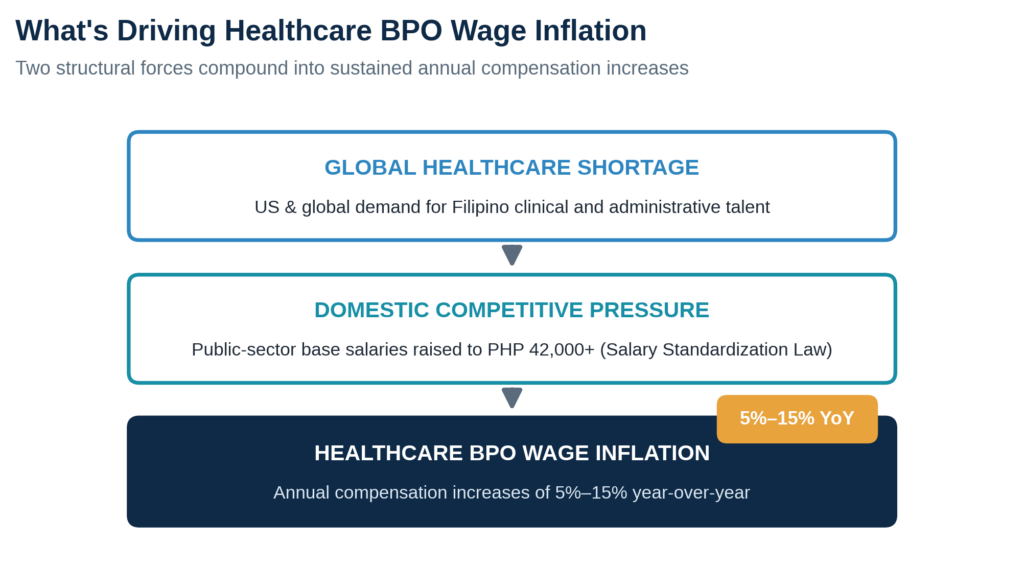
Figure 1 — The two structural forces—global shortage and domestic public-sector pressure—that compound into persistent annual BPO wage inflation.
How Do Wage Trends Differ Across Clinical and Administrative Roles?
Inflation is far from uniform. Administrative and RCM roles—coding, billing, basic adjudication—see stable, moderate annual inflation on a broad talent pool. Licensed clinical roles such as utilization-management nurses, case managers, and USRNs escalate far faster because they directly affect reimbursement and clinical quality scores.
Inflation does not impact the outsourcing landscape uniformly. Highly technical roles requiring active clinical licenses experience significantly sharper wage trajectories than generic back-office positions, a gap that widens as clinical scribing and ambient documentation work draws on the same nurse pool.
Administrative and Revenue Cycle Management Roles
Positions in medical coding, billing, and basic claims adjudication see stable, predictable, moderate wage inflation each year, supported by a broad talent pool and targeted training programs across the country.
Licensed Clinical Roles
Roles requiring specialized credentials—utilization-management nurses, case managers, and USRNs—see annual compensation escalate at a much steeper rate. Because these professionals directly impact hospital reimbursement cycles and clinical quality scores, BPO providers compete aggressively for their expertise. The table below maps current base pay and projected inflation by role.
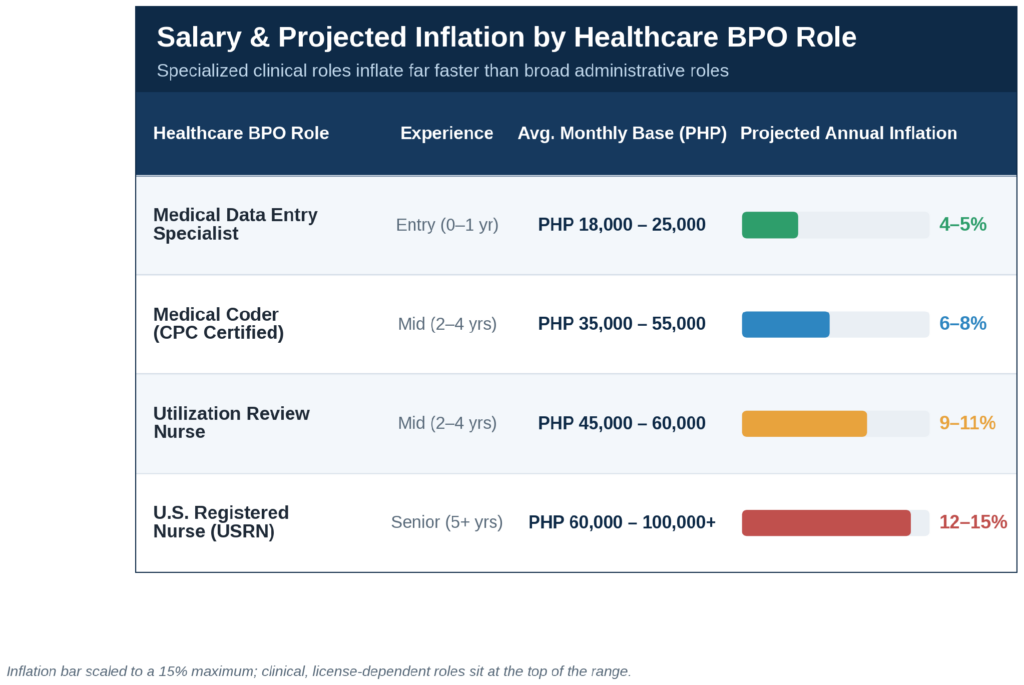
Figure 2 — Average monthly base pay and projected annual wage inflation by healthcare BPO role and experience level.
Which Geographic Strategies Help Mitigate Rising Personnel Expenditures?
Hospitals should look beyond Metro Manila, which commands the highest premiums and attrition. Establishing operations in Tier-2 and Tier-3 hubs—Iloilo Business Park, Clark Freeport Zone, Cebu IT Park—cuts base salaries meaningfully and improves retention, lowering the recurring overhead of recruitment and onboarding.
To maintain a sustainable cost structure, hospitals must look beyond the traditional confines of Metro Manila. The National Capital Region commands the highest salary premiums and the highest attrition rates in the country.
De-Risking via Tier-2 and Tier-3 Cities
Establishing operations in secondary and tertiary talent hubs offers immediate relief from escalating labor costs. Locations such as Iloilo Business Park, Clark Freeport Zone, and Cebu IT Park feature mature infrastructure and strong pipelines of local medical graduates.
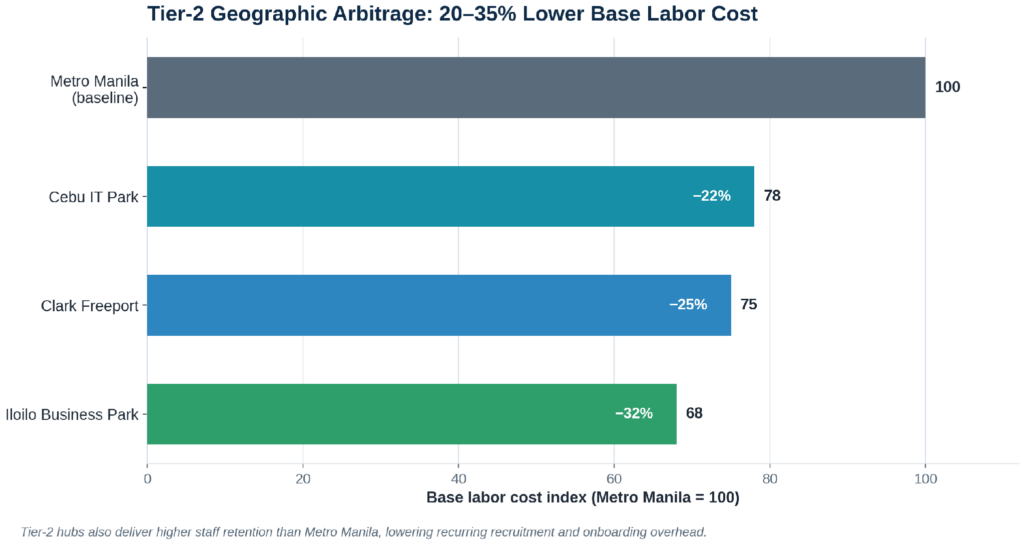
Figure 3 — Base labor cost indexed to Metro Manila: Tier-2 hubs run materially lower, with higher retention as an added benefit.
- Labor cost reductions: Base salaries in Tier-2 municipalities run well below their Manila counterparts.
- Improved retention: Lower operational density in these regions yields significantly higher staff retention, directly reducing the overhead of continuous recruitment and onboarding.
How Can Hospitals Structure Outsourcing Partnerships to Protect Against Inflation?
Move beyond head-count pricing. Procurement teams should prioritize vendors offering output-based pricing tied to transactions or outcomes, shared-productivity-gain clauses requiring efficiencies to offset annual wage increases, and turnover accountability that makes the vendor absorb retraining costs when attrition breaches agreed thresholds.
Hospitals can no longer view the Philippines simply as a destination for cheap labor. Sustaining long-term financial viability requires choosing partners that invest heavily in process automation and continuous clinical training. The goal should be increasing output per full-time employee, ensuring operational efficiencies outpace regional wage trends. — John Maczynski, CEO, PITON-Global
When structuring long-term service level agreements, hospital procurement teams should prioritize vendors that offer flexible commercial frameworks, such as:
- Output-based pricing: Transitioning from hourly head-count models to transaction- or outcome-based fee structures.
- Shared productivity gains: Building continuous-improvement clauses into contracts, requiring the vendor to offset annual wage increases through documented operational efficiencies.
- Turnover accountability: Requiring service partners to absorb retraining costs if clinical attrition rises above agreed-upon thresholds.
What Does an Inflation-Resistant Engagement Look Like?
A mid-sized US health system whose Manila captive stalled amid high coder attrition moved RCM to a specialized Iloilo provider on outcome-based pricing. It realized an immediate personnel-cost reduction, cut attrition sharply within a year, and improved clean-claims rates through workforce stability.
Client Challenge
A mid-sized US health system faced rising operating deficits from backlog accumulation in billing and utilization reviews. Attempts to scale its internal captive center in Manila stalled amid intense localized wage competition and persistently high attrition among its certified medical coders.
Vendor Selection Process
The health system engaged PITON-Global to identify alternative sourcing strategies. PITON-Global conducted an operational audit and screened its network of more than 100 vetted providers to find vendors with dedicated operations outside the capital region.
Solution Implemented
Operations were transitioned to a specialized healthcare provider in Iloilo City, and the contract shifted from a fixed hourly rate to an outcome-based model tied directly to claims accuracy and daily processing volumes. The outcomes are summarized below.
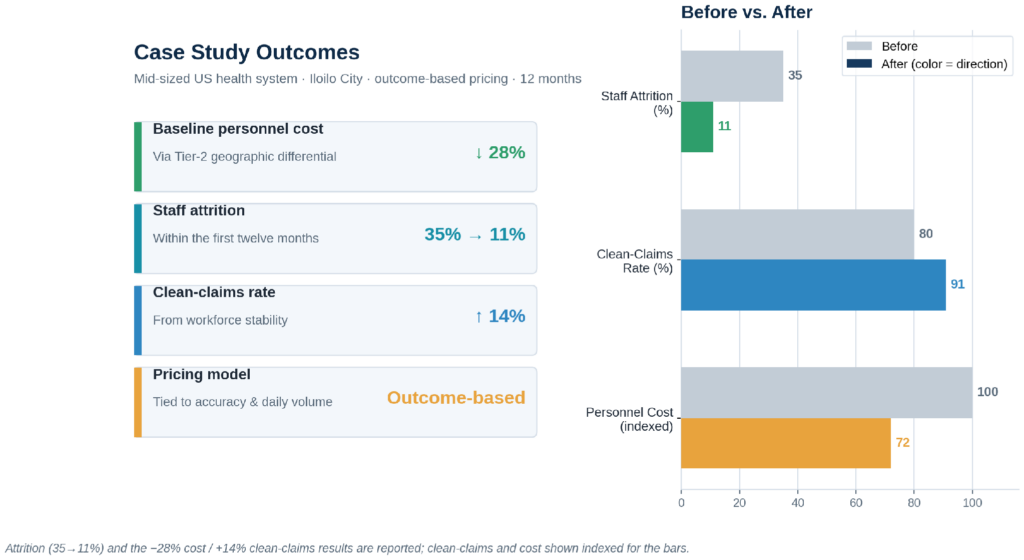
Figure 4 — Quantifiable outcomes within twelve months of transitioning to an Iloilo provider on outcome-based pricing.
Relying entirely on premier metro markets during periods of high demand exposes health systems to severe wage volatility. Diversifying into stable secondary markets provides a long-term buffer against rising costs.
Why Do Leading Health Systems Leverage PITON-Global for Strategic Sourcing?
Navigating the fragmented Philippine market requires localized intelligence and objective oversight. PITON-Global is an advisory-led consultancy—not a broker—that matches hospitals to specialized operators from a network of 100+ vetted providers, evaluating technical and security compliance, regional talent pipelines, and demonstrated resilience against wage inflation.
Navigating the highly fragmented Philippine outsourcing market requires localized market intelligence and objective oversight. PITON-Global operates as an elite BPO advisory and outsourcing consultancy rather than a traditional broker, guiding enterprise healthcare buyers through complex provider-selection processes to minimize operational risk.
With an active network of more than 100 carefully vetted call-center and back-office providers across the Philippines, PITON-Global provides direct access to highly specialized operations. Its advisory-led vendor-matching process evaluates providers across multiple operational pillars:
- Technical infrastructure and data-security compliance, including HIPAA and HITRUST certifications.
- Geographical positioning and regional talent pipelines.
- Demonstrated financial resilience against local wage inflation.
By partnering with PITON-Global, hospitals accelerate selection timelines, secure optimized commercial terms, and establish scalable, inflation-resistant offshore operations.
Frequently Asked Questions
What is the standard contract length required to lock in labor rates in the Philippines?
Most institutional providers offer rate guarantees for 12 to 24 months. Longer arrangements typically include a pre-negotiated, capped annual escalation clause to account for local cost-of-living adjustments.
How do changes to the CREATE MORE Act impact healthcare BPO costs?
The CREATE MORE Act provides enhanced fiscal incentives and tax deductions for registered business enterprises, particularly those in provincial areas. This lowers overall corporate overhead for providers outside Manila, letting them offer competitive wages while keeping client pricing stable.
Are employee benefits and healthcare coverage mandatory for outsourced staff?
Yes. Providing comprehensive HMO coverage that includes multiple dependents is standard practice for retaining skilled clinical talent. BPO vendors include these costs within their fully-loaded hourly or transactional rates.
How do Filipino BPO providers ensure data security for hospital records?
Top-tier providers maintain strict adherence to international security standards, including physical and digital access controls, data routed through secure VPNs without local storage, and full compliance with HIPAA and SOC 2 Type II criteria.
Can administrative medical coders transition easily into complex utilization-review roles?
Generally, no. Utilization review requires clinical judgment and active nursing credentials (such as an RN or USRN license). While medical coders are highly proficient in documentation and billing structures, they cannot substitute for licensed clinical staff.