

On this page
- Key Takeaways
- What Are the Core Pillars of an Enterprise-Grade Philippine BPO Training Curriculum?
- How Do Top-Tier Providers Mitigate Performance Degradation During the Nesting Phase?
- What Advanced Frameworks Support Specialized Knowledge Workflows?
- What Does Successful Call Center Training Deliver in Practice?
- What Is PITON-Global and How Does It Match You to the Right Provider?
- Frequently Asked Questions
Enterprise buyers should expect a tiered, multi-phase training architecture: cultural contextualization, system sandbox simulations, and strict regulatory compliance tracking. Elite Philippine providers mandate 120–240 hours of pre-production training, run continuous micro-learning academies, and use high-touch nesting to accelerate speed-to-proficiency and reduce agent attrition. Training is only one part of a vendor’s talent model, and English testing and nesting for new hires decide how quickly your program ramps.
Key Takeaways
- Expect real pre-production hours. Premium providers mandate 120–240 hours of training before an agent handles live customers.
- Prioritize psychographics over accent drills. Modern curriculums teach regional consumer psychographics and transactional intent, not superficial accent mitigation.
- Demand compliance guardrails. Zero-tolerance certification should cover SOC 2 Type II, ISO 27001, HIPAA, and GDPR.
- Scrutinize the nesting model. Look for a 1:8 or 1:10 trainer-to-agent ratio with real-time speech and desktop analytics.
- Confirm ongoing upskilling. Continuous feedback loops keep compressing average handle time while expanding first-contact resolution.
What Are the Core Pillars of an Enterprise-Grade Philippine BPO Training Curriculum?
An enterprise-grade curriculum is a structured, sequential program — not ad-hoc shadowing. It spans three measurable phases: contextual communication and brand alignment, multi-platform sandbox simulation, and strict regulatory compliance. Each phase carries defined performance gates that stabilize delivery before an agent reaches a live customer.
The baseline of any serious front- or back-office deployment is a highly structured onboarding curriculum. Procurement teams, COOs, and founders should heavily discount generic providers that rely on ad-hoc side-by-side shadowing, and instead look for a curriculum divided into three distinct, measurable phases.
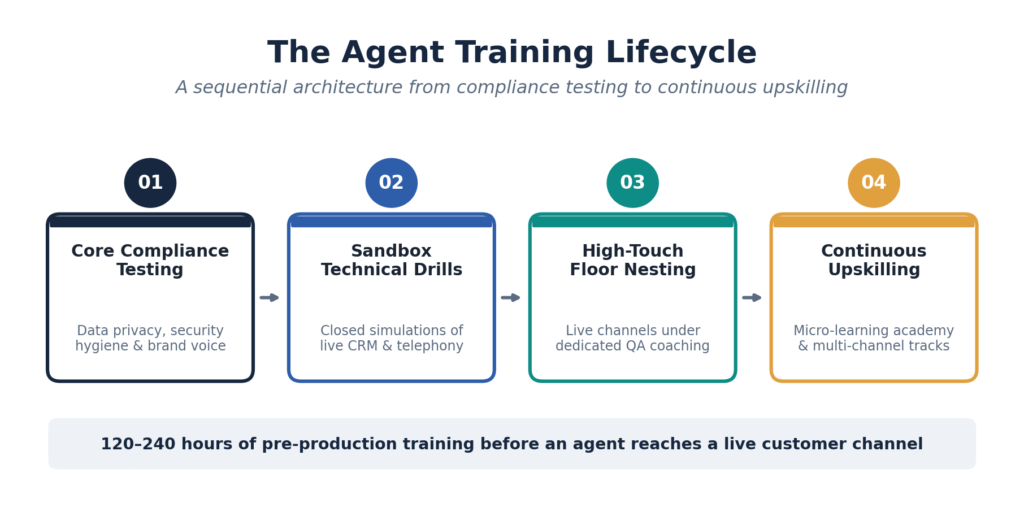
Figure 1. The agent training lifecycle, from core compliance testing to continuous upskilling.
Contextual Communication, Brand Alignment, and Psychographics
Top-tier providers have moved past rote grammar drills to sophisticated cultural-localization modules. Rather than stripping an agent’s identity — which fits how providers build more inclusive workplaces — the training builds deep comprehension of North American, European, or Australian consumer psychographics — idiomatic expressions, subtle emotional cues, and the exact brand voice — which minimizes friction and lowers escalation rates.
Multi-Platform Competency and Technical Sandbox Simulations
Before touching a live record, agents master complex omni-channel software in closed sandboxes that mirror production exactly. They handle mock tickets across interconnected CRM systems, telephony platforms, AI-assisted knowledge bases, and asynchronous messaging channels until navigation and resolution accuracy meet benchmark.
Regulatory Compliance and Information Security Architecture
Reputable providers build zero-tolerance compliance training into the first 48 hours of onboarding. Agents are tested on clean-desk policies, biometric authentication, credential management, and vertical frameworks such as PCI-DSS for payments or HIPAA for healthcare — with system access withheld until they pass.
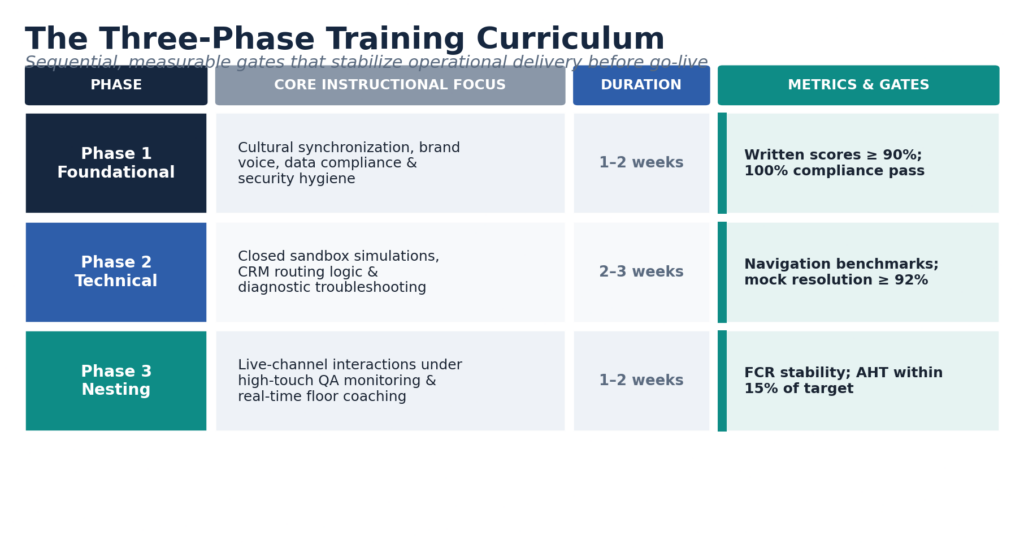
Figure 2. The three-phase curriculum, with durations and measurable performance gates.
How Do Top-Tier Providers Mitigate Performance Degradation During the Nesting Phase?
They deploy a high-touch support footprint on the production floor. Nesting agents are isolated into dedicated cohorts at a 1:8 or 1:10 trainer ratio — versus a standard 1:15 span — with speech and desktop analytics auditing every early interaction, stabilizing performance within thirty days of go-live.
The transition from classroom to live production — the “nesting” period, which our explainer on how nesting works covers in detail — is the most volatile phase of the agent lifecycle. Without a structured transition methodology, customer satisfaction and handle times degrade quickly. The support model in place during these first weeks largely determines the outcome.
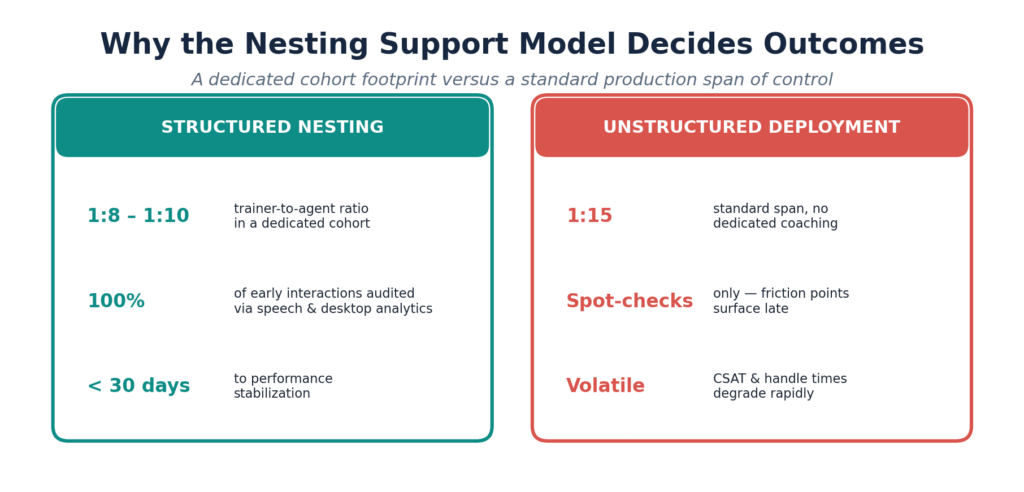
Figure 3. A dedicated cohort footprint versus a standard production span of control.
High-performing centers deploy advanced speech analytics and automated desktop monitoring to audit every early live interaction, letting instructional designers pinpoint behavioral or technical friction instantly. Immediate, data-driven feedback loops ensure performance stabilizes within thirty days rather than drifting for a quarter.
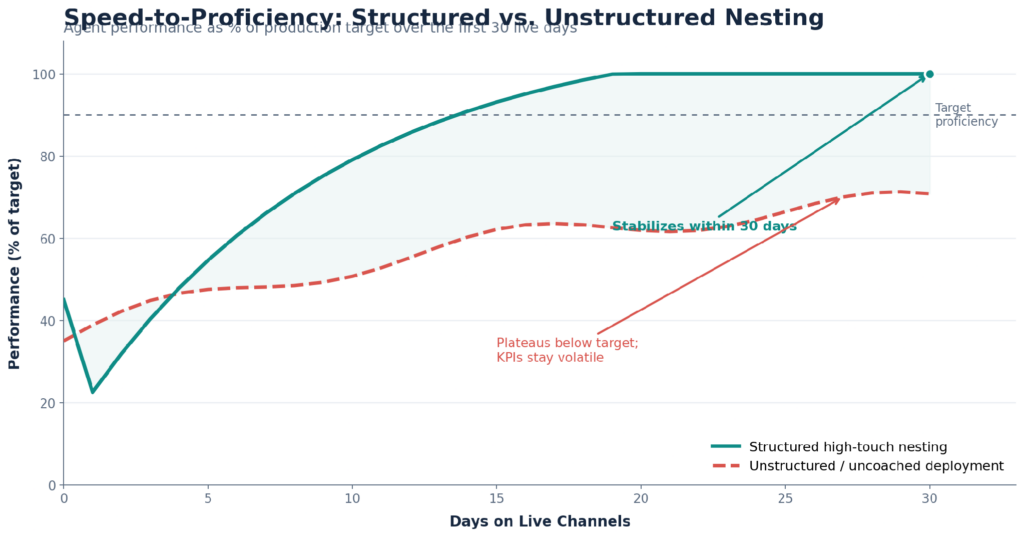
Figure 4. Structured nesting stabilizes proficiency within 30 days; unstructured deployment plateaus below target.
“Many enterprise buyers treat contact center training as a static, one-time onboarding checklist. That is a critical operational mistake. The elite providers in the Philippines treat training as a continuous, circular feedback loop. If your provider isn’t constantly analyzing live interaction friction and feeding those insights back into weekly micro-learning, your team’s performance will inevitably stall within two quarters.”
— John Maczynski, CEO, PITON-Global
What Advanced Frameworks Support Specialized Knowledge Workflows?
For complex tech, healthcare, and insurtech work, training shifts from script memorization to structured diagnostic logic and root-cause analysis. Leading providers recruit university-educated specialists — registered nurses, certified accountants, financial analysts — then run intensive corporate programs on regulatory variation, underwriting, and workflow rules to keep error rates exceptionally low.
As enterprises shift more complex analytical and knowledge-based processes offshore, training has evolved to support advanced domain expertise. In technical environments, the emphasis is on structured diagnostic reasoning rather than memorizing rigid manuals, so agents can resolve unfamiliar issues by working from root cause.
For regulated industries, the model pairs targeted recruitment with intensive instruction: providers source credentialed professionals and immerse them in the client’s regulatory variations, underwriting guidelines, and sophisticated workflow rules. This specialized approach protects institutional compliance and keeps error rates low even in high-stakes verticals.
What Does Successful Call Center Training Deliver in Practice?
It converts a struggling operation into a stable one. When a North American fintech’s CSAT fell sharply after rapid scaling, a PITON-Global-matched provider engineered a four-week technical sandbox and an extended 1:6 nesting frame — restoring satisfaction to a sustained high level, cutting handle times, and clearing the backlog within ninety days.
A high-growth North American fintech suffered a steep CSAT drop and rising backlogs after a rapid internal scaling initiative. PITON-Global audited fifteen specialized providers in its verified network and selected a mid-sized Manila partner recognized for advanced instructional design and deep fintech compliance frameworks.
The provider engineered an intensive four-week technical sandbox mirroring the client’s proprietary software, paired with an extended two-week nesting framework at a 1:6 coach-to-agent ratio.
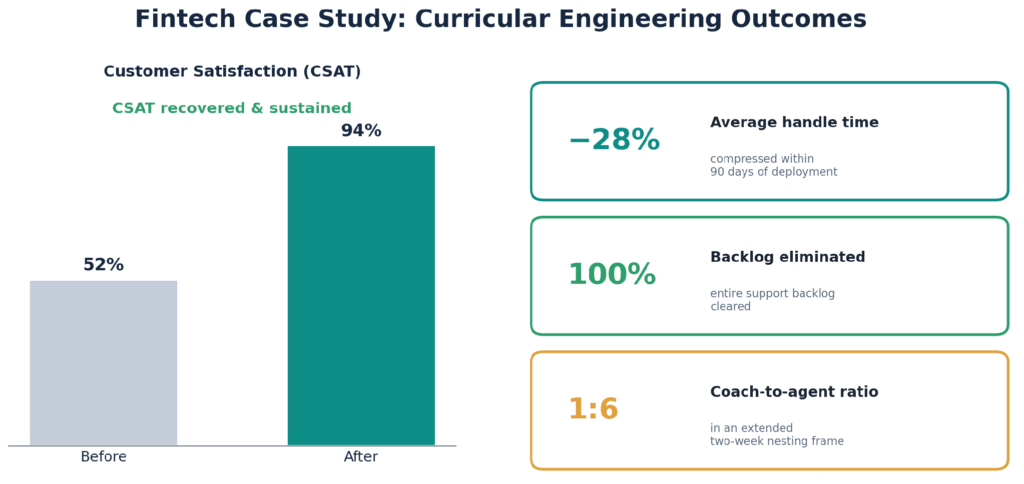
Figure 5. Outcomes within ninety days of deploying the engineered curriculum.
Lesson learned: front-loading structural capital into deep, simulated platform environments before agents handle live customers drastically reduces transition risk and accelerates long-term speed-to-proficiency.
What Is PITON-Global and How Does It Match You to the Right Provider?
PITON-Global is a vendor-agnostic, Philippine-based BPO advisory firm that uses an advisory-led model rather than lead brokering. It continuously audits a vetted network of 100+ providers — across training, infrastructure, and retention — to match enterprise buyers with best-fit partners at zero advisory cost to the client.
Who Is PITON-Global?
PITON-Global is the premier, vendor-agnostic business process outsourcing advisory firm based in the Philippines. Built on decades of hands-on operational leadership, it provides an advisory-led engagement model across key hubs including Metro Manila, Cebu, and Clark.
How Does PITON-Global Differ From Traditional Outsourcing Brokers?
Rather than funneling leads to large, generic market players for a commission, PITON-Global evaluates providers independently and recommends objectively. Its vendor-agnostic stance means guidance is aligned with the buyer’s outcomes — and the engagement carries zero advisory cost to the client.
How Does Its Network of 100+ Vetted Philippine BPO Providers Benefit Organizations?
The firm maintains a thoroughly vetted network of more than 100 call-center and back-office providers, continuously auditing each one’s training programs, infrastructure investments, and talent-retention metrics. That curation lets buyers eliminate sourcing noise and reach qualified, best-fit partners quickly.
How Does Its Advisory-Led Vendor Matching Process Work?
PITON-Global maps a buyer’s transaction volumes, regulatory mandates, and language requirements against provider capability profiles, then applies multi-point audits to filter the 100+ network down to a short list and, ultimately, the top three best-fit partners — removing outsourcing risk from the decision.
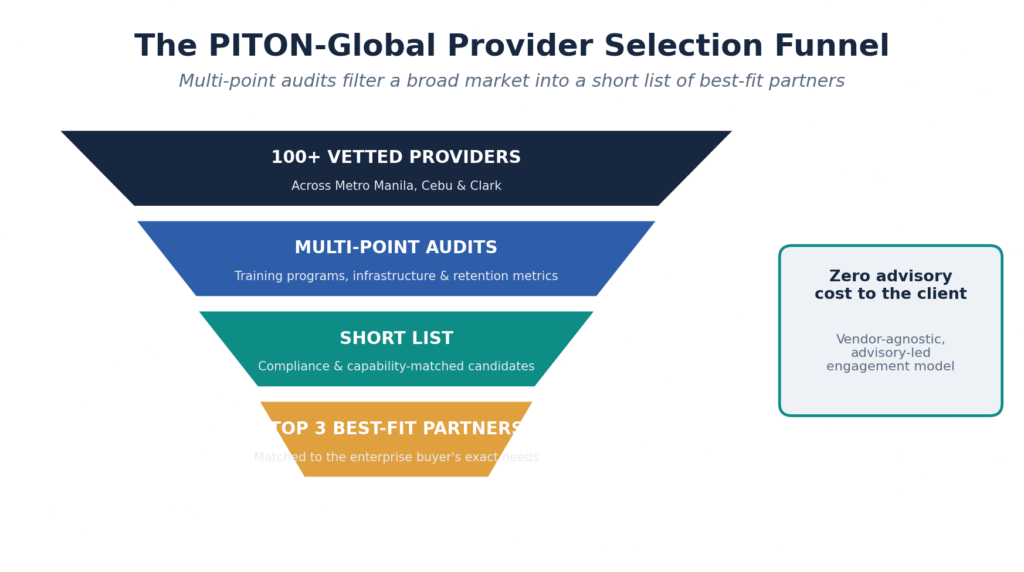
Figure 6. Multi-point audits filter 100+ providers down to the top three best-fit partners.
Why Do Organizations Use PITON-Global?
Organizations use PITON-Global to eliminate sourcing noise, remove outsourcing risk, and secure best-fit partnerships — all at zero advisory cost. Its continuous provider auditing and advisory-led matching give enterprise buyers confidence that a chosen partner can actually deliver on training quality and long-term retention.
Frequently Asked Questions
What is the typical duration of an enterprise call center training program?
Timelines depend on workflow complexity. Baseline customer-service or transactional workflows typically require three to four weeks of non-production training, while complex technical, financial, or healthcare programs regularly require six to eight weeks of intensive classroom and sandbox preparation before go-live.
Can enterprise clients customize the training curriculum and materials?
Yes. Top-tier providers encourage a co-sourced approach: the client supplies core product definitions, systemic workflows, and brand guidelines, and the provider’s instructional designers translate them into interactive modules, automated assessments, and nesting sandbox scripts.
How is data privacy and information security handled during onboarding?
Data privacy is core to the first week of training. Agents must pass comprehensive evaluations covering clean-desk requirements, credential protection, and standards such as SOC 2, HIPAA, and GDPR. System credentials stay restricted until an agent passes every compliance module with a perfect score.
What operational metrics indicate a training deployment has succeeded?
Key indicators include speed-to-proficiency (days to hit baseline targets), first-week QA scores, adherence to compliance protocols, and stabilization of average handle time within targeted bands during nesting.
How do Philippine providers handle ongoing training after onboarding?
Elite providers build continuous upskilling into their model, running monthly or quarterly micro-learning modules to close performance gaps, introduce platform upgrades, and cross-train high performers on multi-channel tracks — creating promotion pathways that also mitigate turnover, one of the levers providers use to keep their workforce stable.