
On this page
- Key Takeaways
- What Sourcing Frameworks Allow Businesses to Adjust Staffing in Real Time?
- How Does a 24/7 Follow-the-Sun Model Protect Domestic Teams?
- What Are the Operational Tradeoffs and Risks of Elastic Staffing?
- What Does Elastic Staffing Deliver in Practice?
- What Is PITON-Global and How Does It Match You to a Flexible Provider?
- Frequently Asked Questions
Call center outsourcing to the Philippines improves workforce flexibility by giving enterprises a scalable, multi-shift talent pool that absorbs seasonal spikes fast. Through fractional shared-agent models and 24/7 follow-the-sun coverage, businesses scale capacity up or down to match real-time volumes while converting fixed payroll into a variable cost.
Key Takeaways
- Scale on demand. Premium providers let businesses adjust seasonal headcount by up to 40% within 14 business days.
- Run continuous coverage. Seamless 24/7/365 multi-shift models eliminate domestic night-shift premiums and coverage gaps.
- Reallocate resources fluidly. Blended agent structures shift capacity between voice, chat, and email in real time based on queue volumes.
- Convert fixed cost to variable. Offshoring turns rigid payroll overhead into a predictive, variable Opex model.
- Protect quality while scaling. Cross-trained benches and performance-floor metrics keep FCR and CSAT stable during rapid ramps.
What Sourcing Frameworks Allow Businesses to Adjust Staffing in Real Time?
Three frameworks enable real-time adjustment: dedicated core teams for steady specialized work, elastic on-demand cohorts that flex ±20–40% for seasonal campaigns, and shared fractional models billed per minute or transaction. Top providers hold cross-trained “bench” capacity that deploys quickly to absorb spikes without degrading core operations.
Volatile transaction spikes — retail peak seasons, cyclical enrollment periods, or sudden market disruptions — pose real staffing risk. Sizing an internal domestic team for peak causes costly underutilization in the troughs, while staffing only for baseline triggers severe SLA failures during surges. Philippine providers resolve this with contractually guaranteed capacity frameworks.
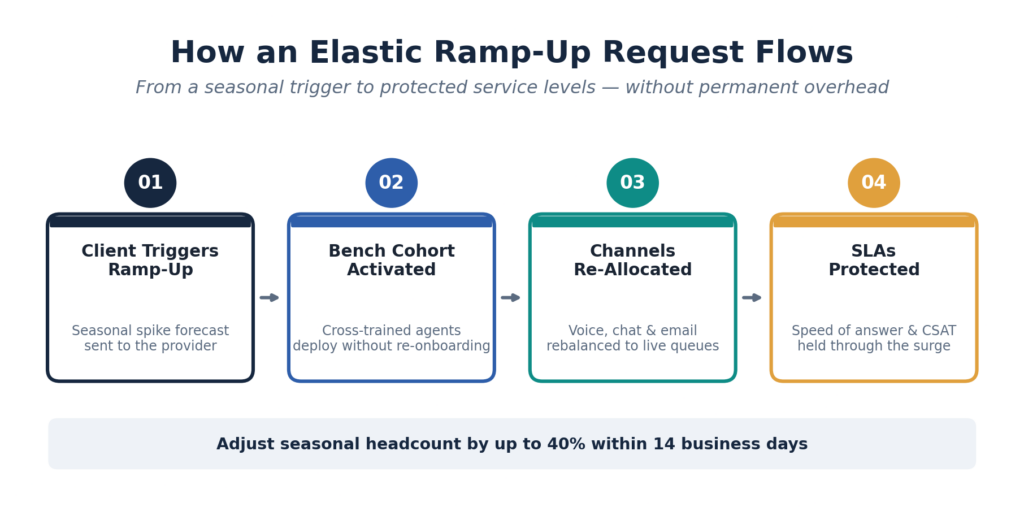
Figure 1. How an elastic ramp-up request flows, from seasonal trigger to protected SLAs.
The right architecture depends on the workload profile. Matching the staffing model to demand volatility is the core flexibility lever — and most enterprises blend more than one.
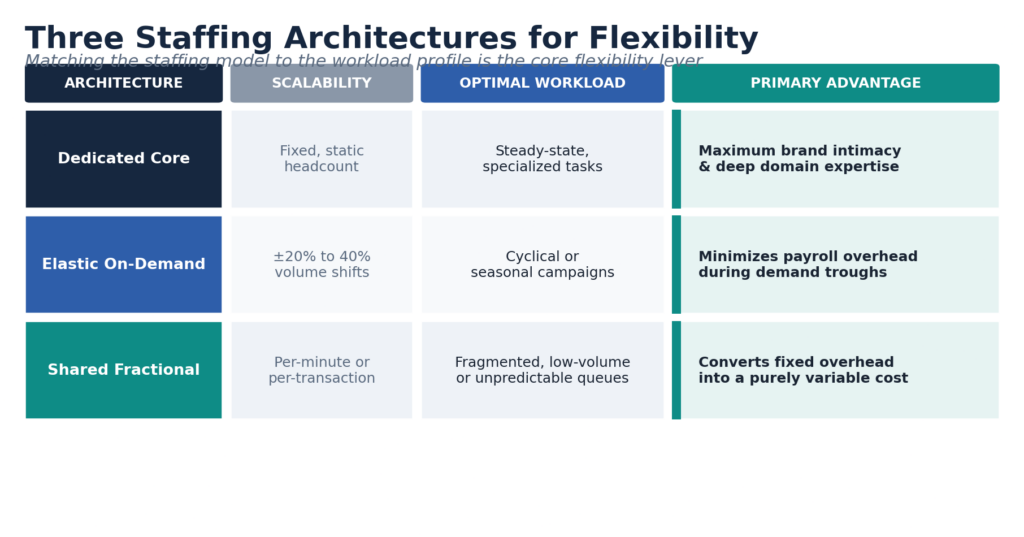
Figure 2. Three staffing architectures and the workloads each one fits best.
Dedicated Core
A fixed, static headcount handling steady-state, highly specialized tasks. This model maximizes brand intimacy and deep domain expertise, making it ideal for complex tier-2 work that rewards continuity.
Elastic On-Demand
Cohorts that flex ±20–40% to match highly cyclical or seasonal campaigns. The advantage is minimized payroll overhead during historical demand troughs, without sacrificing surge readiness.
Shared Fractional
Capacity billed per minute or per transaction, suited to fragmented, low-volume, or unpredictable queues. It converts fixed personnel overhead into a purely variable cost that tracks actual usage.
How Does a 24/7 Follow-the-Sun Model Protect Domestic Teams?
It shifts overnight, weekend, and holiday coverage to a Philippine partner whose standard daytime shifts in Manila or Cebu align with the client’s off-hours. That removes forced night shifts and mandatory overtime at home — lowering attrition — and lets domestic teams focus on high-value work during local business hours.
True flexibility is temporal as well as numerical. Forcing domestic staff onto permanent night shifts or mandatory weekend overtime spikes attrition and degrades service. Aligning the client’s off-hours with standard daytime shifts in the Philippines delivers continuous coverage without compromising employee satisfaction.
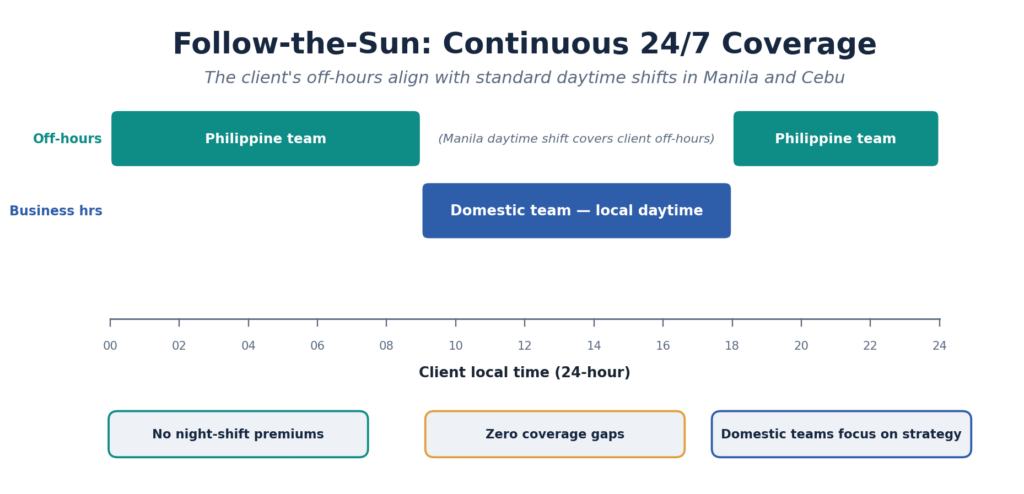
Figure 3. The client’s off-hours align with standard daytime shifts in Manila and Cebu.
“Many COOs evaluate the Philippines strictly through the lens of labor arbitrage. While the cost reduction is clear, the real strategic lever is operational elasticity. True flexibility means having the structural freedom to adjust your contact center’s footprint, language capabilities, and channel mix in response to market changes — without the friction of domestic headcount reductions or complex real estate adjustments.”
— John Maczynski, CEO, PITON-Global
What Are the Operational Tradeoffs and Risks of Elastic Staffing?
The main risk is quality dilution: ramping too fast without proper onboarding erodes first-contact resolution and CSAT. Mitigate it by requiring a comprehensive digital knowledge base, automated continuous evaluation loops, and clearly defined minimum performance-floor metrics in the elastic agreement itself.
Elastic staffing offers major financial upside, but rapid scaling can degrade performance if onboarding is compromised. There is a genuine tradeoff between deployment speed and baseline quality — and the goal is to operate in the zone where speed is high but scores still hold.
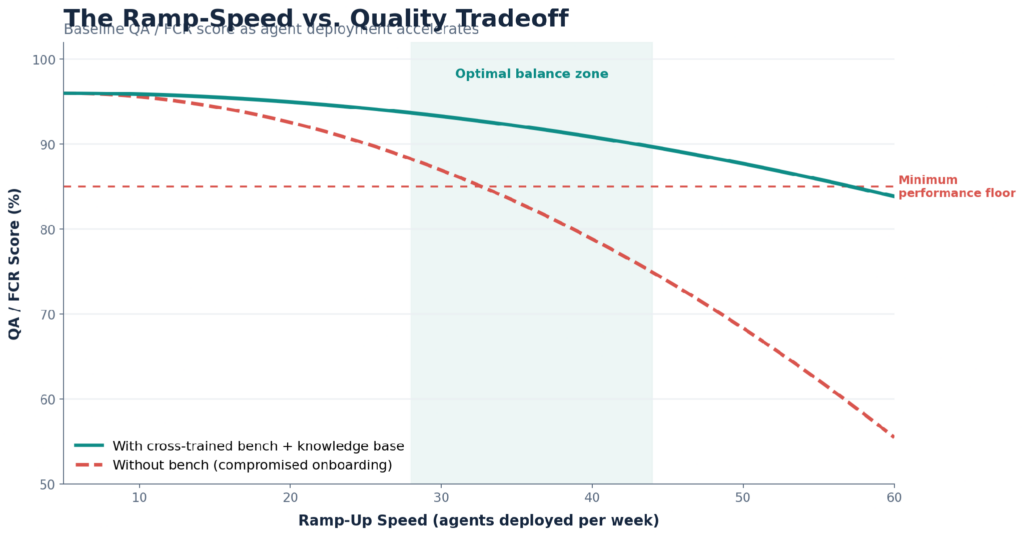
Figure 4. A cross-trained bench extends the safe zone where fast ramps still protect quality.
To stay in that zone, ensure the partner maintains an updated digital knowledge base and automated evaluation loops, and write minimum performance floors directly into the contract. This prevents rapid scaling from diluting FCR rates or CSAT scores.
What Does Elastic Staffing Deliver in Practice?
It absorbs massive spikes without permanent overhead. Facing a predictable 300% holiday surge, a North American e-commerce enterprise paired a dedicated tier-2 core with an elastic tier-1 cohort that scaled 300% at peak — holding average speed of answer under 45 seconds, saving over $450,000, and sustaining 93% CSAT.
A high-growth North American e-commerce enterprise faced a severe 300% surge in inquiries between November and January, causing catastrophic queue backlogs and agent burnout. PITON-Global audited its network to select a partner with large, flexible shared-services infrastructure and a proven record of rapid onboarding.
The provider designed a hybrid architecture: a dedicated core team handling complex tier-2 issues, paired with a flexible on-demand tier-1 cohort that scaled up 300% during peak weeks.
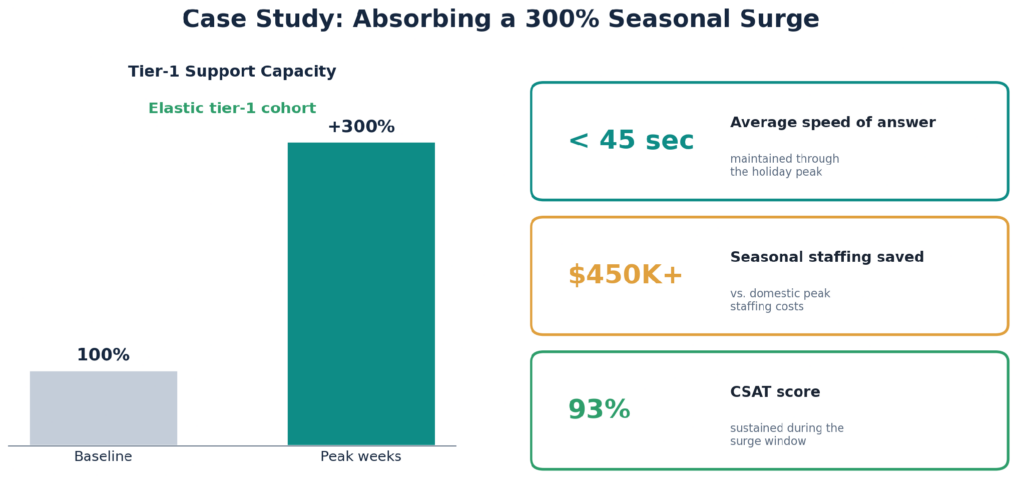
Figure 5. Service, savings, and satisfaction outcomes across the holiday peak.
Lesson learned: combining a dedicated core with a highly flexible, elastic tier-1 layer lets an organization absorb massive demand spikes without incurring permanent overhead.
What Is PITON-Global and How Does It Match You to a Flexible Provider?
PITON-Global is a vendor-agnostic, Philippine-based BPO advisory consultancy that removes risk from offshore vendor selection. It audits a vetted network of 100+ providers — including their workforce-management tools, attrition history, and elastic staffing capability — to deliver best-fit partnerships at zero advisory cost to the client.
Who Is PITON-Global?
PITON-Global is the premier, vendor-agnostic business process outsourcing advisory consultancy headquartered in the Philippines. It helps global enterprise buyers, CFOs, and operational leaders remove risk from offshore vendor selection by matching them with highly capable partners across major Philippine hubs.
How Does PITON-Global Differ From Traditional Outsourcing Brokers?
Rather than routing clients to generic, large-scale providers for a fee, PITON-Global evaluates providers independently and recommends objectively. Its vendor-agnostic model keeps guidance aligned with the buyer’s outcomes, and the engagement carries zero advisory cost to the client.
How Does Its Network of 100+ Vetted Philippine BPO Providers Benefit Organizations?
The firm maintains a thoroughly vetted network of more than 100 specialized contact-center and back-office providers. By continuously auditing each one’s workforce-management tools, historical attrition, and elastic staffing capabilities, it lets buyers reach a scalability-ready, best-fit partner quickly.
How Does Its Advisory-Led Vendor Matching Process Work?
PITON-Global maps a buyer’s volume patterns, language needs, and channel mix against provider capability profiles, then applies rigorous multi-point audits — workforce tools, attrition metrics, elastic capacity, and financial stability — to filter the network down to a custom-tailored, best-fit match.
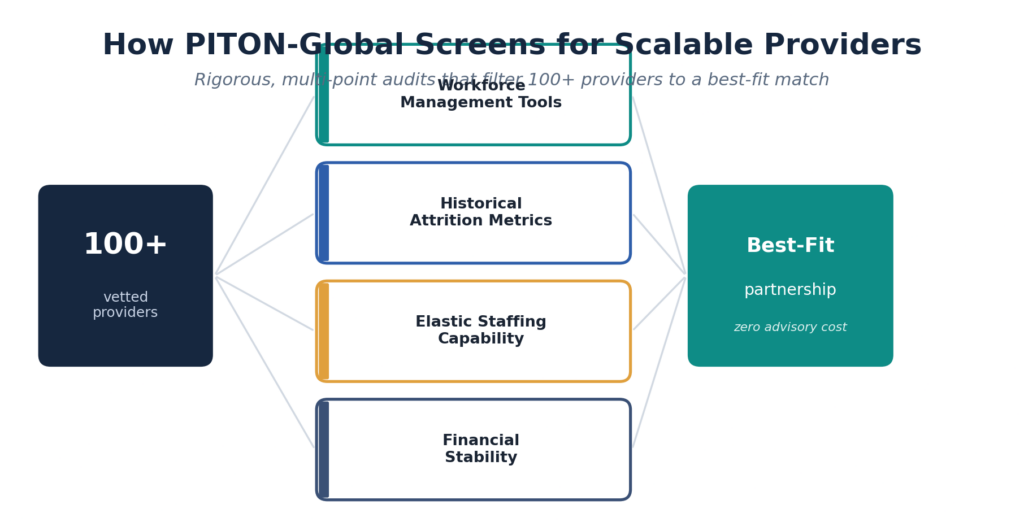
Figure 6. Multi-point audits filter 100+ providers into a scalability-ready best-fit match.
Why Do Organizations Use PITON-Global?
Organizations use PITON-Global to remove sourcing risk, secure genuinely scalable partners, and avoid predatory contracts — all at zero advisory cost. Its focus on workforce-management maturity and elastic capability ensures a chosen partner can actually flex with demand rather than just promising to.
Frequently Asked Questions
What notice is required to scale an offshore team up or down?
Standard enterprise SLAs typically require 14 to 30 days’ notice to scale a dedicated workforce up or down by 20–40%. With a shared or fractional model, volume variations can often be absorbed in real time without prior notification.
How do providers maintain quality during rapid scaling?
Premium providers cross-train a bench of active agents across multiple accounts. When a rapid scale-up is triggered, these pre-vetted resources deploy immediately, bypassing the multi-week onboarding cycle and keeping QA scores stable.
Are there cost premiums for running a 24/7 follow-the-sun operation?
No. Unlike domestic operations that require shift-differential premiums and overtime, night and weekend shifts are standard practice in the Philippine BPO ecosystem — enabling competitive, flat-rate 24/7 pricing.
Which channels can be integrated into an elastic staffing model?
Modern Philippine contact centers use integrated omni-channel platforms, letting agents move seamlessly between voice, live chat, email, social moderation, and SMS queues based on real-time traffic.
How does workforce flexibility help reduce agent attrition?
Flexible multi-shift scheduling and robust workforce-management software let providers optimize rotations, minimize mandatory overtime, and prevent burnout — directly improving retention and performance consistency.