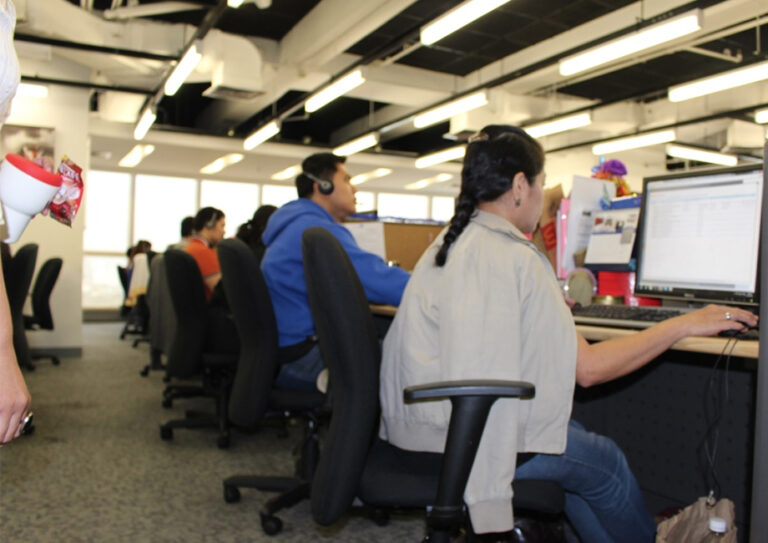

Proctoring services give universities, certification bodies and corporate training teams a trained observer for exams taken far from any testing room. Teams in the Philippines have become a common choice for that work, often alongside the exam-window support for learning platforms that keeps candidates logged in and on schedule. This guide covers what remote proctors do, how an exam day runs, and how to plan capacity for the weeks when every candidate sits at once.
What a remote proctor actually does
A remote proctor verifies that the right person is taking the exam, under the right conditions, and records anything that breaks the rules. The proctor does not grade the exam or decide whether a candidate cheated; that decision belongs to the institution, based on the evidence the proctor provides.
Most programs use one of three delivery modes, and many mix them by exam stakes.
Live online proctoring
A proctor watches the candidate’s webcam, microphone and screen in real time, usually monitoring several candidates at once. Live sessions suit high-stakes exams because the proctor can pause the exam, ask the candidate to re-scan the room or end the session when a rule is clearly broken.
Record-and-review proctoring
The session is recorded and a reviewer watches flagged segments afterward. This mode works well for large, lower-stakes assessments and for candidates in time zones where live coverage would be thin.
AI-flagged sessions with human review
Software flags events such as a second face, a phone in view, long gaps in gaze or a browser switch, and a trained reviewer decides whether each flag matters. Automated flags alone produce many false alarms, so the human review step is what makes the report usable.
The exam-day workflow, step by step
A well-run exam day follows the same sequence for every candidate, which is what makes the results defensible. The typical flow looks like this:
- Scheduling and a system check, so camera, microphone, bandwidth and lockdown browser problems are found before exam day rather than during it.
- Check-in, where the proctor confirms the candidate’s identity against a government or institutional ID.
- An environment scan, in which the candidate shows the desk, the room and sometimes the screen edges on camera.
- Monitoring throughout the exam, with the proctor noting any events against the institution’s rules.
- Incident handling, following a script the institution has approved: a warning, a pause, a note in the record or ending the session.
- Submission and post-exam review, where flagged moments are checked and a session report is written.
- Reporting to the institution, which makes any integrity decision and handles appeals.
Candidates also need help when something breaks, which is why many programs pair proctors with a small technical support desk. A frozen webcam ten minutes before a licensing exam is a support problem first and an integrity problem only if nobody fixes it.
Why exam bodies look to the Philippines
Exam bodies look to the Philippines mainly for clear English communication, round-the-clock coverage and a deep bench of people used to structured, quality-audited work. Each of those matters on exam day.
Communication comes first, because a proctor has to explain rules and instructions calmly to a nervous candidate. The EF English Proficiency Index 2025 ranks the Philippines 28th worldwide with a score of 569, in its “high” proficiency band, according to EF’s country profile.
Coverage comes next. Manila’s working day overlaps the North American night, so exam programs can offer overnight and weekend slots without paying premium local shift rates, and candidates in other regions can be served from the same floor.
The talent pool is the third reason. IBPAP reported that the Philippine IT-BPM industry passed $40 billion in export revenue in 2025 and employed about 1.9 million workers, according to Philstar’s January 2026 report. That depth means experienced team leads and QA reviewers, the people who keep proctoring consistent, are easier to hire.
Who uses offshore proctoring teams
The buyers range from universities running online degrees to professional bodies that certify thousands of candidates each cycle. Each group needs something slightly different from the same core workflow.
- Universities and colleges use proctors for online midterms and finals, often with accommodations such as extra time or rest breaks built into the schedule.
- Certification and licensing bodies need strict identity checks, consistent incident scripts and session records that stand up to appeals.
- Corporate training and compliance teams use lighter proctoring for internal certifications and regulated-role assessments.
- Course platforms and edtech companies need proctoring that fits their learner experience, plus help with login and access problems during exams.
Institutions setting up a program for the first time can use our guide to implementing education support offshore to plan the transition from pilot to full rollout.
Planning capacity around exam windows
Exam demand is predictable but extremely uneven, and the capacity plan should be built from the academic and certification calendars rather than from average weekly volume. Finals weeks and certification deadlines can bring most of a term’s sessions into a few days.
Good providers plan for that peak in advance. They cross-train candidate support agents as proctors, confirm how many candidates each live proctor may watch for each exam type, and run a practice session with the institution’s own exam before the first real window. They also keep the lockdown browser and identity tools tested so a vendor update does not arrive in the middle of finals.
Remote staffing has become more flexible since the CREATE MORE Act (Republic Act No. 12066) was signed in November 2024. It lets registered business enterprises in the Philippines run work-from-home arrangements for up to half of their workforce without losing incentives, as the Daily Tribune reported. For high-stakes proctoring, most institutions still prefer secure on-site floors, and any remote proctors need the same device and privacy controls.
Cost planning follows the same calendar. Our financial analysis of education support offshore explains how to compare seasonal staffing against a year-round in-house team.
Security and privacy basics
Proctoring collects some of the most sensitive data a learner will ever share: face video, room images, ID documents and keystroke-level activity. That data needs strict access controls, encryption in transit and at rest, short retention periods and a clear record of who viewed each session.
In the Philippines, the Data Privacy Act of 2012 (Republic Act No. 10173) governs the processing of personal information, and providers should also follow the institution’s own obligations in its home market. Our companion piece on building candidate trust in online exams goes deeper into privacy, fairness and appeals.
Integrity threats keep changing, from hidden second devices to screen-sharing tricks and impersonation. Proctors need regular refresher training on new cheating methods, and incident scripts should be updated as soon as a new pattern appears.
Frequently asked questions
Is live proctoring better than automated proctoring?
Neither is better for every exam. Live proctoring suits high-stakes exams where a proctor may need to intervene, while record-and-review or AI-flagged sessions with human review suit large, lower-stakes assessments.
Can a proctoring team cover candidates in every time zone?
Yes. A team based in Manila or Cebu can staff day, night and weekend shifts, so candidates in North America and other regions can book slots that suit them.
What happens when a proctor suspects cheating?
The proctor follows the institution’s approved script, which may mean a warning, a pause or ending the session, and records the evidence. The institution reviews the report and makes any integrity decision.
How early should an exam program plan capacity?
Plan at least one full exam cycle ahead. Staffing, training on the institution’s rules and a practice session all need to be complete before the first peak window opens.