
Back
Image Labeling Outsourcing Philippines: Pixel-Perfect Precision for Next-Gen AI

By Ralf Ellspermann / 19 March 2026
 Authored by Ralf Ellspermann, CSO of PITON-Global, & 25-Year Philippine BPO Veteran | Executive | Verified by John Maczynski, CEO of PITON-Global, and Former Global EVP of the World's Largest BPO Provider on March 19, 2026

TL;DR: The Key Takeaway
In 2026, image labeling in the Philippines has evolved from simple object tagging into a high-stakes discipline of “Pixel-Perfect Precision.” As global AI moves toward “Physical AI”—autonomous vehicles, surgical robots, and delivery drones—the Philippines has become the premier hub for Intelligence Arbitrage. By providing specialized AI Pilots who handle complex 4D sensor fusion and semantic segmentation, Filipino teams ensure that AI models perceive the world with human-like accuracy and ethical grounding.
Executive Briefing: The 2026 Image-Ops Paradigm
- Precision Over Volume: Modern computer vision success no longer depends on the quantity of data, but on the deliberate quality of its preparation. Weak annotation is now the #1 point of failure in production AI.
- The 4D Evolution: Industry standards have shifted from static 2D bounding boxes to 4D temporal sequences, tracking object velocity, occlusion, and intent across time.
- Fiscal Velocity: Under the CREATE MORE Act (2026), Philippine providers benefit from 100% deductions on power and AI training, keeping high-compute visual operations 60–75% more cost-effective than onshore labs.
- Sovereign Security: Elite hubs utilize Zero-Possession Data Architecture, where image data is streamed via encrypted tunnels and never resides on local Philippine drives, ensuring 100% GDPR and HIPAA 2.0 compliance.
- Strategic Partner: PITON-Global vets the top 1% of specialized Filipino labeling studios, focusing on achieving a quantifiable 35% increase in IoU (Intersection over Union) for client models.
Advancing Beyond Outlines: The New Era of Visual Data
For years, image labeling was treated as a preliminary task—drawing boxes around cars or pedestrians. In 2026, that model is obsolete. As AI is deployed in regulated, revenue-bearing environments like healthcare and autonomous transit, the “label” has become an enterprise-grade asset.
The Philippines has captured this high-value market by transitioning into Semantic Architecture. Filipino specialists—often university-educated “AI Pilots”—don’t just tag an object; they interpret environmental context. They can distinguish a dark shadow from a physical barrier, read the subtle body language of a cyclist at an intersection, or identify a sub-millimeter tumor in medical imaging. This “Human-in-the-Loop” (HITL) layer provides the cognitive depth that automated pre-labeling tools consistently miss, preventing the “hallucinations” that can lead to catastrophic system failures.
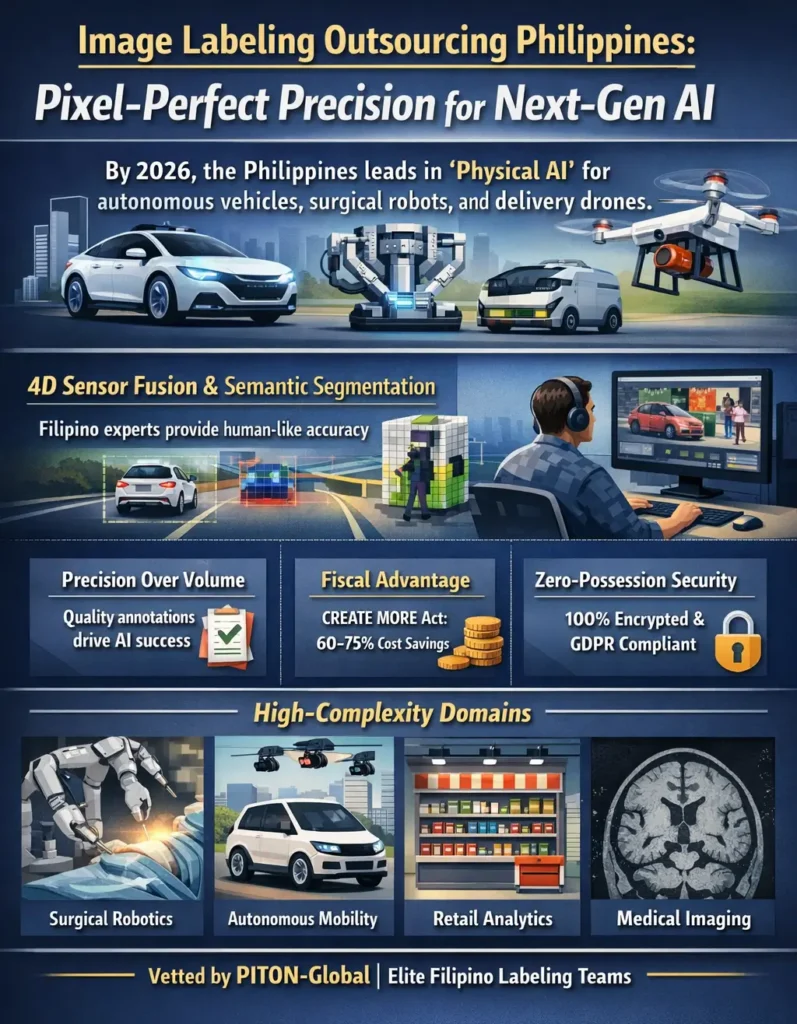
Table 1: Visual Annotation Maturity Matrix (2026)
How Philippine labeling hubs have elevated the “Ground Truth” for next-gen machine learning.
| Feature | Legacy Image Labeling | Philippine 2026 Standard |
| Primary Task | 2D Bounding Boxes | 3D Cuboids & 4D Kinematics |
| Granularity | Object-level tags | Pixel-level Semantic Segmentation |
| Logic | Visual identification | Contextual & Intent Interpretation |
| Security | Standard VPN/NDA | Zero-Possession Sovereign Sandboxes |
| Success Metric | Labels per Hour | 99.8% Pixel Accuracy / Model Lift |
Intelligence Arbitrage: Maximizing Environmental Comprehension
In 2026, the value of Philippine outsourcing is centered on Intelligence Arbitrage—accessing a workforce with a high “Adaptability Quotient” (AQ) capable of high-order reasoning. This is particularly vital in Sensor Fusion, where Filipino teams synchronize data from LiDAR, Radar, and 4K camera feeds into a single “Environmental Twin.”
When data is annotated by specialists who understand the laws of physics and human behavior, the resulting AI models are inherently more robust. This leads to a measurable impact: higher model confidence, fewer edge-case failures, and a significantly faster path to commercialization. Leading tech firms view the Philippines as a “Strategic Moat” because it provides the human touch required to protect a brand’s reputation in an increasingly automated world.
Table 2: High-Complexity Visual Domains in the Philippines
Philippine labs offer specialized clusters tailored to the most demanding AI sectors.
| Application | Complexity | Necessary Expertise | Strategic Impact |
| Surgical Robotics | Extreme | Anatomy & Biomechanics | Enables sub-millimeter precision in surgery. |
| Autonomous Mobility | High | 4D Sensor Fusion (LiDAR+Video) | Eliminates false alarms from shadows/weather. |
| Retail Analytics | High | SKU-level Attribute Tagging | Powers “Just-Walk-Out” frictionless retail. |
| Forensic SGI | Moderate | Deepfake & Metadata Tagging | Compliance with 2026 synthetic media laws. |
| AgTech Intelligence | Moderate | Multispectral Image Analysis | Validates carbon credits & predictive harvest. |
Expert Perspectives: Insights from PITON-Global
How does “Model-Based Pre-Annotation” work in the Philippines?
In 2026, we use Agentic AI to handle 70-80% of routine labeling. This allows our Filipino specialists to focus 100% of their attention on the “edge cases”—the ambiguous regions where the AI is most likely to fail. This hybrid approach ensures the “ground truth” is both fast and mathematically sound.
What is the impact of the “3-Hour Rule” on image labeling?
Under new 2026 IT regulations, synthetic content must be identified rapidly. Our partners provide “Live Forensic Teams” that proactively tag and watermark AI-generated imagery in near real-time, helping platforms stay within legal safe harbors.
Can these teams handle medical-grade imaging?
Yes. Elite Philippine teams consistently meet an IoU (Intersection over Union) of 0.95 to 0.98 for medical segmentation. These roles are often filled by licensed healthcare graduates who understand the clinical nuances of a radiology or pathology slide.
How does PITON-Global ensure data privacy for visual datasets?
We implement a Tri-Layer Defense. First, the data never resides on a local drive (Zero-Possession). Second, we use AI-driven compliance checks to flag anomalies. Third, our partners operate in SOC2 Type II and HIPAA-compliant environments, ensuring your proprietary IP is always protected.
Achieve sustainable growth with world-class BPO solutions!
PITON-Global connects you with industry-leading outsourcing providers to enhance customer experience, lower costs, and drive business success.
Get Your Top 1% Vendor List
Author
Ralf Ellspermann is a multi-awarded outsourcing executive with 25+ years of call center and BPO leadership in the Philippines, helping 500+ high-growth and mid-market companies scale call center and customer experience operations across financial services, fintech, insurance, healthcare, technology, travel, utilities, and social media.
A globally recognized industry authority—and a contributor to The Times of India and CustomerThink —he advises organizations on building compliant, high-performance offshore contact center operations that deliver measurable cost savings and sustained competitive advantage.
Known for his execution-first approach, Ralf bridges strategy and operations to turn call center and business process outsourcing into a true growth engine. His work consistently drives faster market entry, lower risk, and long-term operational resilience for global brands.
EXECUTIVE GOVERNANCE & ACCURACY STANDARDS
Authored by:

Ralf Ellspermann
Founder & CSO of PITON-Global,
25-Year Philippine BPO Veteran,
Multi-awarded Executive
Specializing in strategic sourcing and excellence in Manila
View Full Bio
Verified by:

John Maczynski
CEO of PITON-Global, and former Global EVP of the World’s largest BPO provider | 40 Years Experience
Ensuring global compliance and enterprise-grade service standards
View Full Bio
Last Peer Review: March 19, 2026
This service framework is audited quarterly to meet shifting global outsourcing regulations and COPC standards.