

On this page
- Key Takeaways
- What Core Frameworks Define High-Quality BPO Human Capital?
- How Do Regional Disparities and Local Realities Affect Talent Standards?
- What Does Re-Engineering Talent Quality Look Like in Practice?
- Why Partner with PITON-Global to De-Risk Provider Selection?
- Who Is PITON-Global?
- How Does PITON-Global Differ from Traditional Outsourcing Brokers?
- How Does PITON-Global’s Network of 100+ Vetted Providers Benefit Organizations?
- How Does PITON-Global’s Talent-Validation Framework Work?
- Why Do Organizations Use PITON-Global?
- What Are the Most Common Questions About Evaluating Philippine Call Center Workforce Quality?
Companies should evaluate Philippine call center workforce quality across three dimensions: cognitive and linguistic versatility, contextual problem-solving autonomy, and historical team stability. Rather than relying on static, vendor-supplied recruitment metrics, buyers should analyze calibrated first-contact resolution and verified agent tenure to protect against volatility and ensure a premium, brand-aligned experience. Those checks sit inside how we vet and shortlist Philippine providers.
Key Takeaways
- Linguistic depth over accent: Prioritize deep contextual comprehension and critical-thinking metrics over superficial accent-neutralization scores.
- Audit the attrition base: High workforce quality is inextricably linked to low turnover; verify that a provider’s multi-year attrition stays below industry baselines.
- Calibrate training autonomy: Evaluate the explicit latitude and localized system tools given to frontline agents to resolve complex escalations independently.
- Geographic talent mapping: Balance cost against talent accessibility by mapping your program’s complexity to the appropriate tier-1 or secondary regional hub.
What Core Frameworks Define High-Quality BPO Human Capital?
Because high-tier problem solvers are unevenly distributed even in a mature market, buyers should replace generic vendor checklists with a metrics-driven appraisal matrix—measuring contextual comprehension, complex FCR, account-level retention, and cross-platform accuracy against explicit benchmarks rather than grammar tests and handle time.
Evaluating workforce quality in a mature market like the Philippines requires moving past generalized baseline assumptions. While English fluency and cultural alignment are national traits, the distribution of high-tier technical problem solvers is highly fragmented across the industry. True quality is demonstrated when complex transactional workflows are handled with minimal downstream escalation.
The first step is to audit against the three quality dimensions rather than the vendor’s recruitment brochure.
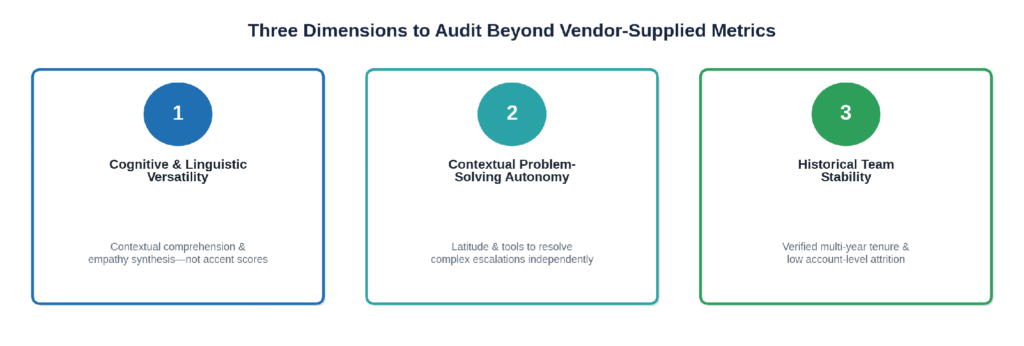
Figure 1. The three dimensions that define workforce quality: linguistic versatility, problem-solving autonomy, and stability.
Each dimension then maps to a concrete, high-value indicator and benchmark, replacing the conventional metrics that obscure real capability.
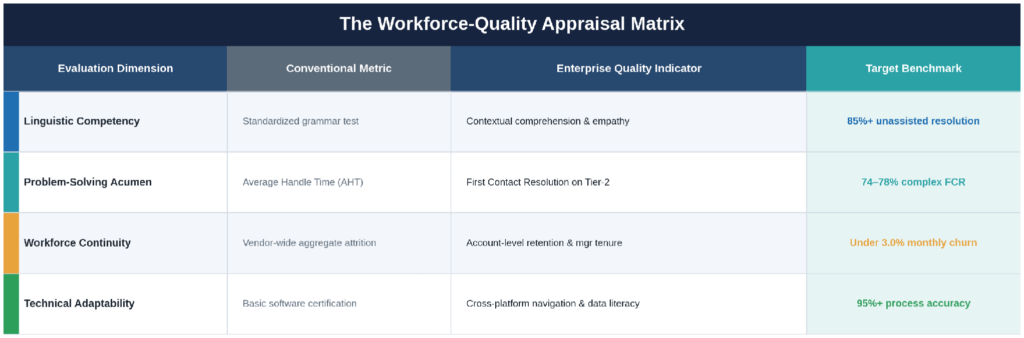
Figure 2. The appraisal matrix pairs each dimension’s conventional metric with a higher-value enterprise indicator and target.
The payoff is measurable. Teams measured purely on speed carry high escalation and depressed satisfaction, while teams incentivized on unassisted resolution invert both outcomes.
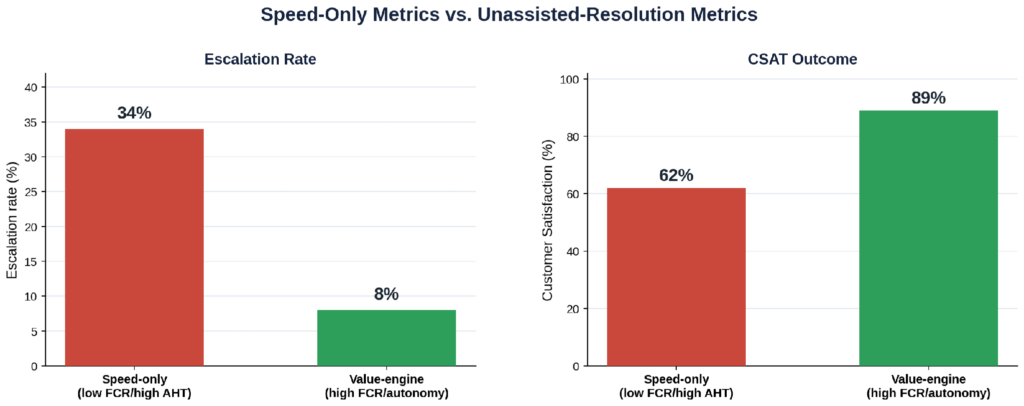
Figure 3. Value-engine metrics cut escalation sharply and lift CSAT versus speed-only measurement.
How Do Regional Disparities and Local Realities Affect Talent Standards?
The Philippine talent ecosystem is highly regionalized. Metro Manila offers a vast pool of specialized technical and financial talent but higher cost and competition, while next-wave hubs like Clark, Iloilo, and Davao offer exceptionally stable, loyal workforces with lower structural attrition for scaled customer-care lines.
Securing top-tier workforce quality requires evaluating where the talent is physically located. Major metropolitan zones like Metro Manila provide a vast pool of specialized technical, financial, and multi-channel talent, but they also bring higher operating costs and intense local competition. Provincial next-wave hubs present distinct trade-offs that buyers must weigh.
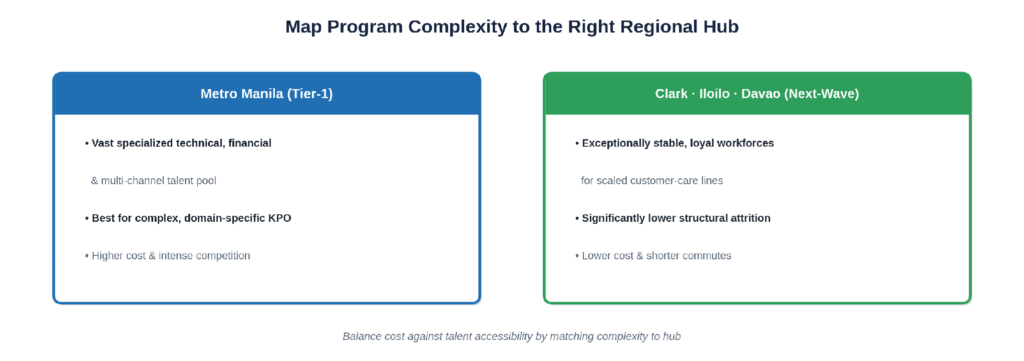
Figure 4. Map complexity to hub: Metro Manila for domain-specific KPO, next-wave hubs for stable scaled care.
Many western buyers incorrectly treat the entire Philippine labor supply as uniform. In reality, the operational baseline changes significantly between regional hubs. While Metro Manila remains the definitive epicenter for highly complex, domain-specific knowledge process outsourcing, secondary hubs like Clark, Iloilo, and Davao offer exceptionally stable, highly loyal workforces with significantly lower structural attrition for scaled customer care lines.
— John Maczynski, CEO, PITON-Global
What Does Re-Engineering Talent Quality Look Like in Practice?
Quality must be built in from day one, not inspected in later. One insurtech firm suffering a steep CSAT decline replaced generic voice screenings with a custom claims-simulation assessment and rewarded resolution accuracy over speed—stabilizing claims accuracy and recovering CSAT within 90 days.
Client Challenge
A high-volume North American insurtech firm experienced a steep decline in customer satisfaction and a ballooning ticket backlog due to poor claims-processing quality from a legacy commodity broker.
Selection and Solution
PITON-Global audited the operational requirements and leveraged its network of 100+ vetted providers to select a specialized boutique operator in Cebu with a deep financial-services talent pipeline. The program abandoned generic voice screenings for a custom claims-simulation assessment and shifted performance incentives away from speed to reward high resolution accuracy.
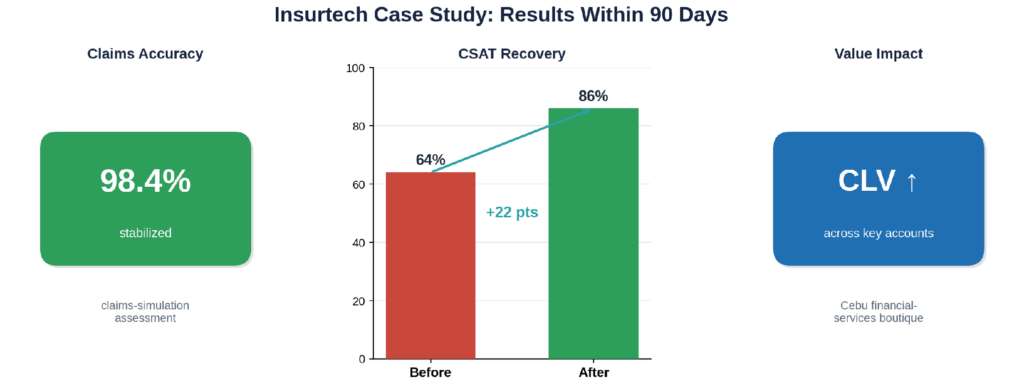
Figure 5. Quantifiable outcomes within 90 days of building quality in through specialized recruitment filters.
Outcomes and Lessons
Within 90 days, claims-processing accuracy stabilized at a high level, customer satisfaction recovered, and customer-lifetime-value metrics improved across key accounts. The lesson: workforce quality cannot be inspected into a program after the fact—it must be built in from day one by matching complex workflows with providers using highly specialized recruitment filters, a lesson echoed across the operational challenges of moving a program offshore.
Why Partner with PITON-Global to De-Risk Provider Selection?
PITON-Global is an elite, advisory-led consultancy, not a transaction broker. Across a vetted network of 100+ premier operators, its neutral, data-first methodology aligns software ecosystems, compliance frameworks, and language needs with the top tier of operators for your vertical—ensuring talent benchmarks are met immediately.
Who Is PITON-Global?
PITON-Global operates as an elite, advisory-led consulting firm rather than a traditional transaction broker. Maintaining an active, carefully vetted network of over 100 premier call center and back-office operators across the Philippines, it removes the guesswork from cross-border vendor selection in a market crowded with thousands of competing firms.
How Does PITON-Global Differ from Traditional Outsourcing Brokers?
PITON-Global’s value lies in a neutral, data-first methodology. Rather than forwarding leads, it aligns corporate software ecosystems, regulatory compliance frameworks, and required language competencies with the top tier of operators suited to your vertical—eliminating the common pitfalls of offshore expansion.
How Does PITON-Global’s Network of 100+ Vetted Providers Benefit Organizations?
The vetted network of more than 100 premier operators lets organizations bypass a risky open-market search. Because each is assessed for vertical competency and real stability, buyers reach a partner genuinely able to meet demanding talent benchmarks from day one.
How Does PITON-Global’s Talent-Validation Framework Work?
PITON-Global runs a four-stage framework: intent analysis of program complexity and quality benchmarks, tech-stack mapping of software, compliance, and language needs, hub-matched selection down to the top tier of providers, and performance stabilization that locks in benchmarks and key-personnel clauses.
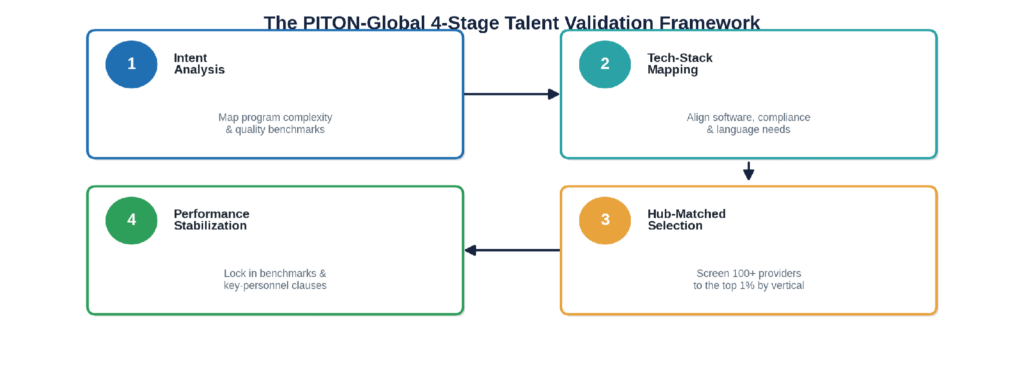
Figure 6. PITON-Global’s four-stage talent-validation framework, from intent analysis to performance stabilization.
Why Do Organizations Use PITON-Global?
Organizations use PITON-Global to de-risk provider selection and ensure talent benchmarks are met immediately. By validating quality against a structured framework before matching, the firm helps enterprises avoid commodity vendors and secure providers whose workforce quality is built in rather than promised.
What Are the Most Common Questions About Evaluating Philippine Call Center Workforce Quality?
Common questions concern verifying recruitment selectivity, the role of internal training academies, whether WFH degrades quality, shielding accounts from backfill, why manager tenure predicts quality, and whether language tests should be contextual. Each is answered below.
How Should a Buyer Verify a Prospective Vendor’s Actual Recruitment Selectivity?
Buyers should audit the vendor’s historical hiring-funnel ratios. Elite enterprise-grade contact centers typically accept only a small fraction of raw applicants, ensuring only highly capable candidates are selected.
What Role Does a Provider’s Internal Training Academy Play in Workforce Quality?
It is a critical indicator of long-term quality. Leading providers invest heavily in multi-week specialized training academies, continuous micro-credentialing, and middle-management development rather than relying solely on base skills. Buyers building their own center face the same task, as the 12-week GCC framework shows.
Do Work-From-Home Models Degrade Workforce Quality in the Philippines?
Not inherently, provided the vendor uses rigorous infrastructure standards. High-quality providers run secure hybrid models with zero-trust network architectures, automated activity tracking, and routine virtual coaching to maintain consistent delivery.
How Do We Shield Our Account From Being Backfilled With Low-Tier Talent After Launch?
Incorporate strict Key Personnel Clauses into your Master Services Agreement. These provisions should mandate explicit educational minimums, tenure requirements, and customer-care certifications for all replacement personnel. Write them into the bid documents from the start, as our guide to contact center RFPs recommends.
Why Is Middle-Management Tenure a Reliable Proxy for Frontline Quality?
Frontline agents perform only as well as they are coached. A center with a stable, tenured layer of team leaders and operations managers consistently shows higher process compliance, faster resolution, and superior team morale.
Should Language Assessments Include Contextual and Idiomatic Testing?
Yes. Traditional accent testing is insufficient for modern omnichannel expectations. Reliable evaluations must test an agent’s ability to interpret subtext, navigate complex frustrations, and synthesize brand-appropriate alignment.