
Back
Finance Outsourcing Philippines: From Transactional Processing to Strategic Orchestration
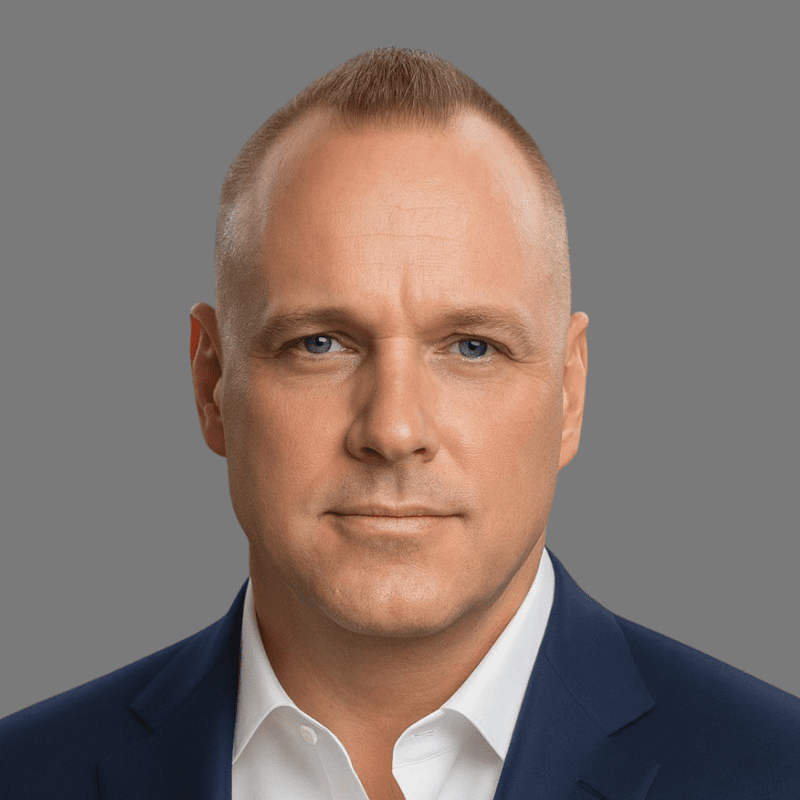
By Ralf Ellspermann / 19 February 2026
 Authored by Ralf Ellspermann, CSO of PITON-Global, & 25-Year Philippine BPO Veteran | Executive | Verified by John Maczynski, CEO of PITON-Global, and Former Global EVP of the World's Largest BPO Provider on February 19, 2026

30-Second Executive Briefing
- The Paradigm Shift: In 2026, Finance & Accounting (F&A) has moved from “Batch Processing” to Continuous Accounting, reducing month-end cycles by 70%.
- The Intelligence Edge: The Philippines provides a high-density pool of 200,000+ US GAAP-trained CPAs acting as “AI Pilots” to oversee Agentic AI workflows.
- The Bottom Line: Enterprises are achieving a 65–75% reduction in TCO while maintaining 100% compliance with DORA, SOX, and HIPAA 2.0.
Executive Summary: The 2026 Fiscal Shift
In 2026, the office of the CFO has undergone a radical transformation. The era of the “10-day month-end close” is dead, replaced by the demand for real-time capital visibility. Finance Outsourcing in the Philippines has emerged as the global catalyst for this shift, moving far beyond simple accounts payable (AP) and accounts receivable (AR).
Today, premium Philippine finance hubs function as Strategic Orchestration Centers. By pairing the country’s deep pool of university-educated CPAs with Agentic AI, global firms are achieving a “Continuous Close” state, where balance sheets are reconciled with atomic precision every 24 hours. Velocity is no longer a luxury; it is the primary moat against market volatility.
“In my 40 years of global BPO leadership, I have never seen a tool as powerful as the Philippine ‘Intelligence Pod.’ We are no longer just cutting costs; we are providing CFOs with a ‘God View’ of their capital in real-time. If your balance sheet isn’t audit-ready every 24 hours, you aren’t just slow—you’re at risk.” — John Maczynski, CEO of PITON-Global
Case Study 1: Global SaaS Entity – The “Zero-Day” Close
The Client: A Silicon Valley SaaS firm with $900M ARR and complex multi-currency revenue streams.
- The Challenge: A 12-day month-end close cycle that delayed board reporting and strategic reinvestment decisions.
- The Philippine Solution: Deployment of an Agentic AI Finance Pod in Manila.
- The Strategy: Transitioned from manual reconciliation to Atomic Reconciliation. AI agents autonomously matched 98% of transactions across 14 currencies in real-time.
- The Result: * Month-end close reduced to 3 days.
- 92% reduction in manual journal entries.
- $1.2M annual savings in overhead through Outcome-Based Pricing.
Beyond RPA: The Rise of Atomic Reconciliation
While the early 2020s focused on basic Robotic Process Automation (RPA), 2026 is defined by Hyper-Automation. Philippine finance pods utilize Agentic AI—systems capable of multi-step reasoning and autonomous decision-making—to handle the heavy lifting of data normalization.
Table 1: 2026 Performance Benchmark – Philippine F&A Pods
| Performance Metric | Traditional Onshore | Philippine “AI Pilot” Pod | Efficiency Delta |
| Cost Per Invoice (AP) | $12.50 – $18.00 | **$2.50 – $3.50** | 78% Savings |
| Reconciliation Accuracy | 94.2% | 99.9% | AI-driven precision |
| Audit Preparation Time | 120+ Hours | Zero (Continuous) | 100% “Always-On” |
| FTE Productivity | 1.0x | 4.2x | Intelligence Arbitrage |
Solving the Automation Paradox: The “Human-in-the-Loop” Edge
In 2026, many CFOs have fallen into the “Automation Paradox”—the more processes they automate with generic AI, the more catastrophic the outliers become. When an autonomous agent misinterprets a complex tax treaty, the lack of a Human-in-the-Loop (HITL) architecture creates massive exposure.
This is where the Philippine model excels. We hire for Judgment Architecture. A Filipino CPA in 2026 functions as a “Model Governor,” ensuring Agentic AI remains aligned with US GAAP and IFRS standards. Internal 2025 audits reveal that finance pods in Manila achieved a 22% higher accuracy rate on non-linear exceptions compared to onshore teams relying on legacy systems.
The Legislative Moat: CREATE MORE Act (RA 12066)
The implementation of the CREATE MORE Act has solidified the Philippines’ position as the safest harbor for sensitive financial data.
“The fiscal certainty provided by RA 12066 is the ‘secret sauce’ for 2026. It allows us to build a ‘Resilience Mesh’ across the archipelago. Your finance function never goes offline because our talent isn’t tethered to a single office building. We’ve effectively decoupled geographic risk from fiscal performance.” — Ralf Ellspermann, CSO of PITON-Global
Table 2: F&A Data Sovereignty & Security Protocol
| Feature | Legacy Standard | 2026 Philippine Standard | Risk Mitigation |
| Data Location | Local BPO Servers | Client-Owned Cloud (VPC) | Zero-Possession Model |
| Employee Access | Password/Duo MFA | Biometric Iris/Facial Scan | Absolute Identity Truth |
| Audit Trail | Manual Logs | AI-Driven Behavior Monitor | Insider Threat Detection |
| Data Interaction | Edit/Download | Encrypted VDI (View-Only) | GDPR 2.0 Compliance |
FAQ: 2026 Tactical Insights
Q1: How does the Philippines handle complex compliance like SOX or DORA?
A: In 2026, Manila is a specialized compliance hub. Senior F&A staff utilize AI Sentinel Agents to perform continuous, micro-batch reconciliations. This automates an unalterable “Chain of Custody” for every record, moving you from periodic audits to Continuous Assurance.
Q2: What exactly is “Agentic AI” in the context of Philippine F&A?
A: Unlike traditional AI, Agentic AI acts autonomously toward a goal (e.g., “Resolve all AP discrepancies”). Filipino CPAs act as the Judgment Architects, supervising these agents to prevent “AI hallucinations” and ensure 100% accuracy in high-stakes fiscal reporting.
Q3: Can we outsource if our internal processes are currently “messy”?
A: 2026 is actually the best time to migrate. Philippine partners now specialize in “Data Hygiene & Standardization.” They act as the “Clean-Up Crew,” taking fragmented legacy processes and migrating them into SOP-driven workflows before layering on AI, fixing your process while you scale.
Achieve sustainable growth with world-class BPO solutions!
PITON-Global connects you with industry-leading outsourcing providers to enhance customer experience, lower costs, and drive business success.
Get Your Top 1% Vendor List
Author
Ralf Ellspermann is a multi-awarded outsourcing executive with 25+ years of call center and BPO leadership in the Philippines, helping 500+ high-growth and mid-market companies scale call center and customer experience operations across financial services, fintech, insurance, healthcare, technology, travel, utilities, and social media.
A globally recognized industry authority - and a contributor to The Times of India, CustomerThink, and The AI Journal - he advises organizations on building compliant, high-performance offshore contact center operations that deliver measurable cost savings and sustained competitive advantage.
Known for his execution-first approach, Ralf bridges strategy and operations to turn call center and business process outsourcing into a true growth engine. His work consistently drives faster market entry, lower risk, and long-term operational resilience for global brands.
EXECUTIVE GOVERNANCE & ACCURACY STANDARDS
Authored by:
Ralf Ellspermann
Founder & CSO of PITON-Global,
25-Year Philippine BPO Veteran,
Multi-awarded Executive
Specializing in strategic sourcing and excellence in Manila
View Full Bio
Verified by:
John Maczynski
CEO of PITON-Global, and former Global EVP of the World’s largest BPO provider | 40 Years Experience
Ensuring global compliance and enterprise-grade service standards
View Full Bio
Last Peer Review: February 19, 2026
This service framework is audited quarterly to meet shifting global outsourcing regulations and COPC standards.