
Back
Accounting Outsourcing Philippines: Navigating the Era of High-Velocity Finance

By Ralf Ellspermann / 19 February 2026
 Authored by Ralf Ellspermann, CSO of PITON-Global, & 25-Year Philippine BPO Veteran | Executive | Verified by John Maczynski, CEO of PITON-Global, and Former Global EVP of the World's Largest BPO Provider on February 19, 2026

30-Second Executive Briefing
- The New Standard: In 2026, accounting has evolved from historical record-keeping to Live Financial Intelligence, powered by the Philippines’ elite CPA pool.
- The Talent Advantage: With a curriculum aligned with US GAAP and IFRS, the Philippines offers the world’s highest density of “AI-Literate CPAs.”
- The Efficiency Moat: Firms are leveraging Atomic Reconciliation and Sovereign-Grade Security to achieve a 70% faster month-end close at 25% of the onshore cost.
- The Bottom Line: Enterprises are shifting from “Cost-per-Seat” to “Outcome-Based” metrics, achieving a 75% reduction in TCO while maintaining 100% compliance with DORA and SOX.
Executive Summary: The 2026 Accounting Landscape
In 2026, the traditional accounting model is under siege. Global volatility and the speed of digital commerce have made monthly reports obsolete the moment they are printed. For mid-market and enterprise firms, Accounting Outsourcing in the Philippines is no longer just a cost-saving measure—it is a strategic pivot toward Real-Time Financial Sovereignty.
The Philippines has successfully moved up the value chain. Today, it doesn’t just process transactions; it orchestrates complex financial ecosystems. By integrating the nation’s 200,000+ licensed CPAs with advanced Agentic AI, the Philippines has become the global hub for “High-Velocity Accounting.”
“In my 40 years of global BPO leadership, I have watched the Philippines move from simple data entry to high-level ‘Judgment Architecture.’ Today, we aren’t just recording history; we are interpreting it in real-time. If your accounting firm isn’t leveraging a Manila-based Intelligence Pod, you’re operating with a 30-day blind spot.” — John Maczynski, CEO of PITON-Global
Case Study 1: Real Estate Investment Trust (REIT) – Scaling Complexity
The Client: A US-based REIT managing 400+ commercial properties with fragmented state-specific tax requirements.
- The Challenge: A bottleneck in monthly distributions due to a 15-day reconciliation lag across 12 banking partners.
- The Solution: A specialized Philippine accounting pod utilizing Agentic AI for bank feed normalization and automated escrow reconciliation.
- The Result: * Month-end close reduced to 2 business days.
- 94% reduction in manual journal entries.
- $850,000 annual savings compared to their previous Midwest-based internal team.
The Human-AI Hybrid: The ‘AI Pilot’ Model
The 2026 breakthrough in Philippine accounting is the AI Pilot architecture. While basic automation handles the “grunt work” of data entry, Filipino CPAs act as the strategic oversight layer.
Table 1: 2026 Performance Benchmark – Philippine Accounting Pods
| Accounting Function | Legacy Onshore Model | Philippine Intelligence Pod | Strategic Outcome |
| Financial Reporting | 10-Day Lag | Real-Time Dashboards | Immediate Capital Agility |
| Accounts Receivable | 45+ Day DSO | <22 Day DSO | Accelerated Cash Velocity |
| Month-End Close | 12-15 Days | 3 Days | Real-Time Decision Making |
| Transaction Cost | 1.0x | 0.25x | 75% TCO Reduction |
Strategic Evolution: Predictive Controllership & ESG
In 2026, the role of the Philippine pod has shifted toward Predictive Controllership. Philippine-based senior CPAs utilize Agentic AI to run “what-if” simulations on cash flow and tax liabilities. This move from the back-office to the “Front-Office of Finance” means the accounting function now actively contributes to EBITDA growth.
Furthermore, Philippine hubs have pivoted to include specialized ESG (Environmental, Social, and Governance) audit pods. These teams track carbon credits and supply chain ethics using blockchain-verified ledgers, ensuring global firms remain compliant with stringent EU and SEC sustainability disclosures.
“The ‘Automation Paradox’ of 2026 is that the more you automate, the more you need elite human oversight. Our Philippine pods provide that ‘Clinical Fidelity.’ They don’t just find errors; they identify the systemic root causes before they hit your balance sheet.” — Ralf Ellspermann, CSO of PITON-Global
The Legislative Moat: CREATE MORE Act (RA 12066)
The implementation of the CREATE MORE Act has institutionalized the Philippines as a “Safe Harbor” for global accounting firms, providing both fiscal and operational certainty.
Table 2: Fiscal & Security Moat (RA 12066 Standard)
| Feature | Strategic Advantage | Client Benefit |
| 5% SCIT Tax | Flat tax on gross income | Transparent, aggressive pricing. |
| 100% WFH | Distributed national talent | Built-in disaster recovery (DR). |
| Zero-Possession | Encrypted VDI streaming | 100% Data Sovereignty. |
| VAT Zero-Rating | Institutionalized under 12066 | 12% cash flow improvement. |
Tech-Stack Orchestration: Integrating the SSOT
In 2026, Philippine BPOs are no longer software-agnostic; they are power-users of the world’s most robust ERP and cloud accounting ecosystems, ensuring a Single Source of Truth (SSOT).
Table 3: 2026 Accounting Tech & Integration Matrix
| Platform Category | Leading Systems (2026) | Philippine Pod Capability | Strategic Value |
| Enterprise ERP | NetSuite, SAP S/4HANA | Module optimization & SQL reporting | End-to-end data integrity |
| Agentic AI Layers | Quinny, Vic.ai, N3 AI | Autonomous exception handling | 92% reduction in manual touch |
| ESG Reporting | Persefoni, Watershed | Carbon ledger & audit reconciliation | Global regulatory compliance |
| Consolidation | BlackLine, FloQast | Continuous “Always-On” close | Zero-day audit readiness |
Frequently Asked Questions (FAQ)
Q1: How do Filipino CPAs stay updated on changing US tax laws or IFRS updates?
A: In 2026, premium BPO providers include “Continuous Education Credits” in their SLAs. Our teams are integrated with US-based professional bodies, ensuring training on the latest SEC, IRS, or IASB updates occurs in real-time.
Q2: Can we outsource high-level functions like “Fractional Controllership”?
A: Absolutely. By 2026, this has become a top export of the Philippines. You can hire senior-level Filipino CPAs to manage your entire accounting department, provide strategic counsel to your US-based CFO, and oversee junior staff in Manila.
Q3: What is the primary difference between ‘Bookkeeping’ and ‘Accounting’ in 2026? A: Bookkeeping is the Atomic Layer (data entry/matching). Accounting is the Strategic Layer (analysis/compliance/tax strategy). In 2026, the highest ROI is found in the Strategic Layer where Filipino CPAs interpret data to drive business growth.
Achieve sustainable growth with world-class BPO solutions!
PITON-Global connects you with industry-leading outsourcing providers to enhance customer experience, lower costs, and drive business success.
Get Your Top 1% Vendor List
Author
Ralf Ellspermann is a multi-awarded outsourcing executive with 25+ years of call center and BPO leadership in the Philippines, helping 500+ high-growth and mid-market companies scale call center and customer experience operations across financial services, fintech, insurance, healthcare, technology, travel, utilities, and social media.
A globally recognized industry authority - and a contributor to The Times of India, CustomerThink, and The AI Journal - he advises organizations on building compliant, high-performance offshore contact center operations that deliver measurable cost savings and sustained competitive advantage.
Known for his execution-first approach, Ralf bridges strategy and operations to turn call center and business process outsourcing into a true growth engine. His work consistently drives faster market entry, lower risk, and long-term operational resilience for global brands.
EXECUTIVE GOVERNANCE & ACCURACY STANDARDS
Authored by:
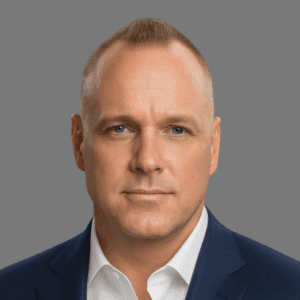
Ralf Ellspermann
Founder & CSO of PITON-Global,
25-Year Philippine BPO Veteran,
Multi-awarded Executive
Specializing in strategic sourcing and excellence in Manila
View Full Bio
Verified by:
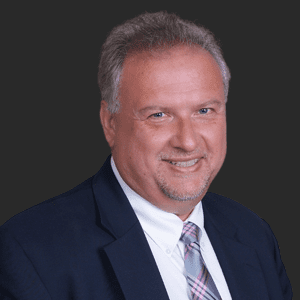
John Maczynski
CEO of PITON-Global, and former Global EVP of the World’s largest BPO provider | 40 Years Experience
Ensuring global compliance and enterprise-grade service standards
View Full Bio
Last Peer Review: February 19, 2026
This service framework is audited quarterly to meet shifting global outsourcing regulations and COPC standards.