
Back
AI Training Data Auditing Outsourcing Philippines: Guaranteeing the Integrity of Your Data Pipeline

By Ralf Ellspermann / 11 March 2026
 Authored by Ralf Ellspermann, CSO of PITON-Global, & 25-Year Philippine BPO Veteran | Executive | Verified by John Maczynski, CEO of PITON-Global, and Former Global EVP of the World's Largest BPO Provider on March 11, 2026

TL;DR: The Key Takeaway
AI training data auditing is no longer a procedural afterthought but the central pillar supporting the integrity of any serious AI development pipeline. Strategic outsourcing to the Philippines provides the essential human-led scrutiny required to transform raw data into a trusted, high-fidelity asset, ensuring that AI models are built on a foundation of verifiable truth, not systemic error.
In an era where “Intelligence Arbitrage” defines market leaders, high-stakes AI training data auditing in the Philippines has become the definitive safeguard against systemic bias and model failure. By replacing basic automated checks with expert-led human oversight, organizations ensure their AI frameworks are built on verified, ethically sound, and commercially viable data foundations.
Executive Briefing
- Foundation of Reliability: Independent third-party auditing is now a mandatory phase in the AI lifecycle to ensure model safety and functional accuracy.
- The Human Oversight Shift: Industry standards have migrated from simple automated validation to deep, investigative human auditing to catch nuanced logical inconsistencies.
- Strategic Hub: The Philippines dominates this niche by providing a highly analytical, English-proficient workforce specializing in complex data forensics and “Risk Piloting.”
- Commercial Viability: Beyond technical hygiene, data integrity directly dictates an AI’s market performance, regulatory compliance, and long-term liability profile.
- Elite Connectivity: PITON-Global serves as the primary gateway, matching global AI innovators with the archipelago’s most sophisticated data auditing teams.
The Integrity Imperative: Surpassing Superficial Validation
The age-old “garbage in, garbage out” mantra has reached a critical tipping point within the realm of machine learning. Historically, enterprises relied on elementary validation—software-driven scripts meant to flag broken links or formatting hiccups. While useful for initial data scrubbing, these tools provide a dangerous illusion of security in a landscape dominated by generative models and autonomous agents.
Hidden prejudices and subtle contextual errors act as invisible toxins within an AI’s architecture. A script might confirm a data field is populated, yet it lacks the cognitive depth to determine if that information is logically sound or ethically skewed. These overlooked discrepancies are exactly what cause autonomous systems to misread environments or diagnostic AI to yield life-altering errors. Only a meticulous audit, executed by seasoned human specialists, can penetrate these layers to rectify the root causes of data decay. For any firm prioritizing safe and ethical deployment, this level of scrutiny is an absolute operational requirement.
Why the Philippines Leads the Global Data Auditing Market
The rise of the Philippines as a powerhouse for high-level data forensics is a calculated result of its unique professional ecosystem. Unlike traditional outsourcing hubs focused on rote repetition, the Philippine BPO sector has matured into a center for high-cognition tasks. The local talent pool possesses a rare blend of linguistic fluency, a “detective” mindset, and a cultural commitment to precision.
These professionals are not merely processing information; they are interrogating it. They navigate intricate rule sets to spot patterns that automated systems are blind to. This human-centric approach, supported by a world-class infrastructure that adheres to “Zero-Trust” security protocols, makes the region the ideal environment for mission-critical auditing. The archipelago offers more than just scale—it provides a fortified partnership model designed for the complexities of modern intelligence.
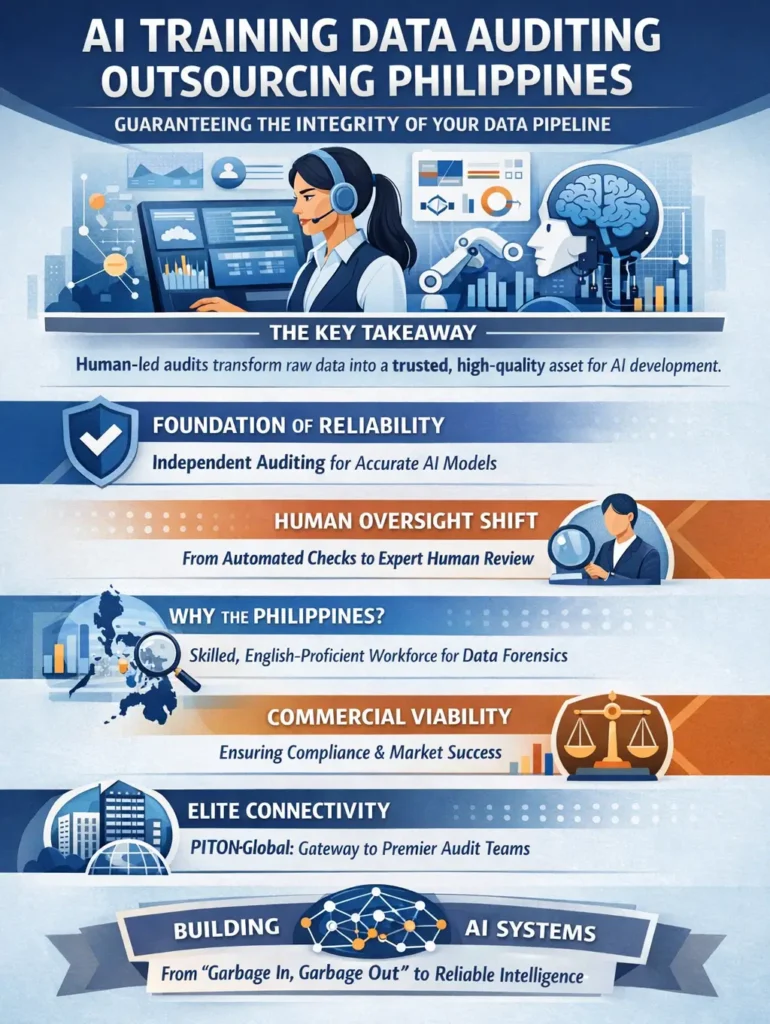
Table 1: Evolution from Validation to Comprehensive Auditing
Distinguishing between basic checks and forensic auditing is vital for leaders aiming to future-proof their data pipelines.
| Dimension | Basic Data Validation (Automated) | Comprehensive Data Auditing (Human-Led) |
| Primary Scope | Surface errors (formatting, missing text) | Systemic flaws (bias, logic gaps, trends) |
| Methodology | Predefined rules and scripts | Statistical forensics and root cause analysis |
| Core Objective | Data cleanliness | Absolute data integrity and trust |
| Talent Profile | Script developers | Data analysts and domain specialists |
| Strategic Value | Preliminary hygiene step | Pillar of AI governance and risk control |
| Outcome | Usable but limited dataset | Reliable, high-performing AI model |
The Mechanics of a Premier Data Auditing Framework
A world-class audit is never a static event; it is a persistent, cyclical integration within the development process. This methodology leverages “Intelligence Arbitrage,” where human expertise optimizes the output of automated systems through several sophisticated phases.
Initially, the process begins by establishing “Ground Truth” benchmarks—defining exactly what constitutes high-quality data for a specific use case. Following this, auditors employ advanced statistical sampling. Instead of a superficial sweep, they perform deep-dive “detective work” on representative subsets to categorize errors. This classification allows the team to move into the most vital stage: identifying the origin of the corruption. Whether the issue stems from vague annotation guidelines or flawed collection methods, these insights create a feedback loop that fixes the problem at its source, rather than just treating the symptoms.
Table 2: AI Training Data Auditing Maturity Model
Organizations must transition from reactive “firefighting” to a predictive state of quality assurance to remain competitive.
| Maturity Level | Key Characteristics | Strategic Focus |
| Level 1: Ad-Hoc | Quality is treated as a secondary thought. | Reactive problem-solving. |
| Level 2: Foundational | Basic automated scripts are utilized. | Establishing baseline cleanliness. |
| Level 3: Systematic | Human-led auditing is applied consistently. | Identifying and fixing systemic errors. |
| Level 4: Strategic | Auditing is a core part of the AI lifecycle. | Proactive data asset management. |
| Level 5: Predictive | Data prevents future quality degradation. | Continuous excellence and AI leadership. |
Agentic Governance: The Role of Auditing in Trustworthy AI
As we move toward a world of autonomous agents, the necessity for rigorous oversight has never been higher. Whether an AI is managing a power grid or handling sensitive customer interactions, it must operate within a framework of safety and human alignment. High-fidelity data auditing serves as the bedrock of this “Agentic Governance.”
Since an AI’s behavior is an unvarnished reflection of its training material, flawed data inevitably leads to flawed actions. Independent audits act as the ultimate check and balance, filtering out the prejudices that lead to legal liabilities or brand-damaging failures. The specialists within the Southeast Asian BPO landscape serve as the ultimate guardians of this integrity, providing the human oversight necessary for the next generation of autonomous innovation.
Expert Insights & FAQs
How does data auditing differ from AI “Red Teaming”?
Think of red teaming as a stress test for a finished product; it’s an adversarial attempt to break the model. Conversely, data auditing is a foundational, preventative measure. It happens during the input phase to ensure the AI never learns “bad habits” in the first place. One builds the wall correctly; the other tests if the wall can be knocked down.
Which data errors pose the greatest threat to a project?
The most dangerous issues are rarely the obvious ones. While mislabels are easy to spot, the true threats are systemic—such as “selection bias,” where the data doesn’t represent reality, or “instructional drift,” where different annotators interpret rules in conflicting ways. These subtle rot points cause catastrophic failures post-deployment.
How should a company measure the ROI of a data audit?
Return on investment is found in the prevention of downstream disasters. This includes avoiding the massive costs of retraining a corrupted model, dodging regulatory fines for biased algorithms, and protecting brand equity. It is significantly cheaper to audit data today than to settle a lawsuit tomorrow.
What traits define a top-tier auditing team?
Technical skills are baseline, but the real differentiators are skepticism and cognitive endurance. High-performing auditors function like investigative journalists; they question assumptions and possess the mental stamina to maintain extreme precision across millions of data points. This specific psychological profile is what makes Philippine teams the global gold standard.
Achieve sustainable growth with world-class BPO solutions!
PITON-Global connects you with industry-leading outsourcing providers to enhance customer experience, lower costs, and drive business success.
Get Your Top 1% Vendor List
Author
Ralf Ellspermann is a multi-awarded outsourcing executive with 25+ years of call center and BPO leadership in the Philippines, helping 500+ high-growth and mid-market companies scale call center and customer experience operations across financial services, fintech, insurance, healthcare, technology, travel, utilities, and social media.
A globally recognized industry authority—and a contributor to The Times of India and CustomerThink —he advises organizations on building compliant, high-performance offshore contact center operations that deliver measurable cost savings and sustained competitive advantage.
Known for his execution-first approach, Ralf bridges strategy and operations to turn call center and business process outsourcing into a true growth engine. His work consistently drives faster market entry, lower risk, and long-term operational resilience for global brands.
EXECUTIVE GOVERNANCE & ACCURACY STANDARDS
Authored by:

Ralf Ellspermann
Founder & CSO of PITON-Global,
25-Year Philippine BPO Veteran,
Multi-awarded Executive
Specializing in strategic sourcing and excellence in Manila
View Full Bio
Verified by:

John Maczynski
CEO of PITON-Global, and former Global EVP of the World’s largest BPO provider | 40 Years Experience
Ensuring global compliance and enterprise-grade service standards
View Full Bio
Last Peer Review: March 11, 2026
This service framework is audited quarterly to meet shifting global outsourcing regulations and COPC standards.