
Back
How Can Outsourcing to the Philippines Improve Workforce Flexibility Across Business Functions?

By Ralf Ellspermann / 24 June 2026
 Authored by Ralf Ellspermann, CSO of PITON-Global, & 25-Year Philippine BPO Veteran | Executive | Verified by John Maczynski, CEO of PITON-Global, and Former Global EVP of the World's Largest BPO Provider on June 24, 2026

Outsourcing to the Philippines enhances cross-functional flexibility by providing rapid access to a scalable, multi-skilled talent pool operating 24/7/365. By decoupling capacity from local labor constraints, enterprises dynamically adjust team sizes, absorb seasonal spikes, and deploy specialized skills across CX, technical support, and back-office—without long-term domestic overhead.
Key Takeaways
- Elastic operational scaling: Expand or contract front- and back-office teams by 30–50% within weeks to mirror shifting market demand.
- Continuous business continuity: Establish uninterrupted 24/7 operations across global time zones via the geographic and cultural alignment of the Philippine workforce.
- Rapid skills deployment: Inject immediate specialized expertise into technical, financial, and creative functions without prolonged domestic recruitment cycles.
- Optimized cost architecture: Convert rigid fixed labor overhead into a flexible variable-cost structure, liberating capital for strategic growth.
What Is the Operational Impact of Decoupling Capacity from Domestic Labor Markets?
Decoupling capacity shifts operations from a fixed-cost model to an elastic, variable-cost architecture. Because providers maintain deep talent pipelines and continuous training academies, enterprises can scale headcount dynamically—absorbing seasonal spikes without over-hiring or risking service degradation.
When an enterprise anchors operational capacity solely to domestic hiring pools, it faces severe structural friction. Tight local labor markets, lengthy recruitment cycles, high onboarding costs, and strict employment regulations make scaling a department up or down slow and expensive.
Outsourcing to the Philippines fundamentally alters this dynamic by shifting operations from a fixed-cost model to an elastic, variable-cost architecture. Because leading BPO providers maintain deep talent pipelines and continuous training academies, an enterprise can adjust headcount across multiple business functions dynamically. This elasticity is especially critical for seasonal spikes or sudden expansions: rather than over-hiring permanent staff (and paying for idle time off-peak) or under-hiring (and risking service degradation), organizations use external teams that scale precisely alongside transaction volumes.
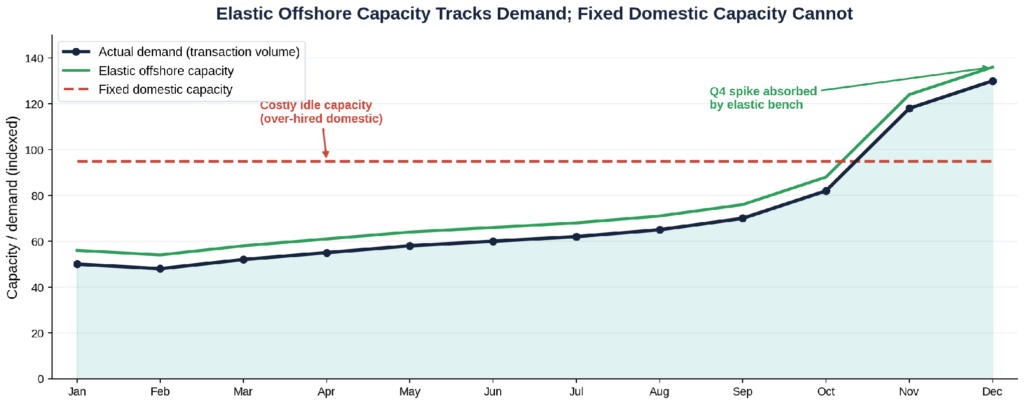
Figure 1. Elastic offshore capacity tracks demand through the year, while fixed domestic capacity cannot.
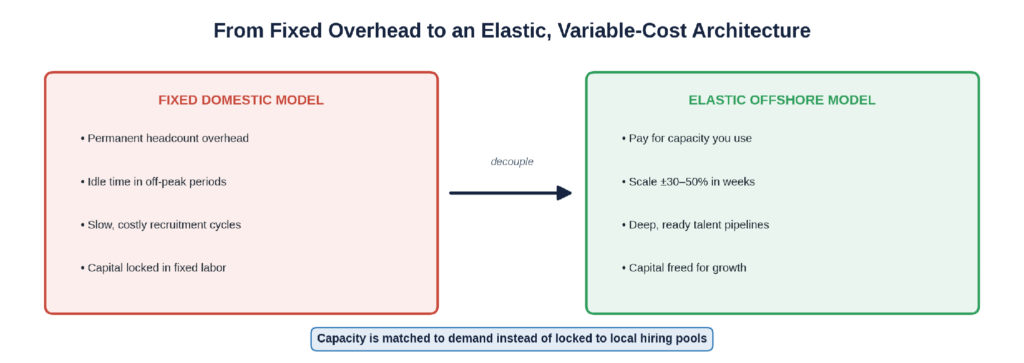
Figure 2. Decoupling capacity converts fixed overhead into a flexible, demand-matched cost structure.
How Does a Multi-Functional BPO Strategy Enhance Flexibility Across Business Units?
Flexibility manifests differently by department. The Philippines’ specialized talent pool lets enterprises inject agile capacity simultaneously across customer experience, finance and accounting, technical support, and data and back-office—each with its own measurable operational impact.
Workforce flexibility is not a generic concept; it manifests uniquely across corporate departments. The specialized, highly educated talent pool in the Philippines allows organizations to inject agile capacity simultaneously across front-, middle-, and back-office roles. The mapping below shows the core flexible capability and measurable impact for each major function.
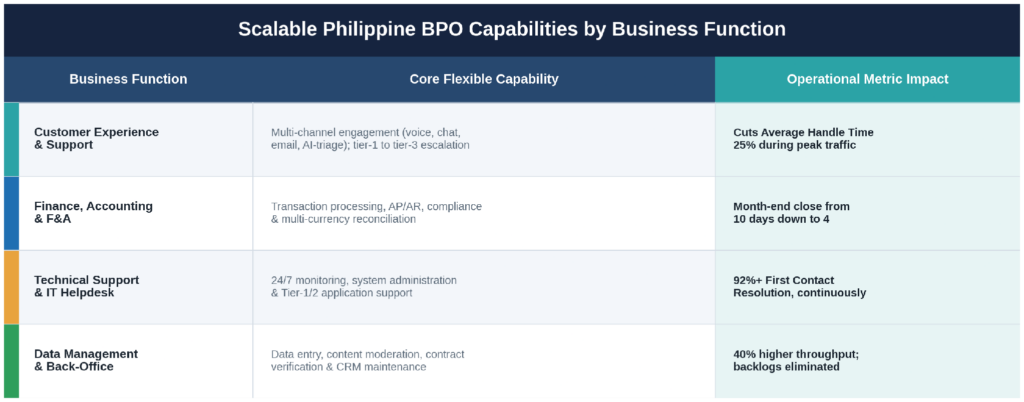
Figure 3. Scalable capabilities and their operational metric impact across four core business functions.
By distributing these roles across specialized offshore teams, enterprises keep core internal teams unburdened by transactional volume fluctuations—allowing internal leadership to maintain uninterrupted focus on high-value corporate strategy.
What Are the Strategic Trade-offs and Operational Risks of Offshoring Critical Workflows?
The main trade-offs are communication and cultural sync, data security and regulatory compliance, and managing internal change. Each is manageable: mirror communication protocols, enforce GDPR/HIPAA/PCI-DSS oversight, and lead the transition with transparent communication.
While the flexibility gains are substantial, transitioning workflows offshore introduces real operational variables that executive teams must actively manage. True agility requires recognizing these friction points and building structured mitigation frameworks, as summarized below.
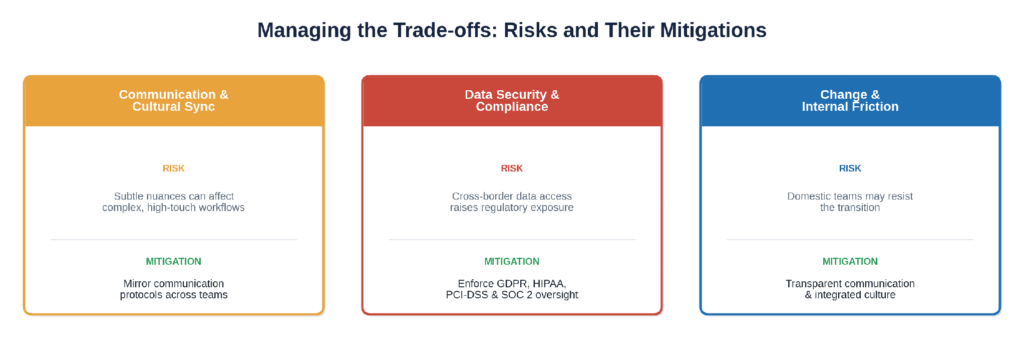
Figure 4. The three primary offshoring trade-offs, each paired with a concrete mitigation.
The organizations that derive the greatest flexibility from the Philippines are those that treat their offshore teams as an integrated extension of their corporate fabric, rather than a detached, transactional vendor. True agility is achieved when communication protocols, data security standards, and performance cultures are seamlessly mirrored across both domestic and offshore environments.
— John Maczynski, CEO, PITON-Global
What Does a Successful Elastic-Scaling Deployment Look Like?
A successful deployment pairs a year-round core team with an elastic bench prepared during off-peak months. One e-commerce enterprise facing 300% Q4 order spikes burst from 40 to 120 agents in three weeks, held 94% CSAT, cut first-response time from 45 minutes to under 90 seconds, and reduced overhead 65%.
The Challenge
A fast-growing North American e-commerce enterprise faced 300% order-volume spikes during Q4. Its rigid domestic support and order-processing teams could not scale quickly enough, causing severe backlogs, a 45-minute drop in first-response times, and rising customer churn.
Vendor Selection
The enterprise engaged PITON-Global to move beyond a transactional broker model. PITON-Global analyzed the tech stack, seasonal curves, and multi-tier support requirements, then screened its network of 100+ vetted providers to select a partner specializing in rapid omnichannel scaling and high-volume retail logistics support.
The Solution
A core hybrid team of 40 full-time professionals in Manila handled year-round Tier-1 and Tier-2 support and accounts-receivable processing. A structured “elastic bench” let the team burst to 120 agents within a three-week window ahead of Q4, supported by an integrated knowledge base and continuous training synchronized to the client’s product updates.
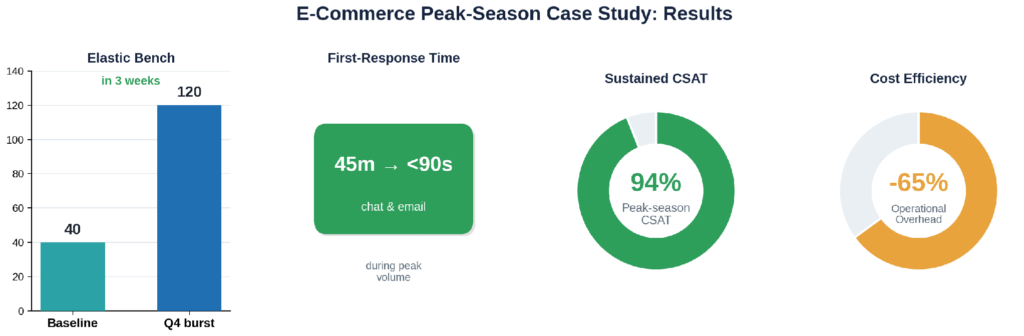
Figure 5. Quantifiable outcomes of the elastic peak-season deployment.
Outcomes and Lessons
The deployment cut operational overhead 65% versus domestic scaling, held CSAT at 94% through peak, reduced first-response times from 45 minutes to under 90 seconds, and eliminated back-office backlogs with a 100% same-day dispatch rate. The lesson: success hinges on proactive structural preparation—establishing an elastic staffing clause and unified training architecture during quiet off-peak seasons turns a seasonal bottleneck into a repeatable competitive advantage.
How Does PITON-Global Help Enterprises Build an Elastic Offshore Workforce?
PITON-Global is an elite, advisory-led consultancy that eliminates provider-selection risk in the Philippine BPO landscape. By managing the diagnostic, RFP, and operational vetting across a network of 100+ vetted providers, it matches enterprises to partners that fit their vertical, culture, architecture, and scale.
Who Is PITON-Global?
PITON-Global is an elite, advisory-led consultancy that guides mid-market and enterprise organizations through the complexities of the Philippine BPO landscape to eliminate provider-selection risk. Rather than reselling capacity, it serves as a strategic advisor across the full diagnostic, RFP, and vetting process.
How Does PITON-Global Differ from Traditional Outsourcing Brokers?
Unlike traditional brokers that simply pass leads to the largest market players, PITON-Global maintains a strictly vetted network of more than 100 premier, specialized providers and matches each client on operational substance. Recommendations reflect fit with the client’s vertical, culture, technical architecture, and scale requirements rather than referral incentives.
How Does PITON-Global’s Network of 100+ Vetted Providers Benefit Organizations?
A diverse, strictly vetted ecosystem of more than 100 premier providers ensures clients are matched precisely to their industry vertical, corporate culture, technical architecture, and scale needs. This breadth lets buyers find partners genuinely capable of elastic, multi-functional delivery instead of settling for a one-size-fits-all vendor.
How Does PITON-Global’s Selection Process Work?
PITON-Global manages the comprehensive diagnostic, RFP formulation, and operational vetting process end to end. By mapping the client’s tech stack, seasonal curves, and support tiers, then designing a core team plus an elastic-bench mechanism, the firm accelerates the timeline to a successful deployment while shielding organizations from the common pitfalls of unguided offshoring.

Figure 6. PITON-Global’s five-stage process for architecting an elastic offshore workforce.
Why Do Organizations Use PITON-Global?
Organizations use PITON-Global to eliminate provider-selection risk and accelerate deployment. By precisely matching each buyer to a specialized partner and engineering elasticity into the engagement, the firm helps enterprises match capacity to demand, optimize their cost structure, and make operational agility a repeatable advantage.
What Are the Most Common Questions About Workforce Flexibility Through Philippine Outsourcing?
Common questions concern transition timelines, how providers absorb sudden volume spikes, required technical infrastructure standards, whether complex middle-office functions can be outsourced, and how providers maintain team continuity. Each is answered below.
How Long Does It Typically Take to Transition a New Business Function to a Philippine BPO Provider?
A standard mid-market operational migration generally takes 4 to 8 weeks, including deep process mapping, technical infrastructure integration, security auditing, and comprehensive agent training.
How Do Philippine Providers Handle Sudden, Unpredicted Spikes in Transaction Volumes?
Top-tier providers use shared-resource pools and elastic staffing models, instantly redirecting cross-trained agents from secondary workflows to absorb immediate spikes while a dedicated backup team is prepared.
What Technical Infrastructure Standards Should an Enterprise Require from a Provider?
Buyers should insist on SOC 2 Type II certification, strict PCI-DSS and HIPAA compliance, fully redundant fiber-optic connectivity with automatic failovers, and secure, isolated virtual desktop infrastructure (VDI).
Can Specialized Middle-Office Functions Like Risk Management or Data Analytics Be Effectively Outsourced?
Yes. The Philippine talent pool includes highly technical professionals with advanced degrees in finance, mathematics, data science, and law, enabling providers to build capable teams for complex, knowledge-driven operations.
How Do Philippine BPO Providers Maintain Team Continuity and Combat Industry-Wide Turnover?
Premium providers stay ahead of attrition through competitive compensation, clear career-advancement paths, ongoing professional development, and modern, employee-centric workplace environments.
Achieve sustainable growth with world-class BPO solutions!
PITON-Global connects you with industry-leading outsourcing providers to enhance customer experience, lower costs, and drive business success.
Get Your Top 1% Vendor List
Author
Ralf Ellspermann is a multi-awarded outsourcing executive with 25+ years of call center and BPO leadership in the Philippines, helping 500+ high-growth and mid-market companies scale call center and customer experience operations across financial services, fintech, insurance, healthcare, technology, travel, utilities, and social media.
A globally recognized industry authority - and a contributor to The Times of India, CustomerThink, and The AI Journal - he advises organizations on building compliant, high-performance offshore contact center operations that deliver measurable cost savings and sustained competitive advantage.
Known for his execution-first approach, Ralf bridges strategy and operations to turn call center and business process outsourcing into a true growth engine. His work consistently drives faster market entry, lower risk, and long-term operational resilience for global brands.
EXECUTIVE GOVERNANCE & ACCURACY STANDARDS
Authored by:

Ralf Ellspermann
Founder & CSO of PITON-Global,
25-Year Philippine BPO Veteran,
Multi-awarded Executive
Specializing in strategic sourcing and excellence in Manila
View Full Bio
Verified by:

John Maczynski
CEO of PITON-Global, and former Global EVP of the World’s largest BPO provider | 40 Years Experience
Ensuring global compliance and enterprise-grade service standards
View Full Bio
Last Peer Review: June 24, 2026
This service framework is audited quarterly to meet shifting global outsourcing regulations and COPC standards.