
Back
Image Annotation Outsourcing Philippines: Pixel-Perfect Precision for Next-Gen Computer Vision

By Ralf Ellspermann / 11 March 2026
 Authored by Ralf Ellspermann, CSO of PITON-Global, & 25-Year Philippine BPO Veteran | Executive | Verified by John Maczynski, CEO of PITON-Global, and Former Global EVP of the World's Largest BPO Provider on March 11, 2026
TL;DR: The Key Takeaway
Image annotation outsourcing in the Philippines has transcended basic object tagging to become a critical source of pixel-perfect precision for advanced computer vision. The nation’s elite workforce delivers the nuanced, context-aware data annotation that is essential for building high-performing and reliable AI models.
The shift toward sophisticated AI requires training data that captures every nuance of the physical world. Image annotation outsourcing in the Philippines has evolved from simple tagging to a high-stakes discipline of pixel-perfect precision. This elite workforce provides the context-aware, high-fidelity data essential for developing reliable autonomous systems and advanced medical diagnostics.
Executive Briefing
- Mission-Critical Data: Modern computer vision requires flawlessly labeled datasets to power safety-critical AI like self-driving cars.
- The Philippine Hub: A unique blend of technical mastery and cognitive sharpness has made the Philippines the global epicenter for specialized annotation.
- Quality Over Cost: Industry leaders now prioritize model performance and reliability over traditional low-cost-per-image metrics.
- The Human Factor: Expert manual intervention remains the only way to resolve visual ambiguity and complex edge cases in training data.
- Strategic Access: PITON-Global bridges the gap between global tech firms and the highest-tier Philippine annotation labs/BPOs.
Executive Summary
The integrity of modern artificial intelligence depends entirely on its underlying data, a reality most evident in the realm of computer vision. Today, the demand for image annotation outsourcing in the Philippines is skyrocketing as developers recognize that a model’s intelligence is a direct reflection of its training data’s accuracy. We have moved past the era of basic bounding boxes; current applications demand a level of granularity and environmental understanding that only skilled human specialists can offer. The Philippines has firmly established itself as the top destination for this sophisticated labor, providing a massive talent pool dedicated to the microscopic precision required by next-generation visual AI. Leading this transition, PITON-Global connects tech innovators and disruptors with elite partners capable of delivering the high-fidelity datasets necessary for true technological breakthroughs.
Advancing Beyond Outlines: The New Era of Visual Data
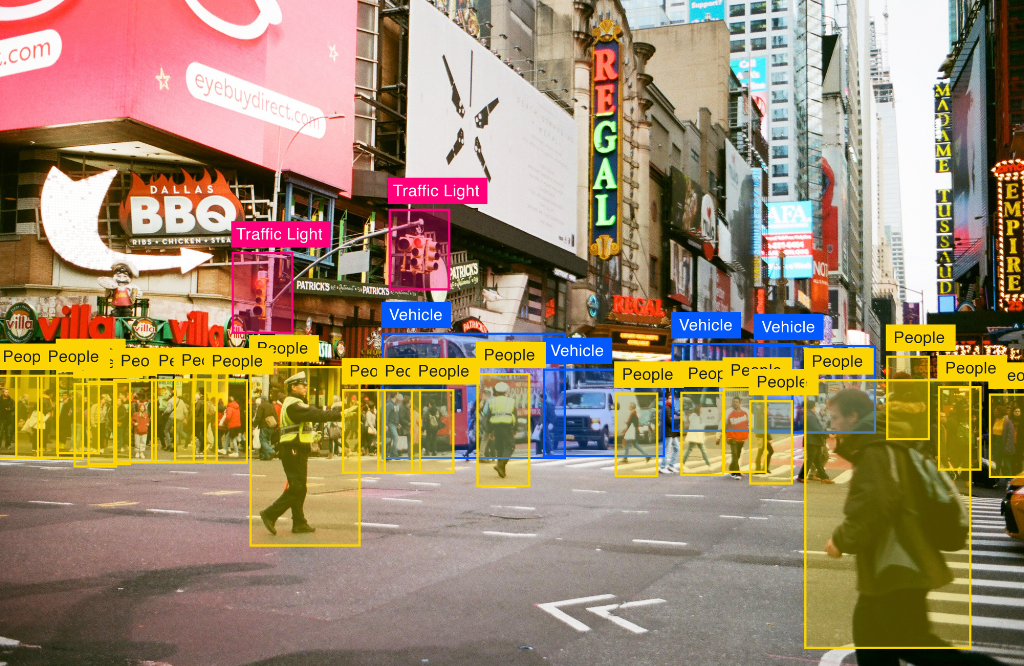
Early iterations of image labeling were defined by high-volume, low-complexity tasks, such as framing vehicles or pedestrians in simple rectangles. While those methods supported early object detection, they fall short of the requirements for today’s hyper-aware AI systems. The modern landscape of data preparation involves intricate methodologies that necessitate significant cognitive processing and technical expertise.
Consider semantic segmentation, where specialists must categorize every individual pixel to build a comprehensive, color-coded map of a scene. Similarly, polygonal annotation demands the surgical tracing of irregular shapes, while 3D point cloud labeling for LiDAR adds a spatial layer of difficulty. These sophisticated approaches are the bedrock of AI that perceives the world with human-like detail. Skilled human oversight proves its worth here: an expert can distinguish a dark shadow from a physical barrier, interpret the meaning of a weathered road sign, or read the subtle body language of a cyclist. This high-fidelity information is the difference between a prototype and a safe, road-ready autonomous vehicle or a reliable surgical assistant.
“Our partners no longer seek mere labels; they demand a quantifiable boost in their system’s environmental comprehension. Whether it is reducing false alarms in diagnostic AI or perfecting the navigation of delivery drones, the goal is total accuracy. By leveraging elite Philippine teams, we provide the cognitive depth and pixel-level precision that automated tools simply cannot match. This human intelligence is the catalyst for the next leap in AI capability.” — John Maczynski, CEO, PITON-Global
This transition toward high-complexity, intellectually demanding work has solidified the Philippines’ status as the global authority. The local workforce merges technical fluency with a cultural dedication to meticulous quality, making them uniquely suited for the rigors of modern data science.

The Philippine Advantage: Merging Talent with Infrastructure
The Philippines has fostered a specialized ecosystem designed specifically for high-tier data processing. The nation’s long-standing BPO heritage provides a stable foundation of world-class facilities, redundant high-speed connectivity, and rigorous data privacy protocols.
However, the primary differentiator remains the human element. The country boasts a highly educated professional class with exceptional English proficiency and a natural alignment with international business standards. Filipino specialists are recognized for their endurance, focus, and rapid mastery of emerging software. In the field of image annotation, these traits are vital. Maintaining extreme accuracy during repetitive, high-detail tasks is a prerequisite for generating the high-fidelity datasets that drive modern computer vision.
Image Annotation Complexity Matrix
Not all data labeling carries the same weight. Different AI goals require varying depths of detail. PITON-Global utilizes the following framework to align specific project needs with the appropriate level of expertise.
| Annotation Type | Task Description | Cognitive Load | Primary Application |
| Bounding Box | Creating rectangular frames around objects. | Low | General object detection. |
| Polygonal Labeling | Tracing the exact contours of irregular items. | Medium | Training models for complex shape recognition. |
| Semantic Segmentation | Assigning a class to every single pixel. | High | Full-scene understanding for self-driving tech. |
| 3D Point Cloud | Labeling objects in 3D space via LiDAR. | Very High | Advanced perception for robotics and drones. |
As these tasks grow more complex, the necessity for seasoned human annotators becomes absolute. The Philippines stands as one of the few global locations capable of supporting the entire spectrum of this matrix, from entry-level tagging to high-level spatial analysis.
The Power of Intelligence Arbitrage
The philosophy of Intelligence Arbitrage is fundamental to why the Philippines dominates this sector. It marks a departure from viewing outsourcing as a cost-cutting measure, reframing it as a value-add strategy centered on data excellence. Within computer vision, this means using the analytical power of human experts to produce datasets that aren’t just categorized, but are rich with context and situational awareness.
This depth allows an AI to transition from basic recognition to holistic understanding. It is the distinction between a machine that sees a person and one that predicts that person’s intent based on a slight head tilt or stride. Such nuance is derived solely from a human specialist who engages deeply with the material. This is the ultimate promise of Philippine image annotation: providing the “brainpower” that unlocks superior AI performance.
Scorecard: Annotation Quality and Model Success
Superior training data translates directly into a more capable AI model. The scorecard below highlights how specific quality metrics influence the final performance of a vision system.
| Quality Metric | Definition | Model Impact |
| Intersection over Union (IoU) | Measuring the overlap between predicted and actual frames. | High IoU ensures pinpoint object localization. |
| Pixel Accuracy | The ratio of correctly identified pixels in a set. | Essential for precise boundary definitions. |
| False Positive Rate | The frequency of the AI “seeing” non-existent objects. | Critical for safety; prevents unnecessary braking or alarms. |
| False Negative Rate | The frequency of the AI missing a real-world object. | Vital for healthcare; ensures no pathology goes unnoticed. |
Investing in premium data preparation is an investment in the product’s safety and efficacy. The elite Philippine teams curated by PITON-Global specialize in reaching the high benchmarks required for these mission-critical metrics.
Agentic Governance in the Visual AI Landscape
As machines gain autonomy, human oversight—known as Agentic Governance—becomes paramount. This is especially true for AI interacting with the physical world. This discipline ensures that autonomous entities operate ethically, safely, and predictably.
Human specialists in the Philippines act as the “ground truth” anchors in this process. They audit AI decisions, flag algorithmic biases, and provide the corrective feedback loop necessary for refinement. These “AI Pilots” represent the future of the industry, offering the human-in-the-loop governance required for the ethical deployment of advanced technology. This role further cements the Philippines’ position as the indispensable partner in the global AI supply chain.
Case Study: Precision Perception for Level 4 Autonomy
The Challenge: A Silicon Valley-based developer of autonomous trucking systems was facing a “performance plateau.” Their models struggled with long-range object detection and low-light semantic segmentation, leading to unacceptable false-negative rates in highway “edge cases,” such as detecting debris or disabled vehicles at 300+ meters. Automated labeling tools were failing to distinguish between visual noise (road spray) and physical hazards.
The Solution: Through PITON-Global, the developer partnered with a specialized computer vision laboratory in the Philippines. A dedicated team of 150 elite annotators was deployed, focusing on high-fidelity polygonal labeling and LiDAR 3D point cloud annotation. Unlike previous vendors, the Philippine team integrated directly into the client’s CI/CD pipeline, providing real-time “human-in-the-loop” feedback.
The Process:
- Micro-Granularity: Annotators traced irregular objects at the pixel level, ensuring precise boundary definitions for objects partially obscured by weather.
- Temporal Context: The team performed video-based annotation, labeling the intent of pedestrians and cyclists across sequential frames to train predictive behavior models.
- Edge Case Auditing: Specialists acted as “Agentic Governors,” manually auditing and correcting labels where the client’s internal AI was uncertain.
The Outcome:
- 35% Increase in IoU (Intersection over Union): Pinpoint object localization improved dramatically, allowing for earlier braking intervention.
- 99.8% Pixel Accuracy: Semantic segmentation reached near-perfect levels, virtually eliminating false alarms caused by environmental shadows.
- Rapid Model Iteration: The “Intelligence Arbitrage” provided by the Philippine team compressed the client’s model training cycles by 40%, accelerating their path to safety certification.
Expert Insights
Why is manual labeling still relevant despite the rise of AI-powered tools?
Automated tools are excellent for speed but struggle with the nuanced ambiguity of real-world environments. Human specialists are required to interpret complex scenes and provide the high-level context that forms the “ground truth” for any successful machine learning project.
What makes the Philippines the premier choice for this work?
The region offers a rare combination of a massive, English-speaking talent pool, a sophisticated technological infrastructure, and a cultural commitment to precision. This makes it uniquely qualified for high-stakes, cognitively demanding data work.
How does PITON-Global verify the quality of its annotation partners?
We employ a strict vetting protocol, partnering only with firms that have a demonstrated history of accuracy and security. Our ongoing oversight ensures that every project meets the rigorous standards of our global clientele.
Where is the field of image annotation heading next?
The industry is moving toward even more complex 3D and video-based labeling. As AI evolves, the need for data that captures movement and temporal context will increase. The Philippines is already preparing its workforce for these advanced perception challenges.
Achieve sustainable growth with world-class BPO solutions!
PITON-Global connects you with industry-leading outsourcing providers to enhance customer experience, lower costs, and drive business success.
Get Your Top 1% Vendor List
Author
Ralf Ellspermann is a multi-awarded outsourcing executive with 25+ years of call center and BPO leadership in the Philippines, helping 500+ high-growth and mid-market companies scale call center and customer experience operations across financial services, fintech, insurance, healthcare, technology, travel, utilities, and social media.
A globally recognized industry authority—and a contributor to The Times of India and CustomerThink —he advises organizations on building compliant, high-performance offshore contact center operations that deliver measurable cost savings and sustained competitive advantage.
Known for his execution-first approach, Ralf bridges strategy and operations to turn call center and business process outsourcing into a true growth engine. His work consistently drives faster market entry, lower risk, and long-term operational resilience for global brands.
EXECUTIVE GOVERNANCE & ACCURACY STANDARDS
Authored by:

Ralf Ellspermann
Founder & CSO of PITON-Global,
25-Year Philippine BPO Veteran,
Multi-awarded Executive
Specializing in strategic sourcing and excellence in Manila
View Full Bio
Verified by:

John Maczynski
CEO of PITON-Global, and former Global EVP of the World’s largest BPO provider | 40 Years Experience
Ensuring global compliance and enterprise-grade service standards
View Full Bio
Last Peer Review: March 11, 2026
This service framework is audited quarterly to meet shifting global outsourcing regulations and COPC standards.