

On this page
- Key Takeaways
- Which Specific Support Workflows Deliver the Highest Return on Investment?
- How Do Support-Tier Costs Compare Onshore Versus the Philippines?
- How Do Cultural Fluidity and Advanced Problem-Solving Skills Impact Retention Metrics?
- What Does a Complex-Support Transformation Look Like in Practice?
- What Is PITON-Global and How Does It De-Risk Provider Selection?
- Frequently Asked Questions
Multi-tiered technical support, complex billing resolution, and high-touch customer retention workflows generate the greatest benefits from outsourcing to the Philippines. Delegating these non-linear, emotionally complex interactions to the empathetic, technically proficient local talent pool maximizes first-contact resolution while cutting total operating costs materially — and because the pricing page models what you actually pay for an offshore agent by function and tier, the saving on each workflow can be sized before you commit.
Key Takeaways
- Target high-yield workflows. Multi-tiered technical support, dispute resolution, and active retention capture the highest operational value.
- Leverage linguistic fluency. Culturally aligned communication makes local agents exceptional at de-escalating sensitive, high-touch interactions.
- Compress cost per interaction. Migrating data-heavy, multi-system billing lowers cost per interaction without hurting satisfaction scores.
- Mitigate sourcing risk. Advisory-driven matching bypasses the service variances and churn common to mass-market aggregators.
- Shift from cost sink to retention engine. Complex, emotionally sensitive work handled well directly protects brand loyalty and lifetime value.
Which Specific Support Workflows Deliver the Highest Return on Investment?
The greatest returns come from non-linear, high-touch workflows — tier-2/3 technical support, billing and account reconciliation, and churn mitigation — not basic tier-one tasks. These require critical thinking, administrative precision, and emotional intelligence, exactly where the Philippine talent pool excels at turning friction into positive brand experiences.
Enterprise leaders often assume high-volume tier-one interactions like order tracking or password resets are the main source of outsourcing value. Those low-complexity tasks are better automated or shifted to transactional low-cost markets — they don’t tap the full potential of the offshore workforce. The real returns lie in complex, high-touch work.
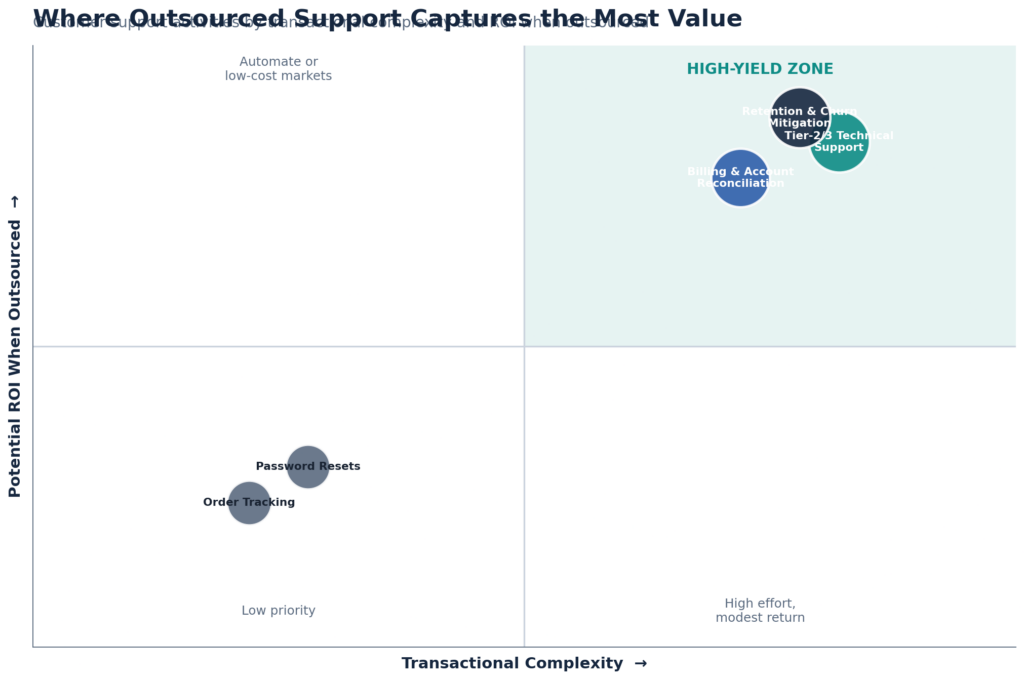
Figure 1. Mapping support activities by transactional complexity and ROI when outsourced.
These specific workflows require an agent to navigate multiple backend systems while building rapport with a frustrated user — and each pairs a distinct complexity with a measurable benefit.
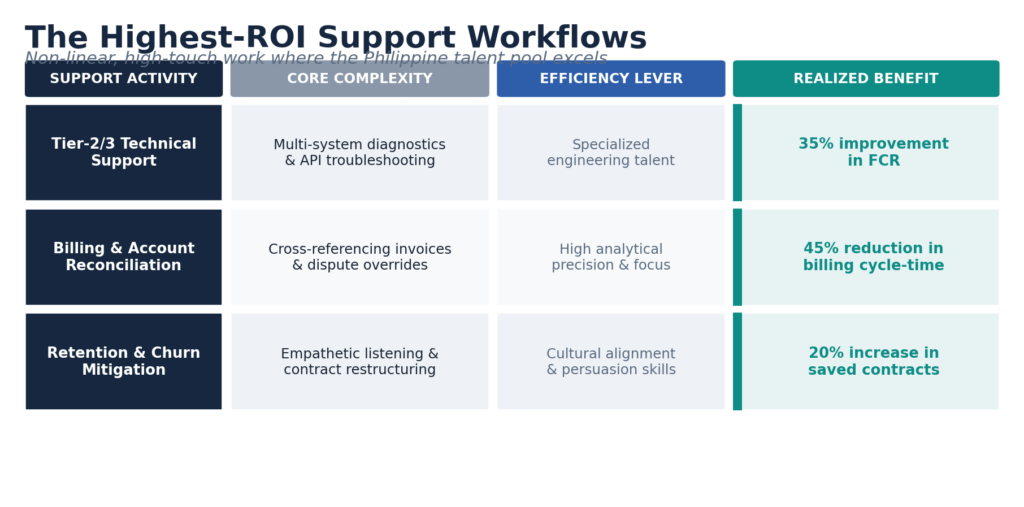
Figure 2. The highest-ROI support workflows, their complexity, lever, and realized benefit.
Tier-2/3 Technical Support
Multi-system diagnostics and API troubleshooting demand a specialized engineering talent pool backed by the integrated tooling covered in our look at contact-center technology transformation. Routing these issues to certified technical agents drives a marked improvement in first-contact resolution on advanced cases.
Billing and Account Reconciliation
Cross-referencing invoices and processing dispute overrides rewards high analytical precision and focus, compressing billing cycle-time sharply without undermining satisfaction.
Retention and Churn Mitigation
Empathetic listening and customized contract restructuring rely on cultural alignment and persuasion skills, lifting the share of at-risk contracts that are saved.
How Do Support-Tier Costs Compare Onshore Versus the Philippines?
Optimized Philippine operations deliver a substantially lower cost per resolution than domestic teams across every support tier — and the advantage holds for complex technical, billing, and retention work, not just routine contacts. This compression is what converts high-touch support into a margin-positive function.
Cost per resolution is the metric that ties support quality to the bottom line. Because specialized offshore operations reduce it across the board — including on the complex tiers where value is highest — enterprises can move sophisticated workflows offshore without sacrificing baseline experience.
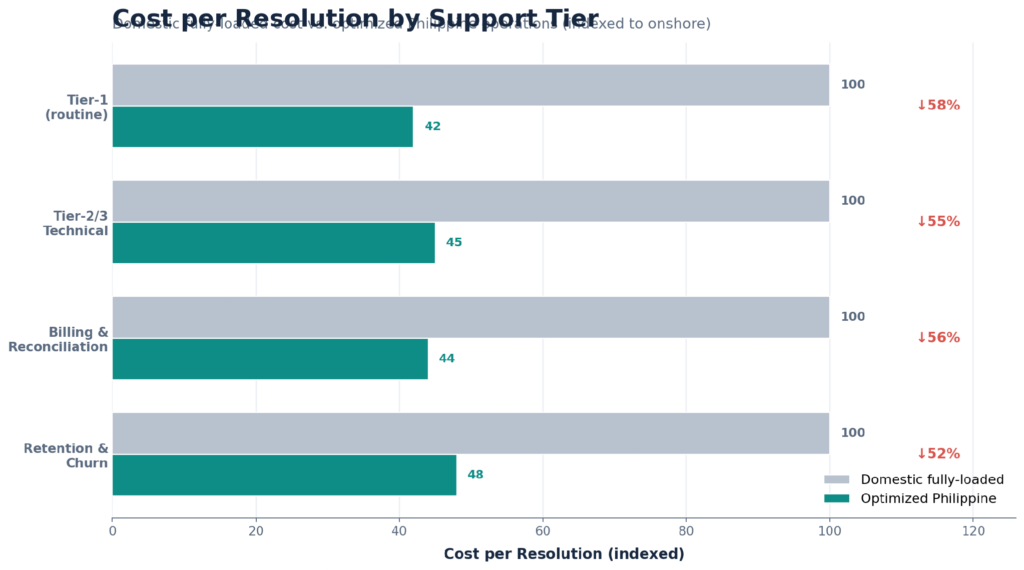
Figure 3. Domestic fully-loaded cost per resolution vs. optimized Philippine operations, by tier.
How Do Cultural Fluidity and Advanced Problem-Solving Skills Impact Retention Metrics?
They turn at-risk calls into saves. Rigid offshore scripts alienate frustrated customers and drive cancellations; Philippine agents instead use cultural familiarity and cognitive flexibility to manage non-scripted scenarios, identify the core issue, and resolve it on the first call — lifting net promoter scores and customer lifetime value.
Managing churn and collections requires balancing policy adherence with genuine empathy. Rigid scripts compound the risk of permanent cancellation. Filipino agents excel because an innate understanding of Western consumer habits and corporate structures translates into smooth, unforced dialogue.
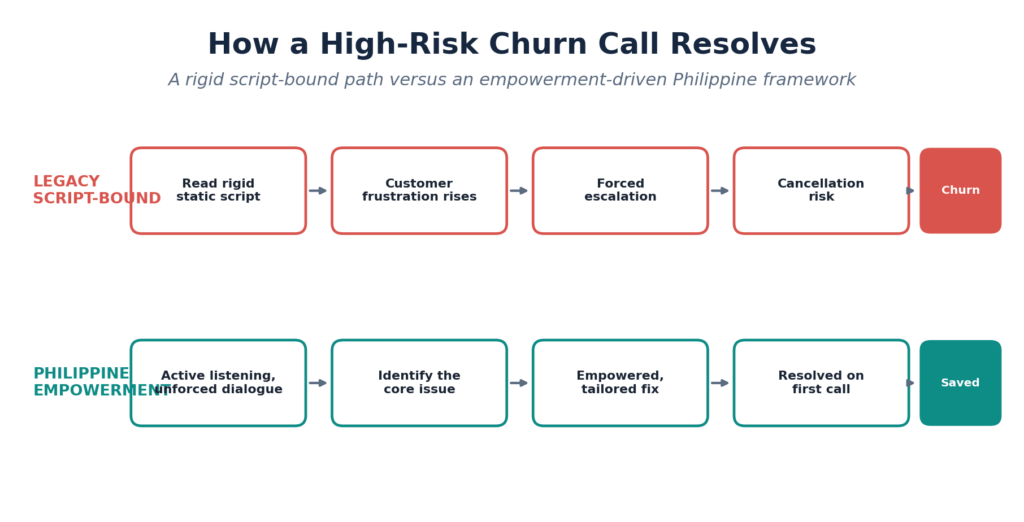
Figure 4. A rigid script-bound path versus an empowerment-driven Philippine resolution framework.
Rather than reading static lines, local professionals apply active listening to surface the real issue and resolve it in a single interaction. This blend of soft skills and systemic problem-solving directly improves net promoter scores and extends customer lifetime value.
“Many corporate decision-makers still treat offshore outsourcing as a basic numbers game focused on lowering headcount costs. But the real value in the Philippine market is its capability to absorb highly complex, emotionally sensitive interactions that directly impact brand loyalty. Moving specialized workflows to partners who invest heavily in continuous agent training shifts your contact center from a cost sink to a retention engine.”
— John Maczynski, CEO, PITON-Global
What Does a Complex-Support Transformation Look Like in Practice?
It can collapse resolution times while cutting cost. A Silicon Valley B2B SaaS firm with a Tier-2 backlog pushing resolution past 72 hours stood up a dedicated 40-seat Philippine engineering cell — dropping resolution to under four hours, lifting first-contact resolution on advanced issues to a strong majority of cases, and cutting support costs by roughly half within 120 days.
A major North American B2B SaaS organization faced rising churn from a severe Tier-2 backlog that pushed resolution times past 72 hours. Engaging PITON-Global to bypass standard brokers, it filtered the network of 100+ providers to find a partner with a technically certified software support team.
The selected provider established a dedicated 40-seat technical support engineering cell with the systemic authority to replicate software environments, analyze logs, and push documentation fixes straight to the client’s product team.
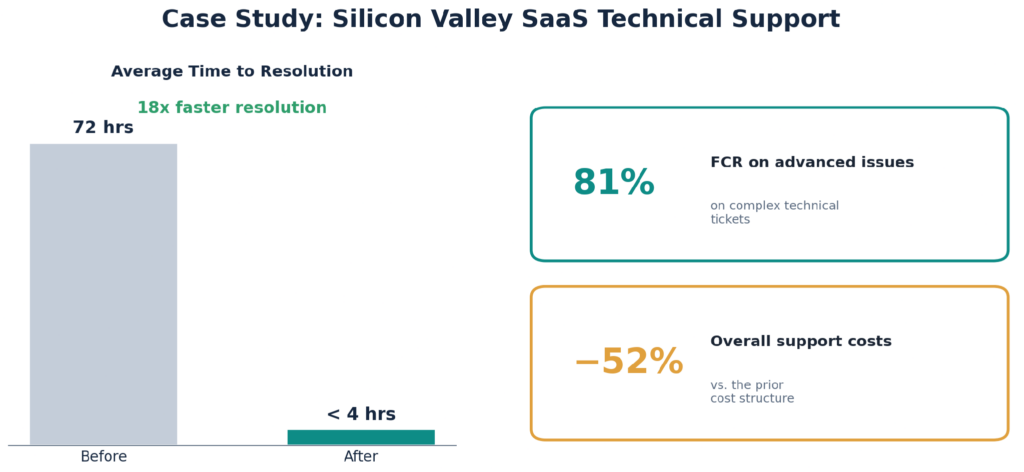
Figure 5. Resolution speed, FCR, and cost outcomes within 120 days.
Lesson learned: highly complex technical roles can be securely scaled offshore when you partner with specialized providers rather than broad, mass-market global aggregators.
What Is PITON-Global and How Does It De-Risk Provider Selection?
PITON-Global is a premium, advisory-led BPO consultancy inside the Philippines’ main corporate hubs. Instead of chasing referral payouts, it applies a neutral, data-driven matching model and deep audits of technology, security, management, and financial viability across 100+ vetted providers — at zero cost to the client.
Who Is PITON-Global?
PITON-Global operates as a premium, advisory-led business process outsourcing consultancy based directly within the main corporate hubs of the Philippines, helping global enterprises navigate the market and secure long-term operational success.
How Does PITON-Global Differ From Traditional Outsourcing Brokers?
Standard brokers push clients toward vendors with the highest referral payouts. PITON-Global uses a neutral, data-driven matching model focused on the buyer’s vertical requirements — an advisory stance that removes the conflict of interest inherent in payout-driven brokerage.
How Does Its Network of 100+ Vetted Philippine BPO Providers Benefit Organizations?
The exclusive network of more than 100 rigorously vetted call-center and back-office providers gives enterprises fast access to specialists aligned with their vertical. Because each provider is pre-audited, buyers minimize selection risk and reach a best-fit partner quickly.
How Does Its Advisory-Led Vendor Matching Process Work?
PITON-Global conducts deep audits of provider technology stacks, security architecture, management expertise, and financial viability, then matches those profiles to the buyer’s requirements — the same rigor set out in our vendor-selection methodology — removing the operational risks commonly associated with offshore migrations.
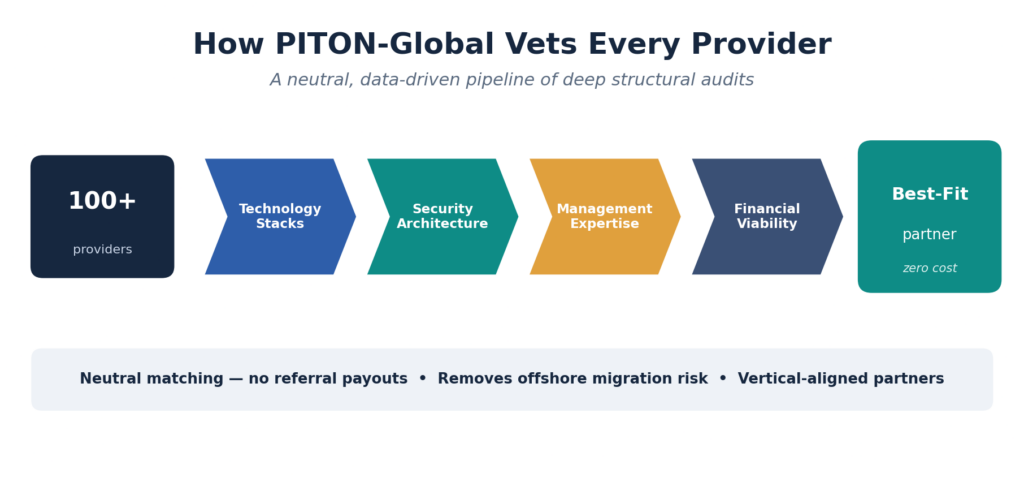
Figure 6. The structural-audit pipeline that filters 100+ providers to a best-fit partner.
Why Do Organizations Use PITON-Global?
Global enterprises use PITON-Global to navigate the market efficiently, select partners aligned with their vertical, and secure long-term success — completely free of charge. Its audit rigor ensures a chosen partner can actually deliver on complex, high-value support, not just low-cost headcount.
Frequently Asked Questions
What are the hourly cost structures for specialized technical support agents?
Fully-loaded hourly rates for specialized Tier-2 or Tier-3 technical support professionals sit well below onshore equivalents and move with certifications such as AWS, Cisco, or Salesforce administration. A fully loaded rate also absorbs statutory premiums such as the night differential paid on overnight shifts, so compare quotes on the loaded figure, not base pay.
How do providers protect sensitive healthcare and financial data?
Top-tier providers use SOC 2 Type II certification, ISO 27001 compliance, and strict adherence to HIPAA and PCI-DSS. Workstations are restricted via secure identity management, and networks are monitored 24/7 by dedicated cybersecurity teams.
Can complex enterprise B2B support workflows be transitioned successfully?
Yes. The talent pool includes many university graduates in business, engineering, and computer science. Paired with specialized onboarding, these teams manage complex B2B accounts requiring deep product knowledge and account management.
What is the average ramp-up time for a specialized 50-seat deployment?
A standard deployment takes 45 to 60 days, covering secure network setup, data integration, recruitment, and a comprehensive two-to-four-week product training and nesting phase.
How do providers handle unexpected volume or seasonal spikes?
Specialized mid-market providers maintain cross-training programs and shared resource benches, using advanced workforce-management software to forecast seasonal trends and scale staffing up or down without disrupting SLAs.