
Back
What Cost Savings Can Companies Realistically Achieve Through Outsourcing to the Philippines?

By Ralf Ellspermann / 2 July 2026
 Authored by Ralf Ellspermann, CSO of PITON-Global, & 25-Year Philippine BPO Veteran | Executive | Verified by John Maczynski, CEO of PITON-Global, and Former Global EVP of the World's Largest BPO Provider on July 2, 2026

Companies can realistically achieve a 55–70% reduction in total cost of ownership versus an equivalent Western onshore team. Savings come primarily from salary arbitrage plus the elimination of domestic payroll taxes, real estate, and HR overhead. Fully loaded managed-services contracts and next-wave regional hubs protect those margins long term.
Key Takeaways
- Capture substantial labor arbitrage. Expect a 60–75% reduction in base labor costs across support, back-office, and technical roles.
- Eliminate secondary overhead. Remove real estate, hardware procurement, HR compliance, and recruiting-lifecycle expenses.
- Insist on fully loaded rates. Prevent budget inflation with single hourly rates that bundle statutory benefits, night differentials, and IT.
- Use geographic cost diversity. Gain an extra 15–20% by deploying to next-wave regional centers outside Metro Manila.
- Layer in AI optimization. Pair proficient local talent with process automation to optimize baseline headcount.
What Is the Real Extent of the Salary Arbitrage?
Salary arbitrage is the primary driver of value. Fully loaded Philippine hourly rates run roughly 68–72% below equivalent Western rates — and the advantage holds for specialized back-office, financial, and technical roles, not just entry-level voice work.
The core economic engine in the Philippine business process outsourcing (BPO) landscape is a deep, structural wage disparity. As onshore labor costs in the US, UK, and Australia climb with domestic inflation, the fully loaded hourly unit cost in the Philippines stays exceptionally stable. That gap is what converts directly into margin.
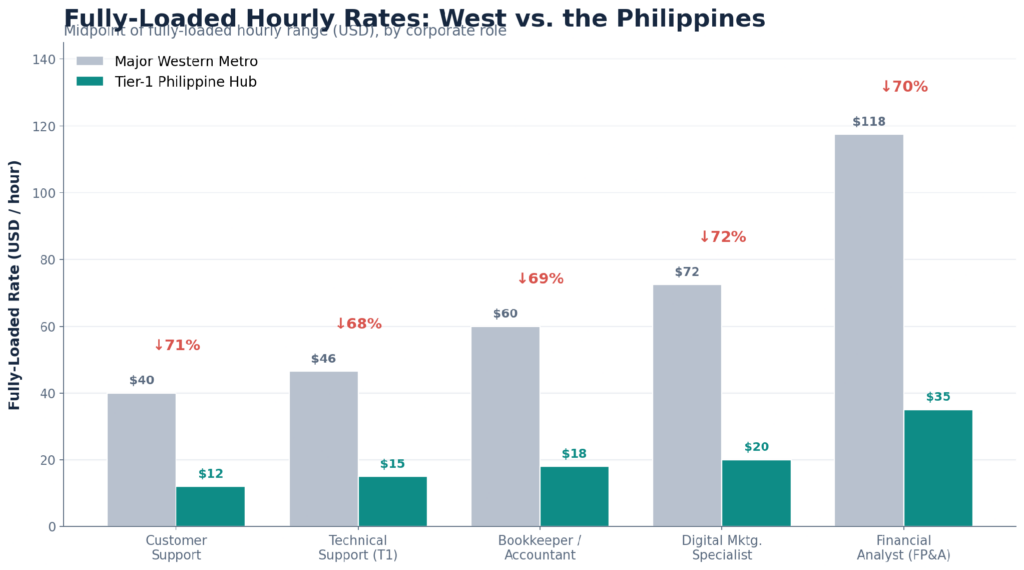
Figure 1. Fully-loaded hourly rates across five core roles, Western metros vs. tier-1 Philippine hubs.
Critically, the savings scale with role complexity rather than shrinking. A financial analyst or digital-marketing specialist delivers roughly the same 70%+ advantage as a frontline support agent, which means the model works for high-value functions, not just cost-center tasks.
What Indirect Costs Are Eliminated Through a Managed Services Model?
A managed services model eliminates the secondary overhead of running an onshore department: commercial real estate, hardware and infrastructure, and the full HR and recruitment lifecycle. These costs are internalized by the provider, which is why total cost of ownership falls far more than salary tables alone suggest.
Procurement teams often compare salary scales while ignoring the heavy burden of secondary overhead. Building an internal department onshore demands substantial capital expenditure that a full-service Philippine provider absorbs entirely — and that absorbed overhead is where much of the real saving lives.
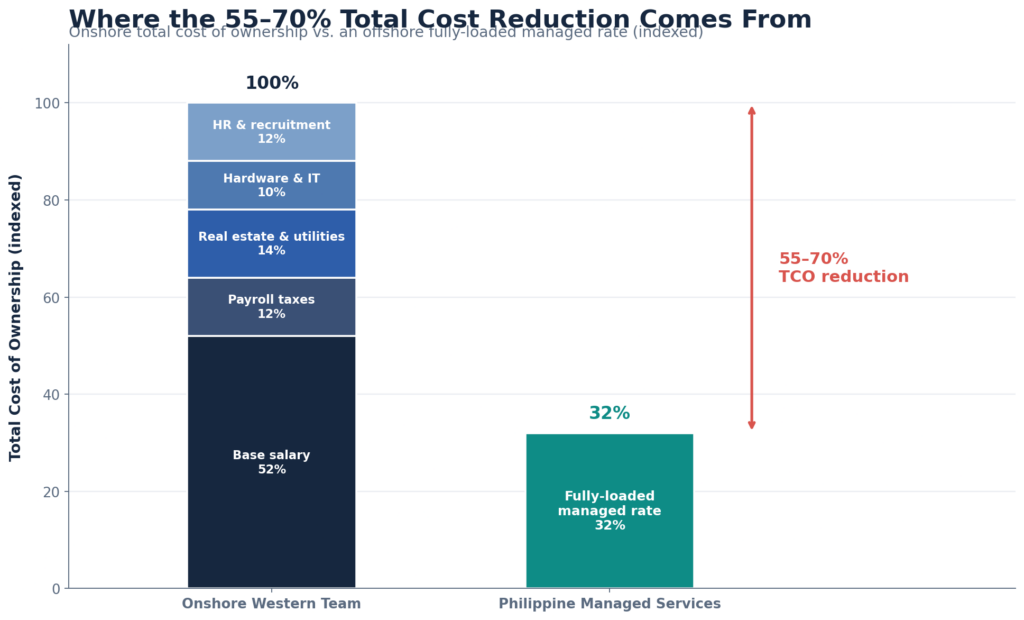
Figure 2. Onshore total cost of ownership vs. an offshore fully-loaded managed rate.
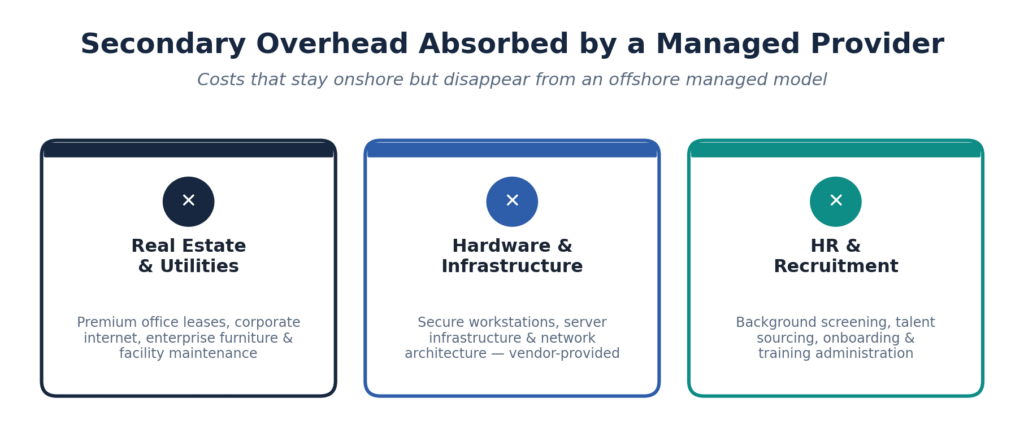
Figure 3. Three categories of secondary overhead absorbed by a managed provider.
Real Estate and Utilities
The model eliminates premium commercial leases, corporate internet lines, enterprise furniture, and localized facility maintenance — fixed costs that scale painfully with headcount onshore.
Hardware and Core Infrastructure
Upfront capital outlays for secure workstations, server infrastructure, and network architecture disappear. Vendors supply tier-1 facilities with built-in fiber redundancy as part of the seat.
Human Resources and Recruitment Lifecycle
Domestic spend on background screening, continuous talent sourcing, specialized onboarding, and training administration is slashed, because the provider owns the entire recruitment and retention engine.
“Leaders cannot simply look at basic salary tables; they must evaluate the fully loaded unit cost. Even after 13th-month pay, local health insurance, and advanced infrastructure in Manila, you secure a premier specialist at a fraction of Western costs. The real value is operational resilience — eliminating the overhead of managing HR compliance and hardware scale at home.”
— John Maczynski, CEO, PITON-Global
How Does Regional Geography Impact Your Long-Term Savings Profile?
Geography adds a second savings layer. Tier-1 metro hubs like Makati and BGC offer the deepest specialized talent at a premium, while next-wave centers such as Davao, Iloilo, Clark, and Bacolod deliver an additional 15–20% baseline savings and higher retention for transactional and large-scale work.
Buyers can optimize further by choosing the right operational geography. The Philippine market has a distinct pricing gradient between premium capital zones and expanding regional infrastructure corridors backed by PEZA incentives, so matching workflow to location is itself a cost lever.

Figure 4. The Philippine cost gradient between tier-1 metro hubs and next-wave regional centers.
Tier-1 Metro Hubs
Makati, BGC, and Ortigas provide immediate access to specialized financial, legal, and advanced technical talent. They carry a premium profile driven by real-estate demand and competitive talent dynamics — worth it for complex, specialist-heavy functions.
Next-Wave Regional Centers
Davao, Iloilo, Clark, and Bacolod offer pristine infrastructure and PEZA tax incentives. Relocating transactional back-office or large-scale customer care here secures an additional 15–20% in baseline savings alongside stronger long-term retention.
What Can a Realistic Cost Transformation Look Like?
A realistic transformation can cut overhead dramatically without hurting service. One e-commerce brand moved a 15-agent support and order-processing pod to a managed regional facility, dropping monthly overhead from $164,000 to $46,000 — a 72% reduction — while improving resolution times 38% and lifting revenue 44% year over year.
A fast-growing e-commerce retailer faced margin compression as domestic customer-care and inventory-management costs climbed past $160,000 per month, starving product development and acquisition of capital. PITON-Global audited the workflows and screened requirements across its network of 100+ vetted providers, matching the brand with a specialized mid-market vendor in an optimized regional hub.
The solution migrated a 15-agent support and order-processing pod to a dedicated managed facility, integrated local AI productivity tools with native English-speaking agents to lift throughput, and put a single hourly agreement in place that bundled management fees, night differentials, and premium IT architecture.

Figure 5. Overhead, service, and growth outcomes after the migration.
Lesson learned: maximizing offshore profitability means moving away from fragmented, self-managed freelance sourcing. An established, fully loaded managed vendor secures cost reductions without sacrificing brand experience.
What Is PITON-Global and How Does It Protect Your Savings?
PITON-Global is a Metro Manila–based BPO advisory and outsourcing consultancy that acts as an institutional partner rather than a transactional broker. It maps your volume trends, language needs, and data-security mandates against a vetted network of 100+ providers to protect margins and eliminate hidden transition costs.
Who Is PITON-Global?
PITON-Global is a premier BPO advisory and outsourcing consultancy headquartered in Metro Manila. It operates as an institutional partner that helps international organizations systematically analyze, source, and govern high-performance offshore operations across the Philippine market.
How Does PITON-Global Differ From Traditional Outsourcing Brokers?
Traditional brokers place clients with whichever provider pays the commission. PITON-Global takes an advisory-led approach: it evaluates providers independently, offers objective recommendations, and stays focused on client outcomes — protecting companies from predatory service agreements rather than steering them toward a payer.
How Does Its Network of 100+ Vetted Philippine BPO Providers Benefit Organizations?
The vetted network of specialized call-center and back-office providers removes the structural uncertainty of vendor procurement. Because partners are pre-qualified against performance profiles, organizations reach a provider optimized for their exact volume, language, and security requirements far faster than an open-market search allows.
How Does Its Advisory-Led Vendor Matching Process Work?
The methodology begins with an operational baseline assessment, maps needs across the 100+ vetted providers, eliminates hidden and predatory contract terms, and supports managed scaling on a fully loaded rate — aligning the brand with a provider optimized for sustained fiscal efficiency.

Figure 6. The PITON-Global deployment methodology, from baseline assessment to managed scaling.
Why Do Organizations Use PITON-Global?
Organizations use PITON-Global to reduce procurement risk, improve provider fit, and accelerate vendor selection while safeguarding savings. Its advisory-driven approach eliminates hidden transition costs, blocks predatory agreements, and aligns each brand with a provider built for long-term cost efficiency and predictable margins.
Frequently Asked Questions
Are holiday premiums and night differentials included in provider rates?
In a traditional managed services model, all local statutory benefits — including the mandatory 10% night-shift differential, healthcare contributions, and holiday premiums — are bundled directly into your single, fully loaded hourly rate.
How do Philippine cost structures compare to BPO vendors in India?
While raw labor rates in parts of India can trend lower, the Philippines offers superior accent neutrality, strong cultural alignment with Western consumers, and high customer-empathy metrics. The result is higher first-contact resolution, which lowers total cost of ownership.
What upfront setup fees should enterprise buyers expect?
Implementation fees vary with workflow complexity and software integration, typically ranging from $5,000 to $50,000. An advisor like PITON-Global can negotiate optimized terms that frequently reduce or amortize these onboarding costs.
Does the CREATE MORE Act change the economics of outsourcing?
Yes — it strengthens them. The CREATE MORE Act of 2024 optimized fiscal incentives, clarified VAT exemptions for registered export enterprises, and streamlined PEZA-zone operations, adding long-term tax predictability for global companies using local providers.
How does workforce attrition affect financial predictability?
High turnover creates hidden costs through retraining and dropped service levels. Under a managed services contract, the vendor absorbs recruitment and baseline-training costs, keeping your hourly operational cost predictable.
Achieve sustainable growth with world-class BPO solutions!
PITON-Global connects you with industry-leading outsourcing providers to enhance customer experience, lower costs, and drive business success.
Get Your Top 1% Vendor List
Author
Ralf Ellspermann is a multi-awarded outsourcing executive with 25+ years of call center and BPO leadership in the Philippines, helping 500+ high-growth and mid-market companies scale call center and customer experience operations across financial services, fintech, insurance, healthcare, technology, travel, utilities, and social media.
A globally recognized industry authority - and a contributor to The Times of India, CustomerThink, and The AI Journal - he advises organizations on building compliant, high-performance offshore contact center operations that deliver measurable cost savings and sustained competitive advantage.
Known for his execution-first approach, Ralf bridges strategy and operations to turn call center and business process outsourcing into a true growth engine. His work consistently drives faster market entry, lower risk, and long-term operational resilience for global brands.
EXECUTIVE GOVERNANCE & ACCURACY STANDARDS
Authored by:

Ralf Ellspermann
Founder & CSO of PITON-Global,
25-Year Philippine BPO Veteran,
Multi-awarded Executive
Specializing in strategic sourcing and excellence in Manila
View Full Bio
Verified by:

John Maczynski
CEO of PITON-Global, and former Global EVP of the World’s largest BPO provider | 40 Years Experience
Ensuring global compliance and enterprise-grade service standards
View Full Bio
Last Peer Review: July 2, 2026
This service framework is audited quarterly to meet shifting global outsourcing regulations and COPC standards.