
The 30-Second Executive Briefing
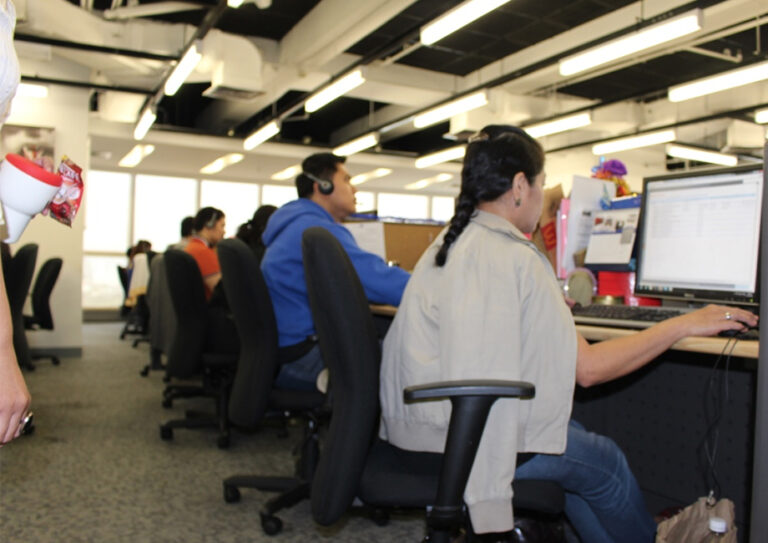
- The 2026 Shift: The line between “Front-Office” (Guest-facing) and “Back-Office” (Operations) has vanished. In 2026, Philippine travel hubs operate as Unified Command Centers, where an agent can resolve a complex flight disruption in one window while reconciling the GDS refund ledger in the next.
- The Linguistic Alpha: Leveraging Neural Translation Overlays and a native multilingual workforce, Manila hubs provide 24/7 support in 20+ languages (Spanish, Mandarin, French, Japanese, etc.), allowing brands to localize globally without the high cost of regional offices.
- Operational Synergy: By housing Omnichannel CX (Phone, Chat, Social) and Back-Office Precision (Claims, Audits, Data Management) in a single Philippine pod, travel brands eliminate “Information Lag,” resulting in 40% faster resolution times.
- Financial Advantage: This integrated model delivers a 60–70% reduction in Total Cost of Ownership (TCO), transforming customer support from a fragmented expense into a streamlined revenue-protection engine.
Executive Summary
In the travel world of 2026, a “siloed” operation is a failing operation. A traveler stuck in Tokyo at 2:00 AM doesn’t care about the distinction between your “Social Media Team” and your “Refund Processing Department”—they want a resolution. Travel 24/7 Multilingual & Omnichannel Outsourcing in the Philippines has evolved to meet this exact need, providing a holistic “Front-to-Back” infrastructure.
Philippine hubs have become the world’s Global Hospitality Command Centers. By combining the country’s inherent service culture with a sophisticated multilingual talent pool and Agentic AI, these hubs manage the entire traveler lifecycle. Whether it’s a high-stakes voice call in Spanish, a rapid-fire WhatsApp inquiry in Mandarin, or a complex back-office commission audit, the Philippines provides a unified solution. This article explores how modern travel brands are leveraging Manila and Cebu to provide “Always-On” excellence that bridges the gap between guest empathy and operational accuracy.
The 2026 “Front-to-Back” Synergy
The Philippine model breaks down the walls between the guest experience and the administrative machinery that powers it.
1. 24/7 Front-Office Omnichannel CX
The guest-facing layer is built for Immediacy and Empathy.
- The Universal Agent: One specialist in Manila manages a traveler’s journey across Voice, Email, WhatsApp, and TikTok DMs.
- Multilingual Fluidity: Using a “Human-AI Hybrid” approach, Philippine agents provide native-level support in dozens of languages. An agent can chat in German or French with 100% grammatical accuracy, backed by real-time neural translation, while maintaining the warmth and nuance of a live human interaction.
2. Integrated Back-Office Precision
The “silent shift” that ensures the business actually works.
- Automated Claims & Refunds: While the front-office agent calms a traveler, the back-office pod (often in the same building) is already processing the GDS refund or insurance claim, ensuring the money is back in the guest’s account in record time.
- GDS Content & Queue Management: Managing the technical heavy-lifting—monitoring airline schedule changes, updating inventory across OTAs, and ensuring that “The Grid” is always accurate.
3. Global Compliance & Data Governance
Managing the complex “Red Tape” of 2026 travel.
- Visa & Document Verification: Philippine pods act as a global clearinghouse for traveler documentation, verifying health codes and visa requirements across different jurisdictions in real-time.
- PCI-DSS 4.0 Financial Hub: Managing secure split-payments and merchant reconciliations without ever exposing sensitive data to the public-facing side of the business.
The ROI of Total Integration: 2026 Benchmarks
By centralizing Front and Back office functions in a single Philippine multilingual hub, brands achieve “Efficiency Density.”
Table 1: 2026 Integrated Travel Support Benchmarks
| Operational Metric | Fragmented Onshore Teams | PH Integrated Hub (2026) | Strategic Gain |
| Language Coverage | 2–3 (English/Local) | 20+ (Global) | Unlimited Market Reach |
| Front-to-Back Lag | 24 – 48 Hours | <10 Minutes | 98% Faster Resolution |
| Omnichannel FCR | 65% | 92% (Unified Data) | Lower Re-call Volume |
| Reputation Score | Variable | Consistently High (NPS 85+) | Brand Loyalty Guard |
| Operational OpEx | 100% (Baseline) | 35–40% | 60%+ Capital Savings |
The PITON-Global Perspective
John Maczynski, CEO of PITON-Global, on “The Unified Edge”:
“The ‘Travel Agent’ has been replaced by the ‘Travel Orchestrator.’ At our Philippine hubs, we don’t just answer questions; we solve problems from the inside out. When you hire an integrated pod in Manila, you’re getting a team that can handle a high-value sales call in Italian and then immediately jump into the back-office GDS queue to fix the traveler’s seat assignment. At $16/hour, this level of cross-functional agility is the only way to stay profitable while meeting the 2026 guest’s expectation of ‘Instant Everything.’
The “Global Command” Tech Stack
The 2026 Philippine model utilizes a “Total Visibility” framework:
- Neural Language Overlays: AI that assists agents in real-time, ensuring that technical travel terms are translated perfectly across 20+ languages.
- Unified Case History: A 360-degree view of the traveler. If they emailed three days ago and are now calling from a different number, the agent sees the full story instantly.
- Agentic RPA (Robotic Process Automation): Bots that handle the data-shuttling between Front and Back office systems (e.g., auto-filling refund forms based on a chat conversation).
The “Multilingual Crisis” Workflow
How a 2026 Manila Pod manages a sudden strike at a European airport:
- The Trigger: A 48-hour strike is announced in Paris. 5,000 travelers from 15 different countries are affected.
- The Detection: The Manila hub’s Crisis Heatmap flags the surge.
- The Action: The hub deploys the Multilingual Omnichannel Pod.
- Front-Office: Agents send mass WhatsApp alerts in the guests’ native languages (French, Spanish, English, etc.) with rebooking options.
- Back-Office: The integrated pod simultaneously bulk-processes 500 GDS re-issuances to avoid airline penalty fees.
- The Result: 85% of guests are re-routed before they even reach the airport. The brand saves $200,000 in potential hotel compensation and gains thousands of “Brand Hero” social mentions.
Performance FAQs (2026 Edition)
Q: Can one pod really manage 20+ languages?
A: Yes. We use a “Core + Overlay” model. We have native speakers for the top 5 global languages and use high-fidelity Neural AI overlays for the next 15+, overseen by expert linguists.
Q: How do Front and Back office teams communicate?
A: In 2026, they are the same team. Our training focuses on “Full-Stack Travel Agents” who understand both the guest psychology and the GDS logistics.
Q: Is the 24/7 coverage truly seamless?
A: We utilize a “Triple-Shift” follow-the-sun model. The team on the 3:00 AM shift in Manila has the same training, authority, and tech access as the mid-day shift, ensuring zero “service degradation” during off-hours.
The Roadmap to Global Command
- Operational Audit: Identify the “Friction Points” where your front office has to wait on your back office.
- The Multilingual Pilot: Launch a Philippine pod to handle all “After-Hours” and “Global Language” inquiries for a specific region.
- The Integrated Merge: Move your administrative back-office functions (Refunds, Audits) into the same Philippine pod as your CX.
Scale and Automate: Use the data from this unified hub to identify which 70% of back-office tasks can be automated, freeing your agents for high-value guest “Heroics.”