
Back
Robot Perception Training Outsourcing Philippines: Teaching Machines to Navigate the Real World

By Ralf Ellspermann / 23 March 2026
 Authored by Ralf Ellspermann, CSO of PITON-Global, & 25-Year Philippine BPO Veteran | Executive | Verified by John Maczynski, CEO of PITON-Global, and Former Global EVP of the World's Largest BPO Provider on March 23, 2026

TL;DR: The Key Takeaway
Robot perception training outsourcing has become the strategic enabler for advanced robotics, moving beyond simple data labeling to a sophisticated process of teaching machines to understand dynamic, unstructured environments. The Philippines provides the essential human cognitive layer, ensuring robots can safely and effectively interpret the real world, making this Southeast Asian nation the premier destination for this critical AI sub-specialty.
In the landscape of 2026, the primary obstacle to autonomous mobility is no longer hardware engineering but perceptual intelligence. Robot perception training in the Philippines provides the essential “visual common sense” machines need to interpret chaotic real-world environments. By leveraging elite human-in-the-loop (HITL) workflows, Filipino specialists deliver the multi-modal sensor fusion and behavioral intent analysis required to transform raw data into safe, reliable robotic navigation.
- Perceptual Priority: Modern robotics development is defined by a machine’s ability to interpret, not just see, its surroundings.
- Specialized Talent: The Philippines has secured its position as a global leader by providing workers capable of complex, context-aware 4D data annotation.
- Speed to Market: Outsourcing to dedicated Philippine hubs allows AI firms to bypass internal bottlenecks and accelerate deployment cycles.
- Measurable Safety: Success is quantified by a drastic reduction in navigational disengagements and improved recognition of “long-tail” edge cases.
- Strategic Partnership: PITON-Global serves as the bridge, matching pioneering AI labs with high-tier data sovereign teams in the archipelago.
From Pixels to Purpose: The Cognitive Leap in Robot Training
Early AI development relied on rudimentary 2D tasks where annotators simply boxed cars or trees. However, for a 2026-era surgical robot or autonomous warehouse drone, this surface-level identification is insufficient. Today’s machines must predict a pedestrian’s trajectory, discern the intent behind a sudden movement, and differentiate between a stationary object and one about to obstruct its path.
This shift demands a cognitive evolution in training data. Annotation has progressed from static image tagging to 4D sensor fusion, where data from LiDAR, radar, and thermal cameras are synchronized over time. Annotators in the Philippines are no longer just labeling pixels; they are interpreting the relationships between objects in a dynamic scene. This work provides the “ground truth” that allows a robot to move from mere sight to true environmental perception—a level of nuance that algorithms currently cannot generate independently.
The Strategic Imperative of Human-in-the-Loop for Robotics
While synthetic data generation has become more sophisticated, it remains unable to fully simulate the unpredictable “noise” of human reality. Rare events and subtle behavioral cues are notoriously difficult to replicate in a digital vacuum. Consequently, human-in-the-loop (HITL) processes remain the gold standard for safety. Expert humans serve as the ultimate arbiters of what is relevant and reliable.
Robotics firms are increasingly turning to the Philippines because the local workforce offers a potent mix of technical literacy and analytical reasoning. These teams do not function as simple vendors; they act as an extension of the R&D department. By identifying model failures and curating complex edge cases, Filipino specialists create a feedback loop that is essential for building resilient, trustworthy autonomous systems.
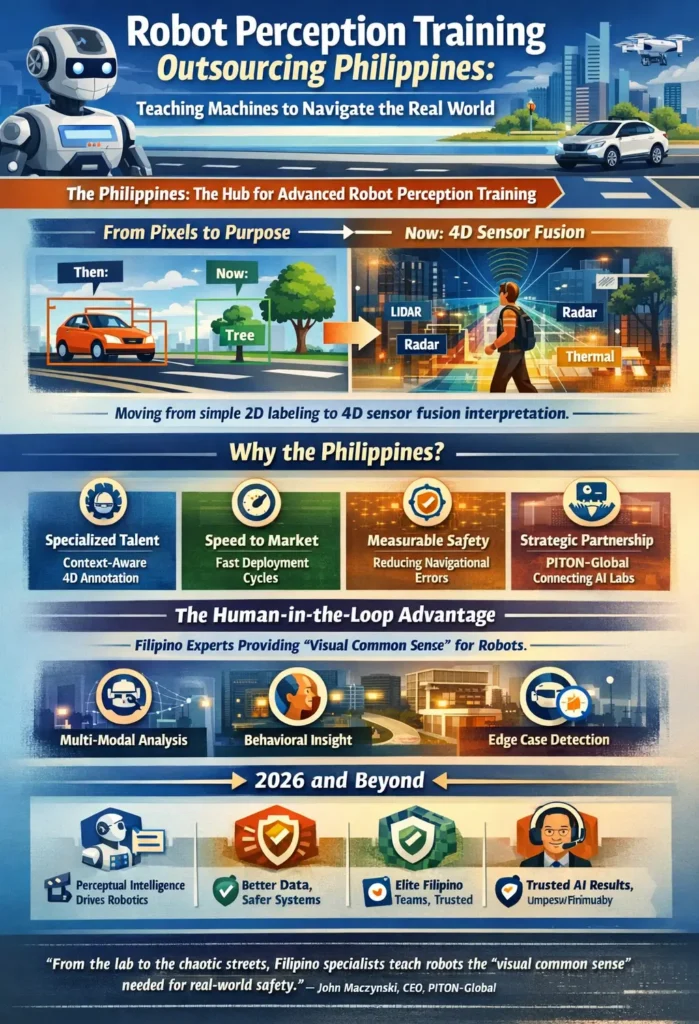
Table 1: Robot Perception Training Maturity Model
The progression of robotic intelligence is mirrored in the complexity of the tasks performed by annotation teams. This model tracks the move from basic detection to agentic governance.
| Maturity Level | Primary Task | Key Metrics | Required Skillset |
| Level 1: Basic | 2D Bounding Boxes | Annotations per hour | Basic computer literacy; rule-following. |
| Level 2: Semantic | Pixel-level Classification | Intersection over Union (IoU) | Extreme attention to detail; pattern recognition. |
| Level 3: Multi-Modal | 4D Sensor Fusion (LiDAR/Radar) | Velocity & Tracking Accuracy | Spatial reasoning; understanding sensor physics. |
| Level 4: Behavioral | Intent & Anomaly Detection | Reduction in False Positives | Critical thinking; predictive analysis. |
| Level 5: Agentic | RLHF & Action Validation | Model Safety & Task Completion | Ethical reasoning; deep domain expertise. |
Intelligence Arbitrage in Robotics: Beyond Cost Savings
The motivation to engage in robot perception training outsourcing Philippines has transitioned from labor arbitrage to Intelligence Arbitrage. This strategy prioritizes the acquisition of superior cognitive input to gain a market edge. Access to a deep pool of specialized talent in the Philippines allows robotics companies to scale high-stakes cognitive work more effectively than they could with an in-house team.
For an AI lab, this translates to measurable performance gains. Higher-quality training data results in more accurate perception models, which in turn leads to safer robots and faster commercialization. In 2026, the focus is squarely on “model truth.” Discerning developers are prioritizing the caliber of human intelligence over simple cost reduction, recognizing that better data is the most direct path to reducing R&D timelines and mitigating the risk of system failures.
Table 2: Service Tiers for Robot Perception Training
Matching project requirements with the correct level of expertise is vital for optimizing both safety and ROI.
| Service Tier | Core Focus | Example Use Case | Strategic Goal |
| Tier 1: Foundational | High-volume 2D labeling | Consumer drone object detection | Rapidly building massive initial datasets. |
| Tier 3: Advanced | 3D Point Cloud/Sensor Fusion | Autonomous vehicle urban navigation | High-fidelity tracking in all weather conditions. |
| Tier 3: Behavioral | Intent & Edge Case Labeling | Sidewalk delivery robot interactions | Minimizing real-world decision-making errors. |
| Tier 4: Full-Cycle | RLHF & Red Teaming | Surgical robot precision validation | Achieving certifiable safety and reliability levels. |
The Human Firewall: Ensuring Safety in an Autonomous World
As machines gain more autonomy, the cost of a perceptual error becomes catastrophic. A warehouse robot failing to detect a human worker or a vehicle misreading a signal represents an unacceptable failure. In this context, the Philippine BPO sector provides a “human firewall”—the final line of defense against model hallucinations.
These specialists are tasked with “red teaming” the AI, intentionally seeking out inputs that cause the model to break. They curate the “long tail” of rare scenarios that are statistically infrequent but critical for public safety. This adversarial testing ensures that when a robot enters a chaotic, rain-slicked street, it possesses a form of “visual common sense” that is the foundation of modern reliability.
“The true test of a robot isn’t a controlled lab; it’s a crowded, unpredictable city at twilight. Our Philippine partners provide the bridge to that reality. They aren’t just tagging data; they are teaching machines the nuanced understanding required to navigate our world safely.” — John Maczynski, CEO, PITON-Global
Expert FAQs
Can synthetic data ever fully replace human annotators?
While synthetic data is useful for common scenarios, it cannot yet replicate the infinite “edge cases” of reality. Human cognition is still required to interpret ambiguous visuals and provide the “ground truth” for complex human behaviors that simulations cannot model with 100% fidelity.
Why is the Philippines considered the top destination for this work?
The workforce combines high English proficiency with strong logical reasoning and a cultural affinity for Western business standards. Their ability to understand and apply complex, nuanced guidelines allows them to act as active participants in the R&D process rather than just rote data processors.
How is sensitive or proprietary robotics data protected?
Leading providers utilize ISO 27001-certified facilities with biometric security and physically isolated “clean rooms.” Data is typically processed via encrypted tunnels, and personnel are subject to rigorous background checks and comprehensive NDAs, ensuring the highest level of confidentiality.
What is the role of Reinforcement Learning from Human Feedback (RLHF) here?
In RLHF, human experts evaluate a robot’s decisions in real-time or simulation, ranking different actions (e.g., choosing the safest path for a delivery bot). This direct feedback loop is essential for fine-tuning the “judgment” of an AI, moving it beyond simple detection toward intelligent decision-making.
Achieve sustainable growth with world-class BPO solutions!
PITON-Global connects you with industry-leading outsourcing providers to enhance customer experience, lower costs, and drive business success.
Get Your Top 1% Vendor List
Author
Ralf Ellspermann is a multi-awarded outsourcing executive with 25+ years of call center and BPO leadership in the Philippines, helping 500+ high-growth and mid-market companies scale call center and customer experience operations across financial services, fintech, insurance, healthcare, technology, travel, utilities, and social media.
A globally recognized industry authority—and a contributor to The Times of India and CustomerThink —he advises organizations on building compliant, high-performance offshore contact center operations that deliver measurable cost savings and sustained competitive advantage.
Known for his execution-first approach, Ralf bridges strategy and operations to turn call center and business process outsourcing into a true growth engine. His work consistently drives faster market entry, lower risk, and long-term operational resilience for global brands.
EXECUTIVE GOVERNANCE & ACCURACY STANDARDS
Authored by:

Ralf Ellspermann
Founder & CSO of PITON-Global,
25-Year Philippine BPO Veteran,
Multi-awarded Executive
Specializing in strategic sourcing and excellence in Manila
View Full Bio
Verified by:

John Maczynski
CEO of PITON-Global, and former Global EVP of the World’s largest BPO provider | 40 Years Experience
Ensuring global compliance and enterprise-grade service standards
View Full Bio
Last Peer Review: March 23, 2026
This service framework is audited quarterly to meet shifting global outsourcing regulations and COPC standards.