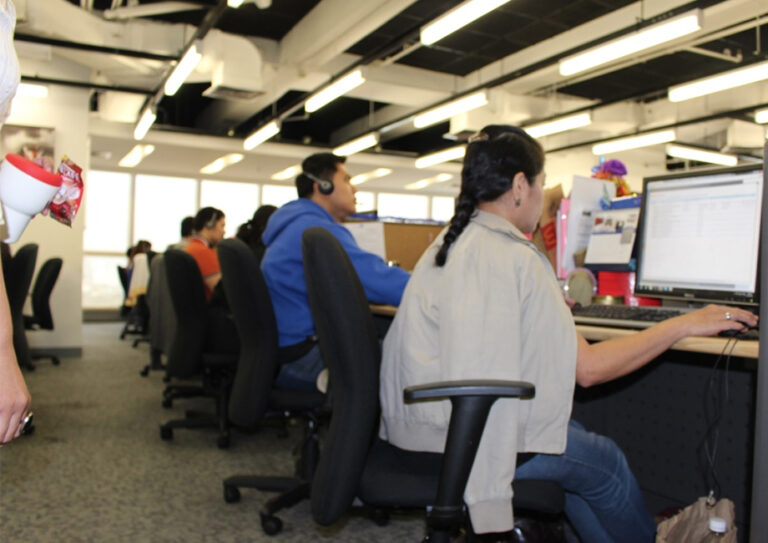
Most carriers that send work to Manila begin with one process and grow from there, and expanding an offshore insurance engagement well is mostly a matter of sequence: which work moves next, what must be proven first, and who governs the change. For buyers who already have insurance operations supported offshore, or who are planning a first pilot, this roadmap lays out the usual order, the gates between stages and the habits that keep added scope from eroding quality.
Why most insurers start small
Insurers new to the Philippines start with a narrow scope because it lets them measure the team on work with clear right answers before trusting it with judgment. A small pilot also exposes gaps in the carrier’s own documentation, which usually matter more than anything the vendor does.
A typical first scope is one queue in one line of business: new business data entry for a personal auto book, for instance, or claims status calls for a homeowners program. The pilot answers practical questions. Can the team hit accuracy targets on the carrier’s systems? Are the procedure guides complete enough for an agent in the Philippines who has never visited the home office? How fast do questions get answered, and by whom? Carriers that skip this stage and move five processes at once often cannot tell which one caused a service dip.
Cost is part of the motivation, but it is rarely the whole story. Buyers also expand because the Philippine team gives them coverage across time zones, capacity during catastrophe seasons and a bench of trained staff that is hard to hire in many US labor markets.
A three-wave roadmap for adding processes
The most reliable path moves from administrative work, to claims support, to underwriting and analytical support. Each wave builds on the knowledge and controls created in the one before it.
Wave one: policy administration and document work
The first wave covers rule-based tasks: policy issuance, endorsements, renewals, cancellations, document indexing, mailroom processing and premium billing questions. These tasks teach the team the carrier’s products, systems and terminology. They also give the carrier a clean baseline for accuracy and turnaround time.
Wave two: claims support
Once the administrative work is stable, most carriers add claims work in layers: first notice of loss intake, then coverage verification and document chasing, then payment preparation and subrogation research. Philippine staff who already know the policy forms move into these roles, which shortens training considerably. Our deeper look at claims processing and adjudication support covers how the review steps are split between the offshore team and licensed adjusters, and the piece on digital claims workflows shows how intake changes when most first notices arrive online.
Wave three: underwriting and analytical support
The third wave asks for more interpretation. Typical tasks include submission intake and clearance, loss-run summaries, exposure data enrichment, referral preparation for underwriters and reporting that feeds pricing and reserving. The underwriter still decides; the Filipino team makes sure every file reaches that decision complete, consistent and on time.
Some carriers add a fourth, seasonal layer: temporary capacity for open enrollment or catastrophe surges. Life and health carriers in particular use it to cover peaks without hiring permanent staff, a pattern examined in our article on staffing for the 2026 life and health enrollment surge.
Readiness gates between each wave
Move the Philippine team to the next wave only when the current one has met agreed targets for a sustained period. A calendar date is not a readiness gate; evidence is.
- Quality: accuracy on audited samples has met the target for several consecutive months, with no recurring error type left unresolved.
- Stability: agent attrition and absenteeism are within the contract range, and team leads have been in place long enough to coach new hires.
- Documentation: procedure guides for the next process are written, tested with the onshore team and approved by the process owner.
- Controls: system access, authority limits and escalation paths for the new work are defined before anyone is trained on it.
- Capacity: the vendor can recruit and train the added headcount without pulling experienced staff off the existing queue.
The last gate is the one most often missed. When a provider in the Philippines staffs a new process by moving its best people from the current one, both queues suffer for a quarter. Ask how the vendor will backfill before approving the next wave.
What makes added scope stick
Growth holds when three things are in place: people who understand insurance, recognized standards that govern the work, and a working relationship that treats the vendor as part of the operation rather than a ticket queue.
People and continuous training
The Philippine workforce brings strong English, a service-minded culture and familiarity with North American norms, which reduces friction on policyholder calls and written correspondence. Those traits are a foundation, not a substitute for domain training. Strong providers run insurance academies that cover policy structures, claims terminology and regulatory basics, and they refresh that training whenever the carrier changes a form, a rule or a system. Ask to see the curriculum and the refresher schedule.
Standards and security
Each new process usually touches more sensitive data than the last, so the control environment has to grow with the scope. The providers we shortlist operate under frameworks such as HITRUST CSF, SOC 2 Type II, ISO 27001, PCI DSS and HIPAA, with NAIC-aligned governance, as set out on our capabilities page. For a carrier, the practical test is whether the vendor’s audit scope covers the specific site and systems the new process will use.
Partnership and agile governance
Carrier relationships with Philippine providers that last tend to run on short feedback cycles. Weekly calibration sessions, a shared issue log and a monthly review of process changes let both sides adjust quickly when a regulation, product or volume pattern shifts. The vendor’s operations lead should be able to propose improvements, not only report metrics, and the carrier’s process owners should attend reviews rather than delegate them entirely to procurement.
Where technology fits as the scope grows
Technology should be added where it removes repetitive steps from a process the team already runs well. Automating a process that has not yet stabilized tends to hide errors rather than remove them.
In practice, many carriers pair each wave with a matching tool. Robotic automation and document extraction speed up wave-one data capture. Predictive models can rank incoming claims by complexity or fraud risk, so the claims team in Manila spends its time on files that need a human read. In underwriting support, models can pre-fill exposure data that staff then verify. Chatbots handle simple policyholder questions around the clock, leaving agents to handle the calls that involve a loss or a complaint. Cloud-hosted platforms make it easier to add seats in Cebu or another city without a new infrastructure project.
The team’s role shifts as tools take over routine steps. Agents become reviewers and exception handlers, which calls for more training in judgment and less in keystrokes. Build that change into the workforce plan for the Philippine site before the tools arrive.
Frequently asked questions
How long should each wave take?
Plan for the current process to run at target for several months before the next wave begins. The exact timing depends on complexity, volume and how complete your documentation is, so set the gates by results rather than by date.
Should we add processes with the same vendor or a second one?
Staying with one vendor keeps shared knowledge and a single control environment. A second vendor makes sense when you need geographic redundancy or a capability the first provider lacks, and it works best when each vendor owns clearly separate processes.
Which processes should stay onshore?
Decisions that require a state license, such as binding coverage or final claim determinations above set limits, usually stay with licensed staff in the US rather than moving to the Philippines. Many carriers also keep complex litigation files and regulator correspondence onshore.
Does expanding scope lower the cost per transaction?
It often does, because supervision, training and quality functions are shared across more work. The larger benefit, though, is usually consistency: one team that knows your products end to end makes fewer handoff errors.