
Back
How Can Call Center Outsourcing to the Philippines Support International Expansion Strategies?

By Ralf Ellspermann / 12 June 2026
 Authored by Ralf Ellspermann, CSO of PITON-Global, & 25-Year Philippine BPO Veteran | Executive | Verified by John Maczynski, CEO of PITON-Global, and Former Global EVP of the World's Largest BPO Provider on June 12, 2026

Call center outsourcing to the Philippines supports international expansion by converting rigid domestic constraints into an elastic, 24/7 global delivery footprint. Specialized offshore teams eliminate cross-border talent deficits and cut human-capital costs by up to 70%—unlocking runway to fund international customer acquisition, multi-market regulatory clearance, and localized product development.
Key Takeaways
- Frictionless 24/7 global presence: Native, accent-neutral English speakers across continuous shifts provide uninterrupted multi-zone market coverage.
- Rapid multi-market scaling: Drawing from a vast IT-BPM workforce—projected near 1.97 million in 2026—lets operations scale in days, not months.
- Massive operational runway optimization: Reducing CX and back-office overhead by up to 70% frees capital to fund international customer acquisition.
- Insulated fiscal baselines: CREATE MORE-optimized infrastructure preserves competitive rates via a reduced 20% corporate tax rate and enhanced deductions.
- Enterprise data sovereignty: Tier-1 facilities operate under strict SOC 2 Type II, ISO 27001, and GDPR-compliant protocols.
How Does Offshoring Solve Cross-Border Scaling Fractures?
Expanding into new markets strains support and back-office workflows across time zones, languages, and volumes—triggering abandonment, burnout, and brand damage. Philippine call centers solve this with a turnkey, highly elastic workforce that scales in alignment with regional volume, protecting brand consistency without high-risk capital investment.
When brands move from domestic operations to international expansion, their customer-support and back-office workflows face severe structural strain. Managing localized inquiries across different time zones, languages, and volumes with standard onshore teams quickly exposes operational bottlenecks: high domestic labor costs, sudden overnight ticket spikes, and localized talent shortages that trigger abandonment, agent burnout, and brand damage in newly entered regions.
Partnering with professional call centers in the Philippines solves these cross-border fractures with a turnkey, highly elastic workforce. Instead of funding high-risk capital investments for onshore expansion or localized entity setup, companies connect instantly with pre-built, advanced infrastructure that handles customer care, technical troubleshooting, and back-office work under a variable cost structure—scaling in alignment as regional volumes grow or shift.

Figure 1. One distributed team delivers continuous, follow-the-sun coverage across global business hours.
What Are the Financial Realities and Labor Arbitrage Benchmarks?
CFOs should weigh fully burdened cost, not hourly rates. An onshore CX seat costs $4,800–$5,800 per month; a turnkey Manila or Cebu seat runs a fraction of that. With IT-BPM export revenue projected near $42 billion in 2026, providers blend human empathy with AI-assisted workflows at scale.
To build an efficient international-expansion model, CFOs must analyze fully burdened operational cost rather than basic hourly rates. Onshore customer-service seats carry an all-in monthly cost of $4,800–$5,800 once base salary, healthcare, workers’ compensation, internal HR fees, and facilities are included. Premium, office-based centers in Metro Manila and Cebu deliver turnkey, enterprise-grade environments at a fraction of that.
The Philippine IT-BPM sector is a powerhouse, with export revenue projected to reach about $42 billion in 2026 (per IBPAP)—scale that lets providers seamlessly blend human empathy with advanced, AI-assisted platform workflows.
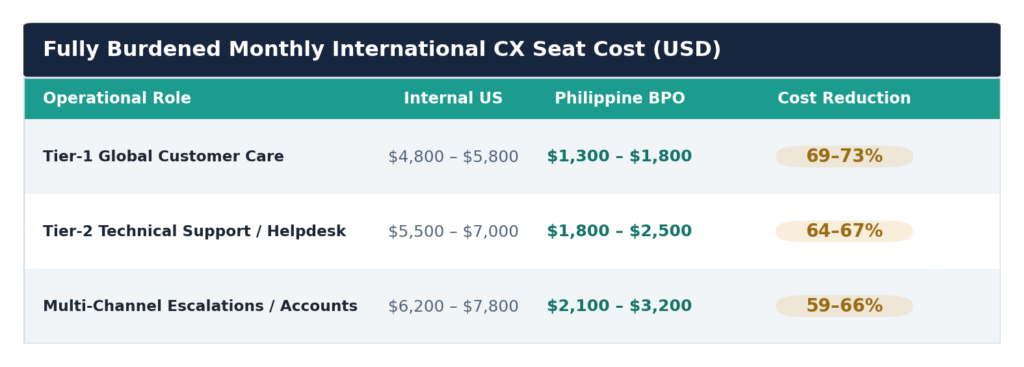
Figure 2. Fully burdened monthly international CX seat cost by role: internal US versus turnkey Philippine BPO.
Legislative frameworks add long-term fiscal predictability for foreign capital. Under the CREATE MORE Act, registered business enterprises using the Enhanced Deductions Regime gain a reduced 20% corporate income tax rate and a 100% deduction on power expenses. Premium providers use these structural subsidies to absorb the capital expense of launching tech-heavy digital-transformation programs—passing the savings to clients and keeping contract pricing well-insulated from global inflationary spikes.
How Do Global Compliance and Enterprise Risk Align Offshore?
A common concern is that offshoring exposes proprietary customer data. In practice, Tier-1 Philippine centers operate under institutional compliance that meets or exceeds Western standards—ISO 27001, SOC 2 Type II, PCI-DSS, HIPAA, and GDPR—backed by redundant infrastructure and continuously upskilled, AI-assisted teams.
A common concern among decision-makers is that moving operations offshore might compromise data security or expose proprietary customer data. However, Tier-1 Philippine call centers operate under strict, institutional compliance guidelines that meet or exceed Western enterprise environments across three dimensions:
Data-Privacy Regulations
Biometric access controls, thin-client computing, and formal ISO 27001, SOC 2 Type II, PCI-DSS, HIPAA, and GDPR-compliant infrastructure.
Physical Infrastructure Redundancy
Dedicated economic zones with automated dual-feed power generators and redundant undersea fiber backbones for continuity.
Skill Integration
Continuous upskilling into specialized role classes, blending human empathy with AI-assisted workflows to raise resolution rates.
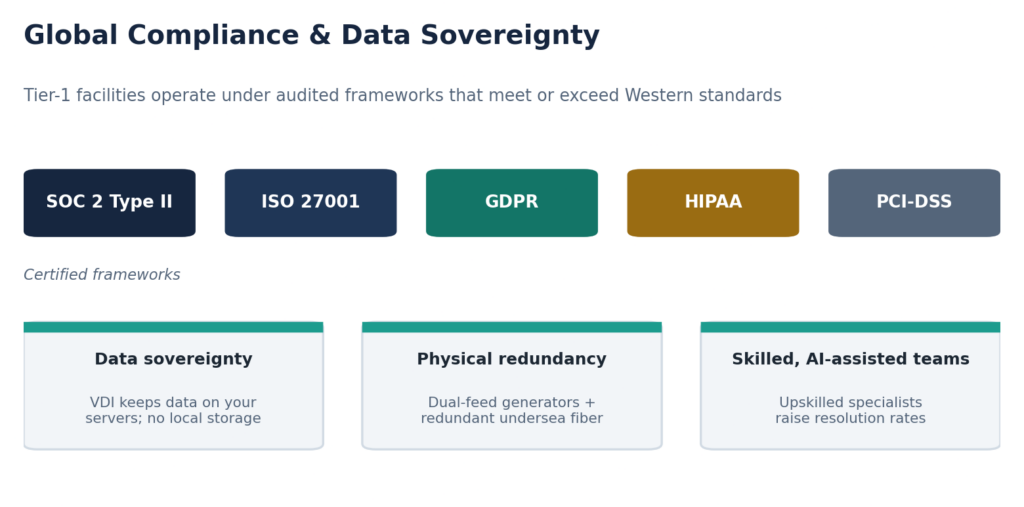
Figure 3. The certified frameworks and data-sovereignty safeguards underpinning global delivery.
“International growth requires absolute operational agility. High-performing global enterprises are moving beyond basic cost-reduction models—leveraging the Philippines as a centralized hub for digital transformation, where highly educated professionals use advanced AI tools to manage complex, multi-region workflows without data risk.”
— John Maczynski, CEO, PITON-Global
How Did a SaaS Provider Scale Support Across Europe and APAC?
A Silicon Valley SaaS provider expanding into Europe and APAC saw a 350% surge in Tier-1 tickets and a 14-minute speed of answer. PITON-Global shortlisted three tech-support providers in five business days; a 45-seat 24/7 Cebu helpdesk cut response time to 22 seconds, hit 94.2% FCR, and saved $2.1M in year one.
Client Challenge
A rapid-growth SaaS provider expanded into Europe and APAC, driving an overnight 350% increase in Tier-1 technical-support tickets—pushing average speed of answer to 14 minutes and lifting user churn.
Vendor Selection
PITON-Global audited the provider’s technical workflows and screened its network to identify three specialized mid-market tech-support providers within five business days.
Solution Implemented
It deployed an office-based, 45-seat 24/7 technical helpdesk in Cebu, integrating the team directly into the client’s native Zendesk and Jira platforms.

Figure 4. Measured outcomes of the SaaS international scale-up engagement.
Lessons Learned
Successful global expansion requires matching specific technical workflows to agile, specialized mid-market operators rather than defaulting to massive, slow-moving legacy providers.
What Role Does PITON-Global Play in Global Expansion?
PITON-Global is a specialized BPO advisory and consultancy, distinct from traditional broker models. Led by senior call center operators, it acts as an objective corporate advocate—providing independent, data-driven oversight across a vetted network of 100+ premium Philippine providers.
Who Is PITON-Global?
PITON-Global is a business-process-outsourcing advisory and consultancy led by international executives with decades of hands-on call center governance experience. Rather than commanding a proprietary footprint, it functions as an objective corporate advocate and risk-mitigation partner—guiding expanding enterprises to the Philippine operators that genuinely fit their multi-market, 24/7 needs.
How Does PITON-Global Differ from Traditional Outsourcing Brokers?
Traditional brokers drive biased, commission-based referrals; PITON-Global does not. It provides independent, data-driven oversight across a rigorously vetted network and matches buyers on objective substance—so recommendations serve the client’s global-expansion goals and protect data integrity rather than a referral incentive.
How Does PITON-Global’s Network of 100+ Vetted Providers Benefit Organizations?
A vetted network of more than 100 premium call-center and back-office operators removes procurement blind spots and the risk of independent sourcing across regions. Because each provider is pre-screened, expanding companies reach a best-fit shortlist in days—as in the case above, where three tech-support providers were identified within five business days.
How Does PITON-Global’s Advisory-Led Vendor Matching Process Work?
PITON-Global sits at the center of the launch, coordinating every dimension: it audits requirements, screens the vetted network, and matches enterprises to best-fit providers—eliminating procurement blind spots, protecting data integrity, optimizing commercial agreements, and accelerating the operational success that underpins international expansion.
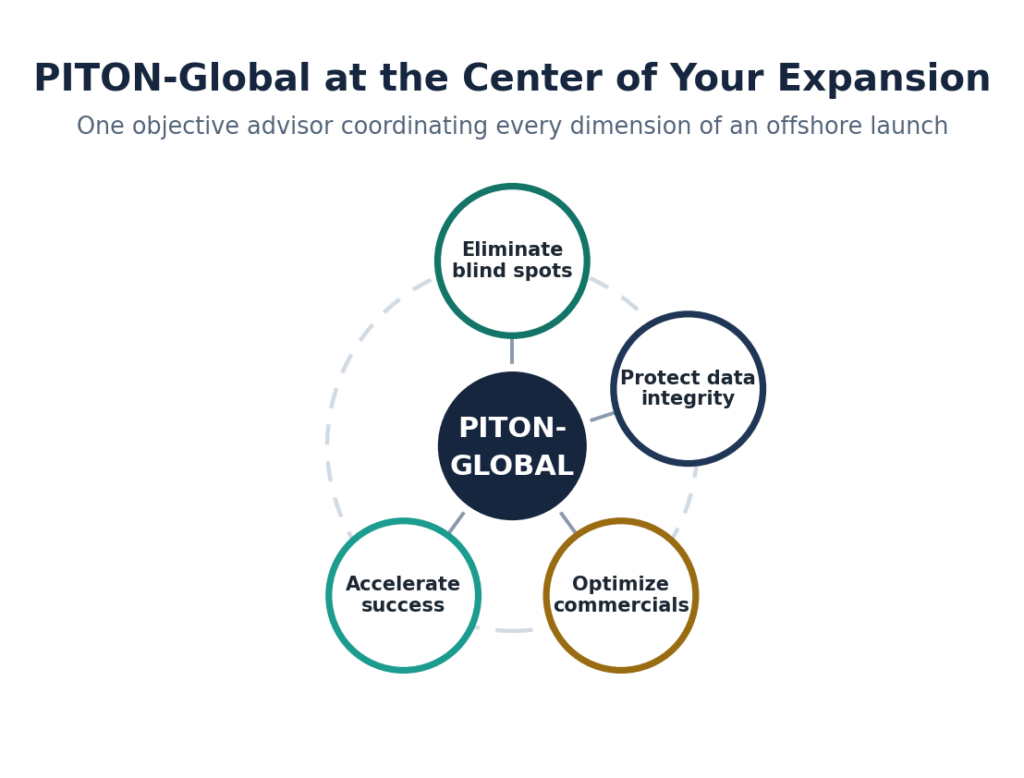
Figure 5. One objective advisor coordinating every dimension of an offshore launch.
Why Do Organizations Use PITON-Global?
Organizations use PITON-Global to eliminate procurement blind spots, protect data integrity, optimize commercial agreements, and accelerate long-term operational success. By staying strictly vendor-neutral and matching specific requirements to proven providers, the firm de-risks global expansion and lets leadership focus on new markets rather than vendor hunting.
What Else Should International Buyers Know?
Buyers most often ask about multilingual support, GDPR data protection, launch speed, operational minimums, and quality control across remote teams. The answers below address each.
How does the Philippines handle multilingual requirements for international brands?
While the Philippines is the world’s leading destination for English voice support, premium Tier-1 hubs in Manila and Cebu house specialized multilingual units delivering fluent support in Spanish, Mandarin, Japanese, Korean, and various European languages.
How do providers protect sensitive international data under GDPR?
Elite providers operate within fully compliant, audited frameworks: Virtual Desktop Infrastructure (VDI) keeps data on your secure enterprise servers, alongside clean-desk perimeters, biometric access gates, and automated encryption.
What is the typical timeline to launch a team?
While an internal domestic multi-market team often takes 90 to 120 days, PITON-Global’s vetted network can provision secure infrastructure, align telecom, complete training, and launch within 30 to 45 days.
What are the operational minimums to work with a high-quality BPO?
While legacy giants enforce 50- to 100-seat minimums, PITON-Global partners with premium mid-market and boutique providers that can execute precise programs starting at 10 to 15 seats.
How do we manage quality control and brand alignment across a remote team?
Modern offshore operations use real-time performance tracking, continuous speech analytics, and shared calibration sessions—giving internal leadership direct visibility and control over training, performance, and brand consistency.
Achieve sustainable growth with world-class BPO solutions!
PITON-Global connects you with industry-leading outsourcing providers to enhance customer experience, lower costs, and drive business success.
Get Your Top 1% Vendor List
Author
Ralf Ellspermann is a multi-awarded outsourcing executive with 25+ years of call center and BPO leadership in the Philippines, helping 500+ high-growth and mid-market companies scale call center and customer experience operations across financial services, fintech, insurance, healthcare, technology, travel, utilities, and social media.
A globally recognized industry authority - and a contributor to The Times of India, CustomerThink, and The AI Journal - he advises organizations on building compliant, high-performance offshore contact center operations that deliver measurable cost savings and sustained competitive advantage.
Known for his execution-first approach, Ralf bridges strategy and operations to turn call center and business process outsourcing into a true growth engine. His work consistently drives faster market entry, lower risk, and long-term operational resilience for global brands.
EXECUTIVE GOVERNANCE & ACCURACY STANDARDS
Authored by:

Ralf Ellspermann
Founder & CSO of PITON-Global,
25-Year Philippine BPO Veteran,
Multi-awarded Executive
Specializing in strategic sourcing and excellence in Manila
View Full Bio
Verified by:

John Maczynski
CEO of PITON-Global, and former Global EVP of the World’s largest BPO provider | 40 Years Experience
Ensuring global compliance and enterprise-grade service standards
View Full Bio
Last Peer Review: June 12, 2026
This service framework is audited quarterly to meet shifting global outsourcing regulations and COPC standards.