The 30-Second Executive Briefing
- Crisis Resolution: Moves beyond simple “rebooking” to Guest Continuity, ensuring passenger data (loyalty, dietary needs, connections) remains intact across disrupted itineraries—the core job of a disruption desk built for storm days.
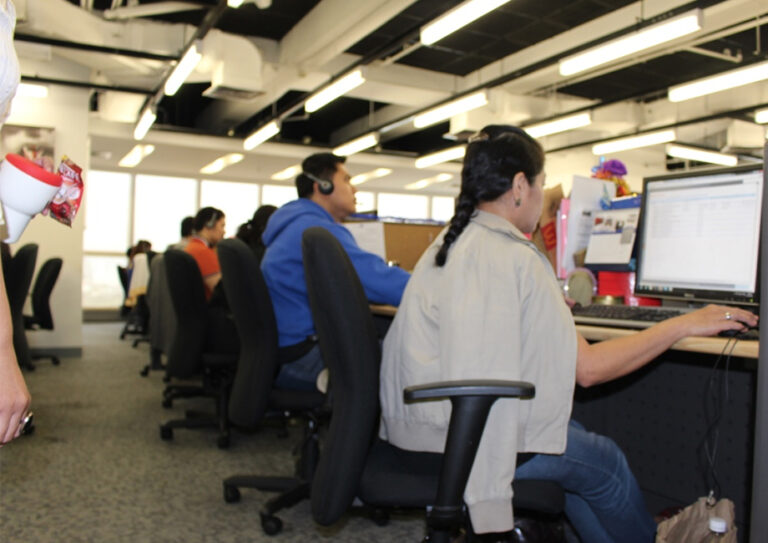
- Surge Capacity: Unique “Burst Desks” in the Philippines can scale from 50 to 500 agents within 2 hours to handle massive system outages or weather events.
- NPS Preservation: Utilizes the high-empathy Filipino culture to de-escalate “High-Velocity Emotional States,” turning a potential PR disaster into a loyalty-building moment.
- Financial Impact: Reduces Cost-per-Interaction (CPI) substantially while improving resolution speed from hours to under 15 minutes via AI-Human hybrid triage.
Executive Summary
In the 2026 aviation landscape, disruptions are no longer situational—they are structural. With global passenger volumes at an all-time high, a single software glitch or weather front can strand 100,000+ travelers in minutes. Flight delay and IRROPS (Irregular Operations) management outsourcing in the Philippines has shifted from a back-office function to a front-line “Brand Shield.” By blending Agentic AI—which handles the bulk of routine rebookings—with a specialized human workforce trained in “Crisis Empathy,” Manila-based partners allow airlines to maintain operational control when domestic centers would otherwise buckle. This article outlines the 2026 blueprint for scaling crisis support without eroding brand equity.
The 2026 Challenge: “The Liquid Guest” and Automation Fatigue
In 2026, passengers are “Liquid Guests”—they expect their profile and preferences to follow them instantly, even when their flight is cancelled.
Solving the “Bot-Frustration” Gap
While many airlines have deployed AI bots, these systems often fail during complex IRROPS (e.g., re-protecting a family of five on three different carriers with a pet in the hold). This is where the Philippine Intelligence Arbitrage model excels. The AI handles the data-heavy rebooking for solo travelers, while the Manila-based specialists handle the “Grey Area” cases. This prevents Automation Fatigue, where a stranded traveler feels “abandoned by the algorithm.”
Cultural Empathy: The Malasakit Advantage
During a delay, a traveler’s logic is clouded by stress. Filipino agents are globally recognized for Malasakit (genuine concern). This cultural DNA allows them to provide the “Linguistic Guardrail” needed to de-escalate angry passengers, providing reassurance that a machine cannot simulate.
Strategic Economics: 2-Hour “Surge Scaling” Blueprint
The primary value of the Philippines in 2026 is its massive, pre-trained talent reserve.
Table 1: IRROPS Response Benchmarks (Legacy vs. 2026 PH Model)
| Metric | Legacy In-House (2024) | Philippine AI-Hybrid (2026) | Strategic ROI |
| Surge Activation Time | 24 – 48 Hours | < 2 Hours | Crisis Mitigation |
| Average Resolution Time | 4 – 6 Hours | < 15 Minutes | NPS Protection |
| Cost Per Resolution | $18.50 | $5.20 | ~72% Savings |
| Recovery Rate (NPS) | 45% (Neutral) | 88%+ (Positive) | LTV Preservation |
Expert Commentary: The PITON-Global Perspective
John Maczynski, CEO of PITON-Global, emphasizes the need for resilience:
“In 2026, travel disruptions are structural. You cannot hire your way out of a crisis using onshore labor—the math doesn’t work. The Philippines is the only hub where you can ‘Burst’ your capacity in a single afternoon without sacrificing the ‘Human Heart’ of your service.”
Maczynski’s focus on “Burst Capacity” is the key differentiator for 2026. These centers maintain “Standby Pools” of agents who are cross-trained in ticketing and GDS, ready to pivot from general support to IRROPS triage at a moment’s notice. The pod structure is the same one used to build hotel sales and lead-generation growth pods and dedicated travel sales teams.
The Technical Protocol: 2026 Recovery Stack
Delivery hubs utilize a proprietary three-tier stack to manage IRROPS:
- Agentic Triage (Tier 1): Autonomous AI authenticates the passenger and offers immediate “Self-Service” rebooking or voucher issuance for the bulk of simple PNRs.
- Specialist Orchestration (Tier 2): High-friction cases (unaccompanied minors, medical needs, interline complexities) are routed to Manila “Crisis Architects.”
- Logistics Coordination (Tier 3): Dedicated back-office teams manage hotel vouchers and ground transport via API integrations with local providers at the disruption site.
Geographic Authority: Multi-Site Disaster Resilience
In 2026, “Crisis Support” must itself be “Crisis-Proof.” Leading Philippine BPOs utilize a multi-city strategy to ensure uptime.
Table 2: Philippine Resilience Hubs
| Hub Location | Strategic Role | Infrastructure Edge |
| Metro Manila | Command & Control | Tier-4 Data Centers & Satellite Backups. |
| Cebu City | Redundant Surge Site | Massive talent pool for overflow support. |
| Iloilo City | Empathy-Lead Support | Known for the highest English purity and de-escalation skills. |
Regulatory Sovereignty: The “Zero-Trust” Guest Perimeter
Managing a crisis involves handling massive amounts of PII (Personally Identifiable Information).
- GDPR & PCI-DSS 4.0: All delivery centers operate under “Zero-Possession” protocols; data is accessed via encrypted VDI, ensuring no passenger data ever leaves the airline’s core system.
- EU AI Act Compliance: When the system shifts from an AI rebooking bot to a Filipino agent, the transition is transparently disclosed, meeting 2026 global transparency standards.
Performance FAQs: Executive Insights
Q1: How do you prevent “Agent Burnout” during a 48-hour global outage?
A: We use Follow-the-Sun Rotation. By utilizing hubs across Manila, Cebu, and Davao, we rotate fresh teams every 8 hours. Our Agentic AI copilots also handle the data-entry “heavy lifting,” allowing agents to focus purely on the emotional resolution of the passenger.
Q2: Can the offshore team handle re-accommodation on other carriers (Interlining)?
A: Yes. Our agents are GDS-Certified (Amadeus/Sabre). They use Intelligence Arbitrage to navigate interline agreements and “Involuntary Rerouting” rules, ensuring the airline doesn’t overpay for third-party seats while still satisfying the passenger—the same GDS discipline that drives outsourced reservations and booking management.
Q3: How does this impact our “Duty of Care” legal obligations?
A: By providing 24/7 proactive updates and instant hotel/meal voucher issuance via the offshore hub, you fulfill your legal “Duty of Care” requirements (like EU261 or US DOT mandates) much faster than an automated email system ever could.