
Back
Fintech Technical Support Outsourcing Philippines: Bridging the “Product-Trust” Gap in 2026
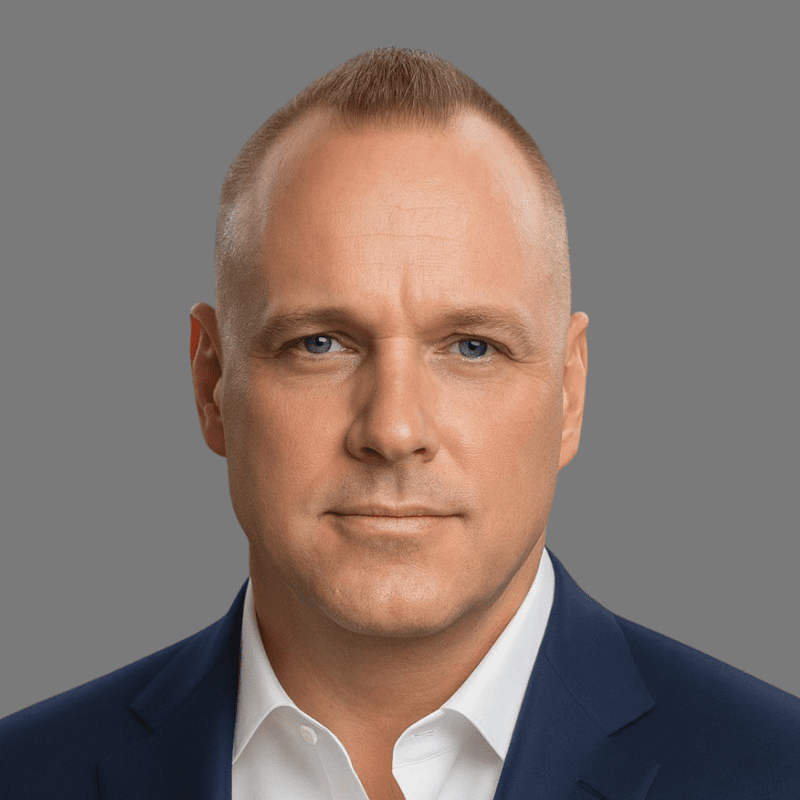
By Ralf Ellspermann / 30 January 2026
 Authored by Ralf Ellspermann, CSO of PITON-Global, & 25-Year Philippine BPO Veteran | Executive | Verified by John Maczynski, CEO of PITON-Global, and Former Global EVP of the World's Largest BPO Provider on January 30, 2026

How Global SaaS and Neobanking Leaders Deploy $14/hr “Technical Architects” to Drive Ecosystem Resilience
Executive Summary
In the fintech ecosystem of 2026, the product is no longer a standalone app; it is a node in a hyper-connected web of APIs. As digital wallets, DeFi protocols, and embedded lending platforms become increasingly modular, the role of support has shifted. It is no longer enough to resolve a ticket; the goal is to ensure ecosystem continuity.
For global fintech leaders, fintech technical support outsourcing to the Philippines has emerged as the strategic solution to the “technical talent crunch.” By leveraging specialized hubs at a $14/hour fully loaded benchmark, fintechs are bypassing the $55/hour onshore cost for tier-2 and tier-3 engineers. This “intelligence arbitrage” allows brands to deploy “technical architects” in Manila who don’t just fix bugs—they manage the “technical glue” between your platform and the global banking rails. Managing the ‘technical glue’ of global banking rails is a specialized function we detail in our Ultimate 2026 Fintech Outsourcing Guide.
The 2026 Technical Support Crisis: The API “Partner Trap”
The fintech products of 2026 rely on a fragile web of third-party integrations—banking-as-a-service (BaaS) providers, biometric ID verifiers, and niche API specialists. When a transaction fails, 70% of the time the issue lies within the interoperability layer, not the fintech’s own code.
The Onshore Engineering Bottleneck
Hiring technical support engineers in the US who can navigate cross-platform logs and perform SQL queries is prohibitively expensive. This leads to “ticket bloat,” where complex integration issues sit in a queue for days, eroding user trust.
The Philippines provides a specialized solution. At $14/hour, fintechs are staffing their desks with university-educated IT professionals who function as partner relationship management (PRM) specialists. These agents act as the “technical liaison” between your internal devs and your third-party API partners, identifying exactly where the communication chain broke before it becomes a system-wide outage.
2026 Technical Support Functional Matrix
The modern fintech technical support team in the Philippines operates as a “real-time dev-ops” extension.
| Support tier | Agentic AI role (automation) | The human value-add (Manila) | Strategic impact |
| Tier 1: Basic access | Resolving MFA sync & biometric re-authentication. | Guiding high-value users through complex identity recovery. | 85% auto-resolution for routine tasks. |
| Tier 2: API & ecosystem | Monitoring API heartbeats & flagging partner latency. | Troubleshooting “broken integration” calls between user apps and BaaS partners. | Minimizes “churn due to friction.” |
| Tier 3: Core systems | Log aggregation and initial pattern recognition of bugs. | SQL database queries & “ephemeral sandbox” debugging with US devs. | 40% faster patch deployment. |
| Onboarding/migration | Standard data mapping for new user accounts. | ISO 20022 migration support: managing the shift to structured XML data. | Ensures 2026 compliance readiness. |
ISO 20022 & The “Structured Data” Deadline
By November 2026, the global banking system will fully transition to the ISO 20022 standard for cross-border payments. This “rich data” format is a massive technical hurdle for support teams.
The Translation Layer in Manila
Philippine technical support hubs have become the primary “translation layer” for global fintechs. At $14/hour, these teams manage the manual mapping of ISO-compliant messages and resolve rejections caused by unstructured data. They ensure that your platform’s cross-border payments don’t hang in “compliance limbo” as the world moves toward native ISO processing.
Agentic AI: The Support Engineer’s “Co-Pilot”
The most transformative shift in 2026 is the integration of agentic AI. Unlike the chatbots of the past, agentic AI in a Philippine BPO setting acts as an “assistant engineer.”
The “Knowledge-as-a-Service” Model
When a technical ticket is opened, the AI instantly scans the company’s entire GitHub repository and Confluence documentation to provide the Philippine agent with a “predicted patch.” This allows a $14/hour agent in Manila to solve problems that previously required a $150k/year engineer. This “human-on-the-loop” model ensures that autonomy never compromises trust.
Operational Security: “Ephemeral Sandboxes” & Zero Trust
For a fintech CTO, the biggest risk of technical support is system access. If an agent has the power to run SQL queries or view transaction logs, they must be within a “zero-trust” environment.
Zero-Trust Implementation in 2026
Leading Philippine BPOs now utilize “ephemeral environments.” A support agent is granted a temporary, “read-only” sandbox of a customer’s technical data that expires the moment the ticket is closed. Combined with biometric workstation access and BSP Circular 1137 compliance, the Philippines offers a security posture that often exceeds that of a fintech’s internal onshore team.
Strategic Insights: The John & Ralf Perspective
Q: Can a $14/hour agent in the Philippines truly handle tier-3 technical issues?
Ralf Ellspermann (CSO, PITON-Global): “In 2026, the answer is yes, because of the AI co-pilot. Our BPO partners are hiring computer science graduates in Manila and giving them ‘superpowers’ via agentic AI. This allows them to function at a tier-3 level for a tier-1 price. That is the essence of intelligence arbitrage.”
Q: What is the biggest mistake fintechs make with technical support?
John Maczynski (CEO, PITON-Global): “They separate ‘support’ from ‘engineering.’ In the best Philippine operations, the support team has a direct feedback loop into the US product team. If the Manila team sees the same API error 50 times in an hour, they are the ones who trigger the ‘global incident’ protocol. They are your early warning system.”
About PITON-Global
PITON-Global is a premier, independent BPO advisory firm that helps fintech, SaaS, and neobanking brands navigate the complexities of the 2026 landscape. We identify high-performing, fully vetted Philippine outsourcing partners that specialize in high-tier technical support and dev-ops assistance. Our guidance is provided free of charge, with no contractual obligations.
Achieve sustainable growth with world-class BPO solutions!
PITON-Global connects you with industry-leading outsourcing providers to enhance customer experience, lower costs, and drive business success.
Get Your Top 1% Vendor List
Author
Ralf Ellspermann is a multi-awarded outsourcing executive with 25+ years of call center and BPO leadership in the Philippines, helping 500+ high-growth and mid-market companies scale call center and customer experience operations across financial services, fintech, insurance, healthcare, technology, travel, utilities, and social media.
A globally recognized industry authority—and a contributor to The Times of India and CustomerThink —he advises organizations on building compliant, high-performance offshore contact center operations that deliver measurable cost savings and sustained competitive advantage.
Known for his execution-first approach, Ralf bridges strategy and operations to turn call center and business process outsourcing into a true growth engine. His work consistently drives faster market entry, lower risk, and long-term operational resilience for global brands.
EXECUTIVE GOVERNANCE & ACCURACY STANDARDS
Authored by:
Ralf Ellspermann
Founder & CSO of PITON-Global,
25-Year Philippine BPO Veteran,
Multi-awarded Executive
Specializing in strategic sourcing and excellence in Manila
View Full Bio
Verified by:

John Maczynski
CEO of PITON-Global, and former Global EVP of the World’s largest BPO provider | 40 Years Experience
Ensuring global compliance and enterprise-grade service standards
View Full Bio
Last Peer Review: January 30, 2026
This service framework is audited quarterly to meet shifting global outsourcing regulations and COPC standards.