
Back
Fintech Payments Operations Outsourcing Philippines: Mastering Global Settlement in 2026
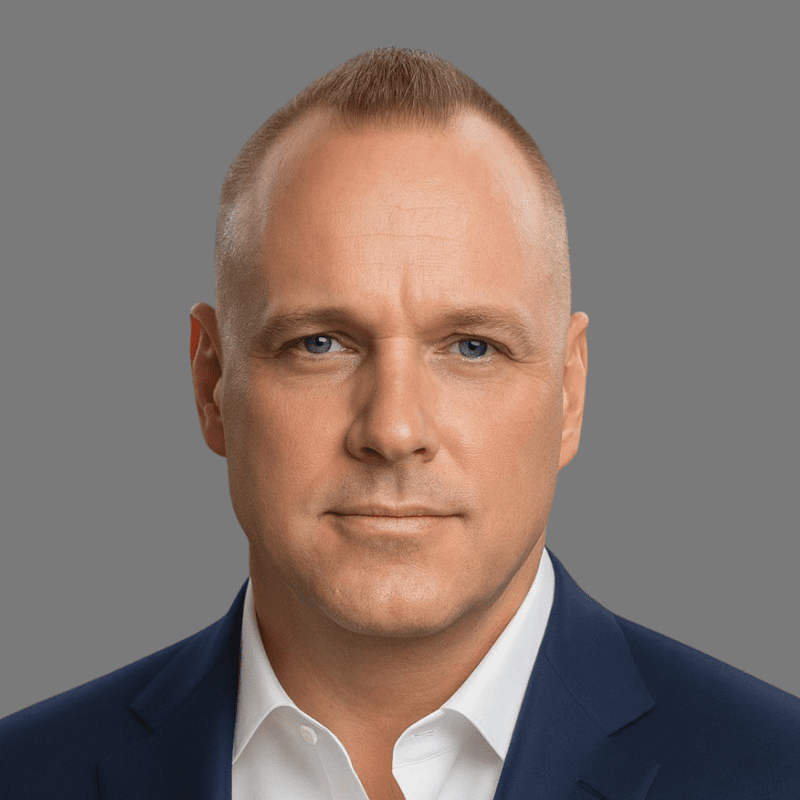
By Ralf Ellspermann / 30 January 2026
 Authored by Ralf Ellspermann, CSO of PITON-Global, & 25-Year Philippine BPO Veteran | Executive | Verified by John Maczynski, CEO of PITON-Global, and Former Global EVP of the World's Largest BPO Provider on January 30, 2026

How Neobanks and PSPs Leverage $14–$16/hr “Payment Architects” to Solve the ISO 20022 and Real-Time Settlement Crisis
Executive Summary
The movement of money is no longer a “batch-and-settle” process; it is a real-time data orchestration challenge. As global digital transaction volumes reach the $2 trillion milestone, the pressure on payments operations (PayOps) has reached a breaking point. The complexity of managing multi-currency rails, instant payment networks (such as FedNow and SEPA Instant), and the rigorous new ISO 20022 messaging standards has turned the back office into a strategic bottleneck.
For global fintech leaders, fintech payments operations support outsourcing to the Philippines has emerged as the premier solution for “precision scaling.” By leveraging specialized Philippine hubs at a $14–$16/hour fully loaded benchmark, fintechs are deploying “payment architects” who manage the high-stakes world of reconciliation, liquidity management, and exception handling. This “intelligence arbitrage” allows fintechs to maintain 24/7/365 settlement velocity while reducing operational overhead by over 60%. Mastering real-time data orchestration and global settlement is a cornerstone of our Strategic Guide to Fintech Outsourcing to the Philippines.
The 2026 PayOps Crisis: The Death of Legacy Settlement
The old world of “T+2” settlement is dead. In 2026, users—both B2B and B2C—expect instant liquidity. However, the technical debt of legacy cores, combined with the “rich data” requirements of modern payment rails, has created a massive spike in “broken transactions.” These are payments that are initiated but fail to clear due to data mismatches, compliance flags, or intermediary bank latency.
The Onshore PayOps Talent Gap
In the US and EU, a qualified payments specialist who understands SQL, SWIFT gpi, and the nuances of real-time rails such as FedNow commands a fully loaded rate of $52.00/hour. For a high-growth payment service provider (PSP) or neobank, staffing a 24/7 “money movement” desk onshore is cost-prohibitive and leads to massive “burnout churn.”
The Philippines provides the global solution. With a 20-year history as the back-office hub for the world’s largest investment banks, the Philippines offers a workforce with “payment muscle memory.” At a range of $14–$16/hour, fintechs can hire university-educated professionals who understand the entire transaction lifecycle, from authorization and clearing to settlement and reconciliation.
2026 Payments Ops Functional Matrix
Winning in 2026 requires a “zero-error” approach to money movement.
| PayOps function | Agentic AI role (automation) | The human value-add (Manila) | Strategic impact |
| Reconciliation | Real-time matching of GDS/PMS logs with bank settlements. | Investigating “penny-off” exceptions and broken ledger chains. | Zero revenue leakage. |
| Liquidity management | Monitoring wallet balances across global rails. | Manual “intra-day” rebalancing and funding of pre-funded accounts. | Optimized working capital. |
| ISO 20022 mapping | Automated XML schema validation. | Resolving “rich data” errors in cross-border payment messages. | 99.9% successful settlement. |
| Shadow accounting | Mirroring ledger entries for real-time audit readiness. | Manual verification of edge-case ledger discrepancies. | Regulator-grade integrity. |
Deep Dive: The ISO 20022 Transition and the “Rich Data” Burden
The most significant technical hurdle for PayOps in 2026 is the full global implementation of ISO 20022. This is not just a format change; it is a fundamental shift in how payments carry data. Unlike legacy SWIFT MT messages, ISO 20022 uses XML-based “rich data” that allows for structured postal addresses, ultimate debtor and creditor information, and purpose codes.
The “Translation Layer” in Manila
When an ISO-compliant payment fails because of a missing structured address or a malformed XML tag, it requires immediate human intervention. Philippine PayOps teams act as the “technical translation layer.” At $14–$16/hour, these specialists use agentic AI tools to identify the data gap and manually repair the message in real time. This is critical for B2B fintechs where a single malformed message can stall a $500,000 settlement. The Philippine analyst ensures these high-value messages move through the network without triggering manual repair fees from intermediary banks.
Liquidity Management: The 24/7 Challenge of Real-Time Rails
In a world of real-time payments (RTP), liquidity must be managed continuously. If a fintech’s pre-funded account at a partner bank runs dry on a Sunday afternoon, the service goes down. This is the “liquidity trap” of modern finance: having the right amount of money in the right “pipe” at the right millisecond.
The “Follow-the-Sun” Money Desk
Philippine PayOps centers provide the 24/7 oversight required for instant finance. Operating in a follow-the-sun model, Manila-based teams monitor intra-day liquidity while US and EU teams are offline. They are empowered to trigger automated “sweeps” or coordinate with liquidity providers to ensure that every wallet is funded and every rail is active. This level of always-on operations is only financially viable at the Philippine cost benchmark, where the delta between day and night shifts is negligible compared to the 300% night differential costs in Western markets.
Mastering Interoperability: Managing the API Ecosystem
The fintech stack of 2026 is a modular web of APIs. A single payment might touch a ledger in AWS, a KYC provider in London, and a settlement bank in New York. The PayOps team in the Philippines acts as the ecosystem orchestrator.
When an API call fails or a webhook drops, it creates a reconciliation ghost—a transaction that exists in one system but not another. Philippine specialists perform triangulated reconciliation, cross-referencing logs from multiple partners to ensure the internal ledger remains the source of truth. This prevents ghost balances that have historically led to regulatory fines and operational failures.
Shadow Accounting: The 2026 Audit Requirement
Regulators in 2026 are no longer satisfied with monthly reports; they demand real-time visibility. Many fintechs now employ shadow accounting, where a secondary manual ledger runs in parallel with automated systems to detect glitches and ghost transactions.
Building a Continuous Audit Trail
At a rate of $14–$16/hour, fintechs can maintain a dedicated shadow accounting team in Manila. These specialists perform daily mini-audits, ensuring that every virtual account balance matches pooled funds at sponsor banks. This internal control enables fintechs to pass SOC 2 Type II and BSP audits with zero findings, protecting their license to operate.
Exception Handling: Solving the “Edge Case” Profit Drain
Automation resolves most payments, but the remaining exceptions—chargebacks, reversals, and unclaimed funds—consume the majority of operational effort.
Manila as the Exception Clearance Center
Philippine agents specialize in exception remediation. With strong financial logic and network rule expertise, they navigate Visa, Mastercard, and SWIFT frameworks to recover funds that would otherwise be written off. Many fintechs recover enough lost revenue through Manila-based exception handling to fund the entire outsourcing operation.
The “Zero-Trust” PayOps Perimeter
When agents are moving money, security is paramount. Leading Philippine BPOs for PayOps operate under non-custodial access protocols.
2026 Security Mandates
Analysts in Manila work in clean room environments without unilateral authorization rights. Every transaction follows an M-of-N multisignature protocol: the Philippine analyst initiates reconciliation, while a US-based treasurer provides cryptographic sign-off. Combined with BSP Circular 1137 and PCI-DSS 4.0, this creates a fortress back office that meets the world’s most stringent audit standards.
Strategic Insights: The John & Ralf Perspective
Q: Why is payments operations more than just data entry?
Ralf Ellspermann (CSO, PITON-Global): “Data entry is passive. Payments operations is active. It requires understanding nostro and vostro accounts, clearing windows, and settlement finality. In the Philippines, we hire payments specialists who understand ledger architecture and banking rails. That difference matters.”
Q: Can a Philippine team manage complex FedNow or SEPA Instant rails?
John Maczynski (CEO, PITON-Global): “Absolutely. The Philippine BPO sector supports the world’s tier-1 banks. At $14–$16/hour, fintechs access the same expertise that powers global interbank systems, with the agility required for modern payments.”
About PITON-Global
PITON-Global is a premier, independent BPO advisory firm that helps fintech, PSP, and neobanking brands navigate the complexity of the 2026 payment landscape. We identify high-performing, fully vetted Philippine partners that specialize in high-stakes payments operations and reconciliation. Our guidance is provided free of charge, with no contractual obligations.
Achieve sustainable growth with world-class BPO solutions!
PITON-Global connects you with industry-leading outsourcing providers to enhance customer experience, lower costs, and drive business success.
Get Your Top 1% Vendor List
Author
Ralf Ellspermann is a multi-awarded outsourcing executive with 25+ years of call center and BPO leadership in the Philippines, helping 500+ high-growth and mid-market companies scale call center and customer experience operations across financial services, fintech, insurance, healthcare, technology, travel, utilities, and social media.
A globally recognized industry authority—and a contributor to The Times of India and CustomerThink —he advises organizations on building compliant, high-performance offshore contact center operations that deliver measurable cost savings and sustained competitive advantage.
Known for his execution-first approach, Ralf bridges strategy and operations to turn call center and business process outsourcing into a true growth engine. His work consistently drives faster market entry, lower risk, and long-term operational resilience for global brands.
EXECUTIVE GOVERNANCE & ACCURACY STANDARDS
Authored by:
Ralf Ellspermann
Founder & CSO of PITON-Global,
25-Year Philippine BPO Veteran,
Multi-awarded Executive
Specializing in strategic sourcing and excellence in Manila
View Full Bio
Verified by:
John Maczynski
CEO of PITON-Global, and former Global EVP of the World’s largest BPO provider | 40 Years Experience
Ensuring global compliance and enterprise-grade service standards
View Full Bio
Last Peer Review: January 30, 2026
This service framework is audited quarterly to meet shifting global outsourcing regulations and COPC standards.