TL;DR: The Key Takeaway
Data annotation outsourcing in the Philippines has evolved from volume-driven labeling into a strategic discipline of Intelligence Arbitrage — where the primary metric is measurable AI model performance lift, not hours logged. The archipelago is now the sovereign control plane for “Model Truth.”
Executive Briefing
- The global demand for high-fidelity training data has outpaced the capacity of automated labeling tools, creating a strategic imperative for expert human-in-the-loop annotation at scale.
- The value proposition has shifted from cost-per-asset to “Model Performance Lift” — the measurable improvement in AI accuracy and safety that results from cognitively demanding annotation work performed by domain specialists.
- The archipelago has established itself as a sovereign data and logic hub, offering a unique combination of cognitive talent, cultural alignment with Western markets, and robust data governance frameworks.
- Filipino data specialists are evolving into “AI Pilots” who provide the nuanced reasoning, edge-case validation, and logical verification that autonomous AI systems require to operate safely in the real world.
- PITON-Global serves as the governance architect in this ecosystem, vetting and connecting premier AI development firms with the top 1% of specialized annotation teams across this data-sovereign corridor.
Executive Summary
The landscape of data annotation outsourcing to the Philippines has undergone a fundamental transformation. What was once a commoditized, volume-driven task has matured into a sophisticated discipline that sits at the very heart of AI model development. The strategic imperative for AI labs and robotics companies is no longer finding the most affordable annotation workforce; it is securing access to the specialized cognitive talent that can deliver a quantifiable lift in model performance. This is the era of “Intelligence Arbitrage,” and the Southeast Asian nation has positioned itself as the global epicenter. PITON-Global operates at the nexus of this shift, architecting the frameworks that connect discerning AI firms with the elite Filipino professionals who are, in effect, the human firewall against AI hallucinations and model failure.
The Evolution of Data Annotation: From Pixel to Perception
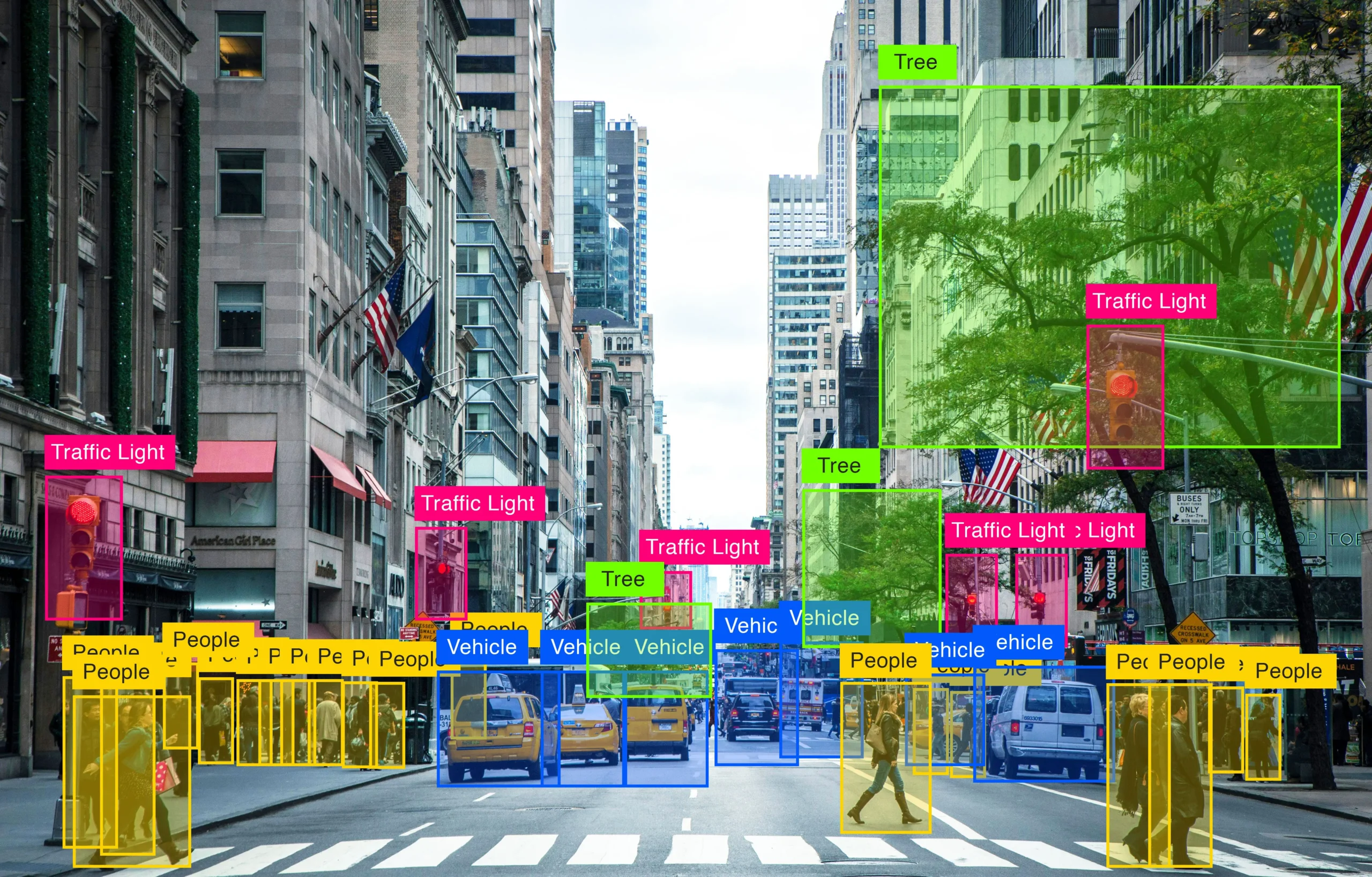
The first generation of data annotation was defined by simplicity and scale. Annotators drew bounding boxes around objects in images, classified text into predefined categories, and transcribed audio files. The work was repetitive, the instructions were rigid, and the primary metric of success was throughput. This foundational layer was necessary, but it created a ceiling. AI models trained on this data could perform basic recognition tasks, but they struggled with the ambiguity, context, and nuance of the real world.
The current generation is defined by an entirely different paradigm. Modern AI applications — from autonomous vehicles navigating unpredictable urban environments to medical imaging systems detecting subtle pathologies — demand training data that captures not just what is in a scene, but the logic, context, and temporal dynamics of how that scene unfolds. This requires annotators who are not merely following instructions but actively reasoning about the data. They must understand why a particular edge case is significant, how an object’s trajectory implies intent, and whether the AI’s interpretation of a complex scenario is logically sound.
“The conversation with our clients has fundamentally changed. Five years ago, they asked us to find teams that could label a million images a month. Today, they ask us to find teams that can reduce their autonomous vehicle’s phantom braking rate by 15% or improve their LLM’s factual accuracy on medical queries. That is the essence of Intelligence Arbitrage — we are not brokering labor, we are brokering cognitive value that directly translates into model truth and market advantage.” — John Maczynski, CEO, PITON-Global
This evolution has profound implications for where and how this work is performed. It demands a workforce that combines technical acumen with critical thinking, cultural fluency with domain expertise. It is precisely this combination that has propelled the Philippines to the forefront of the global AI training data ecosystem.

The AI-Ops Maturity Matrix: 2022 vs. 2026
The transformation of the data annotation industry is best captured by examining the shift in capabilities, metrics, and strategic positioning over the past several years. The following matrix illustrates the dramatic evolution from a cost-centric model to a value-centric partnership.
| Capability | 2022 State (Cost-Centric) | 2026 State (Value-Centric) |
| Primary Task | 2D Bounding Box, Image Classification, Text Tagging | Multi-Modal Annotation, Semantic Segmentation, RLHF |
| Core Metric | Cost-per-Asset, Annotator Hours | Model Performance Lift, Error Rate Reduction |
| Workforce Skill | Manual Task Execution, Rule Following | Domain Expertise, Logical Reasoning, Edge-Case Analysis |
| Value Proposition | Labor Arbitrage | Intelligence Arbitrage, Agentic Governance |
| Technology | Basic 2D Annotation Tools | Advanced Multi-Modal Platforms, QA Automation |
| Client Relationship | Vendor / Supplier | Strategic Partner, Governance Architect |
This matrix underscores a critical reality: the providers who thrived in the 2022 landscape by offering high-volume, repetitive labeling are not necessarily equipped for the demands of the current era. The selection of a data annotation partner is now a C-suite strategic decision, not a procurement exercise.
Intelligence Arbitrage: Redefining the Value of Human-in-the-Loop
The concept of Intelligence Arbitrage is the intellectual engine driving the repositioning of the Philippines as a global AI operations hub. It reframes the entire value proposition of outsourcing. Under the traditional model, the “arbitrage” was purely financial — leveraging wage differentials to reduce operational costs. Under the Intelligence Arbitrage model, the value is cognitive. It is the measurable improvement in an AI model’s accuracy, safety, and reliability that results from the application of expert human judgment.
Consider the practical implications. An autonomous vehicle company does not ultimately care about the cost of annotating a LiDAR point cloud. It cares about whether the annotation is accurate enough to prevent its vehicle from misidentifying a pedestrian. A pharmaceutical company developing a diagnostic AI does not measure success by the number of medical images labeled per hour. It measures success by the sensitivity and specificity of its model in detecting early-stage tumors. The annotation is a means to an end, and that end is model performance. This is the paradigm that PITON-Global champions, connecting AI firms with partners who understand that the ultimate deliverable is not a labeled dataset, but a more intelligent, more reliable, and safer AI.
The Strategic Inflection Point: Why Annotation Quality Is Now a Board-Level Concern
The economics of AI development have reached an inflection point where the marginal cost of compute continues to decline, but the marginal value of high-quality training data continues to rise. For enterprise AI teams, this means that the single greatest lever for improving model performance is no longer a bigger GPU cluster or a more sophisticated architecture — it is the quality and cognitive depth of the human feedback loop. A poorly annotated dataset does not merely slow progress; it embeds systematic errors into the model’s reasoning that compound with every training cycle. This is why the selection of a data annotation partner has migrated from the procurement department to the strategic planning office. The organizations that recognize this shift earliest will be the ones that build the most reliable, trustworthy, and commercially viable AI systems.
Data Annotation Service Complexity Tiers
The spectrum of data annotation outsourcing to the Philippines services is broad, and not all tasks carry the same cognitive weight. Understanding this tiered complexity is essential for matching the right talent to the right project. PITON-Global uses a framework like the one below to ensure optimal alignment.
| Service Tier | Example Tasks | Cognitive Demand | Strategic Value |
| Tier 1: Foundational | Image classification, basic bounding boxes, text categorization | Low to Medium | Building initial training datasets |
| Tier 2: Intermediate | Semantic segmentation, named entity recognition, audio transcription with context | Medium | Improving model granularity and accuracy |
| Tier 3: Advanced | 3D point cloud annotation, multi-turn dialogue evaluation, sentiment analysis | Medium to High | Enabling complex perception and understanding |
| Tier 4: Expert | RLHF ranking, red teaming, edge-case scenario validation, agentic governance | High to Very High | Achieving “Model Truth,” safety, and alignment |
This tiered approach ensures that foundational tasks are handled efficiently while the most complex, high-stakes work is entrusted to the elite cognitive talent that defines the top tier of the Philippine AI-ops ecosystem.
Agentic Governance: The Human Layer of Trust
As AI systems evolve from passive tools into autonomous agents capable of independent action, the need for robust human governance becomes non-negotiable. An autonomous agent operating in a warehouse, on a public road, or within a financial system must adhere to strict safety protocols and brand-logic guardrails. The discipline of Agentic Governance provides this essential layer of human oversight.
Filipino “AI Pilots” are at the forefront of this discipline. They monitor the behavior of autonomous agents, validate their decision-making in complex scenarios, and provide the corrective feedback that keeps these systems aligned with their intended purpose. This is the most sophisticated form of data annotation — it is, in essence, quality assurance for artificial intelligence itself. It is a function that demands not just technical skill, but judgment, intuition, and a deep understanding of the real-world consequences of AI behavior. The BPO ecosystem in the Southeast Asian nation is uniquely equipped to deliver this capability at scale, cementing its role as the indispensable human partner in the age of autonomous AI.
Case Study: Reducing “Phantom Braking” in Autonomous Delivery Robotics (Q1 2025)
The Challenge: In early 2025, a leading Silicon Valley autonomous delivery startup was stalled by a persistent “Phantom Braking” issue—where their robots would abruptly stop for non-existent obstacles, such as shadows or steam from manhole covers. Their internal engineering team was spending 30% of their time manually re-labeling edge cases, a high-cost diversion that threatened their Q4 commercial launch.
The Philippine Solution: Through PITON-Global, the company engaged an elite Annotation Provider in Manila. Unlike their previous volume-based vendor, this team consisted of STEM-background “AI Pilots” who were trained not just to draw boxes, but to perform Temporal Reasoning. They analyzed video sequences to differentiate between static environmental noise (shadows) and dynamic hazards (pedestrians).
The Strategic Intervention:
- Edge-Case Codification: The Filipino team identified 14 distinct sub-categories of “false positive” triggers that the startup’s original guidelines had missed.
- Adjudication Workflow: A three-tier QA process was implemented where “Senior Pilots” resolved disagreements between junior annotators, ensuring a 99.2% IoU (Intersection-over-Union) accuracy rate.
The Quantifiable ROI:
- 60% Reduction in Phantom Braking: The model’s real-world reliability improved within one training cycle (4 weeks).
- $1.4M OpEx Savings: By offloading high-complexity labeling from US engineers to Filipino specialists, the startup reclaimed 4,000 engineering hours.
- Accelerated Launch: The company successfully met its Q4 deployment deadline, securing an additional $20M in Series B funding based on the improved safety metrics.
The Anatomy of Intelligence Arbitrage: 2026 Competitive Benchmarks
In the 2026 landscape, the “Philippine Advantage” is no longer about labor cost; it is about Model Velocity. The following table illustrates the performance gap between legacy outsourcing and the modern Intelligence Arbitrage model.
| Performance Metric | Legacy Outsourcing (2022) | Intelligence Arbitrage (PH 2026) |
| Labeling Logic | Rule-following (Deterministic) | Contextual Reasoning (Heuristic) |
| Error Resolution | Reactive (Found during training) | Proactive (Caught at the Data Hub) |
| Guideline Evolution | Static (Manual updates) | Dynamic (Annotator-led edge-case discovery) |
| Data Security | VPN/Basic Encryption | Zero-Trust Network Access (ZTNA) |
| Impact on Model | Data Volume Increase | Measurable Accuracy Lift (F1 Score) |
Expert FAQs
Q1: What makes the Philippines uniquely suited for high-fidelity data annotation outsourcing?
The nation offers a rare convergence of factors: a large, highly educated, and English-proficient workforce with strong critical thinking skills; a mature and globally recognized BPO infrastructure; deep cultural alignment with Western business practices and communication styles; and a stable regulatory environment with robust data privacy protections. This combination creates an ecosystem capable of delivering the cognitively demanding annotation work that modern AI requires.
Q2: How is “Intelligence Arbitrage” measured in practice?
It is measured through AI model performance metrics that are directly tied to business outcomes. For an autonomous vehicle company, this could be a reduction in disengagement events or phantom braking incidents. For a healthcare AI firm, it could be an improvement in diagnostic sensitivity. The key is that the value of the annotation partnership is quantified not by the volume of data processed, but by the tangible improvement in the AI’s real-world performance.
Q3: What role does PITON-Global play in the data annotation ecosystem?
PITON-Global functions as a strategic advisory and governance architect. Rather than operating annotation teams directly, it connects AI companies with the top-tier, specialized annotation providers in the Philippines. Its role is to vet these providers, ensure they meet the exacting standards required for high-stakes AI work, and architect the governance frameworks that guarantee data integrity, security, and quality throughout the engagement.
Q4: How is the data annotation industry adapting to the rise of generative AI?
The industry is rapidly evolving to meet the demands of generative AI, particularly in areas like Reinforcement Learning from Human Feedback (RLHF), prompt-response evaluation, hallucination auditing, and red teaming. These tasks require annotators who can assess the quality, accuracy, and safety of AI-generated content — a fundamentally different skill set from traditional labeling. The Philippines is leading this transition, leveraging its deep talent pool to become the global center for expert-led AI training data services in the generative AI era.