
Back
Call Centers Philippines: The Ultimate Outsourcing Guide 2026

By Ralf Ellspermann / 14 January 2026
 Authored by Ralf Ellspermann, CSO of PITON-Global, & 25-Year Philippine BPO Veteran | Executive | Verified by John Maczynski, CEO of PITON-Global, and Former Global EVP of the World's Largest BPO Provider on January 27, 2026

Executive Overview: In 2026, the Philippines has transcended its reputation as a “low-cost destination” to become the world’s leading Global Experience (GX) Hub. Managing an estimated $42 billion in revenue and employing over 1.9 million specialists, call centers in the Philippines are now the epicenter of a fundamental shift: from labor-intensive “answering services” to high-value Agentic AI Orchestration. For global enterprises, the Philippines offers the only ecosystem capable of combining 70% cost reductions with the sophisticated empathy required to navigate an AI-saturated consumer market.
The 2026 Landscape: Beyond Manila Saturation
The “Information Technology-Business Process Management Association of the Philippines” (IBPAP) has successfully executed its Roadmap 2028, decentralizing the industry to ensure operational resilience and talent diversity.
- The Rise of “Digital Cities”: While Metro Manila remains the financial core, “Next-Wave Cities” like Iloilo, Clark, and Davao now host 30% of new BPO jobs. These regions offer a lower cost of living, resulting in 18–22% lower attrition rates than the capital.
- Global Capability Centers (GCCs): 2026 marks the “In-House Revolution.” Approximately 25% of the market has shifted to GCC models, where Fortune 500 companies build their own “captive” operations in the Philippines to maintain direct control over their AI training data and corporate culture.
The 2026 Tech Stack: Agentic AI & The Super-Agent
The most significant evolution in Philippine BPOs is the transition from Generative AI (text generation) to Agentic AI (autonomous execution).
Human-in-the-Loop (HITL) Mastery
In 2026, the value of a Philippine call center agent is measured by their ability to supervise AI.
- AI Triage & Resolution: AI agents now resolve 80% of routine queries (billing, tracking, simple tech support) autonomously.
- The “Super-Agent” Intervention: When the AI detects a “Sentiment Red Flag” or an edge case requiring complex judgment, it seamlessly hands over to a Filipino specialist. These agents are trained as AI Supervisors, correcting bot hallucinations and managing high-stakes empathy.
- Real-Time Coaching: Platforms like NGNShadowCoach now provide live, mid-call prompts to agents, suggesting “Next Best Actions” based on the customer’s real-time voiceprint and historical sentiment.
Specialized Industry Verticals: The “Niche” Revolution
The “Generalist” BPO is dead. 2026 call centers in the Philippines have pivoted toward deep vertical specialization.
| Industry | Key 2026 Functions | Competitive Edge |
| Healthtech | Telehealth intake, RCM, HIPAA-compliant patient care. | Clinical certification + Empathy. |
| Fintech/BFSI | Fraud detection, AML (Anti-Money Laundering) monitoring. | Strict regulatory alignment. |
| E-commerce | Revenue recovery, reverse logistics, sentiment-led sales. | 24/7 Global “Follow-the-Sun” support. |
| Legal (LPO) | Contract review, discovery, litigation support. | High English proficiency + US Law familiarity. |
Data Sovereignty: The “Switzerland of Data”
With the enforcement of the EU AI Act and the Philippines’ Public Data Centers Act of 2025, security is the new currency of trust.
- Zero-Possession Architecture: Top-tier BPOs now operate on a “view-only” basis. Philippine agents access client data via encrypted Virtual Desktop Infrastructure (VDI). No PII (Personally Identifiable Information) is ever stored locally, ensuring 100% compliance with GDPR, HIPAA, and DORA.
- Sovereign Cloud Integration: Data residency is managed through localized cloud nodes, allowing global brands to process data in the Philippines while technically remaining within their home-country legal jurisdictions.
The 2026 Economics: Pricing Models and ROI
Pricing has shifted from “Per Head” to “Per Outcome.”
- Resolution-Based Pricing: Clients pay for a “Successfully Resolved Ticket” or “Closed Sale.” This aligns the BPO’s profitability with the client’s efficiency.
- Hybrid Costs: Average hourly rates in 2026 for high-tier support range from $14 to $22/hour, representing a 65–70% saving compared to US/onshore counterparts, even with the costs of AI integration included.
Strategic Implementation: The 16-Week Velocity Plan
To launch a world-class operation in the Philippines, leaders follow this accelerated framework:
- Phase 1 (Wks 1-4): Infrastructure Sync. Integrating Agentic AI layers into your existing CRM (Salesforce, Zendesk, etc.).
- Phase 2 (Wks 5-8): Talent Curation. Selecting the “Top 5%” of the talent pool—agents with high AQ (Adaptability Quotient) to handle AI co-pilots.
- Phase 3 (Wks 9-14): Sandbox Pilot. Testing AI-Human handoffs on low-risk volume to calibrate the “Brand Voice.”
- Phase 4 (Wks 15-16): Full Ramp. Moving to 24/7 global coverage with automated QA (Quality Assurance) scoring.
Managing the “Malasakit” Factor
The Philippines’ ultimate competitive advantage remains Malasakit—a cultural term for “genuine care.” While AI handles the process, Filipino agents handle the relationship. In an era of increasing digital isolation, this “Human Touch” has become a premium luxury that drives Customer Lifetime Value (LTV) higher than automation alone ever could.
Executive Summary for Board Presentation
- Efficiency: Agentic AI handles 80% of volume; humans handle the high-value 20%.
- Savings: 70% reduction in TCO (Total Cost of Ownership).
- Compliance: Zero-Trust, Zero-Possession security architecture.
- Talent: Access to 1.9M English-speaking specialists.
Achieve sustainable growth with world-class BPO solutions!
PITON-Global connects you with industry-leading outsourcing providers to enhance customer experience, lower costs, and drive business success.
Get Your Top 1% Vendor List
Author
Ralf Ellspermann is a multi-awarded outsourcing executive with 25+ years of call center and BPO leadership in the Philippines, helping 500+ high-growth and mid-market companies scale call center and customer experience operations across financial services, fintech, insurance, healthcare, technology, travel, utilities, and social media.
A globally recognized industry authority—and a contributor to The Times of India and CustomerThink —he advises organizations on building compliant, high-performance offshore contact center operations that deliver measurable cost savings and sustained competitive advantage.
Known for his execution-first approach, Ralf bridges strategy and operations to turn call center and business process outsourcing into a true growth engine. His work consistently drives faster market entry, lower risk, and long-term operational resilience for global brands.
EXECUTIVE GOVERNANCE & ACCURACY STANDARDS
Authored by:
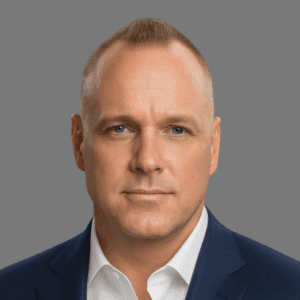
Ralf Ellspermann
Founder & CSO of PITON-Global,
25-Year Philippine BPO Veteran,
Multi-awarded Executive
Specializing in strategic sourcing and excellence in Manila
View Full Bio
Verified by:
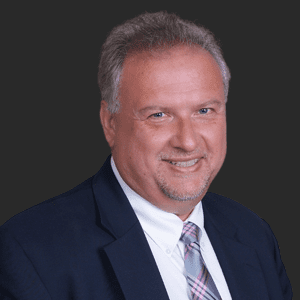
John Maczynski
CEO of PITON-Global, and former Global EVP of the World’s largest BPO provider | 40 Years Experience
Ensuring global compliance and enterprise-grade service standards
View Full Bio
Last Peer Review: January 27, 2026
This service framework is audited quarterly to meet shifting global outsourcing regulations and COPC standards.