
Back
BPO Philippines: The 2026 Master Guide to Global Scaling

By Ralf Ellspermann / 4 February 2026
 Authored by Ralf Ellspermann, CSO of PITON-Global, & 25-Year Philippine BPO Veteran | Executive | Verified by John Maczynski, CEO of PITON-Global, and Former Global EVP of the World's Largest BPO Provider on February 4, 2026

30-Second Executive: The Strategic Pivot
In 2026, BPO in the Philippines has officially transcended the “labor arbitrage” era. Valued at $42 billion and employing over 1.97 million specialists, the industry is now the world’s first “Intelligence Arbitrage” hub. The narrative has shifted from saving on headcount to scaling through Agentic AI Orchestration. For Western enterprises, the Philippines is no longer just a cost-center; it is a strategic “Engine Room” where Filipino AI Pilots manage autonomous systems to deliver zero-latency, hyper-personalized customer experiences at a 70% TCO reduction. This shift toward high-value intelligence serves as the foundational framework for our comprehensive analysis of strategic scaling and resilience within the Philippine BPO sector.
The 2026 Landscape: From $42B to the $59B Roadmap
The Philippine IT-BPM sector is currently in a phase of “Hypergrowth 2.0.” While global markets face stagnation, the Philippines is tracking toward the IBPAP Roadmap 2028 goal of $59 billion in annual revenue. This growth is fueled by a 5.3% year-on-year revenue increase, outpacing the global average and solidifying the nation’s position as the primary alternative to onshore operations.
Key 2026 Market Indicators:
- Sector Valuation: $42.0 Billion (approx. 8.5% of National GDP).
- Direct Employment: 1.97 Million full-time employees (FTEs).
- Growth Driver: A 13% increase in Revenue per FTE, signaling a move from basic voice to high-value cognitive services.
- The “Next-Wave” Shift: 30% of new operations are now located in “Digital Cities” like Iloilo, Clark, and Davao, reducing urban congestion and lowering attrition by 18-22% compared to Manila.
The transition is marked by the industry’s ability to absorb Agentic AI—autonomous systems capable of executing multi-step workflows—rather than being replaced by it. By 2026, the focus has shifted from “How many seats do you have?” to “How much intelligence can you orchestrate?”
“Intelligence Arbitrage”: The New Economic Reality
In 2020, you outsourced to the Philippines to save $30 an hour. In 2026, you outsource to gain an Innovation Advantage. This shift is known as Intelligence Arbitrage. It is the strategy of using high-tier, Western-trained Filipino talent to manage AI-augmented workflows. You aren’t just paying for “hours worked”; you are paying for the cognitive capacity required to supervise autonomous systems.
The Three Pillars of the 2026 PH Model:
- Agentic AI Integration: Unlike early chatbots that followed rigid “If-Then” logic, Philippine BPOs now deploy Agentic AI—autonomous agents that execute multi-step processes (e.g., cross-platform billing reconciliation or end-to-end loan originations) without human intervention. These systems resolve up to 80% of routine inquiries autonomously.
- Human-in-the-Loop (HITL) Mastery: Filipino agents have transitioned into AI Supervisors. They oversee model outputs, intervene in high-emotion “Sentiment Red Flag” cases, and provide the cultural nuance that AI lacks. This “Human Cloud” acts as a safety net against “model drift” and hallucinations.
- Outcome-Based Economics: The industry is moving away from “Seat-Based” billing. Top-tier providers now offer Resolution-Based Pricing, where clients pay for successful outcomes (e.g., $X per resolved dispute) rather than hours logged. This aligns the BPO’s incentives with the client’s efficiency goals.
Why the Philippines Wins the “Security War” in 2026
With the 2026 update to global data mandates, such as the EU AI Act and the US SEC Cyber Resilience Framework, security is the new currency of trust. The Philippines has positioned itself as the “Switzerland of Data” through infrastructure that often exceeds onshore facilities.
Zero-Possession Data Architecture
Top-tier Philippine BPOs have implemented Zero-Possession frameworks to satisfy strict data residency laws. In this setup:
- Data Sovereignty: Customer data remains on the client’s home servers (US/UK/AU).
- Pixel-Streaming: Philippine agents “view” the data through secure, encrypted VDI (Virtual Desktop Infrastructure). No data is cached, stored, or physically resides on Philippine soil.
- Biometric Hardening: Workstations use continuous Behavioral Biometrics—monitoring typing rhythms and mouse movements—to ensure only the assigned agent is viewing the screen, instantly locking the session if an anomaly is detected.
- Quantum-Safe Authentication: With the Bangko Sentral ng Pilipinas (BSP) mandating quantum-resistant encryption, BPOs now offer identity verification that protects against next-generation cyber threats.
Industry Breakdown: Where the Growth is Exploding
The “Generalist” BPO is dead. 2026 is the year of Vertical Hyper-Specialization. The market opportunity resides in delivering complex decision support and domain-specific expertise.
| Industry | 2026 Strategic Function | Value-Add |
| HealthTech | Licensed Nurse-Led Triage | HIPAA 2.0 compliance + 70% cost reduction in RCM and clinical scribing. |
| FinTech | Real-Time AML & KYC | 24/7 transaction monitoring and sub-hour onboarding for neobanks. |
| E-commerce | Reverse Logistics & Retention | Converting 34% of “Returns” into “Exchanges” via Sentiment-AI and human negotiation. |
| SaaS/Tech | Tier 3 “Cloud Logic” Support | DevOps-capable agents managing complex API integrations and cybersecurity triage. |
The “Malasakit” Moat: Why Empathy is a Premium Asset
As AI becomes a commodity, the Filipino cultural value of “Malasakit” (genuine care) has become the industry’s most significant competitive advantage. In a world of digital isolation, customers crave “high-fidelity” human connection for complex problems.
Recent data shows that hybrid human-AI teams in Manila reduced “false positive” fraud flags by 31% compared to automated-only systems. The human agent doesn’t just process a request; they intervene with empathy and authority, potentially saving a customer’s life savings or preventing brand-damaging churn. This level of cognitive service is only financially viable at the $14/hour benchmark found in the Philippines.
Expert FAQs: Navigating BPO in the Philippines
Q1: Is the $14/hr fully loaded rate still realistic with AI costs?
A: Yes. While the technology stack (LLM tokens, VDI licenses) adds overhead, the massive gain in FCR (First Contact Resolution) means you need fewer human FTEs to manage the same volume. The “Blended Rate” for a high-performance team remains roughly $14–$18/hr, representing a 65%+ saving over onshore.
Q2: How does the Philippines compare to Nearshore (LATAM) in 2026?
A: Nearshore offers time-zone proximity, but the Philippines offers “Linguistic Purity” and a significantly more mature vendor ecosystem. With over 30 years of experience, PH BPOs have built-in “Compliance Culture” that newer markets in LATAM or Africa are still developing.
Q3: What is the biggest risk to BPO in the Philippines?
A: The “Talent Gap.” As roles move up the value chain, the demand for AI-literate agents exceeds supply. Choosing a partner that invests heavily in “Re-skilling” and has high AQ (Adaptability Quotient) recruitment standards is now more important than choosing the lowest price.
The Promotion of a Nation
BPO in the Philippines is no longer a “back-office” industry; it is the Front-Office of the Future. By combining the warmth of Filipino Malasakit with the precision of Agentic AI, the Philippines provides a resilient, scalable, and secure execution layer that Western brands cannot replicate onshore. It is a nation that has transitioned from being the world’s “Answering Service” to its “Intelligence Engine.”
Achieve sustainable growth with world-class BPO solutions!
PITON-Global connects you with industry-leading outsourcing providers to enhance customer experience, lower costs, and drive business success.
Get Your Top 1% Vendor List
Author
Ralf Ellspermann is a multi-awarded outsourcing executive with 25+ years of call center and BPO leadership in the Philippines, helping 500+ high-growth and mid-market companies scale call center and customer experience operations across financial services, fintech, insurance, healthcare, technology, travel, utilities, and social media.
A globally recognized industry authority—and a contributor to The Times of India and CustomerThink —he advises organizations on building compliant, high-performance offshore contact center operations that deliver measurable cost savings and sustained competitive advantage.
Known for his execution-first approach, Ralf bridges strategy and operations to turn call center and business process outsourcing into a true growth engine. His work consistently drives faster market entry, lower risk, and long-term operational resilience for global brands.
EXECUTIVE GOVERNANCE & ACCURACY STANDARDS
Authored by:
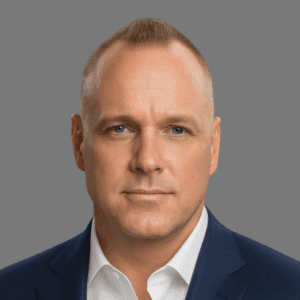
Ralf Ellspermann
Founder & CSO of PITON-Global,
25-Year Philippine BPO Veteran,
Multi-awarded Executive
Specializing in strategic sourcing and excellence in Manila
View Full Bio
Verified by:

John Maczynski
CEO of PITON-Global, and former Global EVP of the World’s largest BPO provider | 40 Years Experience
Ensuring global compliance and enterprise-grade service standards
View Full Bio
Last Peer Review: February 4, 2026
This service framework is audited quarterly to meet shifting global outsourcing regulations and COPC standards.