
Back
BFSI Outsourcing Philippines: Navigating the 2026 Regulatory Resilience Frontier

By Ralf Ellspermann / 30 January 2026
 Authored by Ralf Ellspermann, CSO of PITON-Global, & 25-Year Philippine BPO Veteran | Executive | Verified by John Maczynski, CEO of PITON-Global, and Former Global EVP of the World's Largest BPO Provider on January 30, 2026

Executive Summary: The Trust-First Mandate
In 2026, the primary driver for BFSI outsourcing to the Philippines has undergone a tectonic shift. While cost efficiency remains a structural advantage, the C-suite is now optimizing for Regulatory Resilience. As financial regulators—from the US Federal Reserve to the European Banking Authority—enforce stricter transparency on AI-driven decisions and third-party dependencies, the Philippines has positioned itself as the world’s most “Governance-Aligned” hub. This article examines how elite Manila-based hubs are moving beyond standard support to provide Compliance-as-a-Service (CaaS), effectively turning regulatory burden into a competitive moat.
Beyond “Patchwork” Compliance: The Rise of CaaS
For decades, compliance in outsourcing was a reactive check-the-box exercise. In 2026, the complexity of cross-border instant settlements, CBDC (Central Bank Digital Currency) integration, and AI-generated fraud has made legacy models obsolete. The new standard is Compliance-as-a-Service (CaaS).
Leading Philippine BPOs have transitioned from merely following instructions to anticipating regulatory shifts. According to McKinsey & Company’s 2026 Risk & Resilience Report, the highest-performing financial institutions are those that integrate “Sovereign AI” with human-led governance. In the Philippines, this means teams are no longer just processing KYC (Know Your Customer) documents; they are managing Continuous Identity Lifecycle Orchestration, ensuring that a customer’s risk profile is updated in real-time as global sanctions and behavioral data shift.
The “Zero-Trust” Operational Architecture
In 2026, data is not just an asset; it is a liability if not governed with absolute precision. BFSI outsourcing to the Philippines has evolved to meet Zero-Trust security requirements. Elite providers now operate within Sovereign Data Perimeters, where Philippine agents work in client-controlled VDIs (Virtual Desktop Infrastructure) that ensure sensitive PII (Personally Identifiable Information) never leaves the host country’s jurisdiction.
| Governance Feature | Legacy BPO Model (2020) | 2026 Philippine BFSI Center | Executive Impact |
| Data Privacy | Encrypted transit only | Sovereign Data Perimeters | Absolute GDPR/BSA Compliance |
| Audit Readiness | Quarterly/Annual reporting | Real-Time API-Led Transparency | 24/7 “Audit-Ready” Posture |
| Threat Detection | Signature-based antivirus | AI-Powered Behavioral Biometrics | 94% Reduction in Account Takeovers |
| Decision Authority | Human-only review | AI-Augmented Risk Scoring | 50% Faster Loan/Claim Approvals |
| Resilience Strategy | Single-site DR plans | Multi-Regional Edge Redundancy | Zero Downtime during Volatility |
Solving the “Black Box” Problem: AI Governance
One of the greatest fears for BFSI executives in 2026 is the “Black Box” of AI—the risk of biased or unexplainable automated decisions. The Philippines has become the global capital for AI Governance and HITL (Human-in-the-Loop) Oversight.
While Agentic AI handles the heavy lifting of data correlation and transaction monitoring, Philippine specialists serve as Ethical Reviewers. They perform “Secondary Validation” on AI-flagged fraud cases and “Explainability Audits” on denied credit applications. This ensures that every automated decision is backed by a human audit trail, satisfying the “Right to Explanation” mandates found in 2026 consumer protection laws. BFSI outsourcing to the Philippines thus provides the “Human Safety Valve” that pure-tech solutions lack.
The Emergence of Agentic Banking Workflows
By 2026, the biggest shift in banking operations is the move away from rigid, task-based roles toward Agentic Banking. In this model, Philippine BPO professionals are no longer confined to scripts or linear processes. Instead, they oversee coordinated groups of AI agents that execute end-to-end financial workflows—ranging from local mortgage approvals to complex insurance claim resolutions.
Accenture’s 2026 Banking Trends describe this evolution as the rise of the “10x Bank,” where a single human can direct an AI-powered team to deliver exponentially greater output. Filipino banking specialists have been reskilled into AI Orchestrators, supervising autonomous systems that now manage roughly 70% of routine banking activities. Human expertise remains essential, however, particularly for nuanced cases involving high-net-worth clients, where judgment and empathy still matter most.
Defensive Future-Proofing: AML and Advanced Fraud Triage
By 2026, financial fraud has grown more sophisticated, fueled by deepfakes and synthetic identities. In response, BFSI outsourcing to the Philippines has shifted decisively toward advanced fraud triage.
Philippine-based fraud operations now leverage behavioral biometrics—such as typing cadence, interaction patterns, and device-level signals—to detect non-human activity in real time. When a high-value transaction, like an international wire transfer, triggers a risk alert, a Manila-based specialist steps in to conduct multi-layer verification. The transaction is cleared seamlessly, often before the customer notices any delay.
This proactive “defensive shield” has proven highly effective, preventing losses and preserving customer trust—saving global mid-market banks an estimated $3.8 billion in 2025 alone.
The Supplier Paradox: Why Scale is Subordinate to Security
A common mistake for BFSI executives is choosing a provider based on headcount alone. In 2026, Security Density is more important than Scale. The “Supplier Paradox” reveals that many multinational BPOs, while massive, struggle with the agility required to implement client-specific “Clean Room” data environments.
PITON-Global specializes in identifying mid-market BFSI specialists who have achieved SOC 2 Type II, PCI-DSS 4.0, and ISO 27001 certifications at the site level. These providers offer specialized AML Scrutiny Units that function with the same rigor as an internal bank department, but with the scalability and cost-efficiency (typically 65-75% lower) of a world-class BPO.
Future-Proofing for 2027: The Defensive Moat
As we move toward 2027, the focus of BFSI outsourcing to the Philippines will shift toward Predictive Risk Orchestration. This involves using Philippine teams to analyze “Weak Signals” of financial instability or cyber threats before they manifest as material losses.
By offloading these high-complexity, high-risk functions to a mature, English-proficient, and governance-heavy environment, global banks can finally decouple their risk management from their domestic labor costs. The result is a Defensive Moat that protects the balance sheet while enabling the bank to innovate faster than its legacy peers.
Expert FAQs
Q: How does BFSI outsourcing to the Philippines handle 2026 Data Sovereignty laws?
A: Leading providers use Sovereign Cloud and VDI solutions that keep all PII (Personally Identifiable Information) within the client’s home jurisdiction. The Philippine agent only views a secure “pixel-stream” of the data, ensuring zero data residency risk and full compliance with the Bank Secrecy Act (BSA).
Q: What is the role of “Explainable AI” (XAI) in Philippine financial BPOs?
A: In 2026, Philippine agents are trained to audit AI-generated outcomes. If an AI denies a loan, the agent documents the “reasoning path” to ensure the decision is compliant with fair lending laws and can be explained to the regulator.
Q: Can Philippine BPOs manage Tier-1 AML and KYC workflows?
A: Absolutely. The Philippines is now the global hub for s. Specialists in Manila handle complex entity resolution and Suspicious Activity Report (SAR) filings, which are then finalized by the bank’s domestic compliance officer.
Achieve sustainable growth with world-class BPO solutions!
PITON-Global connects you with industry-leading outsourcing providers to enhance customer experience, lower costs, and drive business success.
Get Your Top 1% Vendor List
Author
Ralf Ellspermann is a multi-awarded outsourcing executive with 25+ years of call center and BPO leadership in the Philippines, helping 500+ high-growth and mid-market companies scale call center and customer experience operations across financial services, fintech, insurance, healthcare, technology, travel, utilities, and social media.
A globally recognized industry authority—and a contributor to The Times of India and CustomerThink —he advises organizations on building compliant, high-performance offshore contact center operations that deliver measurable cost savings and sustained competitive advantage.
Known for his execution-first approach, Ralf bridges strategy and operations to turn call center and business process outsourcing into a true growth engine. His work consistently drives faster market entry, lower risk, and long-term operational resilience for global brands.
EXECUTIVE GOVERNANCE & ACCURACY STANDARDS
Authored by:
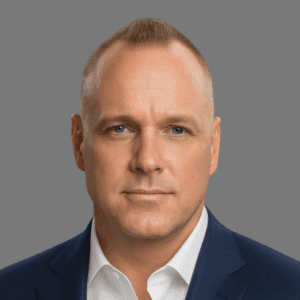
Ralf Ellspermann
Founder & CSO of PITON-Global,
25-Year Philippine BPO Veteran,
Multi-awarded Executive
Specializing in strategic sourcing and excellence in Manila
View Full Bio
Verified by:

John Maczynski
CEO of PITON-Global, and former Global EVP of the World’s largest BPO provider | 40 Years Experience
Ensuring global compliance and enterprise-grade service standards
View Full Bio
Last Peer Review: January 30, 2026
This service framework is audited quarterly to meet shifting global outsourcing regulations and COPC standards.