
Back
BFSI Outsourcing Philippines: The 2026 Shift to Intelligence-Led Operations

By Ralf Ellspermann / 30 January 2026
 Authored by Ralf Ellspermann, CSO of PITON-Global, & 25-Year Philippine BPO Veteran | Executive | Verified by John Maczynski, CEO of PITON-Global, and Former Global EVP of the World's Largest BPO Provider on January 30, 2026

Executive Summary
In 2026, the global financial landscape is defined by “The 10x Bank” philosophy—the idea that a single professional, empowered by Agentic AI, can deliver the output and accuracy of ten traditional employees. BFSI outsourcing to the Philippines has become the epicenter of this transformation. Moving far beyond basic data entry, Manila’s financial BPO sector—now driving a significant portion of the country’s projected $42 billion in 2026 IT-BPM revenues—is the primary engine for Hyper-Personalization, Proactive Compliance, and Defensive Future-Proofing. For global institutions, the Philippines no longer represents a “cost-saving destination,” but a critical “Capability Moat.”
From Processing to Performance: The BFSI Evolution
For decades, BFSI outsourcing was a quest for labor arbitrage. In 2026, that narrative is dead. Global institutions are facing a “perfect storm” of persistent labor tightness in the West, rising regulatory complexity (GDPR/EU Data Act), and a demand for 24/7 digital-first experiences.
The Philippines has responded by pivoting toward Intelligence-Led Operations. According to an Accenture report on the 2026 banking trends, customers now expect conversational, adaptive experiences that are “everywhere they are.” Philippine BPO teams are the ones building and managing these GPT-like financial assistants, blending Filipino empathy with cutting-edge Agentic AI to resolve 88–94% of customer and borrower inquiries on the first contact.
The Economics of Trust: BFSI Performance Metrics
In a regulated environment, “cheap” is dangerous. Global banks now prioritize Resilience Arbitrage—the ability to maintain Tier-1 risk controls at a mid-market cost structure.
| BFSI Operational Metric | In-House (Onshore) | Philippine BFSI Specialist | Strategic Impact |
| First-Contact Resolution | 60–70% | 88–94% (AI-Augmented) | Higher NPS & Lifetime Value |
| Tier-1 Inquiry Automation | 20–30% | 60–75% (Agentic AI) | Massive Operational Scalability |
| Compliance Accuracy | 92–95% | 99.8% (Continuous Audit) | Minimized Regulatory Fines |
| KYC Onboarding Speed | 5–7 Days | 24–48 Hours | Faster “Time-to-Revenue” |
| Cost Reduction | Baseline | 65–75% Total Savings | Capital Reallocated to Tech |
The 2026 Compliance Moat
Regulatory risk is no longer a periodic check; it is a real-time requirement. BFSI outsourcing to the Philippines in 2026 features embedded AI-driven Compliance Monitoring.
Unlike legacy models, where audits happened quarterly, elite Philippine hubs use Natural Language Processing (NLP) to monitor 100% of customer interactions for regulatory disclosures, fraud markers, and AML (Anti-Money Laundering) signals. This shift from “Sample-Based Auditing” to “Universal Monitoring” allows mid-market fintechs and regional banks to achieve the same level of security as Tier-1 global institutions like JPMorgan or HSBC, but without the multibillion-dollar internal tech spend.
The Rise of Global Capability Centers (GCCs)
One of the most significant 2026 trends is the explosion of Global Capability Centers (GCCs) in the Philippines. While 75% of firms still prefer a third-party BPO partnership, a growing number of Fortune 500 banks are establishing their own captive centers in Manila and Cebu.
“We are seeing a ‘Convergence of Models,'” says John Maczynski, CEO of PITON-Global. “The line between an ‘outsourced provider’ and an ‘in-house team’ has blurred. Today, the most successful BFSI partnerships in the Philippines operate as seamless extensions of the bank’s core team, sharing the same data perimeters, the same culture, and the same KPIs.”
Why “Mid-Sized Specialist” BPOs are Dominating
While the largest BPO conglomerates offer massive scale, 2026 has shown that mid-sized BFSI specialists consistently deliver higher ROI. Why? Because BFSI requires Hyper-Specialization.
A mid-sized provider (with 500–2,000 seats) is agile enough to implement custom Agentic Workflows for a specific credit card or mortgage product, whereas a global giant often relies on “One-Size-Fits-All” processes. We (PITON-Global) specialize in identifying these “Expert Hubs” that possess the specific certifications (PCI-DSS, SOC 2, ISO 27001) and the high-EQ talent necessary to handle emotionally charged financial interactions.
The Road to 2027: A Strategic Imperative
For financial executives, BFSI outsourcing to the Philippines is no longer an option—it is a survival mechanism. In an era where “Zero-Interest Rate Policy” (ZIRP) is a memory and margins are under siege from both neobanks and legacy giants, operational efficiency is the only lever left.
The winners of 2027 will be the institutions that stop viewing the Philippines as a “Call Center” and start viewing it as an Intelligence Engine. By leveraging the unique blend of Filipino ingenuity and January 2026-level AI sophistication, brands can finally achieve the “Holy Grail” of banking: Lower Costs, Higher Compliance, and Unmatched Customer Loyalty.
Expert FAQ
Q: Why is the Philippines the leading hub for BFSI outsourcing in 2026?
A: The Philippines offers the highest English proficiency in Asia, a young workforce with 100k+ annual business and IT graduates, and a mature regulatory environment that aligns perfectly with Western banking standards.
Q: How does Agentic AI impact BFSI outsourcing to the Philippines?
A: In 2026, AI handles 60-70% of routine inquiries (balance checks, card activations), while human agents act as “Orchestrators” for complex tasks like fraud triage, dispute resolution, and high-value loan servicing.
Q: What cost savings can a bank expect from Philippine BFSI outsourcing?
A: Most institutions see a 65–75% reduction in total operating costs compared to in-house onshore operations, while simultaneously improving metrics like FCR and compliance accuracy.
Achieve sustainable growth with world-class BPO solutions!
PITON-Global connects you with industry-leading outsourcing providers to enhance customer experience, lower costs, and drive business success.
Get Your Top 1% Vendor List
Author
Ralf Ellspermann is a multi-awarded outsourcing executive with 25+ years of call center and BPO leadership in the Philippines, helping 500+ high-growth and mid-market companies scale call center and customer experience operations across financial services, fintech, insurance, healthcare, technology, travel, utilities, and social media.
A globally recognized industry authority—and a contributor to The Times of India and CustomerThink —he advises organizations on building compliant, high-performance offshore contact center operations that deliver measurable cost savings and sustained competitive advantage.
Known for his execution-first approach, Ralf bridges strategy and operations to turn call center and business process outsourcing into a true growth engine. His work consistently drives faster market entry, lower risk, and long-term operational resilience for global brands.
EXECUTIVE GOVERNANCE & ACCURACY STANDARDS
Authored by:
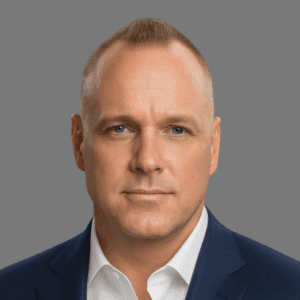
Ralf Ellspermann
Founder & CSO of PITON-Global,
25-Year Philippine BPO Veteran,
Multi-awarded Executive
Specializing in strategic sourcing and excellence in Manila
View Full Bio
Verified by:

John Maczynski
CEO of PITON-Global, and former Global EVP of the World’s largest BPO provider | 40 Years Experience
Ensuring global compliance and enterprise-grade service standards
View Full Bio
Last Peer Review: January 30, 2026
This service framework is audited quarterly to meet shifting global outsourcing regulations and COPC standards.