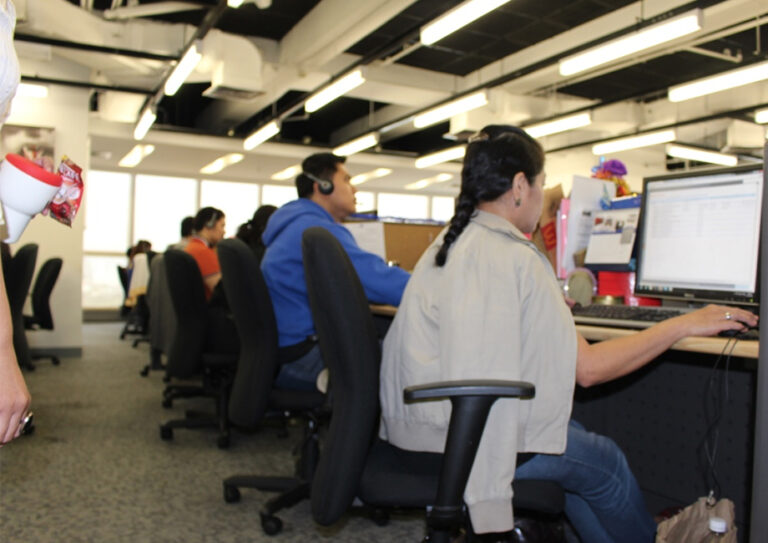

The Philippines is a global leader in business process outsourcing (BPO), particularly in customer service. This success is built on a skilled workforce, English proficiency, and a culture of hospitality. For any company outsourcing to a call center in the country, understanding key performance indicators (KPIs) like Average Handle Time (AHT) is crucial. AHT measures the average duration of a customer interaction, from start to finish. In the Philippines, managing AHT is not just about speed; it’s about balancing efficiency with the empathetic customer experience that Filipino agents provide.
Understanding Average Handle Time (AHT)
Average Handle Time (AHT) is a key metric for customer service efficiency. It measures the total time an agent spends on a customer interaction, including talk time, hold time, and after-call work (ACW). ACW involves tasks like updating customer records and sending follow-up emails. The standard formula for AHT is:
AHT = (Total Talk Time + Total Hold Time + Total After-Call Work) / Total Number of Calls
This provides a clear measure of productivity that can be benchmarked across the industry.
| Component | Description |
| Total Talk Time | The cumulative time agents spend speaking directly with customers. |
| Total Hold Time | The total duration customers are placed on hold during interactions. |
| After-Call Work (ACW) | The time agents spend on follow-up tasks after ending the conversation. |
The Formula for AHT:
AHT = (Total Talk Time + Total Hold Time + Total After-Call Work) / Total Number of Calls
For example, if an operation handles 500 calls in a day, with 15,000 minutes of talk time, 2,500 minutes of hold time, and 5,000 minutes of after-call work, the AHT would be calculated as follows:
(15,000 + 2,500 + 5,000) / 500 = 45 minutes
This calculation reveals that the average interaction takes 45 minutes to handle completely. While this figure is hypothetical, it illustrates how AHT provides a holistic view of the entire customer interaction lifecycle. It is a metric that extends beyond mere talk time to encapsulate the full scope of an agent’s effort for each resolution. Understanding this comprehensive nature is the first step for any organization seeking to optimize performance, especially in a high-performing market like the Philippines.
The Strategic Importance of AHT in a Modern Contact Center
AHT is a critical metric for any contact center, serving as a lever for operational efficiency, cost control, and improved customer experience. A balanced AHT indicates a healthy ecosystem with streamlined processes, well-trained agents, and effective technology. Neglecting or over-emphasizing AHT can lead to inefficiency and poor service quality.
AHT provides clear insight into operational efficiency and is a fundamental component of workforce management. It influences staffing level calculations, helping to prevent both understaffing and overstaffing. By analyzing AHT trends, operations can forecast staffing needs, optimize schedules, and consistently meet service levels.
Financially, AHT is directly linked to cost control, as labor is the most significant expense. A lower AHT translates to a lower cost per contact, and even small reductions can lead to substantial savings. This cost-efficiency is a key value proposition of the Philippine BPO industry.
Fluctuations in AHT can also serve as an early warning system for process or performance issues, such as problems with new software, an outdated knowledge base, or complex customer queries. Investigating these changes allows managers to address bottlenecks, training gaps, or technical problems before they escalate.
However, the strategic value of AHT is only fully realized when it is balanced with quality metrics. An aggressive focus on reducing AHT can pressure agents to rush through calls, leading to incomplete resolutions, frustrated customers, and an increase in repeat calls, which ultimately drives operational costs up and damages customer loyalty. Therefore, AHT should never be viewed in isolation. Instead, it must be analyzed in conjunction with other crucial KPIs such as Customer Satisfaction (CSAT), First Call Resolution (FCR), and Net Promoter Score (NPS). The goal is not simply to achieve the lowest possible AHT, but to find the optimal AHT that allows for efficient, cost-effective, and high-quality resolutions that leave the customer feeling valued and satisfied. This balanced approach transforms AHT from a simple productivity metric into a strategic tool for driving comprehensive excellence.
The Philippine Advantage: Why Context Matters for AHT
The Philippines leads the call center industry by offering high-quality service, not just cost savings. The country’s unique cultural and linguistic advantages are vital to consider when managing AHT. A purely quantitative approach to AHT can undermine the strengths of the Filipino workforce, such as their ability to build rapport and show empathy. An aggressive focus on speed can stifle these valuable assets.
A key advantage is the high level of English proficiency. As an official language, English is integral to the education system, creating a large pool of fluent agents who understand Western communication nuances. This minimizes misunderstandings and improves communication efficiency. However, this proficiency is not just transactional; Filipino agents excel at building rapport through natural conversation. A rigid AHT target can discourage this, leading to impersonal interactions and a diminished customer experience.
The Filipino culture, with its emphasis on hospitality and respect, also plays a crucial role. This trait, known as “malasakit” (a deep sense of care), fosters an empathetic and patient customer service approach. Agents are often willing to spend more time to fully resolve an issue, which can lead to higher AHT but also greater customer satisfaction and loyalty. Prioritizing speed over this cultural strength can reduce service quality and negate a key benefit of outsourcing to the Philippines.
Therefore, AHT must be managed with a nuanced perspective. The goal is not the lowest AHT, but an optimal one that balances efficiency with the natural communication skills and cultural empathy of Filipino agents. This requires valuing quality over quantity and empowering agents with the right training and tools to resolve issues effectively on the first contact. This approach delivers a superior customer experience and builds long-term value.
Data-Driven Insights: AHT Benchmarks and Performance
Quantitative benchmarks are essential for performance evaluation, though qualitative aspects of customer interaction are also important. AHT standards vary by industry due to factors like product complexity and the nature of customer inquiries. For example, a tech support call will have a longer AHT than a simple order status inquiry. Understanding these benchmarks is crucial for setting realistic AHT targets in Philippine operations to avoid agent burnout and inefficiency.
The following table provides generally accepted AHT benchmarks. These figures balance efficiency with quality resolution and should be used as a starting point for a call center in the country, with adjustments for client needs and the workforce’s unique strengths.
| Industry | Average Handle Time (AHT) Benchmark |
| Retail & E-commerce | 3 – 5 minutes |
| Banking & Financial Services | 4 – 7 minutes |
| Telecommunications | 5 – 8 minutes |
| Technical Support & IT | 8 – 12 minutes |
| Healthcare | 6 – 9 minutes |
| Travel & Hospitality | 4 – 6 minutes |
| Utilities | 5 – 7 minutes |
| Insurance | 6 – 8 minutes |
Note: These are generalized industry benchmarks and can be influenced by various factors including call complexity, agent experience, and technology.
There is no one-size-fits-all AHT. A contact center for a financial services account will have a higher AHT than one for a retail brand. This data should guide performance goals, not serve as a rigid rule. It is also essential to track AHT with other metrics like First Call Resolution (FCR) and Customer Satisfaction (CSAT). A low AHT with a low FCR suggests premature call endings, while a high AHT with a high CSAT may indicate excellent service.
Case Study: Optimizing AHT in a Philippine-Based Tech Support Operation
A US-based SaaS company with a complex project management tool faced declining customer satisfaction due to long resolution times. Their in-house team’s AHT was over 15 minutes, far exceeding the industry benchmark. To resolve this, they partnered with a Philippine BPO provider to create a dedicated technical support call center.
The Challenge: The main challenge was to reduce the high AHT without sacrificing support quality. The software’s complexity meant customers had multi-layered problems requiring detailed troubleshooting. A simple mandate to cut call times would have been counterproductive, so the local team needed to improve efficiency while enhancing the customer interaction.
The Solution: The Philippine team implemented a multi-faceted strategy focused on agent empowerment, process optimization, and technology.
1. Intensive, Scenario-Based Training: Instead of generic product training, the agents underwent an intensive, multi-week program that focused on real-world customer scenarios. This included role-playing complex troubleshooting situations and learning how to effectively use a newly structured knowledge base. This prepared them not just to answer questions, but to diagnose problems efficiently.
2.Tiered Support System and Knowledge Base Revamp: The call center restructured the existing knowledge base, making it easier for agents to find information quickly. They also implemented a tiered support system, where agents could seamlessly escalate highly complex or unusual issues to a small team of senior specialists. This prevented frontline agents from spending excessive time on problems beyond their scope, while ensuring that customers with the most difficult issues received expert attention.
3.Investment in AI-Powered Tools: The service provider deployed an AI-powered diagnostic tool that could guide agents through a structured troubleshooting process. The tool would suggest questions to ask the customer and provide a ranked list of potential solutions based on the symptoms described. This augmented the agent’s own knowledge and helped to standardize the troubleshooting process, reducing the time spent on diagnosis.
The Results: The impact of this strategic approach was significant and measurable. Within six months of launching the Philippine contact center operation, the company saw a dramatic improvement in key performance metrics.
| Metric | Before Outsourcing | After 6 Months with Philippine Call Center |
| Average Handle Time (AHT) | 15.2 minutes | 10.5 minutes (a 31% reduction) |
| First Call Resolution (FCR) | 65% | 82% (a 17% improvement) |
| Customer Satisfaction (CSAT) | 78% | 91% (a 13% increase) |
By focusing on the root causes of the high AHT, rather than just the metric itself, the country’s outsourcing company was able to achieve a significant reduction in handle time while simultaneously improving the quality of service. The 31% reduction in AHT led to a substantial decrease in operational costs, while the improvements in FCR and CSAT demonstrated that this efficiency was not achieved at the expense of the customer experience. This case study highlights the sophisticated and strategic approach to AHT management that is characteristic of the top-tier call center operations in the Philippines.
AHT as a Tool for Strategic Excellence
AHT is more than a measure of speed; it’s a strategic tool for operational efficiency and customer satisfaction in the Philippine service provider industry. Its relevance is not in question, but its application must be elevated. A narrow focus on reducing AHT can be harmful, but when integrated into a holistic performance framework with other quality-based KPIs, it becomes a vital indicator of a healthy contact center.
The most successful call center partnerships are those built on a shared understanding that true efficiency is not about doing things faster, but about doing things right the first time. The case of the SaaS company’s technical support operation demonstrates this principle in action. By investing in agent training, optimizing processes, and leveraging technology, the local vendor was able to significantly reduce AHT while simultaneously boosting FCR and CSAT scores. This is the model of strategic AHT management that distinguishes leading outsourcing firms. They understand that the goal is not to rush agents, but to empower them to resolve issues with both speed and precision.
For any business considering outsourcing its customer service to the Philippines, it is essential to look beyond the cost savings and to understand the sophisticated operational methodologies that underpin the industry’s success. AHT is a critical component of this, but it must be approached as part of a broader commitment to quality and continuous improvement. By partnering with a BPO provider that demonstrates a mature and balanced approach to performance management, businesses can unlock the full potential of the Philippine call center industry, achieving not just cost efficiencies, but a level of customer service that builds lasting brand loyalty and drives sustainable growth.