
Back
Healthcare Provider Credentialing & Enrollment Outsourcing Philippines: Accelerating the 2026 Revenue Onramp
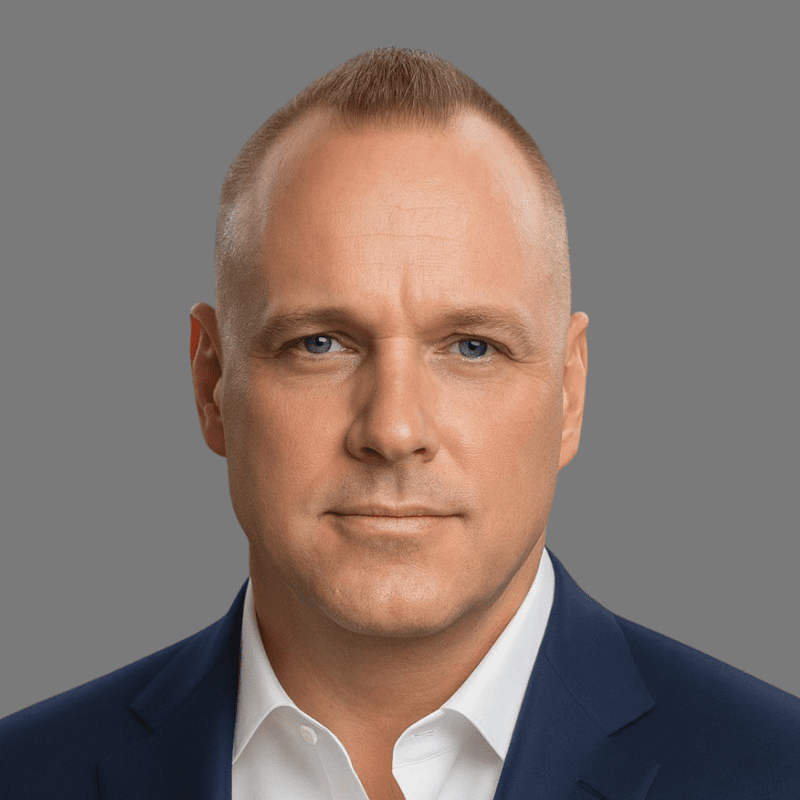
By Ralf Ellspermann / 3 February 2026

Executive Summary
In the high-pressure 2026 healthcare fiscal environment, “Credentialing Lag” has transformed from a back-office annoyance into a catastrophic driver of institutional margin erosion. As U.S. health systems navigate a landscape defined by the Vizient 2026 Trends Report as one of “structural pressure and risk,” the ability to get a provider “billing-ready” is a mission-critical financial priority.
With the average domestic credentialing cycle now stretching beyond 120 days—due to increased regulatory scrutiny and administrative burnout—forward-thinking organizations are adopting specialized offshore models. Shortening the provider onboarding cycle is mission-critical for building the accelerated revenue onramp required to combat local labor inflation.
The “Ghost Revenue” Crisis: Why 2026 is the Breaking Point
“Ghost Revenue” occurs when a provider is on the payroll, utilizing clinic space, and treating patients, yet cannot generate a clean claim because their payer enrollment remains “pending.” In an era where physician salaries are at record highs, every day of delay represents thousands of dollars in unrecoverable losses. According to data from the MGMA (Medical Group Management Association), the cost of onboarding a single physician can exceed $250,000 before they generate a dime of profit.
The Philippines has stepped into this breach by developing an elite tier of Credentialing Specialists. These are not data entry clerks; they are highly trained analysts who function as an high-speed extension of U.S. Medical Staff Offices (MSO). By focusing exclusively on the rigorous standards of the National Committee for Quality Assurance (NCQA) Credentialing Standards, these teams ensure that every file is 100% audit-ready, bypassing the “back-and-forth” that typically stalls domestic processes.
The Executive Perspective: Solving the Velocity Gap
Strategic sourcing in this domain requires a fundamental shift from transactional “outtasking” to a strategy of Revenue Acceleration.
“In 2026, the ‘Credentialing Lag’ is essentially a high-interest loan that health systems are forced to pay every time they hire a new provider,” says John Maczynski, CEO of PITON-Global. “By outsourcing the Primary Source Verification (PSV) and enrollment heavy lifting to specialized Philippine teams, organizations can shorten that revenue onramp by 30-45%. As a BPO advisory firm, our role is to ensure you bypass the generalists and partner with the top 1% of firms that treat credentialing as an urgent financial lever rather than a clerical chore.”
2026 Operational Standards: Beyond Manual Tracking
The 2026 model of Philippine credentialing is built on three pillars of technological and clinical efficiency:
1. Primary Source Verification (PSV) Excellence
Manila-based teams handle 100% of the verification process—including education, training, board certifications, and work history. These specialists are trained to meet the exact documentation requirements of The Joint Commission (TJC) Medical Staff Standards. By operating in a time zone 12–13 hours ahead of the U.S., they can perform verifications while U.S. offices sleep, effectively creating a 24-hour administrative engine.
2. Agentic AI & CAQH Synchronization
In 2026, manual CAQH (Council for Affordable Quality Healthcare) updates are obsolete. PITON-Global’s vetted partners utilize Agentic AI to monitor provider profiles. When a license is within 60 days of expiration or a re-attestation is due, the AI triggers the workflow for the Philippine specialist to secure the renewal. This prevents the “credentialing lapses” that lead to immediate claim denials and network terminations.
3. Predictive Enrollment Portals
The most significant bottleneck in 2026 is the “Payer Black Hole”—the period after an application is submitted but before it is approved. Philippine teams use predictive tracking to monitor payer portals (like PECOS for Medicare Enrollment) 24/7. When a delay is flagged, the specialist initiates a “high-touch” follow-up with the payer’s provider relations representative, ensuring the application stays at the top of the pile.
Security in a Zero-Trust Environment
In 2026, credentialing data is a primary target for cyber-attacks because it contains a “gold mine” of provider PII (Personally Identifiable Information). PITON-Global ensures that all recommended partners operate within a Zero-Trust VDI (Virtual Desktop Infrastructure) architecture.
Under this model, specialists in the Philippines access your credentialing software (such as Echo, Cactus, or Silversheet) via a secure, encrypted stream. No data is cached locally, no “print screen” functions are enabled, and every keystroke is audited. This ensures 100% compliance with HHS HIPAA Privacy & Security Rules, offering a level of data sovereignty that often exceeds domestic in-house capabilities.
Frequently Asked Questions (FAQ)
Q: Can a Philippine team handle complex Medicare and Medicaid enrollment?
A: Absolutely. Elite Philippine teams are specifically trained in the nuances of CMS Medicare Provider Enrollment and various state Medicaid portals. They manage the heavy documentation requirements for PECOS and state-specific revalidations.
Q: What is the measurable ROI of this model?
A: Organizations partnering with PITON-Global’s vetted providers typically see a reduction in “time-to-billing” from an average of 120 days down to 75 days. For a surgeon generating $10,000 in daily billables, that 45-day improvement represents **$450,000 in recovered revenue per provider**.
Q: Is PITON-Global a credentialing BPO?
A: No. PITON-Global is a vendor-neutral BPO advisory firm. We do not perform the credentialing ourselves. We act as your strategic consultants to vet, audit, and match your organization with the most technologically advanced and secure credentialing firms in the Philippines. Our advisory services are provided at zero cost to the healthcare organization.
Achieve sustainable growth with world-class BPO solutions!
PITON-Global connects you with industry-leading outsourcing providers to enhance customer experience, lower costs, and drive business success.
Get Your Top 1% Vendor List
Author
Ralf Ellspermann is a multi-awarded outsourcing executive with 25+ years of call center and BPO leadership in the Philippines, helping 500+ high-growth and mid-market companies scale call center and customer experience operations across financial services, fintech, insurance, healthcare, technology, travel, utilities, and social media.
A globally recognized industry authority—and a contributor to The Times of India and CustomerThink —he advises organizations on building compliant, high-performance offshore contact center operations that deliver measurable cost savings and sustained competitive advantage.
Known for his execution-first approach, Ralf bridges strategy and operations to turn call center and business process outsourcing into a true growth engine. His work consistently drives faster market entry, lower risk, and long-term operational resilience for global brands.
More Articles

Healthcare Outsourcing Philippines: A 2026 Strategic Playbook for Resilience and Growth
Also READ: HealthManagement.org ; WorldHealth.net In 2026, the U.S. healthcare ...

Healthcare Payroll Administration & HR Processing Outsourcing Philippines: Powering the 2026 Clinical Workforce
The 2026 HR Crisis: Managing Complexity in a Post-Entity Era ...

Claims Processing and Adjudication: How Call Centers in the Philippines Are Transforming Insurance and Healthcare Back-Office Operations
Claims processing and adjudication is a complex and mission-critical function ...

Remote Contact Center Management: Building Virtual Teams for Exceptional Customer Service Delivery
The landscape of contact center operations has undergone a seismic ...