
Back
Debt Collection Outsourcing Philippines: 2026 Strategic Blueprint

By Ralf Ellspermann / 5 February 2026
 Authored by Ralf Ellspermann, CSO of PITON-Global, & 25-Year Philippine BPO Veteran | Executive | Verified by John Maczynski, CEO of PITON-Global, and Former Global EVP of the World's Largest BPO Provider on February 5, 2026

⚡ 30-Second Executive Briefing
- The 2026 Shift: Global recovery has moved from the “Hammer” (harassment-based) to the “Heuristic” (behavioral-data driven) model to protect customer Lifetime Value (LTV) and comply with the GENIUS Act.
- The Manila Solution: The Philippines has transitioned into a Risk Intelligence Hub, integrating Agentic AI with high-EQ “Risk Pilots” to verify intent where automated filters fail.
- Economic Advantage: Leading firms are utilizing specialized recovery talent in Manila at $12–$16 per hour, achieving 65–75% operational savings compared to domestic US or UK equivalents.
- Financial Impact: Merchants leveraging this hybrid model achieve 35–38% early-stage recovery rates (vs. 18–22% domestic) and a 71% chargeback win rate.
- Compliance: Continuous Regulation F and PCI-DSS 4.0 “Live State” adherence are maintained through Zero-Knowledge Enclaves and real-time NLP auditing.
Executive Summary: The 2026 “Empathetic Recovery” Revolution
In 2026, the global debt collection landscape is defined by a paradox: delinquency volumes have hit all-time highs due to the surge in Agentic Commerce—where autonomous AI agents now drive 14% of global transactions—yet legacy “hard-collection” tactics are now a legal and brand liability. According to the latest 2026 industry benchmarks, the “Cost of Delinquency” has surged as merchants lose an average of $3.75 for every $1 disputed due to compounding fees.
Debt collection outsourcing to the Philippines has pivoted to meet this crisis. By merging the Philippines’ cultural affinity for Western finance with Agentic AI-Human Hybrids, Manila-based operations are delivering the only scalable defense against a hyper-automated landscape. AsPITON-Global CEO John Maczynski notes, the 2026 goal is “Brand-Safe Recovery”—reclaiming capital while ensuring the customer stays in the ecosystem. This strategy is the first line of defense in a broader Fraud Management & Prevention Outsourcing Philippines: 2026 Strategic Blueprint, ensuring that as you recover past-due capital, you are simultaneously hardening your perimeter against the “Agentic Fraud” bots of 2026. For a holistic view of how empathetic recovery, compliance, and AI orchestration operate within a unified offshore strategy, explore the full Financial Services Outsourcing Philippines (2026): A Strategic Blueprint.
From “Hammer” to “Heuristic”: Mastering Ethical Recovery via the 2026 Philippine Blueprint
In 2026, debt collection has evolved into a high-EQ retention strategy. This blueprint details the transition to “Heuristic Recovery,” where Manila-based “Risk Pilots” combine Agentic AI with human empathy to settle accounts without alienating customers. Operating as a cost-effective hub at $12–$16/hour, this model delivers 65–75% savings versus US and UK firms. By utilizing Atomic Reconciliation for 3-second payment matching and 99% ledger accuracy, Philippine hubs drive Early Recovery Rates of 31–38%—nearly double the performance of legacy US agencies.

Legacy “Hammer” tactics drive churn; the 2026 Philippine Blueprint uses “Risk Pilots” to prioritize Heuristic Recovery. This model delivers a 68–75% Chargeback Win Rate and 88% Customer Retention. By integrating Atomic Reconciliation and Zero-Knowledge Enclaves, Manila hubs reduce fraud losses by 55% while maintaining PCI-DSS 4.0 compliance. It transforms debt recovery from a friction point into a high-speed engine of financial stability.
The “Intelligence Arbitrage” Advantage: $12–$16/Hour Resilience
The primary driver for outsourcing in 2026 is no longer just “Labor Arbitrage,” but “Intelligence Arbitrage.” By deploying Western-trained analysts in Manila at $12–$16 per hour, lenders access the output capacity of five traditional agents from 2022.
Comparative 2026 Performance Benchmarks
| Recovery Metric | Legacy US Agency | 2026 Philippine AI-Hybrid | ROI Impact |
| Early-Stage Recovery | 18% – 22% | 31% – 38% | Direct Revenue Lift |
| Chargeback Win Rate | 28% – 32% | 68% – 75% | $4.1M+ Annual Recovery |
| Customer Retention | 45% | 88% | Preserves Long-Term LTV |
| Compliance Grievance | 1.2% | < 0.05% | Total Regulatory De-risking |
| Fully Loaded FTE Cost | $65k – $85k | $26k – $32k | 65%–75% Cost Savings |
Solving the “Bot-to-Bot” Dispute Crisis
A significant portion of 2026’s $117 billion “Dispute Gap” is fueled by “Agentic Friction”—instances where a consumer’s AI agent mistakenly triggers a high-value purchase or a fraud bot mimics a user’s biometric signature. Standard rules-based filters fail in this environment.
Philippine teams use Agentic AI to analyze sub-second anomalies, acting as a “Trust Layer” that verifies intent rather than just processing swipes. This transition allows merchants to maintain the fluid experience 2026 consumers demand while hardening defenses against bot-driven disputes. By identifying “intent drift”—where an AI agent acts outside its owner’s historical preference—Manila hubs intervene before the transaction settles, reducing fraud losses by 55%.
Reclaiming EBITDA through Atomic Reconciliation
In 2026, the “Standard Net-30” era is over. For B2B SaaS and global fintechs, debt recovery has evolved into a high-velocity data challenge. The bottleneck is no longer receiving money, but the reconciliation of data.
Manila has emerged as the global “Alpha Hub” for A/R because it offers a surplus of CPA-qualified talent trained in ISO 20022 “rich data” standards. These teams achieve “Atomic Reconciliation”—matching payments to invoices in under 3 seconds. This reduces unapplied cash ratios from 4.5% to less than 0.8%, ensuring the ledger is a Single Source of Truth in real-time. This “Continuous Close” model means the CFO wakes up to a 100% accurate ledger every morning.
The 2026 Compliance Catalyst: Continuous “Live State”
By early 2026, PCI-DSS 4.0 and the SEC Cyber Resilience Framework are no longer periodic checklists; they are a continuous “Live State.” Material incident disclosure is now mandated within 36 to 72 hours.
Elite Philippine BPOs have responded with Zero-Knowledge Enclaves:
- Compliance-as-Code: Regulatory rules are built directly into messaging and decision logic.
- Biometric VDI: Every workstation is secured via biometric identity confirmation, ensuring PII is monitored but never exposed to offshore servers.
- Human-in-the-Loop (HITL): Filipino specialists (Risk Pilots) manage high-stakes exceptions that automated systems miss, ensuring SEC reporting windows are met without disrupting cash flow.
Expert FAQ (2026 Executive Brief)
Q: How does the Philippines handle the 2026 “Regulation F” requirements?
A: Elite Manila hubs integrate machine-readable policy engines that encode channel limits, consent, and disclosure standards directly into the workflow, making every interaction 100% audit-ready and virtually eliminating “UDAAP” violations.
Q: Will Agentic AI eventually replace the Philippine recovery staff?
A: No. In 2026, the role has transitioned to AI Auditor. Philippine staff are being upskilled to govern autonomous agents and provide the human accountability that regulators now require for “Explainable AI” decisions.
Q: Can a Philippine team improve our Visa/Mastercard monitoring status?
A: Yes. By implementing Rapid Alert Resolution (60-minute standard), Manila teams can often reduce formal chargeback volume by 30–40% within the first 90 days, protecting the merchant’s health score.
Achieve sustainable growth with world-class BPO solutions!
PITON-Global connects you with industry-leading outsourcing providers to enhance customer experience, lower costs, and drive business success.
Get Your Top 1% Vendor List
Author
Ralf Ellspermann is a multi-awarded outsourcing executive with 25+ years of call center and BPO leadership in the Philippines, helping 500+ high-growth and mid-market companies scale call center and customer experience operations across financial services, fintech, insurance, healthcare, technology, travel, utilities, and social media.
A globally recognized industry authority—and a contributor to The Times of India and CustomerThink —he advises organizations on building compliant, high-performance offshore contact center operations that deliver measurable cost savings and sustained competitive advantage.
Known for his execution-first approach, Ralf bridges strategy and operations to turn call center and business process outsourcing into a true growth engine. His work consistently drives faster market entry, lower risk, and long-term operational resilience for global brands.
EXECUTIVE GOVERNANCE & ACCURACY STANDARDS
Authored by:

Ralf Ellspermann
Founder & CSO of PITON-Global,
25-Year Philippine BPO Veteran,
Multi-awarded Executive
Specializing in strategic sourcing and excellence in Manila
View Full Bio
Verified by:
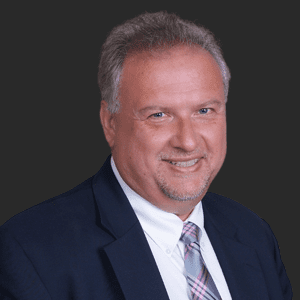
John Maczynski
CEO of PITON-Global, and former Global EVP of the World’s largest BPO provider | 40 Years Experience
Ensuring global compliance and enterprise-grade service standards
View Full Bio
Last Peer Review: February 5, 2026
This service framework is audited quarterly to meet shifting global outsourcing regulations and COPC standards.