
30-Second Executive: The Shift from Tickets to Revenue Recovery
In 2026, e-commerce outsourcing to the Philippines has evolved from a reactive support function into a revenue center, and outsourced front and back offices for online retail now measure themselves on recovered sales rather than closed tickets. With global returns hitting record highs and “Where Is My Order?” (WISMO) queries becoming automated, the value of the offshore team has shifted to Revenue Recovery and Predictive Logistics. By merging Filipino “High-Touch” empathy with Agentic AI, elite hubs in Manila and Cebu are now converting a growing share of return requests into exchanges and using sentiment AI to interdict churn before the customer even sends a message. For large brands, this “Zero-Latency” model isn’t just a cost-save; it’s a balance-sheet protector. Building such an anticipatory service infrastructure is a core prerequisite for the high-performance offshore scaling strategies of 2026. Scaling a retail brand requires the specialized infrastructure found within the leading offshore providers.
Anticipatory service still ends in a conversation when a proactive update is not enough and the shopper calls or chats. For that live contact layer, our overview of call centers in the Philippines shows how we vet providers and match a shortlist to your store’s volumes.
“In 2026, if you’re waiting for a customer to complain about a delayed shipment, you’ve already lost the LTV (Lifetime Value). The modern Philippine e-commerce hub uses ‘Anticipatory Service.’ If a carrier in London stalls, the Manila-based AI Pilot proactively triggers a discount and an update to the customer. We are moving from ‘fixing problems’ to ‘preventing friction,’ effectively turning the back office into a growth engine.” — John Maczynski, CEO of PITON-Global
Brands ready to turn returns and fraud reviews into recovered revenue can start with our guide to E commerce outsourcing in the Philippines, which sets out what online sellers outsource, in order, and how we shortlist vetted providers.
The 2026 E-commerce Benchmark: AI-Augmented ROI
The primary change for 2026 is the Industrialization of Empathy. While AI handles the routine bulk of contacts, human agents focus on high-stakes persuasion and recovery, the same shift behind predictive CX that resolves issues before the customer asks.
Performance Comparison: 2026 Benchmarks
| Metric | Onshore (US/UK) | Philippines (AI-Hybrid) | The “Efficiency Gain” |
| First-Contact Resolution | 71% | 94% | +23% (via AI co-pilots). |
| Return-to-Exchange Rate | 9% – 11% | 31% – 34% | 3x Revenue Recovery. |
| WISMO Volume | Baseline | -58% reduction | Proactive “Anticipatory” SMS/Chat. |
| Fully Loaded Rate | $32 – $45/hr | $12 – $16/hr | ~65% Direct Savings. |
Turning the “Returns Crisis” into a Revenue Engine
Reverse logistics is the silent margin killer of 2026. Offshore specialists have rebranded as Revenue Recovery Specialists, utilizing a three-step AI-assisted workflow:
- Sentiment-First Triage: AI analyzes the “tone” of a return request. High-frustration customers are routed directly to a human “Empathy Specialist” in Manila, bypassing the bot entirely.
- Incentivized Exchanges: The agent is empowered with “Latitude Ranges”—the authority to offer immediate upgrades, bundles, or store credit that outweighs the refund value.
- The Exchange Conversion: By leveraging real-time inventory mirrors, the agent ensures that if a customer wants an exchange, the item is reserved instantly. This proactive “Human-in-the-Loop” (HITL) model is recovering millions in previously lost GMV (Gross Merchandise Value).
Neutralizing Fraud with Behavioral Biometrics
In 2026, fraud has moved beyond simple stolen cards to sophisticated Account Takeover (ATO) and Synthetic Identity attacks. Offshore review teams provide a critical layer of “Cognitive Defense.”
- Behavioral Analysis: While the AI monitors typing rhythms and mouse movements for bot patterns, a specialist in Manila performs a Real-Time Manual Review of high-value flags.
- The Result: This hybrid approach sharply reduces “False Positives.” For a mid-market retailer, this means millions in legitimate revenue is saved from being erroneously blocked by overly aggressive automated filters.
Strategic “Middle Mile” Orchestration
The 2026 e-commerce support team isn’t just answering emails; it is managing the “Middle Mile”—the space between the click and the pick.
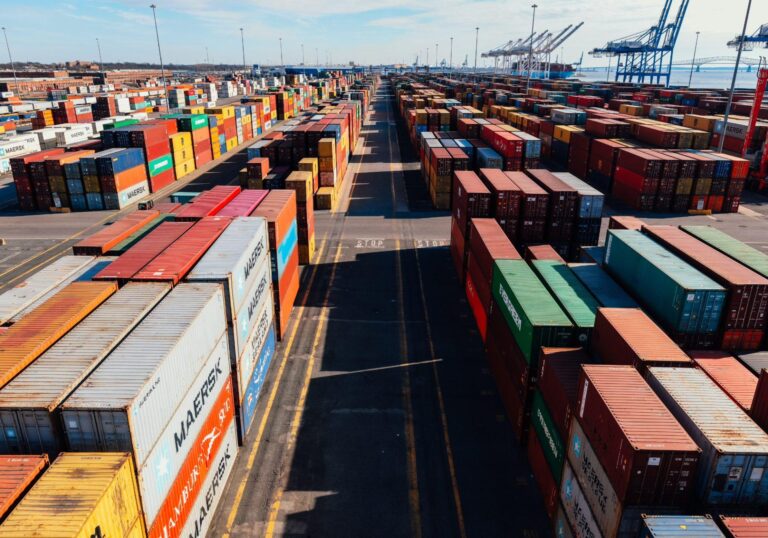
- Logistics Exception Management (LEM): Manila-based teams use Agentic AI to monitor global carrier data. If a “stalled container” is detected in a port, the team autonomously re-routes secondary stock from a different warehouse to fulfill the order.
- Unified Inventory Mirroring: Agents manage the inventory layer across Shopify, Amazon, and TikTok Shop, ensuring “Overselling” events are reduced to near-zero.
Expert FAQs: Scaling E-commerce in 2026
Q1: How do I manage the surge in “Social Commerce” (TikTok/Instagram)?
A: In 2026, the Philippines is the hub for Live-Commerce Engagement. Specialists in Manila manage “Comment-to-Cart” conversions in real-time, handling DMs and live-stream moderation to ensure social engagement translates directly into revenue. The same flexible staffing absorbs seasonal peaks in e-commerce support demand.
Q2: Is “Work-from-Home” a risk for e-commerce security?
A: Top-tier BPOs use Zero-Trust VDI. Data never leaves your US/UK servers; the agent only sees a “Pixel Stream.” Physical security is reinforced by AI-driven webcam monitoring that locks the screen if an unauthorized person (or a phone) is detected in the frame.
Q3: Can these teams help with “Catalog Enrichment”?
A: Yes. Using Vision-AI, Manila teams can tag thousands of SKUs, write SEO-optimized descriptions, and perform quality checks on product imagery faster than traditional teams, accelerating your time-to-market.
The Innovation Lab
The brands that win in 2026 are those that treat their Philippine e-commerce operation as an Innovation Lab, not a cost center, and let economies of scale in e-commerce outsourcing compound over time. By offloading “Middle Mile” complexity to high-competency hubs, your domestic team can focus fully on brand storytelling and product development. In 2026, your back office is either your greatest bottleneck or your most potent competitive weapon.