
Back
Patient Experience Management Outsourcing Philippines: High-Stakes Patient Advocacy and Margin Recovery in 2026

By Ralf Ellspermann / 3 February 2026
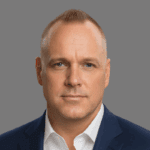 Authored by Ralf Ellspermann, CSO of PITON-Global, & 25-Year Philippine BPO Veteran | Executive | Verified by John Maczynski, CEO of PITON-Global, and Former Global EVP of the World's Largest BPO Provider on February 3, 2026

Executive Summary
In the 2026 healthcare landscape, “Patient Experience” (PX) has evolved from a soft metric into a high-stakes financial and clinical imperative. With the implementation of the CMS HCAHPS 2026 updates, including more rigorous dimensions for Care Coordination and Information about Symptoms, a hospital’s net margin is now inextricably linked to its ability to deliver personalized, empathetic advocacy at scale.
As health systems face a “margin cliff” characterized by rising labor costs and the transition to Value-Based Care (VBC), the Philippines has emerged as the strategic “safety valve.” By fusing the nation’s innate clinical empathy—the culture of Malasakit—with the precision of Agentic AI, leading providers are transforming the patient journey from a source of friction into a driver of resilience.Implementing empathetic clinical advocacy is the primary lever for HCAHPS-driven margin protection in the 2026 landscape.
The Advisory Perspective: Strategic Partnerships over Transactions
Success in 2026 requires moving beyond the traditional BPO vendor model. Achieving elite PX outcomes depends on specialized selection and rigorous operational governance.
“Healthcare outsourcing to the Philippines is no longer about shifting administrative work offshore,” says John Maczynski, CEO of PITON-Global. “It has become a care-enablement strategy—one that restores clinical focus, improves patient experience, and stabilizes operations at the same time. The real value isn’t in replacing humans; it’s in removing systemic friction so care associates can spend more time listening and less time navigating software.”
As a premier BPO advisory firm, PITON-Global does not provide the call center services directly. Instead, we act as a vendor-neutral bridge, connecting U.S. healthcare organizations with the top 1% of HIPAA-compliant, clinically literate providers in the Philippines. This advisory-led approach ensures that “Patient Experience” is treated as a strategic asset rather than a commoditized task.
The New HCAHPS Reality: Why 2026 is Different
The 2026 CMS Care Compare refresh introduces a more rigorous benchmarking system. The previous “Care Transitions” measure has been replaced by a Care Coordination composite, which evaluates whether hospital staff worked as a unified team. For U.S. health systems struggling with staffing shortages, maintaining this perception of “team unity” is nearly impossible with in-house resources alone.
Philippine-based PX management fills this gap by acting as the “Connective Tissue” of the care team. These specialists do not simply answer phones; they are clinical advocates who ensure that the patient’s transition from acute care to the home is seamless. By providing 24/7 post-discharge support, they ensure that patients feel “known” and “supported,” directly impacting the scores that determine federal reimbursements.
Agentic AI: The “Empathy Multiplier”
The greatest innovation in 2026 is the deployment of Agentic AI—autonomous systems that can reason and execute multi-step workflows. In an elite Philippine-managed PX center, AI handles the “transactional burden,” allowing human advocates to focus on “transformational connection.”
- Predictive Sentiment Routing: AI identifies distress or confusion in a patient’s digital footprint and routes them to a specialized advocate before frustration escalates.
- Ambient Documentation: AI transcribes and summarizes patient interactions in real-time, ensuring information liquidity—a top priority according to the Vizient 2026 Trends Report.
- Behavioral Coaching: Real-time AI prompts guide Filipino advocates to use specific empathy-validated phrases, ensuring consistent, top-box quality interactions.
Solving the “Patient Trust Gap”
The Deloitte 2026 Health Care Outlook reveals that while patients appreciate AI for convenience, 88% still prefer receiving medical and financial guidance from a human being. The Philippines offers a unique “Middle Path.”
Filipino advocates possess a high degree of “Clinical Literacy.” With a massive pool of tertiary-educated professionals—many of whom are U.S.-licensed nurses—the conversation shifts from a script-based call center interaction to a medically informed consultation. This expertise allows advocates to bridge the Social Determinants of Health (SDOH) gap by flagging “vulnerability signals” and connecting patients with community resources.
Financial Advocacy: The “Financial PX” Revolution
In 2026, the #1 source of patient dissatisfaction is Financial Anxiety. According to Peterson-KFF health tracker data, rising healthcare costs and premium hikes are driving intense consumer scrutiny of medical billing.
The Philippine model of Financial Advocacy replaces the “Collection Agent” with a “Financial Navigator” trained to:
- Simplify the EOB: Walk patients through their Explanation of Benefits (EOB) with patience.
- Proactive Financial Counseling: Identify patients eligible for assistance before the account goes to bad debt.
- Revenue Integrity: By resolving billing inquiries at first contact, these teams reduce the “Cost-to-Collect” while increasing the “Likelihood to Recommend” score.
Data Sovereignty and the Zero-Trust Perimeter
As healthcare cyber-attacks reach record highs, “Security PX” has become a competitive differentiator. PITON-Global ensures all recommended partners utilize a Zero-Trust VDI (Virtual Desktop Infrastructure) architecture. Specialists in the Philippines operate within a “view-only” environment where data never leaves U.S. soil, adhering to the same standards used by the nation’s largest insurers to mitigate structural pressure and risk.
Frequently Asked Questions (FAQ)
Q: Is PITON-Global a BPO service provider?
A: No. PITON-Global is a vendor-neutral BPO advisory firm. We do not employ the agents or provide the call center services ourselves. Instead, we help healthcare organizations find, vet, and select the highest-performing outsourcing partners in the Philippines at zero cost to the client.
Q: How does the new 2026 HCAHPS Care Coordination measure differ from the old Care Transitions?
A: Per the updated CMS Technical Specifications, the 2026 composite focuses specifically on whether staff stayed informed about the patient’s care and worked as a unified team throughout the entire stay, rather than just the discharge hand-off.
Q: Can Philippine-based teams really impact U.S. hospital Star Ratings?
A: Yes. Because “Communication with Nurses” and “Communication about Medicines” are high-weighted domains, having 24/7 Philippine-based clinical support significantly increases “Top-Box” responses.
Q: What is the financial ROI of improving the patient experience?
A: Research from the Deloitte Center for Health Solutions shows that hospitals with “excellent” HCAHPS ratings see net margins nearly double (4.7% vs 1.8%) compared to low-rated hospitals.
Achieve sustainable growth with world-class BPO solutions!
PITON-Global connects you with industry-leading outsourcing providers to enhance customer experience, lower costs, and drive business success.
Get Your Top 1% Vendor List
Author
Ralf Ellspermann is a multi-awarded outsourcing executive with 25+ years of call center and BPO leadership in the Philippines, helping 500+ high-growth and mid-market companies scale call center and customer experience operations across financial services, fintech, insurance, healthcare, technology, travel, utilities, and social media.
A globally recognized industry authority—and a contributor to The Times of India and CustomerThink —he advises organizations on building compliant, high-performance offshore contact center operations that deliver measurable cost savings and sustained competitive advantage.
Known for his execution-first approach, Ralf bridges strategy and operations to turn call center and business process outsourcing into a true growth engine. His work consistently drives faster market entry, lower risk, and long-term operational resilience for global brands.
EXECUTIVE GOVERNANCE & ACCURACY STANDARDS
Authored by:
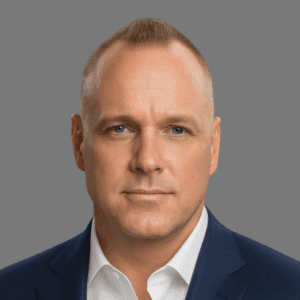
Ralf Ellspermann
Founder & CSO of PITON-Global,
25-Year Philippine BPO Veteran,
Multi-awarded Executive
Specializing in strategic sourcing and excellence in Manila
View Full Bio
Verified by:
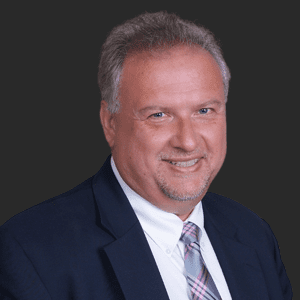
John Maczynski
CEO of PITON-Global, and former Global EVP of the World’s largest BPO provider | 40 Years Experience
Ensuring global compliance and enterprise-grade service standards
View Full Bio
Last Peer Review: February 3, 2026
This service framework is audited quarterly to meet shifting global outsourcing regulations and COPC standards.