
Our healthtech vendor is HIPAA-compliant — why isn’t that enough?
Because HIPAA compliance is a training certificate, not a security architecture; the failure points are shared infrastructure, PHI persisting on workstations and password-only access — invisible in a BAA. Run the test: open a PHI record, close the session, reopen it; if the record persists, walk. the digital-care provider under HITRUST governance: prior-auth turnaround 68 to 19 hours, first clean HITRUST report ever.
BPO Suppliers
Innovators Served
Delivering for Clients
In 2026, healthtech leaders don’t just scale users — they scale responsibility. The Philippines has evolved into a clinical extension of the enterprise, where the focus has shifted from back-office support to Clinical Data Sovereignty and Agentic AI-driven patient safety — delivered by HITRUST-certified partners operating at 99.9% accuracy.
Tier 1 support first, then the RCM work your provider customers need — how healthtech companies sequence outsourcing.








Patient Onboarding and Digital Literacy Support
Patient onboarding and digital literacy support represent fundamental requirements for successful digital health implementation that must address the diverse needs and capabilities of patient populations with varying levels of technology experience and comfort through healthtech outsourcing to the Philippines. Call center services have developed comprehensive patient onboarding programs that combine technology training with empathetic support to ensure that all patients can successfully access and utilize digital health services regardless of their previous experience with technology. These onboarding programs recognize that digital health adoption requires more than just technology access and must address patient concerns, preferences, and individual learning needs to achieve successful outcomes.
The patient onboarding process begins with comprehensive assessment of individual patient technology capabilities, preferences, and potential barriers to digital health adoption. Call center agents conduct detailed consultations with patients to understand their technology experience, identify potential challenges, and develop personalized onboarding plans that address their specific needs and circumstances. This individualized approach ensures that onboarding support is relevant and effective for each patient while building confidence and comfort with digital health technologies.
The assessment process includes evaluation of patient technology access and capabilities, identification of potential barriers to digital health adoption, assessment of patient preferences and concerns, and development of customized onboarding plans that address individual patient needs. Onboarding specialists utilize structured assessment tools and empathetic communication techniques to gather comprehensive information about patient circumstances while building rapport and trust that supports successful onboarding outcomes.
Digital literacy training provided through call center services encompasses both general technology skills and specific digital health platform capabilities, ensuring that patients develop the knowledge and confidence necessary to utilize digital health services effectively. The training approach combines step-by-step instruction with hands-on practice opportunities that allow patients to develop proficiency with digital health tools in a supportive, non-judgmental environment. This comprehensive training approach addresses common technology fears and misconceptions while building practical skills that enable successful digital health participation.
The digital literacy training curriculum includes basic technology skills such as internet navigation, email usage, and video calling, as well as specific digital health platform training that covers platform access, navigation, and utilization. Philippine training specialists utilize adult learning principles and patient-centered approaches to deliver training that is engaging, relevant, and effective for diverse patient populations. The training approach includes multiple learning modalities and flexible scheduling options that accommodate patient preferences and availability.
Ongoing support for digital literacy development includes follow-up training sessions, refresher courses, and advanced training opportunities that help patients continue to develop their digital health capabilities over time. Contact center services provide flexible training options that accommodate patient schedules and preferences, including individual coaching sessions, group training programs, and self-paced learning resources that enable patients to develop digital health skills at their own pace.
The ongoing support model includes regular check-ins with patients to assess their digital health experiences and identify additional training needs, as well as proactive outreach to provide updates on new platform features and capabilities. Support specialists maintain detailed records of patient training progress and preferences, enabling them to provide personalized ongoing support that addresses individual patient needs and circumstances.
Accessibility considerations in digital health onboarding address the unique needs of patients with disabilities, language barriers, or other factors that may impact their ability to utilize digital health services effectively. BPO services have developed specialized accessibility support capabilities that include multilingual support, assistive technology compatibility, and accommodation services that ensure digital health services are accessible to all patients regardless of their individual circumstances or needs.
The accessibility support framework includes comprehensive assessment of patient accessibility needs, identification of appropriate accommodations and assistive technologies, and ongoing support for patients with special accessibility requirements. Accessibility specialists in the Philippines maintain current expertise in assistive technologies and accommodation strategies, enabling them to provide expert guidance and support for patients with diverse accessibility needs.
Your product decides which pillar carries the load first.
Patient volume scales in weeks; clinical-admin capacity scales in quarters — the digital-care provider was exactly this gap. Onboarding, prior-auth at sub-24 hours, and predictive navigation for virtual-care and remote-monitoring platforms.
Evidence is the product, and evidence lives in data quality. Clinical data operations, adherence outreach, and AI data-ops — labeling, validation, and model evaluation with clinical review on the edge cases your regulatory submissions depend on.
Your customers audit you the way we audit vendors. Implementation support, data abstraction, and documentation QA delivered from a HITRUST-assessed environment your enterprise deals can reference — TEFCA-aligned, FHIR-native.
Value-based contracts price your data discipline. Claims operations, coding support, and care-management workflows at the Forensic QA standard, with the audit trail your delegation agreements require.
Why is clinician administrative burden the primary patient safety risk in healthtech scaling?
In 2026 the leading cause of clinician error is not clinical knowledge failure — it is administrative cognitive overload. Documentation, chart-review backlogs and prior-auth queues consume 34–41% of licensed clinician time that should be spent on patient care. Agentic Clinical Workflows absorb that burden with zero-error tolerance.
Clinical Data Sovereignty is a healthtech outsourcing model in which Agentic AI performs documentation and abstraction autonomously while EHR-trained Philippine specialists own judgment-critical review, exception handling, and escalation under HITRUST CSF governance — with every clinical decision made by the client’s licensed clinicians — measuring success in forensic accuracy and patient safety, not ticket volume.
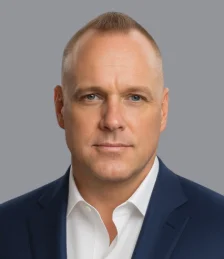
“A BPO that bolted a healthcare vertical onto its existing business is not what we put in front of a client. We vet clinical infrastructure providers that happen to operate out of Manila — organizations whose remit has already moved past back-office support into Clinical Data Sovereignty and Agentic AI-driven patient safety.”
Three interlocking pillars that define HITRUST-ready Clinical Sovereignty.
Agentic Clinical Data Operations, Regulatory Sovereignty under Zero-Trust, and Predictive Patient Engagement. Each pillar is independently auditable. Together, they define the top 1% of Philippine healthtech operations.

“In healthtech, the wrong partner doesn’t just cost you money — it costs you patient trust, regulatory standing, and potentially clinical outcomes. The HITRUST CSF certification is not a premium feature. It is the minimum architecture for any PHI-touching engagement in 2026.”
Where does the Compliance Dividend come from — and why do standard models miss 50% of its value?
The Compliance Dividend is the economic value created when healthtech outsourcing architecture eliminates regulatory exposure rather than managing it. Standard models capture labor savings but miss the three largest value drivers: violation-exposure reduction, clinician top-of-license ROI, and proactive-engagement patient LTV.
The cheapest column below cannot navigate your EHR. That is why it’s the cheapest.
Every procurement model opens with the seat comparison, so we publish it — with the column most vendors hide in a blend shown separately.
Illustrative projection at standard role mix; labor savings run about 60–65% vs. an equivalent in-house build, with the vetted seat priced below a global BPO’s because mid-sized, clinically specialized providers carry less overhead. In line with our healthcare RCM benchmark (50–70%): healthtech clinical-ops roles carry the clinical-literate profile end to end, and the dividend is built on risk elimination and clinician recovery, not seat arbitrage. We confirm exact figures against your platform, patient volumes, and payer mix.
Indicative 2026 rates — the clinical-literate profile shown in two columns, not blended into one.
The spread between the columns is the Credentialing Gap, priced the other way round: at a mid-sized, clinically specialized provider an EHR-certified, ICD-10/CPT-trained specialist costs less than the global BPO’s generalist on every row. You pay less for more capability — and a generalist in a clinical seat is how you buy the 71% who fail a live EHR navigation demo.
The rows global BPOs rarely staff are the point — those seats cannot be staffed from a communication-skills pool, which is why 71% of providers claiming healthcare capability failed the live evaluation (PITON-Global Q2 2026 healthtech audit cohort, n=100). Rates confirmed per engagement against platform and specialty mix. Global BPO column: indicative 2026 rate cards of large global providers for the same roles, which typically run $14–$20 an hour for specialist roles; the PITON-Global-vetted band from mid-sized, specialized providers runs about $2 an hour lower at both ends of every row.
Price my role mix against the credentialing standard →Legacy BPO baseline vs. PITON-Global-vetted 2026 standard.
The competitive delta across eight dimensions that determine valuation, regulatory standing and patient safety in a PHI-touching healthtech operation.
Healthtech BPO Philippines: compliance and audit controls.
Every clinical data interaction is processed through three sequential controls — Agentic AI orchestration, Forensic Human QA and Continuous Compliance Telemetry — before it touches the platform’s downstream systems. A live dashboard answers every assessor question in real time.
Two structural failure modes that expose healthtech orgs to regulatory and patient-safety risk.
The Credentialing Gap and the Security Illusion account for the majority of healthtech outsourcing regulatory events. Both are auditable before contract execution. Neither requires legal review to identify — only the right questions asked to the right people.
Where Clinical Data Sovereignty doesn’t fit — and the line we never cross.
The fastest way to become one of the audit statistics on this page is to force a clinical-literate, HITRUST-governed operation into work it was never built for. So before the shortlist, the disqualifiers — ours, stated plainly.
How administrative burden became a $2.1M compliance dividend.
A documented Q4 2025 engagement: a US-based telehealth platform onboarding 4,200 new patients monthly, deploying a 25-specialist Philippine clinical operations team under full HITRUST CSF governance.
$2.1M 12-month compliance dividend on $580K cost
One pillar, one signal — a patient-engagement-only deployment, measured.
The flagship engagement proves the three-pillar architecture; the companion engagement proves the entry point. A platform with clean documentation doesn’t need a sovereignty transformation to fix its retention curve — one pillar, placed at the engagement layer where adherence signals live, moved the LTV metric in a quarter with the clinical stack untouched. The architecture scales down to the size of the gap.
Our previous Philippine BPO had three years of HIPAA training certificates on the wall and zero HITRUST architecture behind them. The PITON-Global audit found persistent PHI on analyst workstations, no role-based access controls, and prior-auth agents who could not interpret a payer’s medical necessity criteria. We had been exposed without knowing it. The switch was not optional after that audit.
Independent coverage. Third-party validation.
What healthtech leaders ask before they outsource.
In-depth answers to the questions that decide a healthtech engagement — from the principals who run them.

Healthtech outsourcing in the Philippines: support and operations for digital health companies
Healthtech outsourcing to the Philippines gives telehealth platforms, digital therapeutics, remote monitoring companies, health apps and healthcare software vendors a team for the operations that grow with every user: patient and clinician support, device and app technical help, onboarding and enrollment, care coordination tasks, billing and insurance questions and the clinical operations administration that keeps virtual care running. Healthtech companies scale quickly and must meet healthcare standards from day one.
Filipino teams combine healthcare backgrounds with technical support skills, which is exactly the mix digital health needs. Providers in Manila, Cebu and Clark run programs for US, UK and Australian healthtech companies under HIPAA, SOC 2 Type II and often HITRUST, with 24/7 coverage for patients who use apps and devices at all hours. The sections below describe where people fit in a digital health operation. For the wider picture, see our guide to healthcare IT help desk and healthtech support.
Patient support and technical help
Patients contact digital health companies about app logins, appointment scheduling, video visit problems, device pairing and readings, prescriptions and billing. Agents with healthcare and technical training resolve most issues in one contact and escalate clinical questions to nurses and clinicians through defined paths. Empathy matters: many users are managing chronic conditions and are not comfortable with technology.
Support runs across chat, in-app messaging, email and phone, with clear rules on what agents may say about health matters. Knowledge articles are kept current with each release. See telehealth support for virtual visit operations.
Clinician support and care coordination
Clinicians using healthtech platforms need fast technical help and administrative support: EHR integration issues, scheduling, documentation tools, e-prescribing problems and credentialing paperwork. Dedicated clinician desks reduce the time providers lose to technology and improve retention on the platform.
Care coordination tasks, such as appointment reminders, follow-up outreach, care gap closure calls, remote monitoring alert triage to protocol and referral tracking, keep patients engaged between visits. Nurses and medical assistants handle protocol-based work under your clinical governance. See virtual medical scribe for documentation support during visits.
Remote monitoring and device operations
Remote patient monitoring programs ship devices, collect readings and act on them. Operations teams enroll patients, ship and track devices, help with pairing and troubleshooting, monitor transmission gaps and contact patients who stop transmitting, and triage readings against protocols to clinical staff. Logistics, inventory and device returns are part of the work.
Billing for remote monitoring under CPT codes requires documented transmission days and clinical time, and operations teams keep the records that support claims. Programs that run these operations well show better adherence and cleaner billing.
Data operations and interoperability support
Healthtech products live on health data: EHR integrations, HL7 and FHIR interfaces, claims and eligibility feeds, device data and patient-reported information. Data operations teams monitor interface health, resolve failed messages and mapping errors, reconcile records across systems and support customer implementations with data validation.
Interoperability rules, such as information blocking provisions and patient access requirements in the US, shape what systems must support. Teams that understand these rules and the standards behind them keep integrations compliant and reliable.
Onboarding, enrollment and billing
Growth depends on activation. Onboarding teams help new patients enroll, verify insurance, complete intake forms, pair devices and schedule first visits, and reach out to users who stall. For employer and health plan programs, enrollment teams work eligibility files and run activation campaigns.
Billing in healthtech mixes subscriptions, visit fees and insurance claims. Teams handle patient billing questions, insurance verification, claim submission and payment posting under revenue cycle procedures. See insurance verification for eligibility work.
Compliance, security and choosing a partner
Healthtech operates under HIPAA in the US, with business associate agreements, access controls, audit logs and breach procedures; FDA rules apply to software as a medical device, and adverse events must be captured and reported. UK and Australian companies follow their health data and medical device rules. Vetted vendors train every agent on these before go-live.
When you compare vendors, ask about healthcare and technical support experience together, clinical staff availability, platform integrations, 24/7 coverage and security certifications. Vetted mid-sized Philippine providers usually start healthtech programs with 5 to 50 people and report first-contact resolution, response times by channel, activation rate, clinician satisfaction and patient satisfaction.
Also serving: healthtech sits in our Healthcare & Life Sciences hub. Related pages: telehealth support, healthcare outsourcing and virtual medical scribe.
Our healthtech vendor is HIPAA-compliant — why isn’t that enough?
Because HIPAA compliance is a training certificate, not a security architecture; the failure points are shared infrastructure, PHI persisting on workstations and password-only access — invisible in a BAA. Run the test: open a PHI record, close the session, reopen it; if the record persists, walk. the digital-care provider under HITRUST governance: prior-auth turnaround 68 to 19 hours, first clean HITRUST report ever.
BPO Suppliers
Innovators Served
Delivering for Clients
In 2026, healthtech leaders don’t just scale users — they scale responsibility. The Philippines has evolved into a clinical extension of the enterprise, where the focus has shifted from back-office support to Clinical Data Sovereignty and Agentic AI-driven patient safety — delivered by HITRUST-certified partners operating at 99.9% accuracy.
Tier 1 support first, then the RCM work your provider customers need — how healthtech companies sequence outsourcing.
Patient Onboarding and Digital Literacy Support
Patient onboarding and digital literacy support represent fundamental requirements for successful digital health implementation that must address the diverse needs and capabilities of patient populations with varying levels of technology experience and comfort through healthtech outsourcing to the Philippines. Call center services have developed comprehensive patient onboarding programs that combine technology training with empathetic support to ensure that all patients can successfully access and utilize digital health services regardless of their previous experience with technology. These onboarding programs recognize that digital health adoption requires more than just technology access and must address patient concerns, preferences, and individual learning needs to achieve successful outcomes.
The patient onboarding process begins with comprehensive assessment of individual patient technology capabilities, preferences, and potential barriers to digital health adoption. Call center agents conduct detailed consultations with patients to understand their technology experience, identify potential challenges, and develop personalized onboarding plans that address their specific needs and circumstances. This individualized approach ensures that onboarding support is relevant and effective for each patient while building confidence and comfort with digital health technologies.
The assessment process includes evaluation of patient technology access and capabilities, identification of potential barriers to digital health adoption, assessment of patient preferences and concerns, and development of customized onboarding plans that address individual patient needs. Onboarding specialists utilize structured assessment tools and empathetic communication techniques to gather comprehensive information about patient circumstances while building rapport and trust that supports successful onboarding outcomes.
Digital literacy training provided through call center services encompasses both general technology skills and specific digital health platform capabilities, ensuring that patients develop the knowledge and confidence necessary to utilize digital health services effectively. The training approach combines step-by-step instruction with hands-on practice opportunities that allow patients to develop proficiency with digital health tools in a supportive, non-judgmental environment. This comprehensive training approach addresses common technology fears and misconceptions while building practical skills that enable successful digital health participation.
The digital literacy training curriculum includes basic technology skills such as internet navigation, email usage, and video calling, as well as specific digital health platform training that covers platform access, navigation, and utilization. Philippine training specialists utilize adult learning principles and patient-centered approaches to deliver training that is engaging, relevant, and effective for diverse patient populations. The training approach includes multiple learning modalities and flexible scheduling options that accommodate patient preferences and availability.
Ongoing support for digital literacy development includes follow-up training sessions, refresher courses, and advanced training opportunities that help patients continue to develop their digital health capabilities over time. Contact center services provide flexible training options that accommodate patient schedules and preferences, including individual coaching sessions, group training programs, and self-paced learning resources that enable patients to develop digital health skills at their own pace.
The ongoing support model includes regular check-ins with patients to assess their digital health experiences and identify additional training needs, as well as proactive outreach to provide updates on new platform features and capabilities. Support specialists maintain detailed records of patient training progress and preferences, enabling them to provide personalized ongoing support that addresses individual patient needs and circumstances.
Accessibility considerations in digital health onboarding address the unique needs of patients with disabilities, language barriers, or other factors that may impact their ability to utilize digital health services effectively. BPO services have developed specialized accessibility support capabilities that include multilingual support, assistive technology compatibility, and accommodation services that ensure digital health services are accessible to all patients regardless of their individual circumstances or needs.
The accessibility support framework includes comprehensive assessment of patient accessibility needs, identification of appropriate accommodations and assistive technologies, and ongoing support for patients with special accessibility requirements. Accessibility specialists in the Philippines maintain current expertise in assistive technologies and accommodation strategies, enabling them to provide expert guidance and support for patients with diverse accessibility needs.
Your product decides which pillar carries the load first.
Patient volume scales in weeks; clinical-admin capacity scales in quarters — the digital-care provider was exactly this gap. Onboarding, prior-auth at sub-24 hours, and predictive navigation for virtual-care and remote-monitoring platforms.
Evidence is the product, and evidence lives in data quality. Clinical data operations, adherence outreach, and AI data-ops — labeling, validation, and model evaluation with clinical review on the edge cases your regulatory submissions depend on.
Your customers audit you the way we audit vendors. Implementation support, data abstraction, and documentation QA delivered from a HITRUST-assessed environment your enterprise deals can reference — TEFCA-aligned, FHIR-native.
Value-based contracts price your data discipline. Claims operations, coding support, and care-management workflows at the Forensic QA standard, with the audit trail your delegation agreements require.
Why is clinician administrative burden the primary patient safety risk in healthtech scaling?
In 2026 the leading cause of clinician error is not clinical knowledge failure — it is administrative cognitive overload. Documentation, chart-review backlogs and prior-auth queues consume 34–41% of licensed clinician time that should be spent on patient care. Agentic Clinical Workflows absorb that burden with zero-error tolerance.
Clinical Data Sovereignty is a healthtech outsourcing model in which Agentic AI performs documentation and abstraction autonomously while EHR-trained Philippine specialists own judgment-critical review, exception handling, and escalation under HITRUST CSF governance — with every clinical decision made by the client’s licensed clinicians — measuring success in forensic accuracy and patient safety, not ticket volume.
“A BPO that bolted a healthcare vertical onto its existing business is not what we put in front of a client. We vet clinical infrastructure providers that happen to operate out of Manila — organizations whose remit has already moved past back-office support into Clinical Data Sovereignty and Agentic AI-driven patient safety.”
Three interlocking pillars that define HITRUST-ready Clinical Sovereignty.
Agentic Clinical Data Operations, Regulatory Sovereignty under Zero-Trust, and Predictive Patient Engagement. Each pillar is independently auditable. Together, they define the top 1% of Philippine healthtech operations.
“In healthtech, the wrong partner doesn’t just cost you money — it costs you patient trust, regulatory standing, and potentially clinical outcomes. The HITRUST CSF certification is not a premium feature. It is the minimum architecture for any PHI-touching engagement in 2026.”
Where does the Compliance Dividend come from — and why do standard models miss 50% of its value?
The Compliance Dividend is the economic value created when healthtech outsourcing architecture eliminates regulatory exposure rather than managing it. Standard models capture labor savings but miss the three largest value drivers: violation-exposure reduction, clinician top-of-license ROI, and proactive-engagement patient LTV.
The cheapest column below cannot navigate your EHR. That is why it’s the cheapest.
Every procurement model opens with the seat comparison, so we publish it — with the column most vendors hide in a blend shown separately.
Illustrative projection at standard role mix; labor savings run about 60–65% vs. an equivalent in-house build, with the vetted seat priced below a global BPO’s because mid-sized, clinically specialized providers carry less overhead. In line with our healthcare RCM benchmark (50–70%): healthtech clinical-ops roles carry the clinical-literate profile end to end, and the dividend is built on risk elimination and clinician recovery, not seat arbitrage. We confirm exact figures against your platform, patient volumes, and payer mix.
Indicative 2026 rates — the clinical-literate profile shown in two columns, not blended into one.
The spread between the columns is the Credentialing Gap, priced the other way round: at a mid-sized, clinically specialized provider an EHR-certified, ICD-10/CPT-trained specialist costs less than the global BPO’s generalist on every row. You pay less for more capability — and a generalist in a clinical seat is how you buy the 71% who fail a live EHR navigation demo.
The rows global BPOs rarely staff are the point — those seats cannot be staffed from a communication-skills pool, which is why 71% of providers claiming healthcare capability failed the live evaluation (PITON-Global Q2 2026 healthtech audit cohort, n=100). Rates confirmed per engagement against platform and specialty mix. Global BPO column: indicative 2026 rate cards of large global providers for the same roles, which typically run $14–$20 an hour for specialist roles; the PITON-Global-vetted band from mid-sized, specialized providers runs about $2 an hour lower at both ends of every row.
Price my role mix against the credentialing standard →Legacy BPO baseline vs. PITON-Global-vetted 2026 standard.
The competitive delta across eight dimensions that determine valuation, regulatory standing and patient safety in a PHI-touching healthtech operation.
Healthtech BPO Philippines: compliance and audit controls.
Every clinical data interaction is processed through three sequential controls — Agentic AI orchestration, Forensic Human QA and Continuous Compliance Telemetry — before it touches the platform’s downstream systems. A live dashboard answers every assessor question in real time.
Two structural failure modes that expose healthtech orgs to regulatory and patient-safety risk.
The Credentialing Gap and the Security Illusion account for the majority of healthtech outsourcing regulatory events. Both are auditable before contract execution. Neither requires legal review to identify — only the right questions asked to the right people.
Where Clinical Data Sovereignty doesn’t fit — and the line we never cross.
The fastest way to become one of the audit statistics on this page is to force a clinical-literate, HITRUST-governed operation into work it was never built for. So before the shortlist, the disqualifiers — ours, stated plainly.
How administrative burden became a $2.1M compliance dividend.
A documented Q4 2025 engagement: a US-based telehealth platform onboarding 4,200 new patients monthly, deploying a 25-specialist Philippine clinical operations team under full HITRUST CSF governance.
$2.1M 12-month compliance dividend on $580K cost
One pillar, one signal — a patient-engagement-only deployment, measured.
The flagship engagement proves the three-pillar architecture; the companion engagement proves the entry point. A platform with clean documentation doesn’t need a sovereignty transformation to fix its retention curve — one pillar, placed at the engagement layer where adherence signals live, moved the LTV metric in a quarter with the clinical stack untouched. The architecture scales down to the size of the gap.
Our previous Philippine BPO had three years of HIPAA training certificates on the wall and zero HITRUST architecture behind them. The PITON-Global audit found persistent PHI on analyst workstations, no role-based access controls, and prior-auth agents who could not interpret a payer’s medical necessity criteria. We had been exposed without knowing it. The switch was not optional after that audit.
Independent coverage. Third-party validation.
What healthtech leaders ask before they outsource.
In-depth answers to the questions that decide a healthtech engagement — from the principals who run them.
Healthtech outsourcing in the Philippines: support and operations for digital health companies
Healthtech outsourcing to the Philippines gives telehealth platforms, digital therapeutics, remote monitoring companies, health apps and healthcare software vendors a team for the operations that grow with every user: patient and clinician support, device and app technical help, onboarding and enrollment, care coordination tasks, billing and insurance questions and the clinical operations administration that keeps virtual care running. Healthtech companies scale quickly and must meet healthcare standards from day one.
Filipino teams combine healthcare backgrounds with technical support skills, which is exactly the mix digital health needs. Providers in Manila, Cebu and Clark run programs for US, UK and Australian healthtech companies under HIPAA, SOC 2 Type II and often HITRUST, with 24/7 coverage for patients who use apps and devices at all hours. The sections below describe where people fit in a digital health operation. For the wider picture, see our guide to healthcare IT help desk and healthtech support.
Patient support and technical help
Patients contact digital health companies about app logins, appointment scheduling, video visit problems, device pairing and readings, prescriptions and billing. Agents with healthcare and technical training resolve most issues in one contact and escalate clinical questions to nurses and clinicians through defined paths. Empathy matters: many users are managing chronic conditions and are not comfortable with technology.
Support runs across chat, in-app messaging, email and phone, with clear rules on what agents may say about health matters. Knowledge articles are kept current with each release. See telehealth support for virtual visit operations.
Clinician support and care coordination
Clinicians using healthtech platforms need fast technical help and administrative support: EHR integration issues, scheduling, documentation tools, e-prescribing problems and credentialing paperwork. Dedicated clinician desks reduce the time providers lose to technology and improve retention on the platform.
Care coordination tasks, such as appointment reminders, follow-up outreach, care gap closure calls, remote monitoring alert triage to protocol and referral tracking, keep patients engaged between visits. Nurses and medical assistants handle protocol-based work under your clinical governance. See virtual medical scribe for documentation support during visits.
Remote monitoring and device operations
Remote patient monitoring programs ship devices, collect readings and act on them. Operations teams enroll patients, ship and track devices, help with pairing and troubleshooting, monitor transmission gaps and contact patients who stop transmitting, and triage readings against protocols to clinical staff. Logistics, inventory and device returns are part of the work.
Billing for remote monitoring under CPT codes requires documented transmission days and clinical time, and operations teams keep the records that support claims. Programs that run these operations well show better adherence and cleaner billing.
Data operations and interoperability support
Healthtech products live on health data: EHR integrations, HL7 and FHIR interfaces, claims and eligibility feeds, device data and patient-reported information. Data operations teams monitor interface health, resolve failed messages and mapping errors, reconcile records across systems and support customer implementations with data validation.
Interoperability rules, such as information blocking provisions and patient access requirements in the US, shape what systems must support. Teams that understand these rules and the standards behind them keep integrations compliant and reliable.
Onboarding, enrollment and billing
Growth depends on activation. Onboarding teams help new patients enroll, verify insurance, complete intake forms, pair devices and schedule first visits, and reach out to users who stall. For employer and health plan programs, enrollment teams work eligibility files and run activation campaigns.
Billing in healthtech mixes subscriptions, visit fees and insurance claims. Teams handle patient billing questions, insurance verification, claim submission and payment posting under revenue cycle procedures. See insurance verification for eligibility work.
Compliance, security and choosing a partner
Healthtech operates under HIPAA in the US, with business associate agreements, access controls, audit logs and breach procedures; FDA rules apply to software as a medical device, and adverse events must be captured and reported. UK and Australian companies follow their health data and medical device rules. Vetted vendors train every agent on these before go-live.
When you compare vendors, ask about healthcare and technical support experience together, clinical staff availability, platform integrations, 24/7 coverage and security certifications. Vetted mid-sized Philippine providers usually start healthtech programs with 5 to 50 people and report first-contact resolution, response times by channel, activation rate, clinician satisfaction and patient satisfaction.
Also serving: healthtech sits in our Healthcare & Life Sciences hub. Related pages: telehealth support, healthcare outsourcing and virtual medical scribe.